Holidays in Perranporth, Cornwall – Beach, Surfing & St Piran’s Country
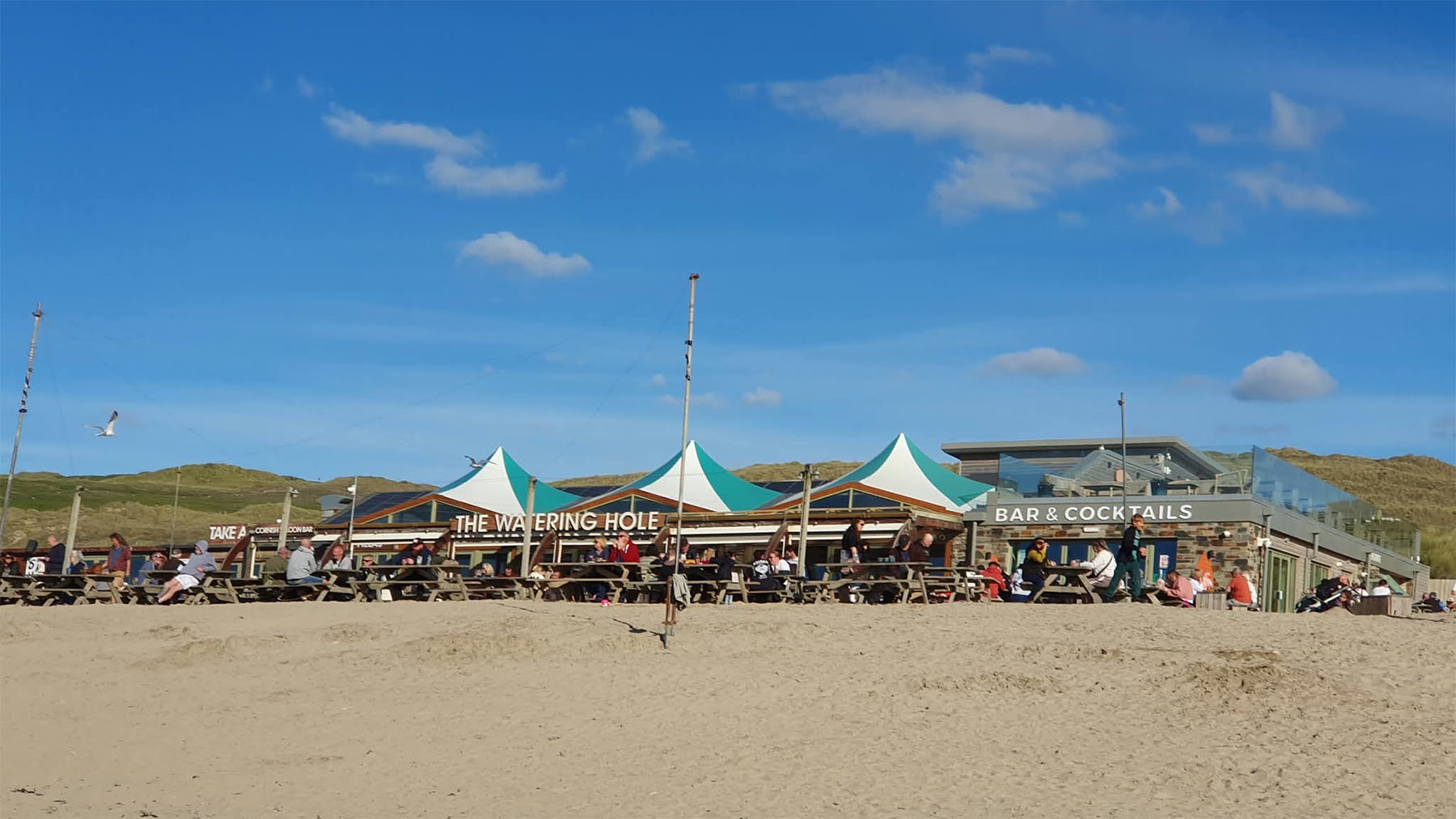
The Watering Hole on Perranporth beach (photo Harrison Frost)
Perranporth on Cornwall’s North Coast
St
Ives | Carbis Bay | Hayle | Gwithian
Towans | Godrevy Head | Portreath
| Porthtowan | St
Agnes | Trevaunance Cove
| Perranporth | Holywell
Bay | Crantock Bay | Newquay
| Porth | Mawgan Porth | Harlyn Bay
| Constantine Bay & Trevone | Padstow
& The Camel Estuary
On This Page
Perranporth at a Glance
A lively seaside village on Cornwall’s north coast, about 8 miles south-west of Newquay and 9 miles from Truro. Around three miles of sand at low tide, RNLI lifeguards in season, the Watering Hole beach bar, St Piran’s Oratory in the dunes and the South West Coast Path on the doorstep. Sat-nav: TR6 0JL (Promenade car park).
HOLIDAYS IN PERRANPORTH
Perranporth is one of Cornwall’s favourite seaside villages, and it is easy to see why. At low tide its beach joins with Perran Sands to form around three miles of golden sand, backed by the high dunes of Penhale and sheltered at the village end by cliffs, arches and caves. Families come for the space, the shallow stream and the rock pools; surfers come for the consistent Atlantic waves; and walkers come for the coast path, which climbs straight out of the village on to some of the most dramatic cliffs on the north coast.
The village takes its name from St Piran, Cornwall’s patron saint – in Cornish it is Porth Peran, “the cove of St Piran”. Tradition says Piran came ashore here from Ireland, and the little oratory that bears his name still lies in the dunes just north of the village. Every year on St Piran’s Day, 5 March, hundreds of people carrying the black and white flag of Cornwall walk across the sands to his cross.
Perranporth sits about 8 miles south-west of Newquay and 9 miles north-west of Truro, on the B3285 between Goonhavern and St Agnes. It is the largest settlement in the parish of Perranzabuloe, with a year-round community of around three thousand people that swells many times over in summer.
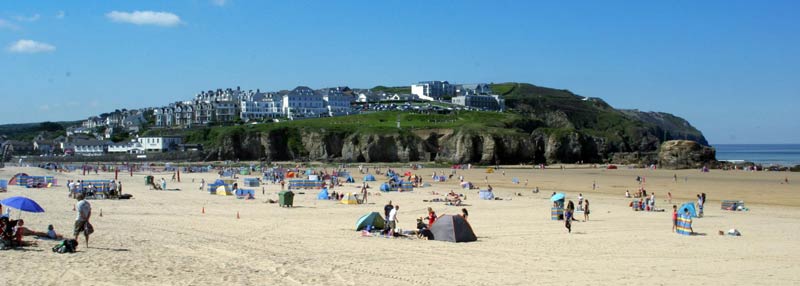
The beach is the heart of the village. From the Promenade car park and Beach Road it is only a few steps on to the sand, where you will find surf schools, deckchairs, beach shops, the lifeguard hut and the famous Watering Hole, a bar and restaurant built right on the beach. Further north the crowds thin out quickly, and on most days you can walk for miles along the tideline towards Penhale Point with only the gulls for company.
Out of season Perranporth is just as rewarding. Winter swells bring experienced surfers, the dunes and clifftops are quiet, and a bracing walk along the empty sands is the perfect prelude to a pub lunch or a cream tea in the village. Spring brings St Piran’s Day and wildflowers on the cliffs, while September and October often have the warmest sea of the year.
This guide covers everything you need for a holiday in Perranporth: the beach, surfing and lifeguards, the village, St Piran’s Oratory and the Penhale dunes, local history and notable people, things to do, walks and events, plus practical visitor information on parking, buses, shops and health services.
↑ Back to top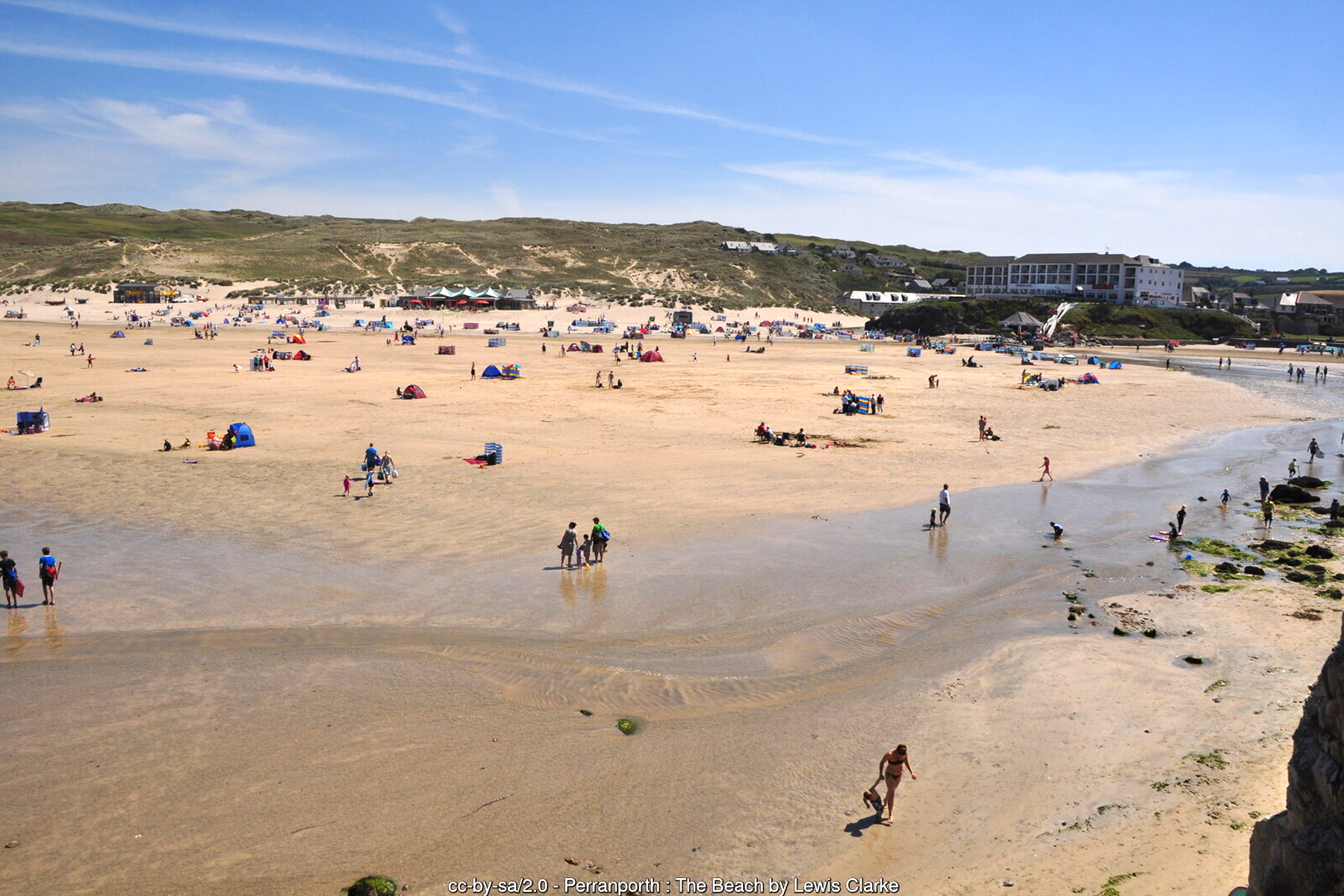
PERRANPORTH BEACH
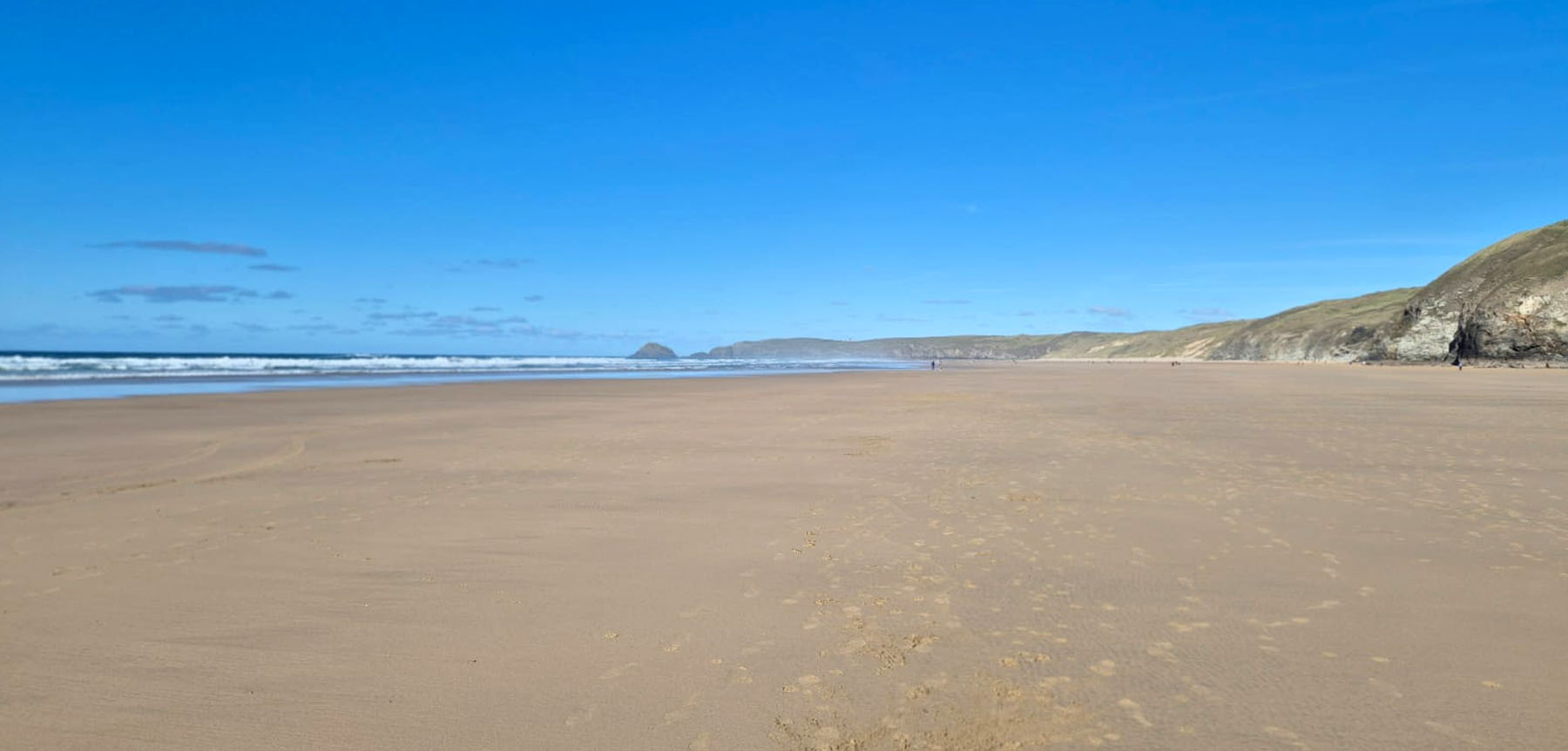
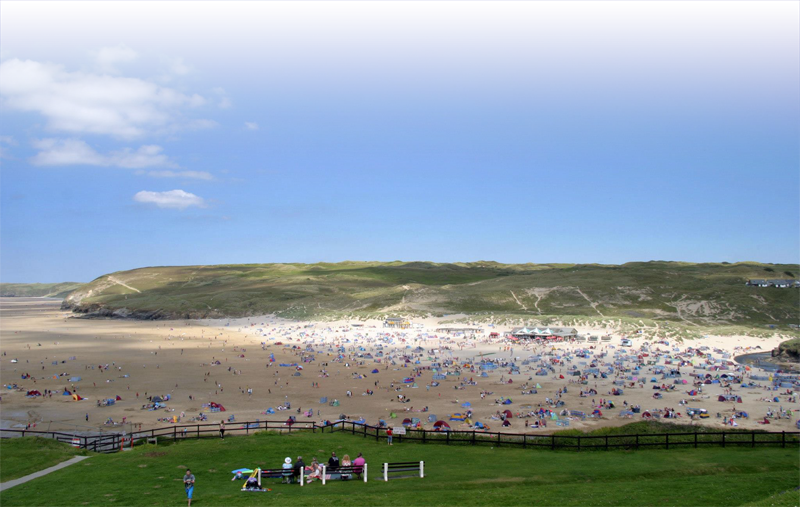
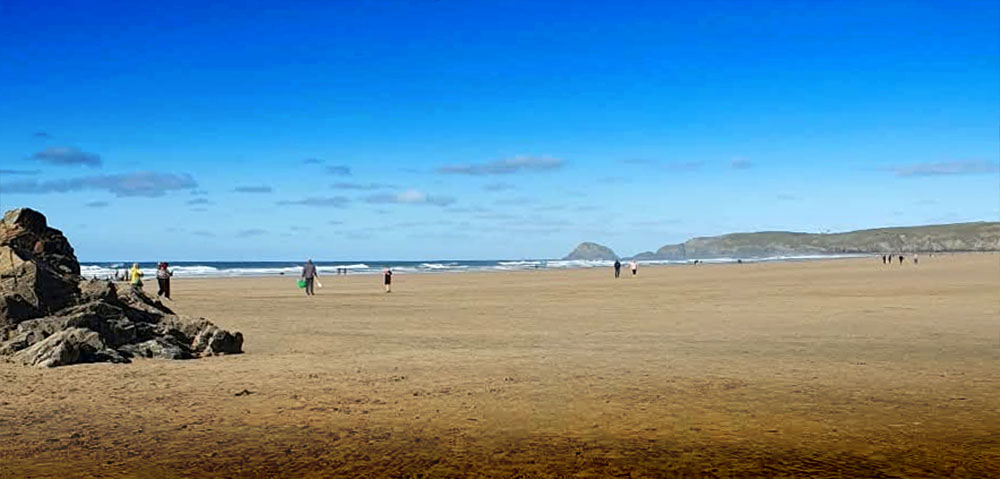
Perranporth beach is one of the largest in Cornwall. At low tide the sands stretch north for around three miles, joining with Perran Sands and running all the way to Penhale Point, and even at high tide there is usually a wide strip of sand below the dunes. The sand is firm and flat, ideal for ball games, kite flying and long walks, and the sheer size of the beach means that, outside the busiest corner by the village, it rarely feels crowded.
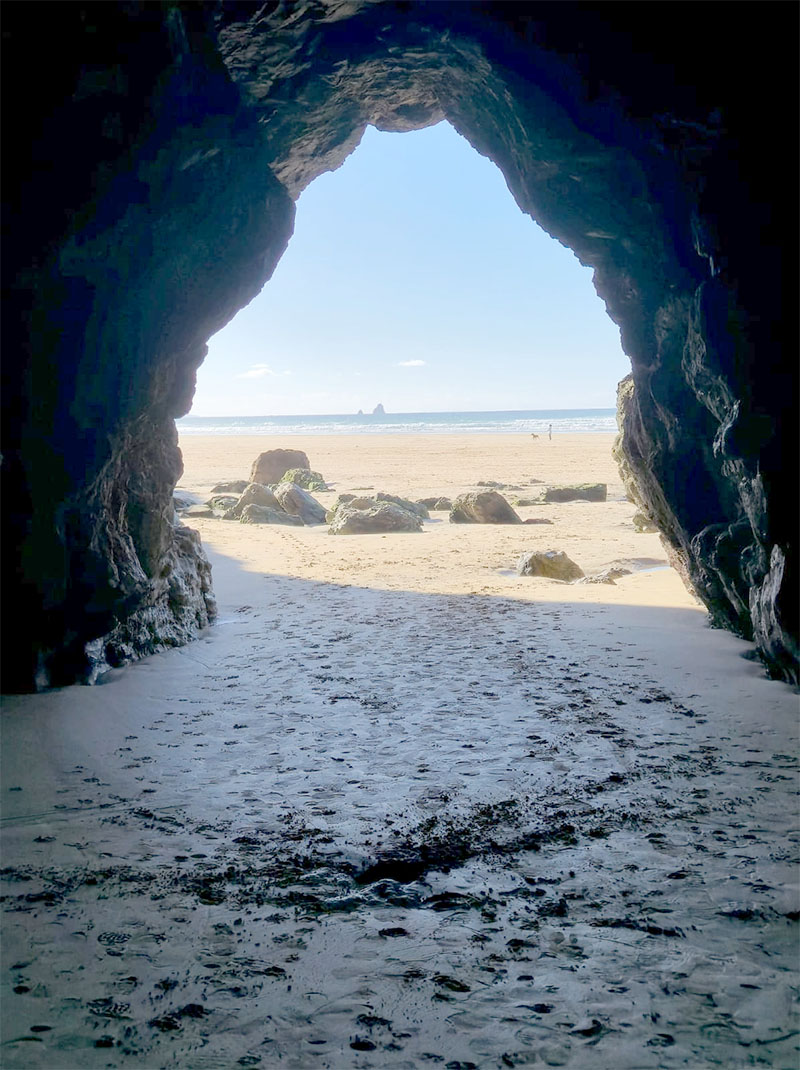
A shallow, clean stream flows out of the village and winds across the beach to the sea. On a sunny day the water warms up quickly, making it a favourite for toddlers to paddle and splash in, and for children building dams and channels. At the village end the beach is sheltered by cliffs, where the sea has carved natural arches, stacks and caves into the rock below Droskyn Point – explore them at low tide, but keep an eye on the incoming sea.
The most famous landmark is Chapel Rock, a rocky outcrop in the middle of the beach, topped by a flagpole flying the flag of St Piran. At low tide a sea-water pool among the rocks makes a natural swimming pool, and the surrounding rocks are full of anemones, crabs and small fish. Be aware that strong rip currents can form around Chapel Rock as the tide goes out, so always swim between the lifeguard flags.
Behind the beach to the north rise the great dunes of Penhale Sands, among the highest in Britain. Paths lead through the marram grass to St Piran’s Oratory and Cross, and the dunes are an important wildlife habitat, home to orchids and to Cornwall’s largest colony of the rare silver-studded blue butterfly. Please keep to the paths to help protect them.
Everything you need for a day on the sand is at the village end of the beach, a few steps from the Promenade car park. There are public toilets, beach shops selling buckets, spades and body boards, surf and wetsuit hire, deckchairs and windbreaks, and the RNLI lifeguard hut, where the lifeguards can help with first aid and lost children. Food and drink are close at hand, from ice creams and pasties to a full meal at the Watering Hole.
The beach changes dramatically with the tide. At low water the sand seems to go on for ever and you can walk round the rocks to explore the caves and coves below Droskyn, but on a big spring tide the sea reaches close to the dunes and the village end of the beach narrows considerably. Always check the tide times before setting out, start long walks towards Penhale on a falling tide, and make sure you won’t be cut off by the incoming sea around the rocks and caves.
Facing west into the Atlantic, Perranporth is one of the best places on the north coast to watch the sun go down over the sea, and on a clear summer evening the whole beach glows gold. Winter storms reshape the sands from year to year, uncovering rocks and sometimes old timbers, so every visit is a little different. Dogs are welcome all year (on a lead in July and August between 9am and 5pm), and wherever you go, please take your litter home and help keep the beach clean.
↑ Back to top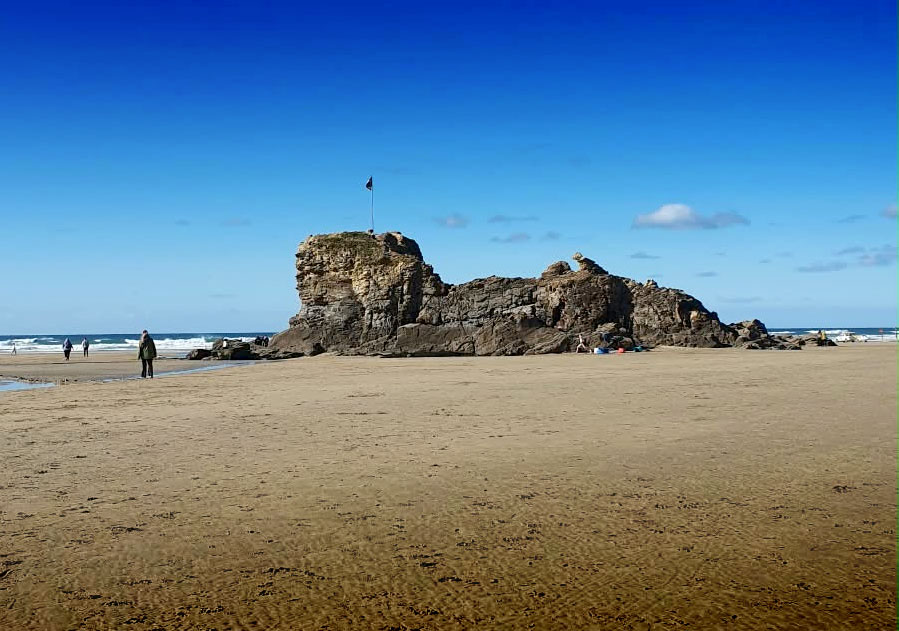
SURFING & LIFEGUARDS
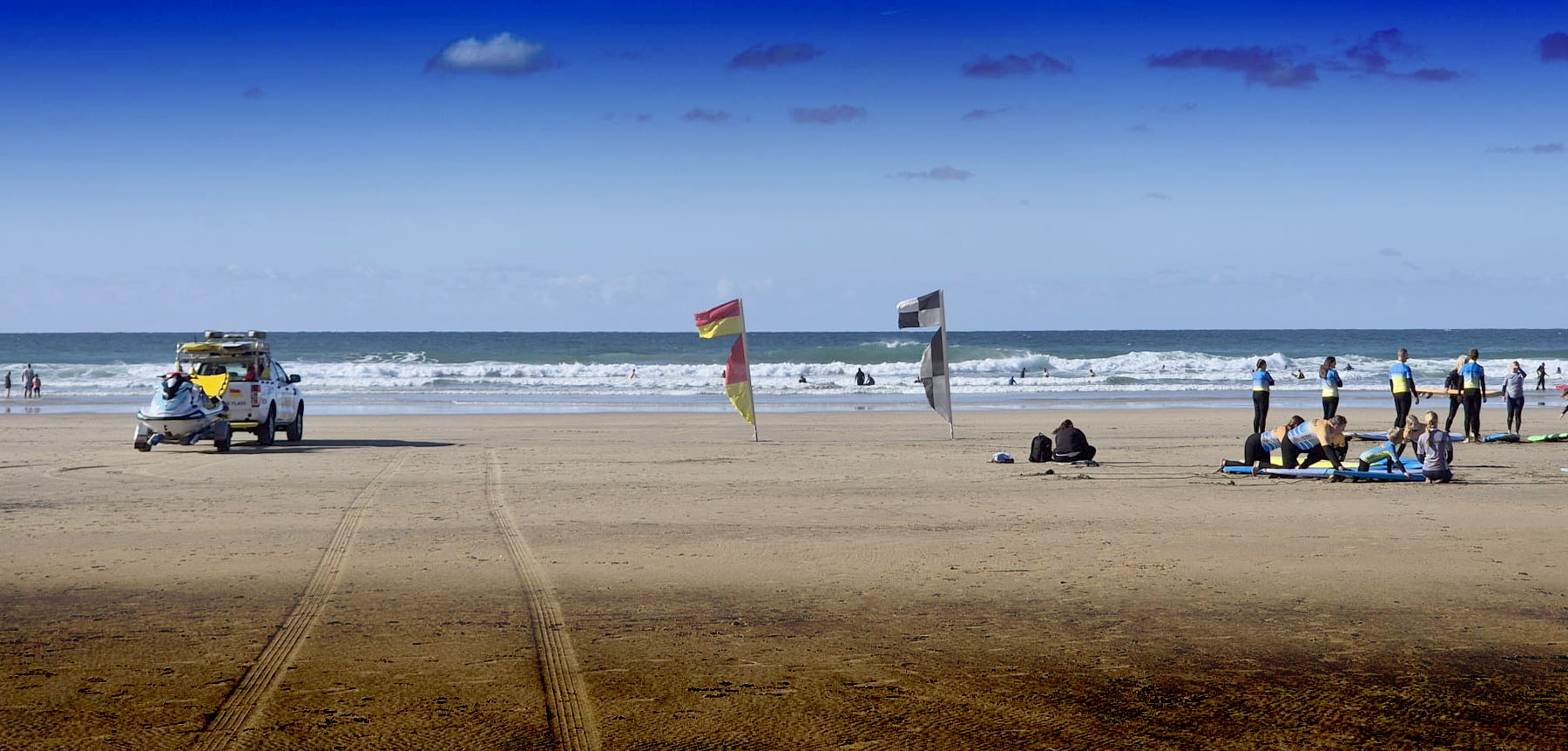
Perranporth is one of the best places in Britain to learn to surf. The long, gently shelving beach faces the Atlantic and picks up swell in almost any conditions, producing a choice of peaks along its length and plenty of white-water waves close to shore that are perfect for beginners. Surf schools at the beach entrance run lessons for all ages through the season, and you can hire boards and wetsuits by the hour or by the day.
For more experienced surfers the beach works on all states of the tide, with the best waves usually found towards the middle and northern end, away from the crowds. Kite surfers and kite buggy riders also make the most of the wide open sands and steady sea breezes, especially on the quieter stretches towards Penhale.
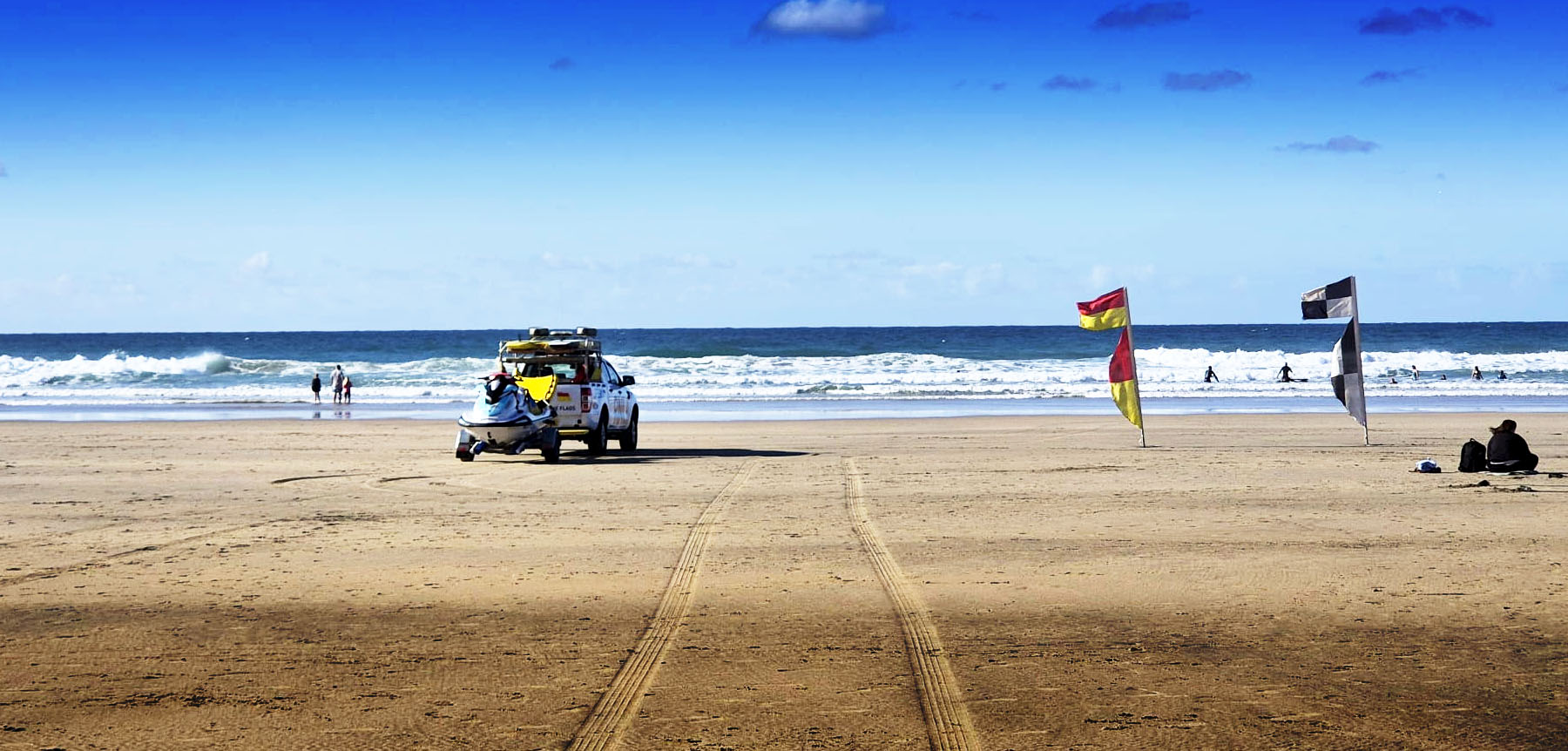
RNLI lifeguards patrol Perranporth every day through the main season – in 2026 from early April to 1 November, 10am to 6pm. They set out red and yellow flags for swimming and bodyboarding and black and white chequered flags for surfboards and other craft. Always swim between the red and yellow flags, never swim alone and, if you get into trouble, raise your hand and shout for help. No flags means no lifeguards.
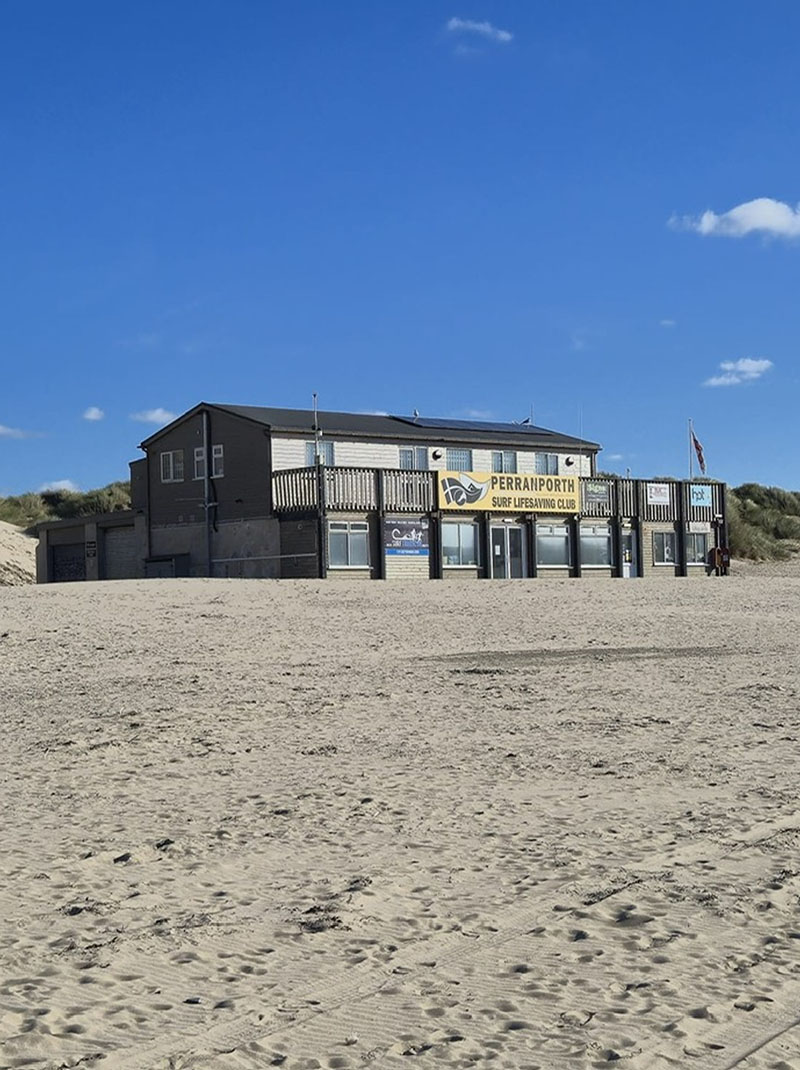
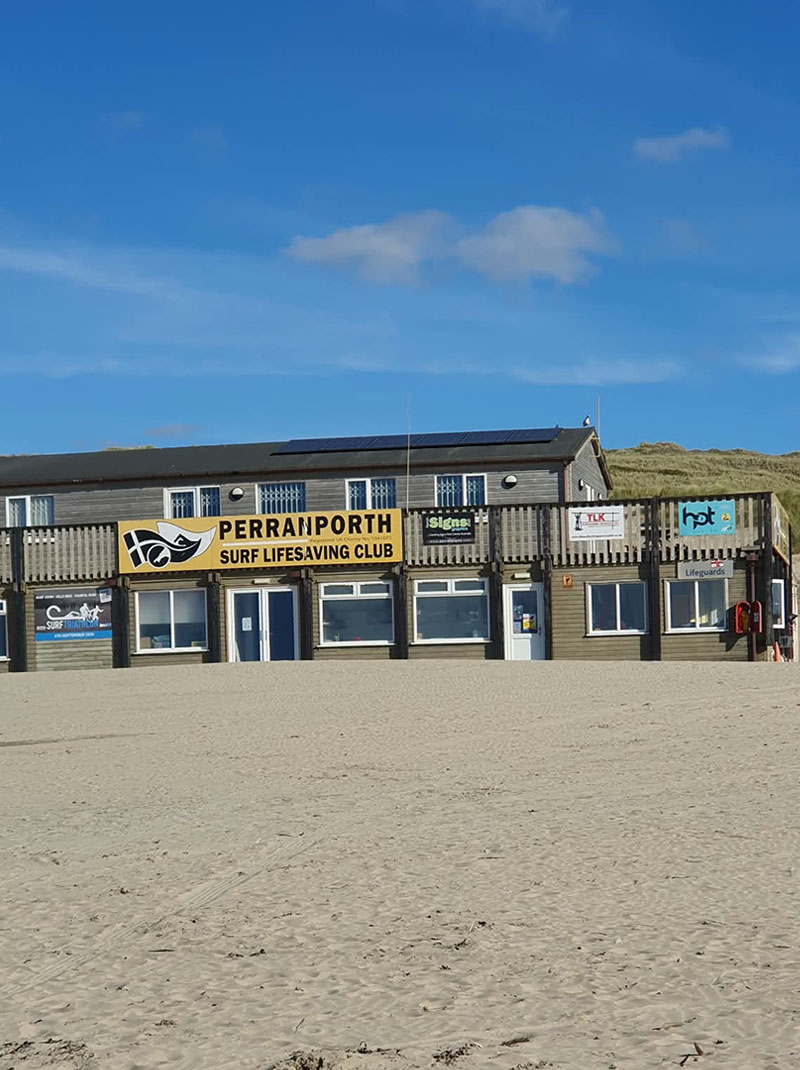
The beach is also home to Perranporth Surf Life Saving Club, whose clubhouse stands on the sand beside the Watering Hole. Its volunteer members train young people in beach safety, surf sports and lifesaving, and each September the club organises the gruelling Extreme Surf Triathlon around the beach, dunes and cliffs.
↑ Back to top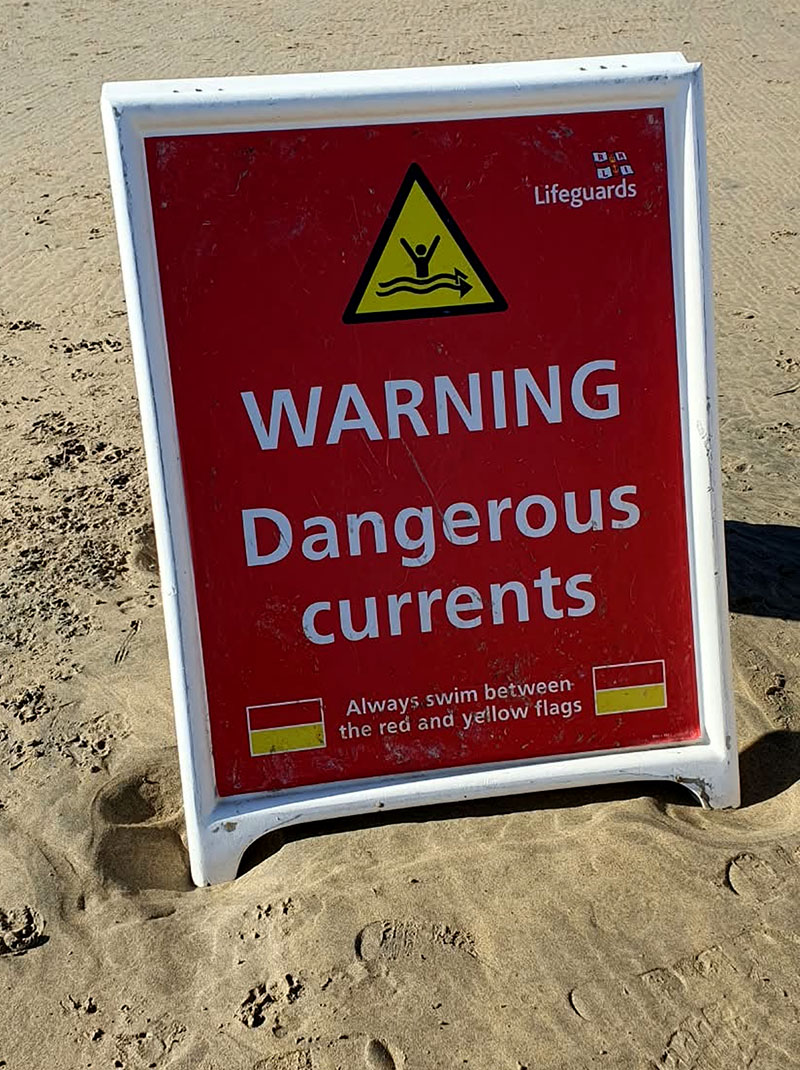
PERRANPORTH VILLAGE
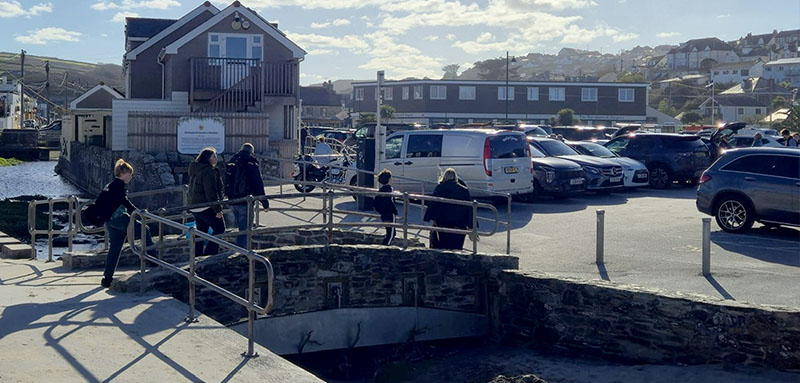
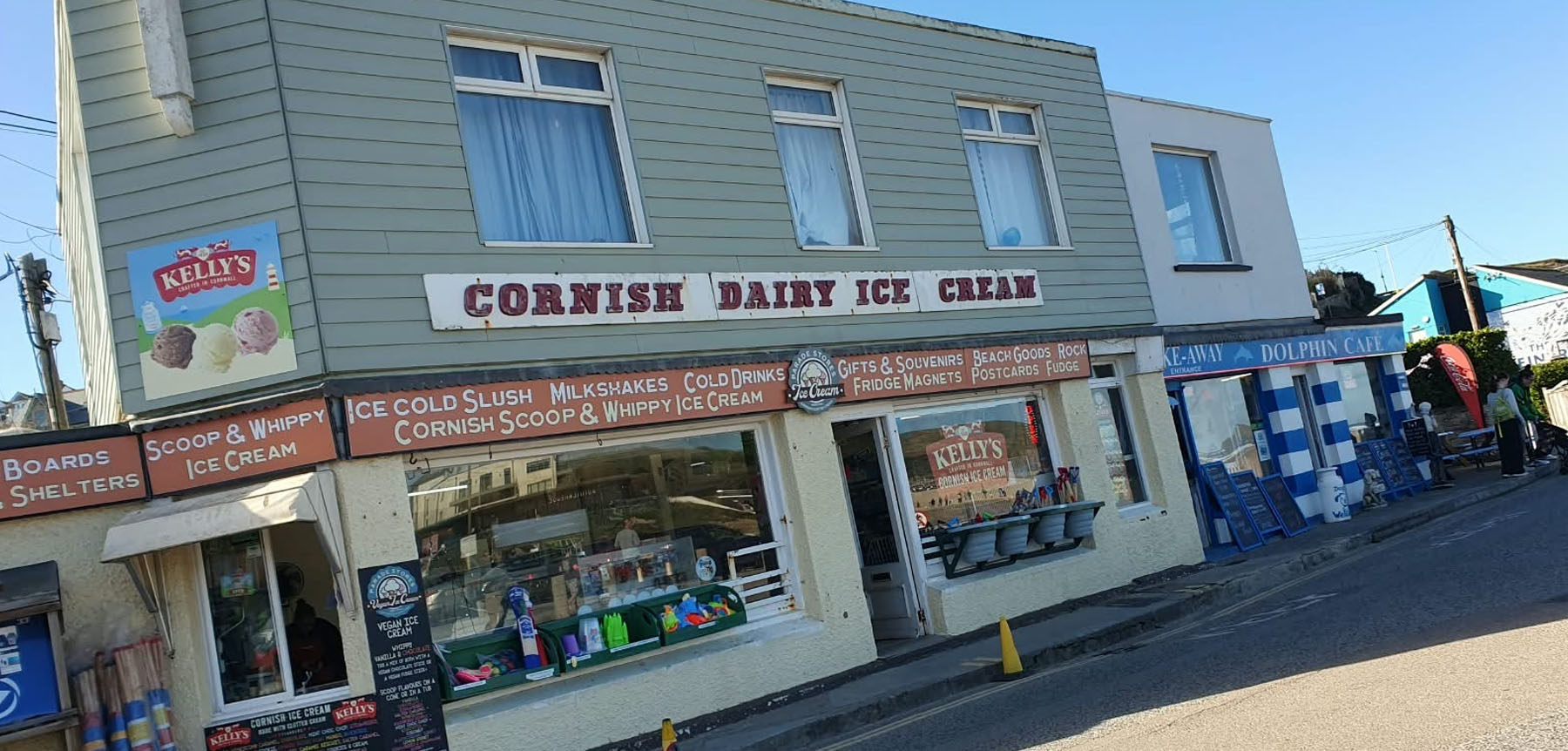
Perranporth village is compact and friendly, with everything you need for a day on the beach close at hand. Beach Road leads from the village centre straight down to the sand, lined with surf shops, beach shops, ice cream parlours and cafés, while St Piran’s Road, the main street, has a Co-op, a pharmacy, gift shops, galleries, takeaways, pubs and restaurants.
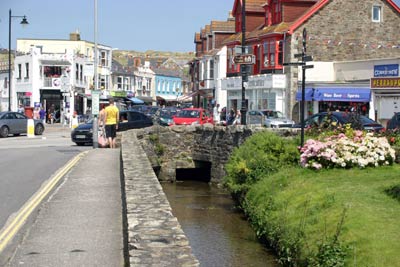
A small stream runs through the heart of the village beside the main street, past the green and the gardens, before flowing under the road and out across the beach. Tywarnhayle Square, with its short-stay car park, is at the centre, and the Perranporth Gardens beside the stream are a pleasant place to sit with an ice cream.
There is a good choice of places to eat, from fish and chips and pasties to pub food, cafés, bistros and seafood restaurants, with the Watering Hole on the beach itself. Booking ahead is wise for evening meals in July and August. For local history, the volunteer-run Perranzabuloe Museum in the Oddfellows Hall on Ponsmere Road tells the story of the parish, with displays on mining, fishing, railways and surfing; it opens on weekdays from Easter to October and admission is free.
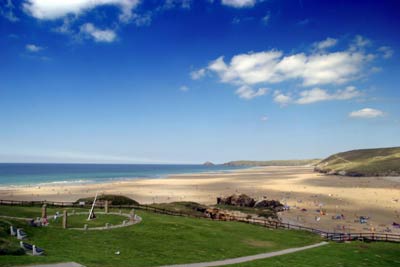
Above the village to the west, Droskyn Point is home to the Perranporth Millennium Sundial, a ring of granite stones laid out in 2000 to tell the time from the sun, and to the youth hostel perched on the cliffs. The views from here across the whole of Perran Bay to Penhale Point are among the best in Cornwall.
For self-catering visitors, the Co-op on Station Road has groceries and everyday essentials, and the village also has a post office, cash machines, a pharmacy and a GP surgery. The surf shops sell and hire boards, wetsuits and beachwear, and the gift shops and galleries stock local crafts, art and souvenirs, making Perranporth an easy place to stay for a week or more without needing to drive.
Evenings in Perranporth are relaxed and family-friendly. After a day on the beach, many visitors head back to the sand for the sunset, then on to one of the village pubs, restaurants or takeaways. In July and August the village is busy until late, with the beach, the shops and the Watering Hole all bustling; in the quieter months it settles back into a friendly community, although some businesses open shorter hours out of season.
The village sits at the mouth of a valley, and just inland lie the small settlements of Bolingey and Perrancoombe, with quiet lanes and footpaths along the stream. Perranporth’s own St Michael’s Church, a chapel of ease opened in 1872, stands in the village, while the parish church of St Piran is at Perranzabuloe, a short drive inland, and the Catholic church of Christ the King is on Wheal Leisure Road.
↑ Back to top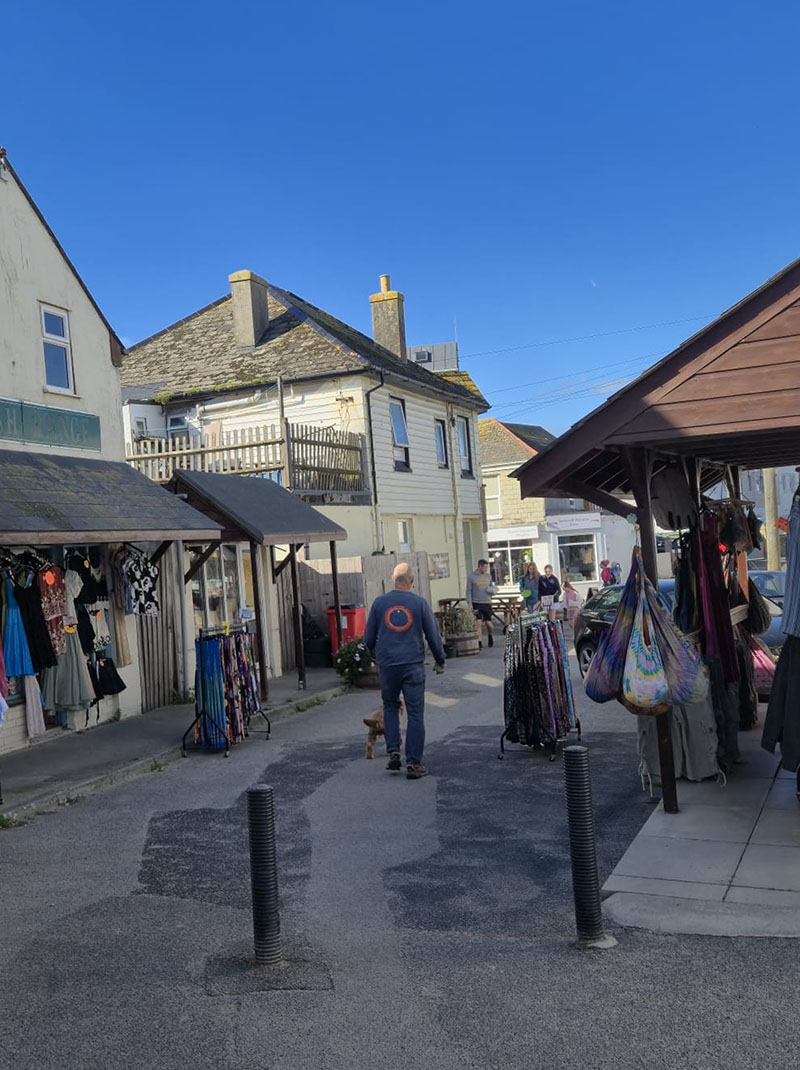
MAP OF PERRANPORTH
ST PIRAN & THE PENHALE DUNES
St Piran is the patron saint of Cornish tinners and of Cornwall itself. Legend says that he was cast into the sea in Ireland tied to a millstone, but floated safely across to land on the sands here, where he built a small chapel and preached to the local people. He is also said to have discovered tin when black ore in his hearthstone melted in the heat and a stream of white metal ran out – the origin of the white cross on a black background that is now the flag of Cornwall.
St Piran’s Oratory, in the dunes north of the village, is one of the oldest Christian sites in Britain, traditionally dated to the early medieval period. Shifting sand engulfed it centuries ago; it was rediscovered in 1835, excavated again in 1910 and reburied in 1980 to protect it. In 2014 nearly a hundred volunteers, led by the St Piran Trust, dug it out by hand so that people could see it once more.
Nearby stand St Piran’s Cross, believed to be one of the earliest recorded stone crosses in Cornwall, and the remains of St Piran’s Old Church, built inland by the 12th century and abandoned in the late 18th century when the sand overwhelmed it too. Its stones were used to build the present parish church of Perranzabuloe, which was dedicated in 1805.
The walk out to the Oratory is a gentle one of about two miles from the village, along the beach and across the sandy paths of the dunes, and the Penhale dunes themselves are a Site of Special Scientific Interest, rich in wild flowers, butterflies and birds. On St Piran’s Day (5 March), a procession crosses the sands from Perranporth to the cross, where daffodils are laid and a play about the saint’s life, spoken in Cornish, has been performed in recent years.
↑ Back to topSt Piran’s Day
Held every year on or around 5 March, St Piran’s Day is Cornwall’s national day. At Perranporth, crowds in black, white and gold walk across the dunes to St Piran’s Cross, carrying the flag of Cornwall and laying daffodils – one of the most memorable Cornish celebrations of the year.
HISTORY OF PERRANPORTH
Long before it became a resort, Perranporth was a working mining and fishing village. The cliffs at Droskyn and the south end of the beach are riddled with old tin-mining adits, and an iron lode running through the beach was worked as early as the 18th century. In the 1860s iron ore was hauled up the cliffs by a steam “puffer” engine, and mines such as Wheal Leisure and Gravel Hill gave their names to parts of the village.
The sea was both a living and a danger. Pilchard fishing with seine nets was once carried on in Perran Bay, and many ships were lost on this exposed coast. One of the most famous wrecks was the Voorspoed, which ran ashore in a northerly gale on 7 March 1901 and was one of the last wrecks in Cornwall to be looted by local people.
The arrival of the railway in 1903 changed everything. The Truro and Newquay Railway, running from Chacewater to Newquay, brought holidaymakers straight to Perranporth station and to a second halt by the beach, and hotels and guest houses soon followed. The line closed in the 1960s, but by then Perranporth was firmly established as one of Cornwall’s favourite family resorts.
During the Second World War, RAF Perranporth was built on the clifftops at Cligga Head. Opened in 1941 as a Fighter Command station, it was home to Spitfire squadrons from Britain and the Commonwealth, as well as Polish, Czechoslovak and Free French units, until it closed in 1946. Today it is Perranporth Airfield, a civil airfield, and remains of the wartime airfield can still be seen from the coast path.
↑ Back to top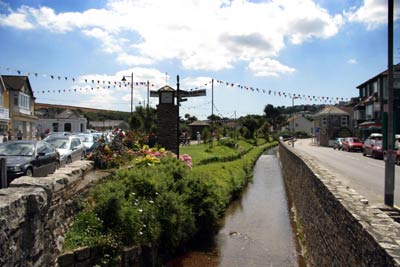
NOTABLE PEOPLE
Winston Graham (1908–2003), the author of the Poldark novels, lived in Perranporth for 34 years. He moved to the village with his family as a young man, and the cliffs, coves, mines and mining communities of this stretch of coast became the setting for Ross Poldark’s Cornwall. The first novel, Ross Poldark, was published in 1945, and the series has since been adapted twice for BBC television.
Donald Healey (1898–1988), the motor engineer and rally driver behind the famous Austin-Healey sports cars, was born in Perranporth. In 1919 he opened the village’s first garage and petrol station, and he went on to build a career in car design that made the Healey name famous around the world. His son Geoffrey Healey (1922–1994), also an automotive engineer, worked alongside him on the Healey cars.
Perranporth’s long association with surf lifesaving also produced generations of volunteer lifeguards, and the village remains closely linked with Cornish culture, from St Piran’s Day to the inter-Celtic festival of Lowender Peran, which was held here for many years before moving to Newquay.
↑ Back to topPoldark Country
The countryside around Perranporth and St Agnes is the heart of Winston Graham’s Poldark country. The BBC’s 2015 adaptation filmed many scenes on the nearby north coast cliffs around St Agnes Head and Chapel Porth, where the engine houses of the old mines still stand above the sea.
THINGS TO DO IN PERRANPORTH
Most days in Perranporth start and finish on the beach, but there is far more to the village than sand and surf. The coast path, the dunes and the old mining country inland are perfect for exploring, and Newquay, Truro and St Agnes are all within easy reach.
Families will find plenty to keep children happy, from rock pooling and stream dams to surf lessons, while walkers, golfers and history lovers each have their own reasons to linger. On rainy days the museum, the cafés and the attractions of Newquay and Truro are close by.
Here are some of the best things to do in and around Perranporth:
- Learn to surf – book a lesson with one of the surf schools at the beach entrance, or hire a board and wetsuit and ride the white water between the flags.
- Walk the length of the beach – at low tide, follow the tideline north along Perran Sands towards Penhale Point for one of Cornwall’s great beach walks.
- Explore Chapel Rock and the caves – go rock pooling around Chapel Rock and explore the arches and sea caves below Droskyn at low tide.
- Visit St Piran’s Oratory – walk out across the Penhale dunes to the Oratory, St Piran’s Cross and the remains of the old church.
- Watch the sunset at the Watering Hole – enjoy a drink with your feet in the sand at the bar on the beach.
- Find the Millennium Sundial – climb to Droskyn Point for the sundial and the views across Perran Bay.
- Discover local history – call in at the Perranzabuloe Museum in the Oddfellows Hall to learn about the parish’s mining, fishing and surfing past.
- Play a round of golf – Perranporth Golf Club, just north of the village, is a natural links laid out among the dunes by James Braid in 1927.
- Walk to St Agnes – follow the coast path past Cligga Head and the airfield to Trevaunance Cove, and catch the bus back.
- Explore further afield – visit Holywell Bay, Crantock and Newquay to the north, or Truro, Cornwall’s only city, a short drive inland.
Perranporth Golf Club
Founded in 1927 and designed by five-time Open champion James Braid, Perranporth Golf Club is a classic links course among the dunes and clifftops just north of the village, with sea views from many holes. Visitors are welcome – book tee times directly with the club. See also our guide to golf courses in Cornwall.
WALKS FROM PERRANPORTH
The South West Coast Path passes right through Perranporth, giving walkers a choice of two very different routes. Heading south-west, the path climbs from the beach to Droskyn Point and follows the clifftops past Cligga Head, where the granite cliffs rise around 300 feet above the sea, and the edge of Perranporth Airfield. It then drops steeply into Trevellas Porth and Trevaunance Cove at St Agnes – about four miles of superb, but at times steep, coastal walking, with old mine workings all along the way.
Heading north, the path follows the beach and the dunes of Penhale Sands towards Penhale Point and Holywell Bay. At low tide you can walk the whole length of the beach on the sand, then return through the dunes past St Piran’s Oratory and Cross for a loop of around four miles. Parts of the Penhale area are used by the Ministry of Defence, so follow the signed paths and observe any warning notices.
For a shorter stroll, the walk up to the Millennium Sundial at Droskyn and back along the beach takes less than an hour and gives wonderful views of the whole bay. Whichever route you choose, wear good footwear, take water and check the tide times before walking on the beach or exploring the caves.
↑ Back to topCoast Path Tips
Stay well back from the cliff edges, especially in wet or windy weather, and keep dogs on leads near livestock and cliff edges. Cliffs around Perranporth are riddled with old mine shafts – always keep to the marked paths.
LOCAL EVENTS IN PERRANPORTH
Perranporth has a lively calendar of events through the year. The biggest date is St Piran’s Day on 5 March, when a procession crosses the dunes to St Piran’s Cross. In spring the village has hosted The Loudest Shout (formerly the Perranporth Shout), a festival of sea songs and shanties traditionally held in April.
In early summer, Tunes in the Dunes brings a weekend of live music to Perranporth beach, usually in June. During the summer the Heritage on the Beach event, organised with the Perranzabuloe Museum, brings pop-up talks and displays about local history, mining, fishing and Winston Graham down to the sand by Chapel Rock.
In September, Perranporth Surf Life Saving Club organises the Extreme Surf Triathlon, combining a sea swim, a cycle ride and a run around the beach, dunes and cliffs. Dates change from year to year, so check with the organisers or the parish council before you travel.
↑ Back to topCheck Before You Go
Event dates and programmes change each year. For up-to-date information, check the Perranzabuloe Parish Council website and the organisers’ own websites and social media pages.
VISITOR INFORMATION
Parking & EV Charging
Car parks near the beach: the Promenade car park, Beach Road (TR6 0JL), pay and display, 24 hours, all year; Wheal Leisure car park (TR6 0EY), Cornwall Council pay and display and coach drop-off; Droskyn car park, Cliff Road (TR6 0DR), pay and display; Tywarnhayle Square (TR6 0ER), free for up to one hour; and a long-stay overflow car park at Chyanhale, Ponsmere Valley (TR6 0DB), open in peak periods.
Electric vehicle charging:
- Wheal Leisure car park – 2 slow chargers with 4 connectors (Evolt Network), TR6 0EY
- Droskyn car park, Cliff Road – 1 charger with 2 Type 2 (22kW) connectors (EV Charge.Online), TR6 0DR
Bus & Train
Go Cornwall Bus route 87 links Perranporth with Truro, St Agnes, Goonhavern, Holywell Bay, Crantock and Newquay, roughly hourly during the day. The nearest main line station is Truro; Newquay station is on the branch line from Par. Check timetables before you travel.
Facilities & Supermarkets
Public toilets by the beach, a pharmacy, post office, cash machines, surf and beach shops, gift shops and galleries in the village. The Co-op is the village supermarket; larger supermarkets are in Newquay (about 8 miles) and Truro (about 9 miles). Supermarkets include:
- Co-op – Station Road, Perranporth TR6 0DD
- Asda – Oakleigh Terrace, Newquay TR7 1RN
- Lidl – Treloggan Road, Newquay TR7 2BB
- Londis – 12 Central Square, Newquay TR7 1EU
- Morrisons – Treloggan Road, Newquay TR7 2GZ
- Sainsbury’s – The Whim, Alma Place, Newquay TR7 1NF
- Great Cornish Food Store – Tregurra Park, Newquay Road, Truro TR1 1RH
- Sainsbury’s – Treyew Road, Truro TR1 3XL
- SPAR – 56 Pydar Street, Truro
- Tesco Superstore – Truro TR1 2TN
- Waitrose – Tregurra Park, Newquay Road, Truro TR1 1RH
Cafés & Restaurants
Cafés, bakeries, pasty shops, fish and chips, pubs and restaurants along Beach Road and St Piran’s Road, and the Watering Hole bar and restaurant on the beach itself. Booking ahead is wise for evening meals in July and August.
Health
Perranporth Surgery (TR6 0PS) is the village GP practice, and there is a pharmacy in the village. The nearest Minor Injury Unit is at Newquay Community Hospital – check its opening hours before travelling. Call NHS 111 for urgent advice and 999 in an emergency – ask for the Coastguard for incidents at sea or on the cliffs. The nearest A&E is the Royal Cornwall Hospital, Truro.
Disabled Access
The village end of the beach is close to the Promenade car park, with level access from Beach Road on to firm sand. Beach (sand) wheelchairs have been available to borrow in the village – ask locally before your visit. The dunes, clifftop paths and the walk to St Piran’s Oratory are uneven and sandy. Check Blue Badge rules on car park signs.
Vets & Dogs
St Clement Veterinary Clinic, 36a St Piran’s Road, Perranporth TR6 0BJ. Dogs are welcome on Perranporth beach all year, but must be on a lead in July and August between 9am and 5pm.
National Trust & English Heritage
The National Trust cares for much of the coast around St Agnes, including St Agnes Head, Chapel Porth and the Wheal Coates engine houses, and for Trerice, the Elizabethan manor near Newquay. Pendennis Castle and St Mawes Castle (English Heritage) are under an hour’s drive away.
Beaches
Perranporth and Perran Sands in the village; Holywell Bay to the north; and Trevellas Porth, Trevaunance Cove and Chapel Porth towards St Agnes.
STAY & EXPLORE NEAR PERRANPORTH
Surf & Watersports
FAMILY HOLIDAYS & SHORT BREAKS IN PERRANPORTH
Family holidays in Perranporth are all about the beach. Around three miles of gently shelving sand at low tide, a shallow stream to paddle in, rock pools around Chapel Rock and RNLI lifeguards on patrol through the season make it one of the best family beaches in Cornwall – and, with its friendly surf schools, one of the best places in the UK to learn to surf.
Most visitors choose a self-catering holiday in Perranporth: beach houses and holiday cottages a short walk from the sand, apartments with sea views over Perran Bay and family homes with space for surfboards and wetsuits, giving you the freedom to plan your days around the tides. Many Perranporth holiday cottages welcome dogs too.
Perranporth is just as rewarding for a short break or weekend getaway. Out of the school holidays the beach is quieter, the surf is often at its best and the clifftop walks are glorious, so a few nights in a B&B, hotel, holiday park or campsite nearby is the perfect escape. Booking direct with the owner means no agency fees.
Browse self-catering holidays in Perranporth for holiday cottages, beach houses and apartments, or holidays and short breaks in Perranporth for every type of accommodation – B&Bs, hotels, holiday parks, camping and glamping – all listed on Cornwall Online by their owners.
↑ Back to topFREQUENTLY ASKED QUESTIONS ABOUT PERRANPORTH
Yes. At low tide Perranporth beach joins Perran Sands to form around three miles of firm, flat sand, with a shallow stream running across it from the village, rock pools around Chapel Rock and plenty of room to spread out. Toilets, cafés, surf hire and the Watering Hole are all at the village end, and RNLI lifeguards patrol in season.
RNLI lifeguards patrol Perranporth beach every day through the main season – in 2026 from early April to 1 November, 10am to 6pm. Always swim or bodyboard between the red and yellow flags, and remember that no flags means no lifeguards. Rip currents can form, especially around Chapel Rock as the tide drops.
Yes, Perranporth is a dog-friendly beach all year round. A Dogs on Leads Order applies in July and August between 9am and 5pm, when dogs must be kept on a lead. Check the signs at the beach entrances, and always pick up after your dog.
The Promenade car park on Beach Road (TR6 0JL) is right beside the beach and is pay and display, 24 hours a day, all year. There are also pay-and-display car parks at Wheal Leisure (TR6 0EY) and Droskyn, on Cliff Road above the beach, and a long-stay overflow car park at Chyanhale in the Ponsmere valley in peak periods. Arrive early in July and August.
Yes. The Oratory lies in the Penhale dunes north of Perranporth and can be reached on foot across the dunes from Perran Sands or along the beach. It was buried by sand for centuries, uncovered in 1835, reburied in 1980 to protect it and dug out again by volunteers led by the St Piran Trust in 2014. Nearby are St Piran’s Cross and the remains of the old parish church.
Yes – the Watering Hole stands right on the sand at the village end of the beach. It began as a simple beach shack in 1978 and is often described as the only bar actually on a beach in the UK. It serves drinks and food through the day and hosts live music.
Yes. The South West Coast Path climbs from Droskyn Point past the Millennium Sundial and out along the cliffs by Cligga Head and Perranporth Airfield, then drops to Trevellas Porth before reaching Trevaunance Cove at St Agnes – about four miles of spectacular, often steep, clifftop walking. The 87 bus links the two villages if you want to walk one way.
Yes. Winston Graham, author of the Poldark novels, lived in Perranporth for 34 years, and the coast and mining country around the village inspired the world of his books. The first Poldark novel, Ross Poldark, was published in 1945.
Go Cornwall Bus route 87 runs between Truro and Newquay through St Agnes, Perranporth, Goonhavern, Holywell Bay and Crantock, roughly hourly during the day. The nearest main line station is Truro; Newquay station is at the end of the Atlantic Coast branch line from Par. Check current timetables before you travel.