About Trerice House
Just three miles south-east of Newquay, down narrow Cornish lanes, Trerice House is one of the county's best-kept secrets — a small, intimate Elizabethan manor that has changed remarkably little since it was built in the 1570s. Where many grand houses were extended and remodelled by successive generations, Trerice spent long stretches under absentee owners, and that neglect turned out to be a gift: the house survives today much as it was originally built.
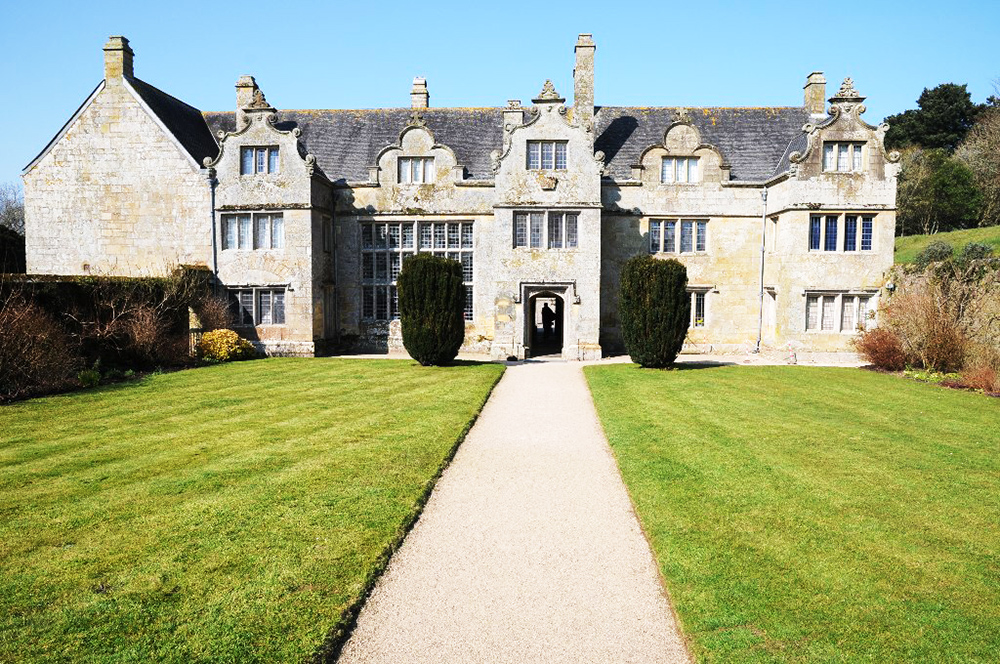
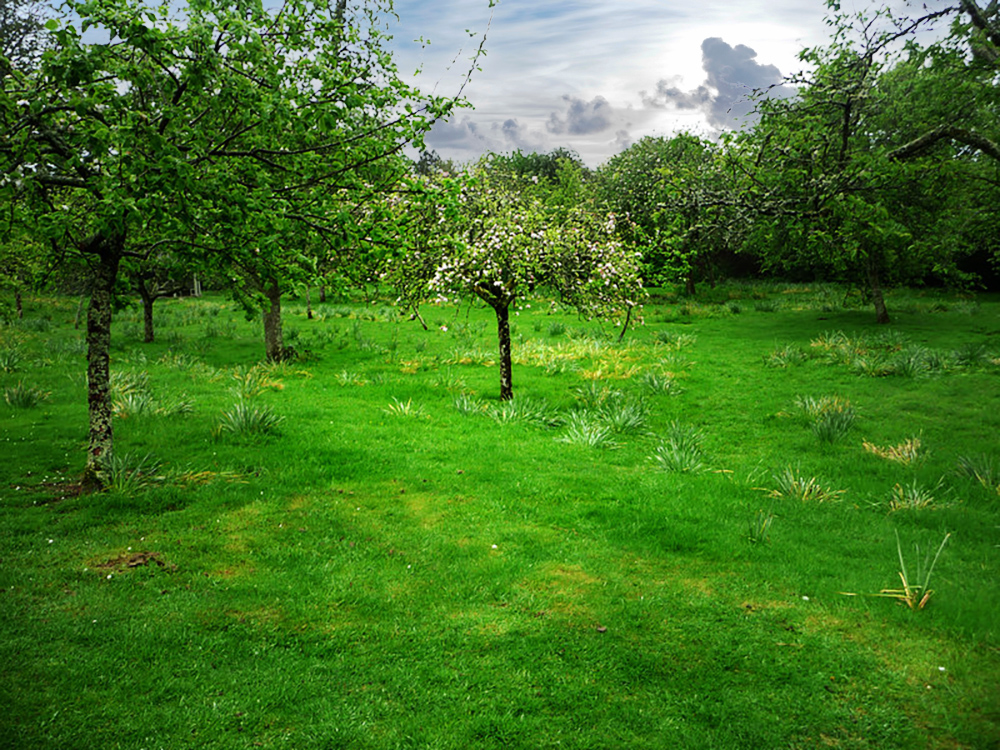
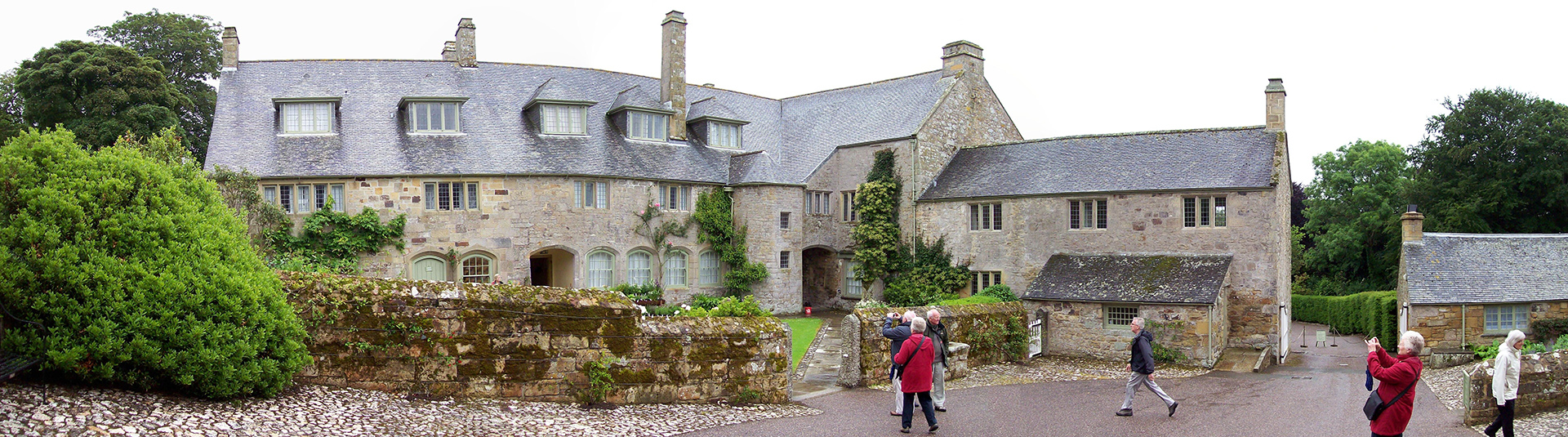
Its most distinctive feature is the east front, with five ornate, Dutch-influenced scrolled gables rising above walls of local silvery-grey "growan" stone. Inside, the Great Hall's enormous mullioned window and elaborately plastered ceilings give a real sense of Tudor and Elizabethan grandeur, scaled to a manageable, human size rather than a palace. Outside, a small walled garden with an Elizabethan knot garden and an orchard of old Cornish apple varieties makes for a peaceful place to wander.
Gallery
History
The manor of Trerice had passed to the Arundell family by marriage as early as the 14th century, and it remained their seat for over 400 years. The house you see today, however, dates from rather later: it was built by Sir John Arundell, replacing an earlier home he inherited from his father — also Sir John — who made his fortune in royal service. The elder Arundell was knighted at the Battle of the Spurs in 1513, served as Esquire of the Body to Henry VIII, and went on to serve under Edward VI and Mary I. Building work on the new house began around 1570 and was largely complete by 1573.
The Arundells supported the Royalist cause during the Civil War — a later Arundell of Trerice, nicknamed "John for the King," commanded the defence of Pendennis Castle for Charles I — and the family suffered financial hardship as a result, though their fortunes recovered after the Restoration. In 1675, a marriage to Margaret Acland of Killerton in Devon linked the family to the Aclands, though it would be some time before that connection told: when the direct Arundell line died out in 1768, Trerice passed first to the Wentworth family under the terms of a marriage settlement. It was only in 1802, when the Wentworth line itself failed, that the estate finally passed to the Aclands of Killerton.
The Aclands never lived at Trerice, letting it instead to farming tenants — a quiet fate that spared the house from Victorian alteration and left it remarkably unchanged. They sold the estate in 1915, and it changed hands several times over the following decades, including a period in the ownership of the MP Somerset de Chair, before the National Trust acquired Trerice in 1953.
The Elton family, who had been tenants under the previous private owner, stayed on as the Trust's tenants after 1953 and paid for extensive repairs, including to the roof and to the north wing, which had been demolished in 1860 and was rebuilt in 1954. Visitors can still see the Eltons' 1950s sitting room today, along with an exhibition in Mrs Elton's former sewing room on the Home Guard battalion stationed at Trerice during the Second World War.
Inside the House
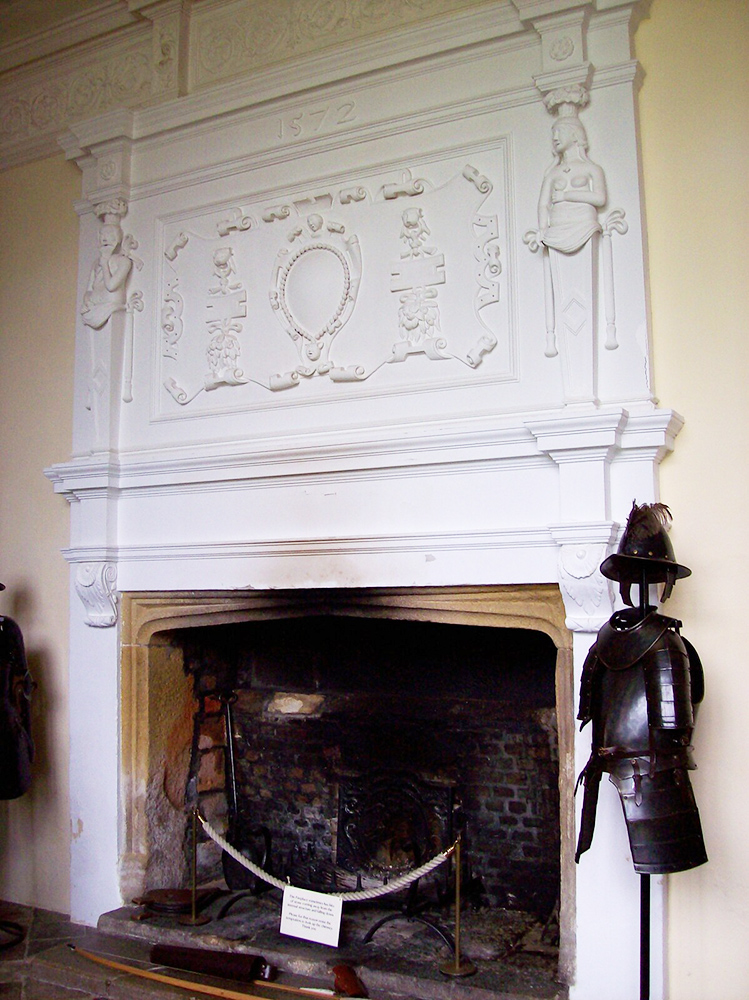
Trerice's interiors punch well above the house's modest size. The Great Hall is the showpiece: its huge mullioned and transomed window contains 576 panes of glass spanning the 16th to 19th centuries, and the fireplace is topped by an ornately scrolled plaster overmantel supported by carved caryatids. The Great Chamber above features a barrel-vaulted plasterwork ceiling, restored by the Aclands, and today displays an English oak Tudor four-poster bed gifted to the house in the 1980s.
The collection reflects the many families who have passed through Trerice rather than a single dynasty: 17th- to 19th-century furniture, a set of longcase clocks including a rare example by Thomas Tompion dating to around 1680, 17th-century embroidered pictures, and paintings by the Cornish-born portraitist John Opie, including a self-portrait. Trerice is also said to have a resident ghost — local tradition tells of a servant girl, seduced and abandoned by one of the Arundell lords, whose presence is said to linger in the library as a sudden chill and the faint scent of lilac, though no one claims to have actually seen her.
Gardens
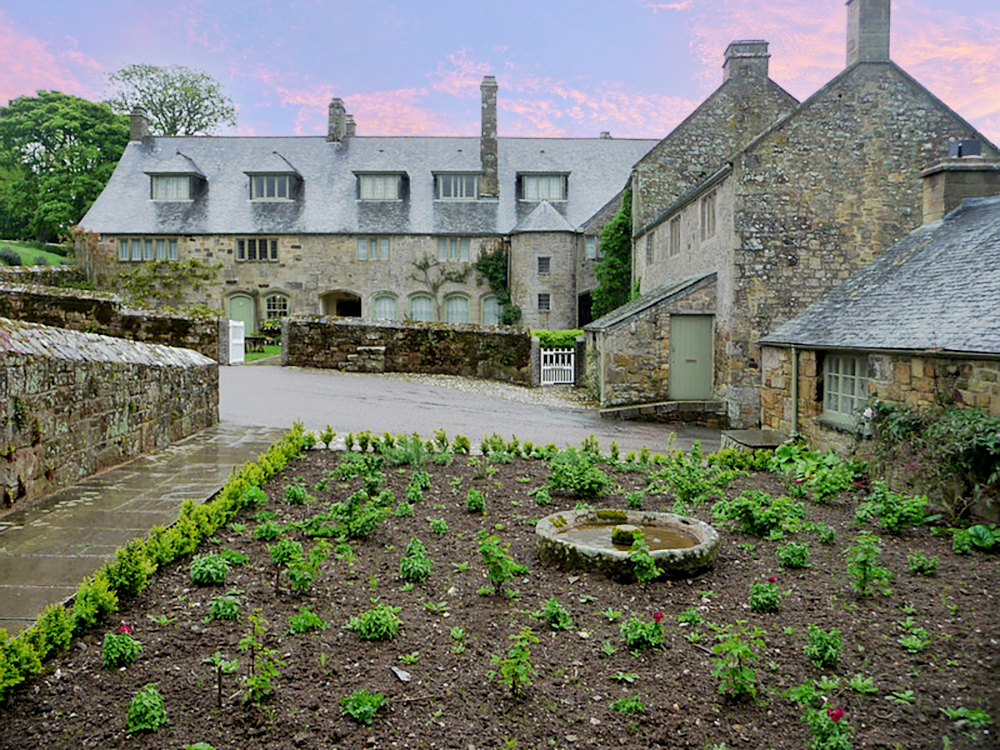
Trerice's garden is small but full of character, enclosed by high walls that shelter it from the Cornish weather. An Elizabethan-inspired knot garden takes its design cues from the plasterwork inside the house, while cottage-style borders and an orchard planted with old Cornish apple varieties give the grounds a relaxed, informal feel. Behind the barn, a small Tudor-style kitchen garden grows heritage vegetables such as purple carrots and Good King Henry within rabbit-proof hurdle fencing, alongside a turf maze based on a design from Elizabethan gardener Thomas Hill's 1577 book, The Gardener's Labyrinth.
On the lawn, visitors can try a game of kayles — a traditional Cornish skittles game — and in the Mowhay field at the bottom of the site, mown paths through long grass make for a good spot to look out for wildlife or let children run off some energy.
Visiting Information
- Address
- Kestle Mill, Newquay, Cornwall, TR8 4PG — 3 miles south-east of Newquay, off the A392 and A3058.
- Getting there
- Follow the brown tourist signs from Quintrell Downs, St Newlyn East or Summercourt. The nearest train station is Quintrell Downs, with bus routes running to Kestle Mill. Approach roads are narrow country lanes — take care and give way where they narrow.
- Contact
- 01637 875404 (also for second-hand book donations to the shop).
- Opening times
- Open Tuesday to Sunday, 10.30am–4.30pm (last entry to the house around 4pm). Closed on Mondays. Hours can vary seasonally, so check the official Trerice page before travelling.
- Admission
- Free for National Trust members. Non-member prices vary by season and age group — check current prices on the National Trust website, as they are subject to change.
- Dogs
- Welcome in the garden, the outdoor café area and the second-hand bookshop, but not permitted inside the house or the main shop. Assistance dogs are welcome throughout.
- Accessibility
- Blue Badge and designated disabled parking, accessible toilets, and induction loops at the till points. Some paths are steep or gravelled; house access is limited to the ground and first floor, with mobility scooter access to the ground floor only. A manual wheelchair is available on site.
- Facilities
- Licensed café in the barn serving light refreshments, cream teas and packed lunches; gift shop; second-hand bookshop in the Undercroft.
Opening days, admission prices and facilities change seasonally — always confirm details on the official National Trust Trerice website before setting out.