About Levant Mine and Beam Engine
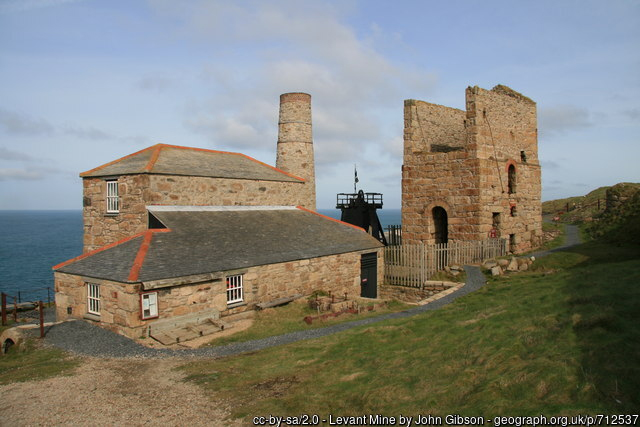
Levant Mine and Beam Engine stands high on the dramatic cliffs of Cornwall's Tin Coast, close to Pendeen and St Just. Once one of Cornwall's most important tin and copper mines, Levant is now part of the Cornwall and West Devon Mining Landscape World Heritage Site and is cared for by the National Trust.
At the heart of the site is the restored 1840 beam engine, which still operates under steam in its original engine house. It is the world's oldest Cornish steam winding engine still working in its original location — a rare chance to experience the sights, sounds and atmosphere of Victorian Cornish mining.
History
The story of mining at Levant stretches back to the 18th century. The mine appears on Martyn's map of Cornwall in 1748, and copper was being extracted by the late 18th century, with a record of mining at Levant dating from 1787. In 1820 the Levant Mining Company was formally established, and the mine soon became highly successful after rich deposits of copper ore were discovered.
Levant expanded rapidly during the first half of the 19th century: by 1836 around 320 men, 44 women and 186 children were employed at the mine, with women and children commonly involved in ore dressing. Although copper was initially important, tin became the principal product during the 19th century, and the workings continued to expand beneath the surrounding land and eventually beneath the Atlantic Ocean itself — earning Levant its reputation as the "mine under the sea", with tunnels extending as far as 2.5km from the cliffs.
The 1840 Beam Engine
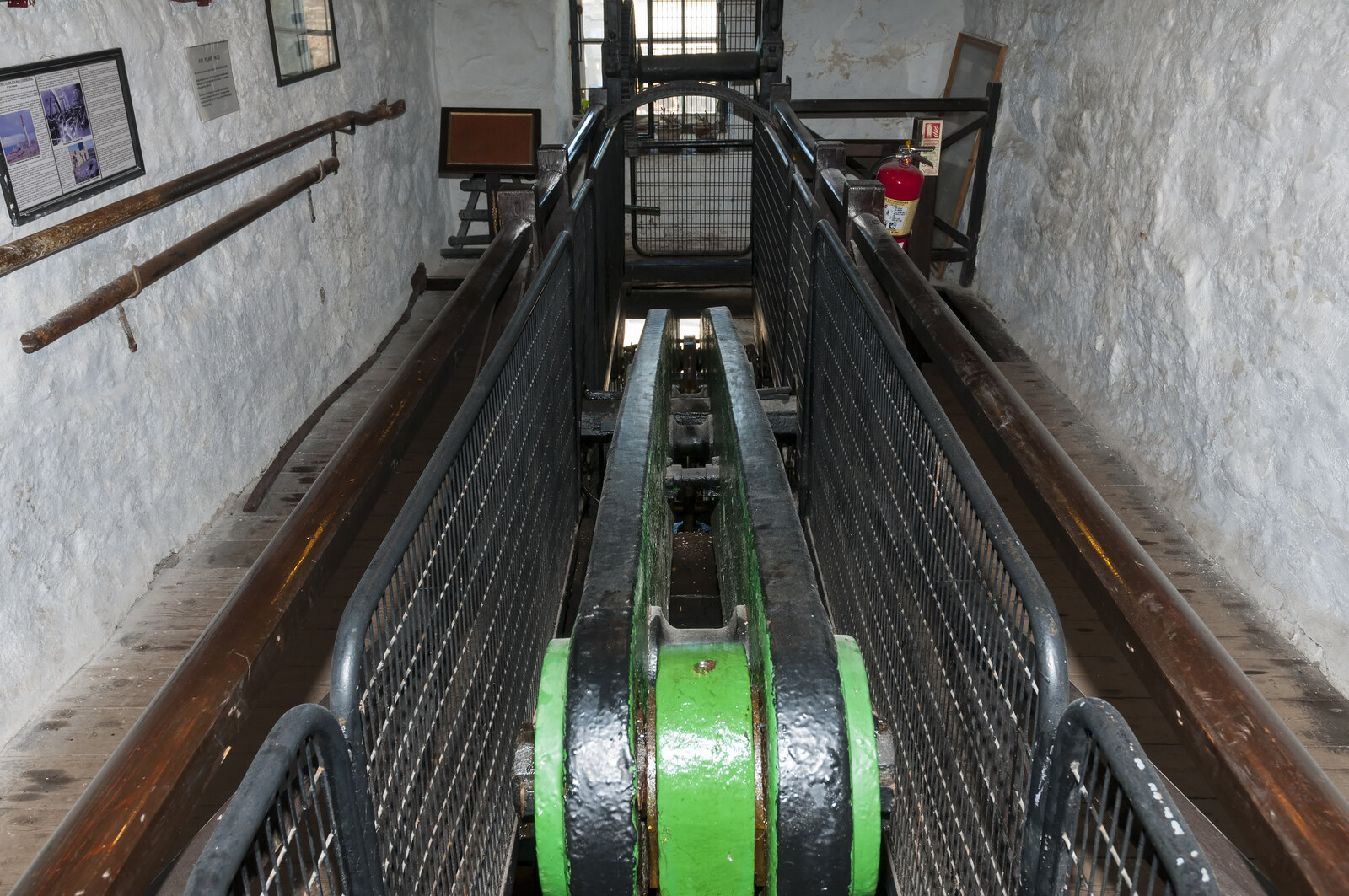
One of Levant's greatest treasures is its beam engine. Built around 1840 by Harvey's of Hayle, the engine was originally used as a winding engine, hauling ore from the deep workings of the mine to the surface — the mine's unusually crooked shafts made conventional cages and skips difficult to operate.
The engine's survival is remarkable. When Levant Mine closed, there were proposals to remove the engine to the Science Museum; instead, the Cornish Engines Preservation Committee secured its survival on site in 1935. The engine and engine house were donated to the National Trust in 1967, and during the 1980s and early 1990s volunteers known as the "Greasy Gang" restored the machinery — in 1992 the beam engine ran under steam once again, in the setting for which it was built.
The Man Engine Disaster
Levant is also associated with one of the most tragic events in Cornish mining history. In 1857 a man engine was installed in Daubuz Shaft — a system of moving rods and stationary platforms that let miners travel between the surface and the deep workings far more easily than climbing hundreds of metres of ladders.
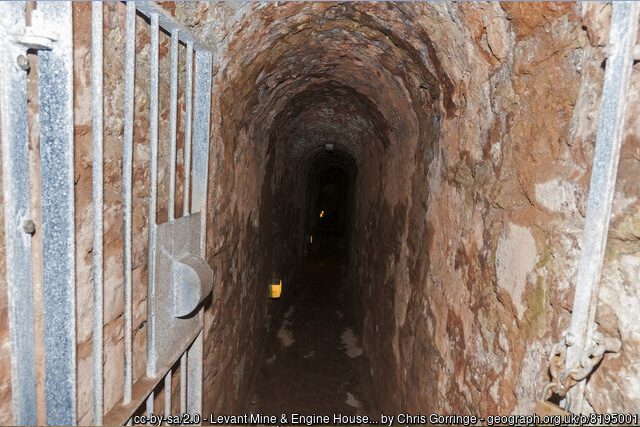
On 20 October 1919, a metal bracket connecting the man engine's rod and beam failed while miners were changing shifts. The machinery collapsed down the shaft while around 130–150 men were using it. Thirty-one miners lost their lives. The man engine was never replaced and the deepest workings at Levant were abandoned; today the Man Engine Tunnel forms part of the visitor experience, and the disaster is remembered on site.
The mine finally closed in 1930, its equipment sold for just £600, before dedicated preservationists secured the beam engine's future.
What to See
- The 1840 Beam Engine — the world's oldest Cornish beam engine still working in its original engine house.
- The Man Engine Tunnel — the technology used to transport miners into the deep workings, and the story of the 1919 disaster.
- The Skip Shaft — used to raise ore from the mine's extensive underground workings.
- The Tin Coast — follow the South West Coast Path through a landscape shaped by centuries of mining, with a chance of spotting the rare Cornish chough.
Visiting Information
- Address
- Trewellard, Pendeen, near St Just, Cornwall, TR19 7SX
- Access
- Access to the main site is by pre-booked guided tour only — admission cannot be guaranteed without booking. Tours last around 90 minutes and include underground access to the Man Engine Tunnel. As of the latest National Trust information, Levant is currently open for pre-booked tours on Mondays and Tuesdays only, following storm damage; check the official Levant Mine page for current days, tour times and booking before travelling.
- Admission
- Adult £14.00, child (5–17) £7.00, family (2 adults + up to 3 children) £35.00, family (1 adult) £21.00. Free for National Trust members (pre-booking still required); relatives of the 1919 disaster victims can visit free by calling ahead. Prices correct at time of writing — check the official site for current charges.
- Parking
- Free parking for Levant visitors at Geevor Mine (postcode TR19 7EW), from where a signed route along Maggie's Lane and the coast path leads to Levant (around 15–20 minutes over uneven terrain). Limited accessible parking is available at Levant itself, by prior arrangement only.
- Facilities
- Toilets, including an accessible toilet, are available on site when Levant is open. Refreshments, a shop and picnic areas are available at nearby Geevor Tin Mine.
- Accessibility
- Levant is a historic industrial site on rugged coastal terrain with uneven ground, steep slopes and steps. The Man Engine Tunnel includes a curved underground staircase without a handrail. An accessible toilet and an induction loop are available, and accessible parking can be arranged in advance. Assistance dogs are welcome on tours; other dogs on leads are welcome on the wider site.
- Contact
- 01736 786156 • levant@nationaltrust.org.uk
Opening times, admission prices and facility availability change seasonally — please confirm details on the official National Trust site before your visit.