Truro, Cornwall – Cornwall’s Cathedral City
Truro & the Fal
Cornwall Online | Mid Cornwall Towns and Villages | Truro | Falmouth | The Roseland Peninsula | St Mawes | St Anthony Head | St Just in Roseland | Portscatho | Gerrans | Philleigh | Ruan Lanihorne | Tregony | Veryan | Portloe | Portholland | Gorran Haven | Mevagissey | The Lost Gardens of Heligan | St Austell | Charlestown | Fowey | Golant | Lostwithiel | The Lizard Peninsula
On This Page
- Holidays in Truro
- Best Time to Visit
- Truro Cathedral
- Shopping, Markets & the City Centre
- Museum, Theatre & the Arts
- The River & Boat Trips
- History of Truro
- Key Buildings
- Notable People
- Walks from Truro
- Things to Do
- Beaches near Truro
- Local Events
- Places near Truro
- Visitor Information
- Stay & Explore
- Family Holidays & Short Breaks
- Frequently Asked Questions
Truro at a Glance
Cornwall’s only city (since 1877), at the head of the Truro River in the middle of the county. Truro Cathedral, built 1880–1910, with three spires; Georgian Lemon Street and Prince’s Street; the Cornwall Museum & Art Gallery and the Hall for Cornwall theatre. Farmers’ market on Lemon Quay every Wednesday and Saturday. Main line railway station, bus station and two park and ride sites. Boats down the Fal to Trelissick and Falmouth from Malpas, two miles away. Population about 21,000.
HOLIDAYS IN TRURO
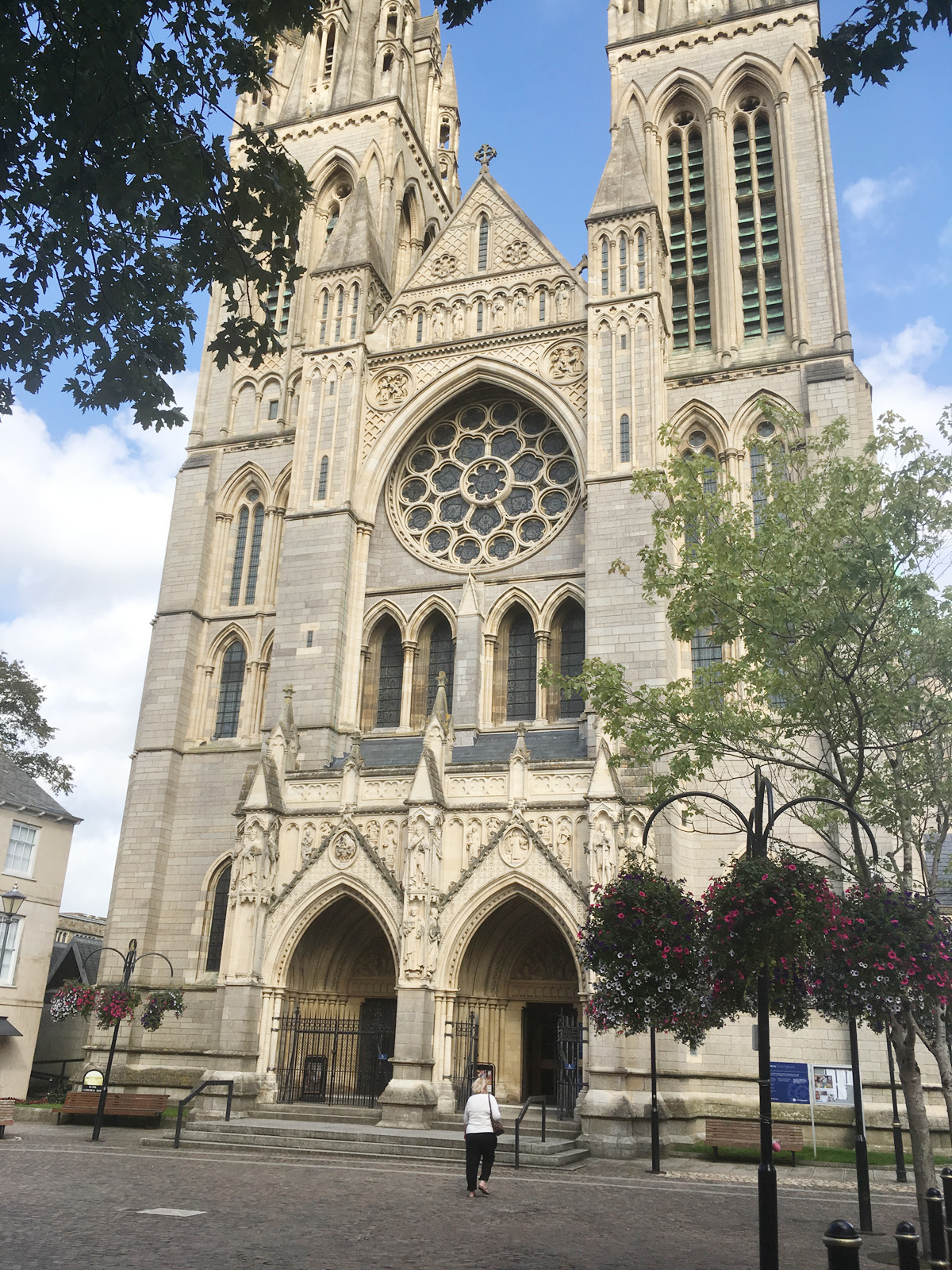
Truro is Cornwall’s only city and its capital in all but name. It stands almost exactly in the middle of the county, where the little Kenwyn and Allen rivers meet to form the Truro River, a tidal arm of the Fal estuary. Above the rooftops rise the three spires of Truro Cathedral, the first cathedral built on a new site in England since Salisbury in the 13th century – a landmark you can see from miles around.
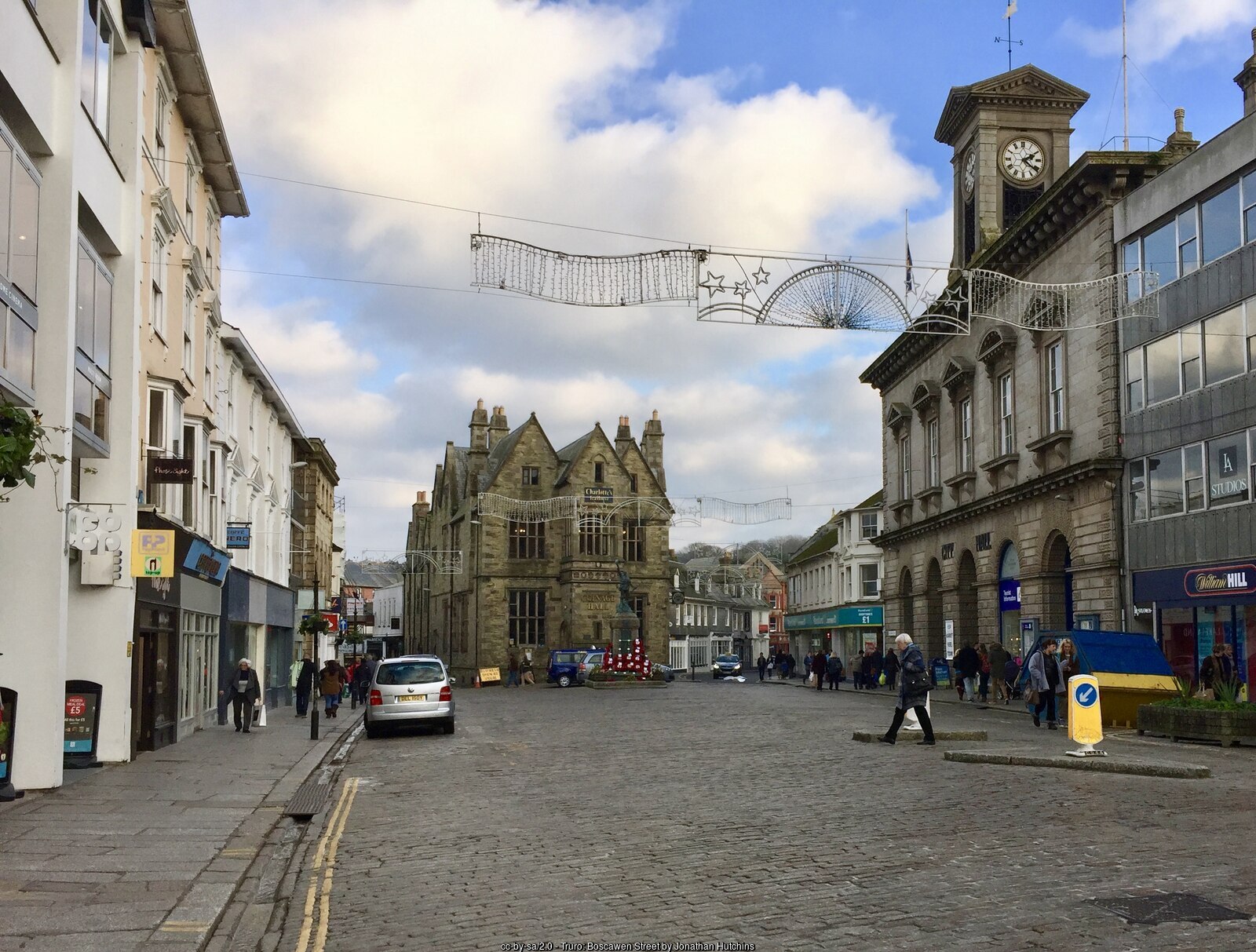
The city centre is compact and easy to explore on foot. Wide, cobbled Boscawen Street is the heart of it, with the Italianate City Hall and the Hall for Cornwall theatre on one side and narrow lanes and “opes” running off towards the cathedral. Elegant Georgian houses line Lemon Street and Prince’s Street, built for the merchants and mine owners who made Truro the fashionable centre of 18th-century Cornwall.
Truro is Cornwall’s main shopping centre, with a mix of high street names and independent shops, galleries, cafés and restaurants. Twice a week the farmers’ market fills Lemon Quay, and the square is the stage for the city’s food festival in September and its Christmas market in November and December.
For a rainy day there is the Cornwall Museum & Art Gallery, the county’s largest museum, with more than a million objects telling the story of Cornwall, its people and its art – and, of course, the cathedral itself, where the famous Festival of Nine Lessons and Carols was first held on Christmas Eve 1880.
With good road and rail links, Truro makes an excellent touring base. The north coast surf beaches at Perranporth, St Agnes and Porthtowan are about half an hour away, Falmouth and the Roseland Peninsula are close by to the south, and in summer you can leave the car behind and take a boat down the Fal past Trelissick to Falmouth.
Truro is lovely at any time of year and is busy all year round as Cornwall’s working city. For somewhere to stay, see Truro holiday cottages and holidays and short breaks in Truro.
Best Time to Visit Truro
As a city rather than a seaside resort, Truro is good to visit all year. Spring brings St Piran’s Day celebrations in early March and colour to Victoria Gardens and the great gardens nearby. Summer is the season for river trips, Sunday bandstand concerts in Victoria Gardens and days out on the beaches. In autumn the Truro Food Festival takes over Lemon Quay in late September. In winter the Christmas market, late-night shopping, the lights and the cathedral’s carol services make Truro one of the most festive places in Cornwall.
The city centre can be very busy on Saturdays and in the run-up to Christmas – the park and ride is the easiest way in.
↑ Back to topTRURO CATHEDRAL
For centuries Cornwall had no bishop of its own: since the 11th century it had been part of the Diocese of Exeter. The Diocese of Truro was created in 1876, and the first bishop, Edward White Benson, was consecrated in 1877. Benson set out at once to build a cathedral, and the leading Gothic Revival architect John Loughborough Pearson was chosen to design it.
The foundation stones were laid on 20 May 1880 by the Duke of Cornwall, later King Edward VII. The cathedral was built on the site of the old parish church of St Mary, in the crowded city centre, so there was no room for a close around it – it rises straight out of the surrounding streets. Pearson kept the south aisle of the medieval church, and it survives as St Mary’s Aisle, with its granite walls and wagon roof. While the work went on, services were held in a temporary wooden cathedral, and it was there that Benson held the first Festival of Nine Lessons and Carols at 10pm on Christmas Eve 1880, attended by about 400 people. The service is still held at the cathedral every Christmas, and is now sung around the world.
The choir, transepts and baptistery were completed and consecrated in 1887. Money then ran out, and building did not start again until 1898. Pearson died in 1897, and his son Frank Loughborough Pearson completed the cathedral to his father’s designs: the nave and central tower were finished in the early 1900s, and the two western towers in 1910, thirty years after the work began.
The cathedral is built in the Early English Gothic style, strongly influenced by the cathedrals of Normandy. It is one of only three cathedrals in the UK with three spires: the central spire is 250 feet (76 metres) high and the western spires 200 feet (61 metres). The outside is of Mabe granite and the inside of St Stephen’s granite, with dressings of Bath and Polyphant stone. Inside, the soaring vaulted nave, the rose windows and the Victorian stained glass – designed as a single sequence telling the story of the Christian faith – are breathtaking. Look out too for the great carved stone reredos behind the high altar, the 18th-century organ by John Byfield that was played in the temporary cathedral in 1880, and the monument to John Robartes (died 1614) and his wife, brought from the old church.
The cathedral is open to visitors every day except during some services, with guided tours, a café and a shop. Hearing the choir sing Evensong is a memorable way to experience it. The Chapter House was added in 1967.
↑ Back to top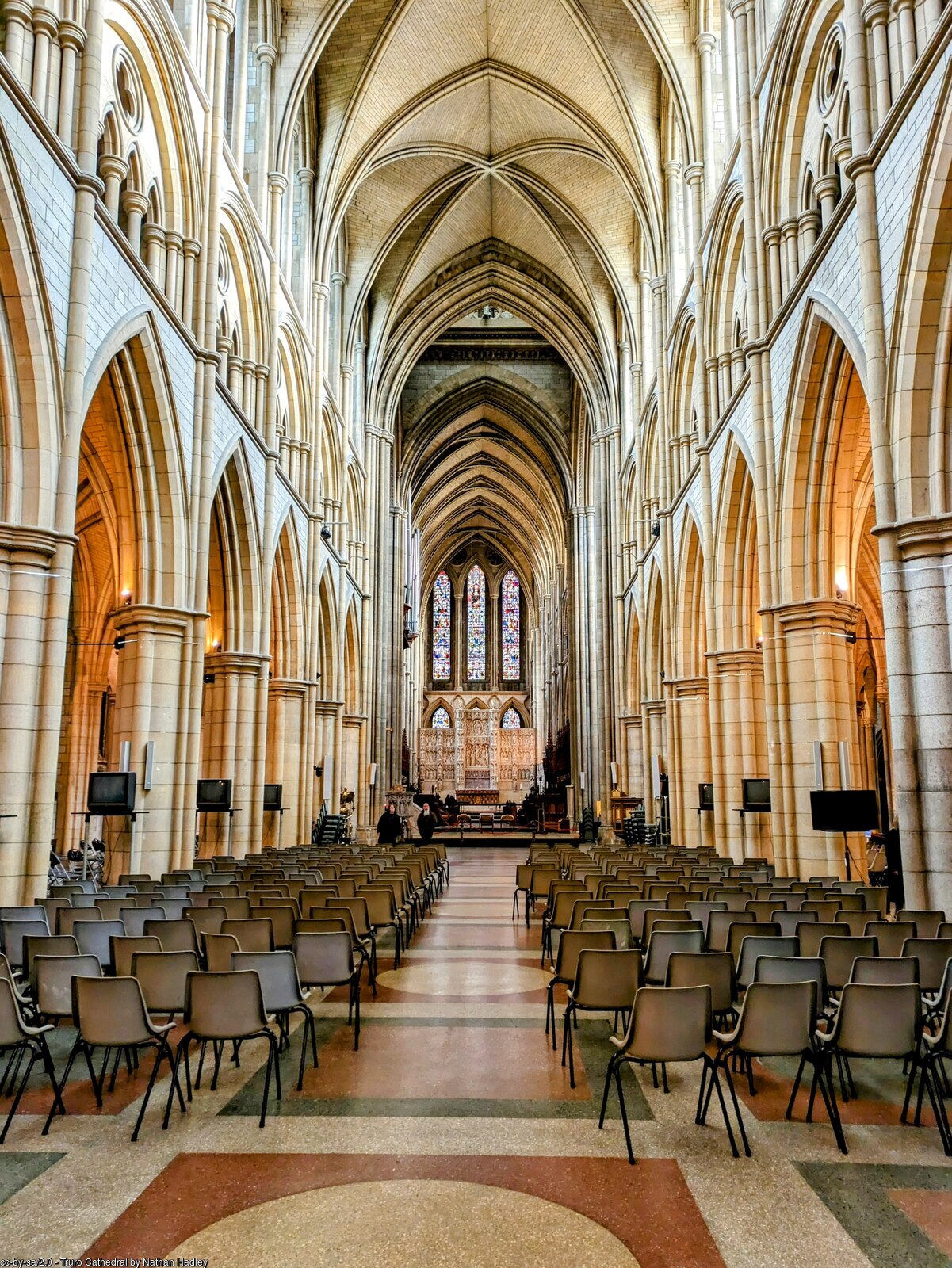
Truro Cathedral
Full name: Cathedral of the Blessed Virgin Mary
Diocese founded: 1876
Foundation stones: 20 May 1880
Consecrated: 1887
Completed: 1910
Architect: John Loughborough Pearson, completed by his son Frank
Central spire: 250 ft (76 m)
Listed: Grade I
Where: St Mary’s Street and High Cross, city centre
SHOPPING, MARKETS & THE CITY CENTRE
Truro has long been Cornwall’s market town and shopping centre, and its streets are a pleasure to wander. Boscawen Street, wide and cobbled, is the old market place of the city. From here Pydar Street, King Street and River Street lead off to the cathedral and the museum, and a network of narrow lanes such as Cathedral Lane and Kenwyn Street is full of independent shops, delis, galleries and cafés.
Lemon Quay, the big open square beside the Hall for Cornwall, was once a working quay on the river, which now runs in a culvert beneath it. Today it is the city’s gathering place: the Truro Farmers’ Market is held here every Wednesday and Saturday, the BIG Truro Market on the second Saturday of the month, and in summer and autumn the square fills with festivals and events. Next to it, the Pannier Market on Back Quay is an indoor market of small traders and stalls, open all year.
Climb Lemon Street from the quay to see some of the finest Georgian architecture in Cornwall: the street was built in Bath stone between the 1790s and the 1830s and named after the mine owner and MP William Lemon. At the top stands Lander’s Monument, a granite column put up in 1835 in memory of the explorer Richard Lander (see Notable People). Close to the river, Prince’s Street has the two grandest 18th-century town houses in the city, Princes House and the Mansion House.
Walk down to the riverside at the bottom of the city, where the old quays look out over the Truro River towards Boscawen Park and the creek to Malpas. Truro’s parks are a peaceful break from the shops: Victoria Gardens, laid out for Queen Victoria’s Diamond Jubilee, has a bandstand, lawns and colourful bedding, and Boscawen Park beside the river has playing fields and a children’s play area.
↑ Back to top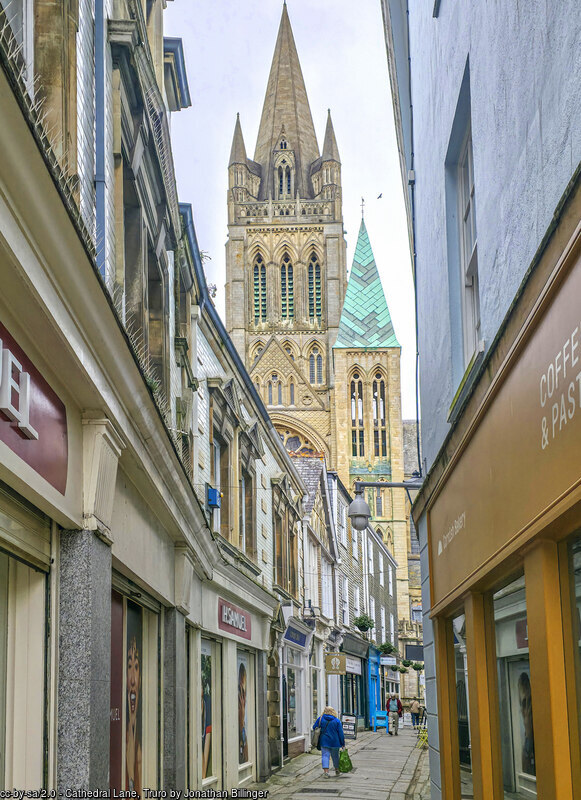
Markets in Truro
Farmers’ Market: Lemon Quay, every Wednesday and Saturday
BIG Truro Market: Lemon Quay, second Saturday of the month
Pannier Market: Back Quay, all year
Christmas Market: Lemon Quay, late November to Christmas Eve
MUSEUM, THEATRE & THE ARTS
The Cornwall Museum & Art Gallery on River Street is Cornwall’s oldest and largest museum. It was founded in 1818 by the Royal Institution of Cornwall and moved to its present home, a former bank and mining school, in 1919. For many years it was known as the Royal Cornwall Museum; after a major transformation it reopened under its new name in March 2025, with a new art gallery hung salon-style with hundreds of paintings.
The collections cover the whole story of Cornwall, from prehistoric gold and Bronze Age finds to the county’s world-famous minerals, its mining and maritime history, the Cornish language and the Newlyn and St Ives artists. Children love the Egyptian mummy of Iset, given to the Royal Institution in 1837. The museum has a lift to the upper galleries and a café next door, and further improvements to the galleries are planned for 2026–27.
The Hall for Cornwall on Boscawen Street is the county’s largest theatre. It occupies the old City Hall and market house, built in 1846–47 to designs by Christopher Eales, whose clock tower looks over Boscawen Street. The old market hall became a theatre in 1997, and after a three-year rebuild the venue reopened in 2021 with its new auditorium, the Cornwall Playhouse, staging touring shows, musicals, comedy, concerts and Cornish theatre, and a big Christmas show every year.
Truro also has a lively gallery scene, with independent galleries around Lemon Street, River Street and the city-centre lanes, and live music in pubs, the cathedral and the Hall for Cornwall throughout the year.
↑ Back to topCornwall Museum & Art Gallery
Founded: 1818, by the Royal Institution of Cornwall
In River Street since: 1919
Formerly: the Royal Cornwall Museum (renamed 2025)
Collections: more than a million objects – archaeology, minerals, art, Cornish history
Where: River Street, Truro TR1 2SJ
Hall for Cornwall
Building: City Hall, 1846–47, by Christopher Eales (Grade II*)
Theatre opened: 1997
Reopened after rebuild: 2021, with the Cornwall Playhouse auditorium
Where: Boscawen Street and Lemon Quay
THE RIVER, MALPAS & BOAT TRIPS
Truro was a port long before it was a city. Ships once tied up at the quays in the city centre to load tin and copper, and for centuries Truro and Falmouth argued over who controlled the river. Today the tidal Truro River winds south from the city past Boscawen Park to the waterside village of Malpas, two miles downstream, where it joins the Tresillian River and flows on into the Fal.
The Fal estuary is one of the most beautiful stretches of water in Cornwall, with steep wooded banks, quiet creeks, herons and egrets, and old ships laid up on the deep-water moorings. The best way to see it is by boat. From April to October, Enterprise Boats run between Malpas and Falmouth, calling at the National Trust’s Trelissick, where you can stop off to explore the gardens. A connecting bus (496) runs from the Museum stop in Truro to Malpas to meet the boats.
The river is tidal and very shallow at low water, so boats can only reach Truro itself on the highest tides. On selected dates through the season, Enterprise Boats run special Truro High Tide Cruises all the way from Falmouth to Truro’s Town Quay. Check the timetable before you travel: all sailings depend on the tides and the weather.
By car, the King Harry Ferry, a chain ferry across the Fal near Trelissick, is a lovely short cut from Truro to the Roseland Peninsula and St Mawes.
↑ Back to topOn the river
Enterprise Boats: Malpas – Trelissick – Falmouth, April to October
From Truro: 496 bus from the Museum stop to Malpas
High Tide Cruises: Falmouth to Truro Town Quay on selected dates
King Harry Ferry: car ferry across the Fal to the Roseland
Riverside walk: Truro to Malpas along the Malpas Road
HISTORY OF TRURO
The earliest records of Truro date from Norman times, when a castle was built on the hill now occupied by the Crown Court. In the 12th century the town was granted its first charter, confirmed by Reginald, Earl of Cornwall, and a market town grew up on the low ground between the rivers below the castle. The origin of the name is still debated. By the early 14th century Truro was one of Cornwall’s coinage towns, where the tin from the county’s mines had to be brought to be tested, stamped and taxed, and it prospered as a river port.
The Black Death and a slump in trade brought hard times in the 14th century, but the town recovered under the Tudors. In 1589 Elizabeth I granted a new charter, giving Truro an elected mayor and control over the port of Falmouth. In the Civil War the Royalists set up a mint in Truro in 1642, and in March 1646 the King’s army in Cornwall surrendered to Sir Thomas Fairfax at Tresillian, just outside the town. Falmouth’s charter of 1661 began a long dispute over the harbour, settled only in 1709, when the river was divided between the two towns. The traveller Celia Fiennes, who rode through Cornwall in 1698, found Truro in a sorry, run-down state.
The 18th century transformed Truro. Fortunes made in Cornish tin and copper mining were spent on fine town houses, and the town became the social capital of Cornwall, with balls and plays in the Assembly Rooms at High Cross. Lemon Street and its neighbours were laid out in Bath stone, and in 1818 the Royal Institution of Cornwall was founded here. The railway from Plymouth arrived in 1859, with the branch line to Falmouth following in 1863.
In 1876 the new Diocese of Truro was founded, and in 1877 Queen Victoria made Truro a city. The cathedral rose between 1880 and 1910. In the 20th century, as mining declined, Truro grew instead as Cornwall’s centre of government, law and shopping. On 6 August 1942 a surprise raid by two German fighter-bombers hit the Royal Cornwall Infirmary and the city, killing 14 people; they are remembered at a memorial in Victoria Gardens. The Crown Court opened in 1988, the Hall for Cornwall in 1997, and since 2009 Truro has been the headquarters of Cornwall Council, with Truro City Council carrying on the city’s own long tradition of local government.
↑ Back to topTruro – key dates
12th century – Norman castle and first charter
14th century – one of Cornwall’s coinage (tin) towns
1589 – charter of Elizabeth I; elected mayor
1642 – Royalist mint set up in Truro
1646 – Royalist army surrenders at Tresillian
1709 – harbour dispute with Falmouth settled
c.1760 – the Mansion House built
1790s–1830s – Lemon Street built
1818 – Royal Institution of Cornwall founded
1835 – Lander’s Monument erected
1846–47 – City Hall built
1859 – railway from Plymouth arrives
1876 – Diocese of Truro founded
1877 – city status
1880 – cathedral begun; first Nine Lessons and Carols
1910 – cathedral completed
1942 – air raid on the city
1988 – Crown Court opens
1997 – Hall for Cornwall opens
2025 – Cornwall Museum & Art Gallery reopens
Key Buildings
- Truro Cathedral – the Grade I listed Gothic Revival cathedral of 1880–1910 by John Loughborough Pearson, with St Mary’s Aisle surviving from the old parish church. See Truro Cathedral above.
- City Hall and the Hall for Cornwall, Boscawen Street – the Grade II* listed Italianate City Hall and market house of 1846–47 by Christopher Eales, now the county’s main theatre.
- Princes House and the Mansion House, Prince’s Street – two Grade II* listed Georgian town houses by the architect Thomas Edwards: Princes House (c.1740) for William Lemon, and the Mansion House (c.1760) for Thomas Daniell, faced in Bath stone given by his wife’s uncle, Ralph Allen.
- Lemon Street and Lander’s Monument – the finest Georgian street in Cornwall, built from the 1790s, with the Grade II* listed Doric column of 1835 by Philip Sambell at the top; the statue of Richard Lander by Neville Northey Burnard was added in 1852.
- The Assembly Rooms, High Cross – the facade of Truro’s Georgian assembly rooms and theatre, built in 1772 or the 1780s, with its Wedgwood-style plaques, facing the west front of the cathedral.
- Cornwall Museum & Art Gallery, River Street – the former bank and mining school that has housed the Royal Institution of Cornwall’s museum since 1919. See Museum, Theatre & the Arts above.
NOTABLE PEOPLE
- Samuel Foote (1720–1777) – the actor, playwright and theatre manager, famous for his comedy and mimicry, was born in Truro and baptised at St Mary’s on 27 January 1720. His father was mayor of Truro.
- Henry Martyn (1781–1812) – born in Truro and educated at the grammar school here, he became a chaplain and missionary in India and translated the New Testament into Urdu (Hindustani) and Persian. He is remembered in the cathedral.
- Richard Lander (1804–1834) and his brother John Lander (1807–1839) – explorers born at the Fighting Cocks Inn in Truro, the son of an innkeeper. In 1830 they traced the River Niger to its mouth in the Bight of Benin. Richard died of wounds on a later expedition in 1834, and Lander’s Monument at the top of Lemon Street was raised in his memory.
- Edward White Benson (1829–1896) – the first Bishop of Truro (1877–1883), who began the building of the cathedral and devised the Festival of Nine Lessons and Carols in 1880. He went on to become Archbishop of Canterbury.
WALKS FROM TRURO
The classic walk from the city is the riverside stroll to Malpas: from the bottom of the city, follow the Malpas Road along the Truro River past Boscawen Park to the village, about two miles each way, with views over the water to the woods on the far bank. Time it with the 496 bus or an Enterprise Boat for a one-way walk.
North of the city, the woods at Idless in the valley of the River Allen are a favourite with dog walkers, with waymarked paths through mixed woodland. Within the city, a gentle circuit takes in the cathedral, Lemon Street, Victoria Gardens and the riverside. For coastal walking, the South West Coast Path is a short drive away at St Agnes and Perranporth on the north coast, or across the Fal on the Roseland Peninsula.
- St Agnes walk – Cornwall Online
- St Anthony Head walk – Cornwall Online
- South West Coast Path
- Walking in Cornwall – Cornwall Online walks
THINGS TO DO IN AND AROUND TRURO
Truro is a city to enjoy at a gentle pace. Start at the cathedral, browse the shops and markets around Boscawen Street and Lemon Quay, admire the Georgian houses of Lemon Street, and finish with a meal or a show at the Hall for Cornwall.
For families, there are the museum’s Egyptian mummy and minerals, the play areas and riverside of Boscawen Park, and boat trips down the river. On rainy days, the cathedral, the Cornwall Museum & Art Gallery, the Pannier Market and the city’s shops and cafés keep everyone busy.
Further afield, Truro is within easy reach of some of Cornwall’s best gardens, its north coast beaches and the Roseland. Here are some of the best things to do in and around Truro.
- Visit Truro Cathedral and, if you can, hear the choir at Evensong – Truro Cathedral.
- Explore the Cornwall Museum & Art Gallery – Cornwall Museum & Art Gallery.
- Shop at the farmers’ market on Lemon Quay on a Wednesday or Saturday.
- See a show at the Hall for Cornwall, Cornwall’s biggest theatre.
- Walk Lemon Street and Prince’s Street to see Truro’s Georgian architecture.
- Take the boat from Malpas down the Fal to Trelissick and Falmouth – the river.
- Visit Trelissick, the National Trust garden and estate above the Fal – Trelissick.
- See the magnolias and camellias at Trewithen, near Probus – Trewithen Gardens.
- Spend a day on the beach at Perranporth or St Agnes on the north coast – Beaches near Truro.
- Play a round of golf at one of the courses near the city – Golf in Cornwall.
BEACHES NEAR TRURO
Truro is an inland city, but one of its great advantages as a holiday base is that beaches on both of Cornwall’s coasts are close at hand. In around half an hour you can be on the Atlantic surf beaches of the north coast, or on the calmer, sheltered beaches of the south coast around Falmouth and the Roseland – so whatever the wind and weather, there is usually somewhere good for a beach day.
On the north coast, about 8 to 10 miles away, Perranporth has three miles of golden sand, surfing and a lively village behind the beach. Nearby are Trevaunance Cove at St Agnes, Chapel Porth below the old mine engine houses, Porthtowan, popular with surfers, and Holywell Bay, with its dunes. To the south, Falmouth’s Gyllyngvase beach is about 11 miles away, and the quiet beaches of the Roseland Peninsula are reached across the King Harry Ferry.
For families, the big north coast beaches at Perranporth, Porthtowan and Holywell Bay have RNLI lifeguards in the summer season, along with beach cafés and car parks. Always swim between the red and yellow flags, watch the tide and check the RNLI website before you go.
- Perranporth – a huge sandy beach with surfing, rock pools at Chapel Rock and the village close by. Lifeguarded in summer.
- Trevaunance Cove, St Agnes – a sandy cove below the village, with a café, pub and surf.
- Porthtowan – a popular surf beach with sand at low tide and a lively beach scene.
- Chapel Porth – a National Trust cove below Wheal Coates engine house; the sand appears at low tide.
- Holywell Bay – a wide beach backed by dunes, with Gull Rocks offshore.
- Gyllyngvase, Falmouth – the south coast’s sheltered, family-friendly sandy bay.
See our Cornwall Beaches guide for parking, facilities and access at each one, and our Perranporth surf guide for the north coast surf.
↑ Back to topBeaches near Truro
North coast (about 8–10 miles): Perranporth, Trevaunance Cove, Chapel Porth, Porthtowan, Holywell Bay
South coast (about 11 miles): Gyllyngvase, Swanpool and the Falmouth beaches
Roseland: Porthcurnick, Towan and Pendower, via the King Harry Ferry
Lifeguards only on the main beaches and only in the summer season. Check the Met Office beach forecast and tide times before you go.
LOCAL EVENTS
- St Piran’s Day (around 5 March) – a parade through the city centre to the cathedral, with music, dancing and black-and-white flags, celebrating Cornwall’s patron saint.
- Bandstand concerts (Sundays, May to late summer) – free concerts by brass bands and other groups in Victoria Gardens, organised by Truro City Council.
- Truro air raid remembrance (6 August) – a short service in Victoria Gardens remembering the people killed in the air raid of 1942.
- Truro Food Festival (late September) – five days of Cornish food and drink on Lemon Quay, with chef demonstrations, producers’ stalls, street food and music.
- Christmas in Truro (late November to Christmas Eve) – the Christmas market on Lemon Quay, the Father Christmas Parade that launches the Wednesday late-night shopping evenings, and carol services in the cathedral, including the Nine Lessons and Carols.
- New Year’s Eve fireworks (31 December) – free displays over Lemon Quay.
Dates change from year to year – check Visit Truro, Truro City Council events and Truro Cathedral for this year’s events.
↑ Back to topPLACES NEAR TRURO
- Malpas and St Clement – quiet waterside villages on the creeks just downstream from the city.
- Falmouth – the great maritime town at the mouth of the Fal, about 11 miles away by road, rail or boat.
- St Agnes and Perranporth – north coast villages with surf beaches and old mine engine houses, about 8 to 10 miles away.
- The Roseland Peninsula, St Mawes and Tregony – peaceful villages, creeks and beaches to the south-east, via the King Harry Ferry or Tregony.
- St Austell and Mevagissey – china clay country, the Eden Project, Heligan and the fishing harbour of Mevagissey to the east.
- Newquay – Cornwall’s surf capital on the north coast.
Mid Cornwall towns & villages
Truro, Falmouth, the Roseland, St Austell, Fowey and the north coast villages – see the Mid Cornwall index.
VISITOR INFORMATION
Parking & EV Charging
The easiest way into the city is the Truro Park and Ride, with large car parks at Langarth on the western side of the city off the A390 (TR4 9AN) and Tregurra on the eastern side near the junction of the A39 and A390 (TR1 1RH); buses run on a loop between the two through the city centre. Cornwall Council long-stay car parks are at Garras Wharf (TR1 2TN), Edward Street (TR1 3AJ) and Moresk (TR1 1DW), with a short-stay car park at Old Bridge Street (TR1 2AH). The upper decks of Moorfield multi-storey car park are closed. There are also private car parks at Lemon Quay, Kenwyn Street and the railway station.
Electric vehicle charging:
- Langarth Park and Ride – fast chargers (Evolt)
- Tregurra Park and Ride – 7kW chargers
- Tesco, Garras Wharf – fast and rapid chargers (Pod Point)
- New County Hall, Treyew Road – 22kW chargers
Bus & Train
Truro station is on the main line, with trains to Penzance, Plymouth, Exeter and London Paddington, including the Night Riviera sleeper, and is the junction for the Maritime Line to Falmouth. It is about 15 minutes’ walk from Lemon Quay. Truro bus station, by Lemon Quay, has buses to Falmouth, Newquay, St Austell, Perranporth, St Agnes, Redruth, Camborne, Penzance and St Ives, and the 496 to Malpas for the boats. Check timetables before you travel.
Facilities & Supermarkets
As Cornwall’s main shopping centre, Truro has every service: banks, chemists, post office, a library and the Truro Visitor Information & Shop on Boscawen Street, which also sells tickets for the Enterprise Boats. There is a Changing Places toilet at the Green Street public toilets. Supermarkets:
- Tesco – Garras Wharf, Truro TR1 2TN
- Sainsbury’s – Treyew Road, Truro TR1 3XL
- Lidl – Treyew Road Retail Park, Truro TR1 2TH
- Aldi – Highertown, Truro TR1 3PZ
- Waitrose – Newquay Road, Truro TR1 1RH
- Iceland – Fairmantle Street, Truro TR1 2EQ
Cafés & Restaurants
Truro has a wide choice of places to eat and drink, from cafés, bakeries and delis in the lanes around the cathedral to pubs, wine bars and restaurants on Kenwyn Street, River Street and Lemon Quay, many using local Cornish produce. The cathedral and the Hall for Cornwall have their own cafés, and the farmers’ market is the place for Cornish pasties, cheese and cakes. Booking ahead is wise on Friday and Saturday evenings and in the weeks before Christmas.
Health
GP practices at Truro Health Park, Infirmary Hill, TR1 2JA, include the Lander Medical Practice (01872 243700) and Three Spires Medical Practice (01872 272272). The Royal Cornwall Hospital at Treliske, on the western edge of the city (TR1 3LJ), is Cornwall’s main hospital, with the county’s major Emergency Department. Call NHS 111 for urgent advice and 999 in an emergency.
Disabled Access
The main shopping streets in the centre are fairly level and largely pedestrianised, though some are cobbled and the streets climb towards Lemon Street and Highertown. The park and ride buses are accessible, and there is a Changing Places toilet at Green Street. The cathedral has level access to the nave, and the Cornwall Museum & Art Gallery has a lift to its upper galleries. Lemon Quay hosts the markets on level ground.
Vets & Dogs
Dogs are welcome on the Enterprise Boats, in Victoria Gardens and Boscawen Park on a lead, and in many of Truro’s pubs and cafés. Summer dog restrictions apply on many of the lifeguarded beaches nearby – check before you go. Local vets include Highertown Vets, 23 Highertown, TR1 3QE, and Clifton Villa Veterinary Surgery, Coronation Terrace, TR1 3HJ (01872 273694).
National Trust & English Heritage
The National Trust cares for Trelissick, the garden and estate above the Fal a few miles south of Truro, reached by road or by boat, and Trerice, the Elizabethan manor house near Newquay. On the coast, the Trust looks after Chapel Porth and St Agnes Head. English Heritage cares for Pendennis Castle in Falmouth and St Mawes Castle.
Attractions
The cathedral and museum in the city, great gardens all around, and the Eden Project and Heligan within half an hour or so by car.
STAY & EXPLORE NEAR TRURO
Local Attractions
Official Information
FAMILY HOLIDAYS & SHORT BREAKS IN TRURO
Family holidays in Truro give you the best of both worlds – a city with shops, a theatre, a museum and plenty of places to eat, right in the middle of Cornwall, with beaches on both coasts, boat trips down the Fal and some of the county’s finest gardens all within easy reach. When the weather turns, there is always something to do in the city.
Choose a cottage in the city within walking distance of the cathedral, a barn conversion in the countryside around, or somewhere by the water on the creeks of the Fal. Browse Truro holiday cottages, or holidays and short breaks in Truro for every type of accommodation.
Short breaks in Truro are a treat at any time of year – a weekend of shopping and the theatre, the food festival in September, or a festive break with the Christmas market and carols in the cathedral. Booking direct with the owner means no agency fees.
↑ Back to topFREQUENTLY ASKED QUESTIONS ABOUT TRURO
Truro is in the middle of Cornwall, at the head of the Truro River, a tidal arm of the Fal estuary. It is about 11 miles north of Falmouth, and the beaches of both the north and south coasts are within about half an hour by car.
Yes. Truro is Cornwall’s only city. It was granted city status by Queen Victoria in 1877, the year after the Diocese of Truro was founded, and its cathedral was built between 1880 and 1910.
Truro Cathedral was designed by John Loughborough Pearson. The foundation stones were laid in 1880, the first part was consecrated in 1887, and the building was completed with the western towers in 1910, finished by Pearson’s son Frank. Its central spire is 250 feet (76 metres) high.
The easiest option is the Truro Park and Ride, from Langarth on the western side of the city (TR4 9AN) or Tregurra on the eastern side (TR1 1RH). In the city, Cornwall Council’s long-stay car parks are at Garras Wharf (TR1 2TN), Edward Street (TR1 3AJ) and Moresk (TR1 1DW), with short-stay parking at Old Bridge Street.
Yes. Truro station is on the main line, with direct trains to Penzance, Plymouth, Exeter and London Paddington, including the Night Riviera sleeper. It is also the junction for the Maritime Line to Falmouth. The station is about 15 minutes’ walk from the city centre.
Yes, in season. From April to October Enterprise Boats sail between Malpas, two miles from Truro, and Falmouth, calling at Trelissick. The 496 bus runs from the Museum stop in Truro to Malpas to meet the boats, and on selected high tides special cruises reach Truro’s Town Quay. Sailings depend on the tides and weather, so check the timetable first.
In Truro. Bishop Edward White Benson devised the Festival of Nine Lessons and Carols, and the first service was held at 10pm on Christmas Eve 1880 in the temporary wooden cathedral used while Truro Cathedral was being built. It is still held at the cathedral every Christmas.
Visit Truro Cathedral, explore the Cornwall Museum & Art Gallery on River Street, browse the Pannier Market and the city’s shops, galleries and cafés, or see a show at the Hall for Cornwall.
Truro is inland. The nearest north coast beaches are Perranporth, Trevaunance Cove at St Agnes and Porthtowan, about 8 to 10 miles away; on the south coast, Gyllyngvase in Falmouth is about 11 miles away.
Cornwall Online | Mid Cornwall Towns and Villages | Truro | Falmouth | The Roseland Peninsula | St Mawes | St Anthony Head | St Just in Roseland | Portscatho | Gerrans | Philleigh | Ruan Lanihorne | Tregony | Veryan | Portloe | Portholland | Gorran Haven | Mevagissey | The Lost Gardens of Heligan | St Austell | Charlestown | Fowey | Golant | Lostwithiel | The Lizard Peninsula