Lostwithiel, Cornwall – Medieval Town on the River Fowey
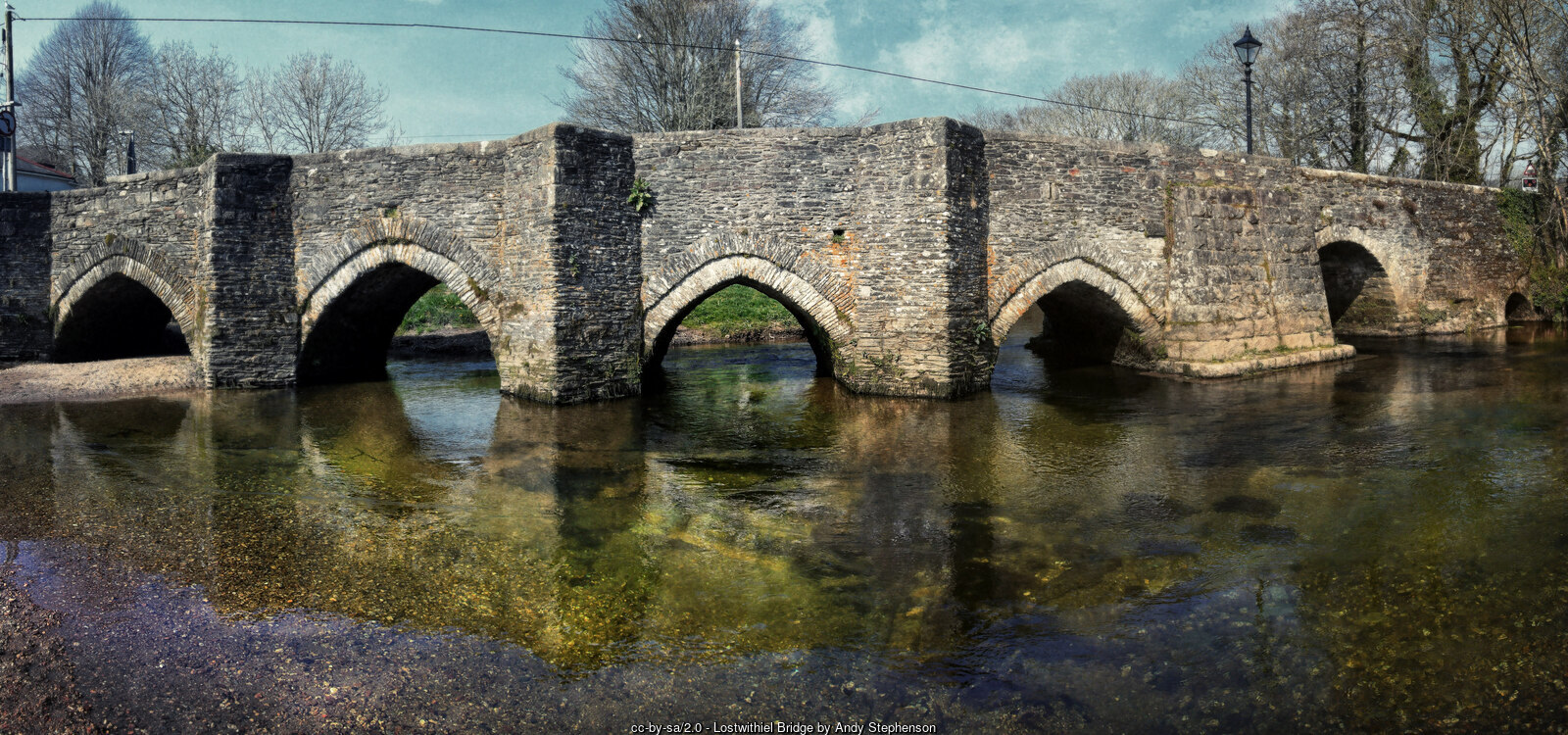
Lostwithiel & the Fowey Valley
Cornwall Online | South East Cornwall Towns and Villages | Looe | Talland Bay | Polperro | Polruan | Fowey | Golant | Lostwithiel | Mevagissey | Whitsand Bay & The Rame Peninsula | Kingsand | Cawsand | Mount Edgcumbe Country Park | Torpoint | St Germans | Saltash | Liskeard | Siblyback Lake - Water Park | Minions - Hurlers - Bodmin Moor | St Neot | St Cleer | Callington | Gunnislake | Calstock | Cardinham Woods - Walking & Cycle Trails | Launceston |
On This Page
- Holidays in Lostwithiel
- Best Time to Visit
- History of Lostwithiel
- Key Buildings
- Lostwithiel Museum
- The River Fowey & the Old Port
- The Battle of Lostwithiel, 1644
- Restormel Castle & Lanhydrock
- Notable People
- Walks from Lostwithiel
- Things to Do
- Local Events
- Beaches near Lostwithiel
- Places near Lostwithiel
- Visitor Information
- Stay & Explore
- Family Holidays & Short Breaks
- Frequently Asked Questions
Lostwithiel at a Glance
Medieval stannary town at the head of the tidal River Fowey, once the administrative capital of Cornwall. The medieval bridge, the Duchy Palace and St Bartholomew’s Church; antique and independent shops; free parking; main line railway station. Restormel Castle is a mile away and Lanhydrock about three miles; Fowey, Bodmin and the Eden Project are all within easy reach.
HOLIDAYS IN LOSTWITHIEL
Sailing up the River Fowey more than a century ago, a travel writer described the approach to Lostwithiel as “the loveliest inland scenery in Cornwall”. Whether you arrive by river, rail or road, the description still holds true: the little town sits where the tidal river meets the woods, in one of the prettiest valleys in Cornwall.
Lostwithiel was a “new town” more than 800 years ago, founded by the Norman lords of Restormel Castle as a port for the export of tin. In the 13th century the Earls of Cornwall made it the seat of their government, and for a time it was in effect the capital of Cornwall. The medieval bridge, the Duchy Palace and the church of St Bartholomew, with its unusual lantern spire, still stand as reminders of those days – John Betjeman is reputed to have said there is “history in every stone” in Lostwithiel.
Today it is a quiet, friendly market town tucked just off the A390. Its narrow streets are full of antique shops, galleries and independent businesses selling everything from fine furniture and collectables to contemporary arts and crafts, and there are pubs, cafés and a riverside park beside the Fowey. Parking is free, which makes it a pleasant place for a wander and a browse.
For families, Lostwithiel is a peaceful, central base with plenty within a short drive. Picnic in Coulson Park by the river, explore the ramparts of Restormel Castle, spend a day at Lanhydrock or the Eden Project, and head down to the coast at Fowey and St Austell Bay for the beaches.
Lying almost in the centre of Cornwall, with a main line railway station, the town is well placed for exploring both coasts and Bodmin Moor – an ideal centre for a holiday. For somewhere to stay, see Lostwithiel holiday cottages and holidays and short breaks in Lostwithiel.
Best Time to Visit Lostwithiel
Spring brings bluebells to the woods around Restormel, the gardens at Lanhydrock into flower and the free LostFest festival in May. Summer is the season for Carnival Week, riverside picnics and days on the coast. Autumn and winter are good for antique hunting, Christmas shopping and quiet walks along the river, and Lostwithiel’s free parking and indoor attractions nearby make it a good choice on a rainy day.
↑ Back to topHISTORY OF LOSTWITHIEL
The name Lostwithiel (Lostwydhyel in Cornish) is usually explained as “the place at the tail of the woodland”, and looking down the valley from Restormel Castle it is easy to see why. The town received its charter in the late 12th century from Robert de Cardinham, lord of Restormel, and was laid out as two adjoining boroughs – Penknight to the south of South Street and Lostwithiel to the north – which were formally united in 1268.
In the 1260s Richard, Earl of Cornwall, brother of Henry III, acquired Restormel, Lostwithiel and Fowey, and his son Edmund, Earl of Cornwall made the town the centre of his government. He built the great complex now known as the Duchy Palace from about 1292, with its exchequer, coinage hall and stannary courts, and is said to have called Lostwithiel his “Lily of the Valley” and “Fairest of Small Cities”. When the Duchy of Cornwall was created in 1337, the palace became the Duchy’s administrative centre, and the Stannary Parliament of Cornish tinners met there until 1751.
Ironically, tin, the source of the town’s wealth, also caused its decline. From the 14th century, waste washed down from tin streaming on the moors silted up the river, and larger ships could no longer reach the quay, so trade moved downriver to Fowey.
The town suffered badly in the Civil War, when the Parliamentarian army of the Earl of Essex was trapped here in August 1644 and the church and palace were damaged. There was much rebuilding in the late 17th and 18th centuries, which gave Fore Street and Queen Street many of their fine houses. The Cornwall Railway arrived in 1859, and from 1869 a branch line ran down the river to the china clay jetties at Fowey.
↑ Back to topLostwithiel – key dates
Late 12th century – town charter from Robert de Cardinham
1268 – Lostwithiel and Penknight united
c.1292 – Edmund, Earl of Cornwall, builds the Duchy Palace
1337 – the Duchy of Cornwall created
14th century – church spire built; river begins to silt up
1644 – Battle of Lostwithiel
1751 – last Stannary Parliament held in the town
1859 – Cornwall Railway opens
1869 – branch line to Fowey opens
2013 – restored Duchy Palace reopened
Key Buildings
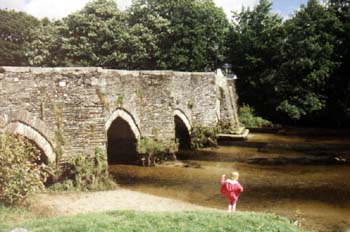
- Lostwithiel Bridge – the medieval stone bridge over the River Fowey, with its pointed arches, built mainly in the 14th and 15th centuries; the Parliamentarians tried and failed to blow it up in 1644.
- The Duchy Palace, Quay Street – the surviving part of Edmund, Earl of Cornwall’s great hall of about 1292, Grade I listed and regarded as Cornwall’s most important secular medieval building. Rescued by the Prince’s Regeneration Trust and reopened in 2013, it is now cared for by the Cornwall Buildings Preservation Trust.
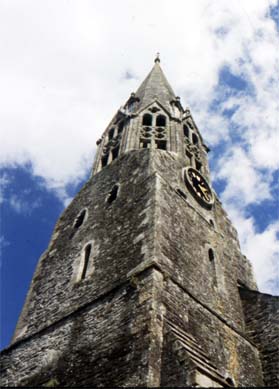
- St Bartholomew’s Church – the Grade I listed parish church, with a 13th-century tower and an early 14th-century octagonal lantern and spire unique in Cornwall, a clerestory and a remarkable carved 14th-century font.
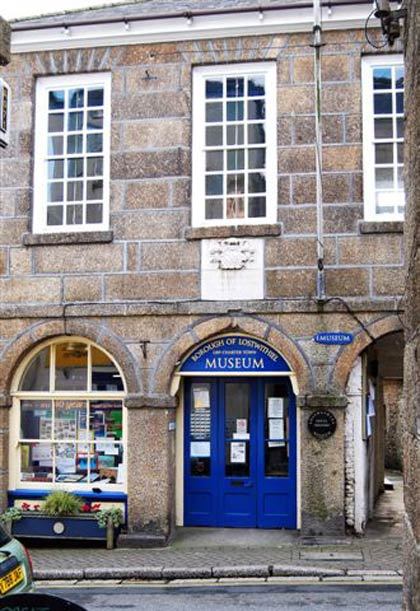
- The Guildhall and Lostwithiel Museum, Fore Street – the Georgian former Corn Exchange, with the town council chamber above and the old town gaol at the back. See Lostwithiel Museum below.
- Restormel Castle – the circular Norman shell keep on the hill a mile north of the town, cared for by English Heritage.
LOSTWITHIEL MUSEUM
Billed as “the biggest little museum in Cornwall”, Lostwithiel Museum is the best place to discover the story of the town. It is housed at 16 Fore Street in the Georgian former Corn Exchange, below the Guildhall; the back room is older still and was once the town gaol. Over the years the building has also served as a schoolroom, a butcher’s and a magistrates’ court.
The collection has been given by local people over many years: domestic objects, craft tools and farm implements, medals and minerals, and a fine collection of old photographs recording the life of the town since the early days of photography. The star exhibit is the town’s 18th-century hand-pumped fire engine, given to Lostwithiel by the Earl of Mount Edgcumbe in 1761 and worked by teams of eight men pumping its wooden poles. Among the most poignant items is the cloak of Town Sergeant Joseph Burnett, who was murdered while on patrol in 1814.
The museum is run entirely by volunteers. As well as the displays it sells local history booklets and publishes its own journal, copies of photographs from the collection can be ordered, and volunteers lead guided town walks during the season.
↑ Back to topLostwithiel Museum – visitor information
Where: 16 Fore Street, Lostwithiel
Open: from spring to the end of October, Monday to Saturday; closed in winter, but groups are welcome out of season by arrangement
Admission: free, donations welcome
Access: wheelchair access to the main display room
Parking: free car parks nearby
Website: lostwithielmuseum.org
THE RIVER FOWEY & THE OLD PORT
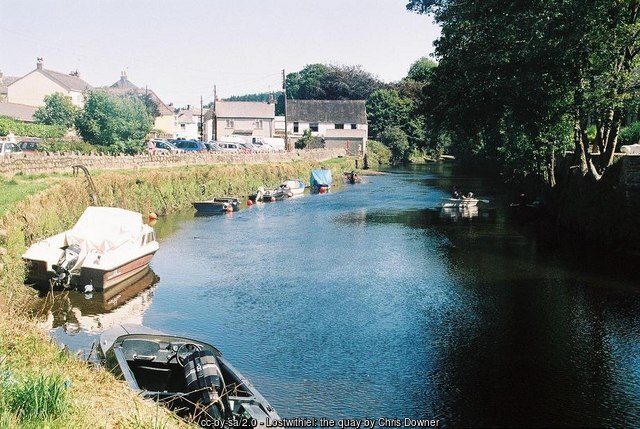
Lostwithiel stands at the tidal limit of the River Fowey. In the Middle Ages the river here was wide and deep enough for sea-going ships to tie up at the quay and load tin for France and the Mediterranean, and the town was one of the busiest ports in Cornwall.
As the river silted up, the port died, and the quays were left to small boats and barges. Today there is no harbour, but the river is still at the heart of the town. Quay Street runs beside it to Coulson Park, a riverside green with picnic spots, and beyond lies the marshy Shirehall Moor. At high tide you can paddle a canoe or kayak down the estuary towards Golant and Fowey – always plan around the tide, as the river drains to mud at low water.
The railway and china clay today: Lostwithiel station is on the main line, and the branch line that leaves it to run down the west bank of the river is still busy with china clay trains taking clay from the pits around St Austell to the deep-water jetties at Fowey for export. Passenger trains on the branch ended in 1965.
↑ Back to topThe river at a glance
River: Fowey, tidal up to Lostwithiel
Old port: tin exports in the Middle Ages
Decline: silting from tin streaming, from the 14th century
Today: Coulson Park and riverside walks
Railway: main line station; clay trains to Fowey Docks
THE BATTLE OF LOSTWITHIEL, 1644
In the summer of 1644 the Parliamentarian commander, the Earl of Essex, marched into Cornwall hoping to cut off the Royalists’ supply of Cornish tin, and made Lostwithiel his headquarters, placing troops in Restormel Castle and on the hills around. King Charles I followed him west, set up his own headquarters at Boconnoc, three miles east, and closed the trap.
On 21 August Sir Richard Grenville’s Cornish Royalists attacked from the north and took Restormel Castle, then seized Respryn Bridge and Lanhydrock, so that the Royalists held both sides of the river. Squeezed between Lostwithiel and Fowey, the Parliamentarians made a final stand on the ridge at Castle Dore at the end of August. Essex escaped by boat to Plymouth, and on 2 September his infantry surrendered – the last great Royalist victory of the war.
The town paid a heavy price. Essex’s men looted Lostwithiel as they withdrew, damaged the church – Royalists claimed they christened a horse “Charles” in the font – and tried to blow up the bridge. The Duchy Palace was badly damaged, and the townspeople were left starving. Both battlefields are now on Historic England’s Register of Historic Battlefields.
↑ Back to top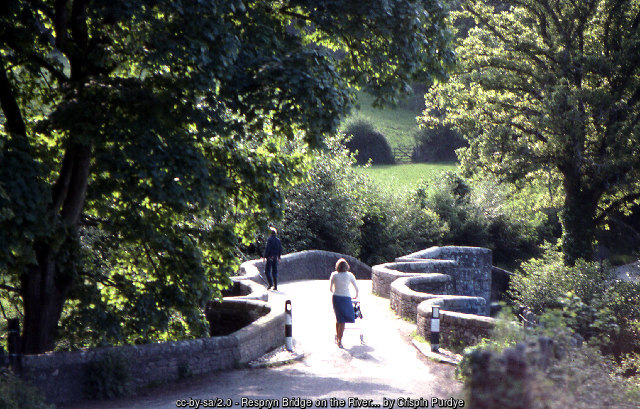
RESTORMEL CASTLE & LANHYDROCK
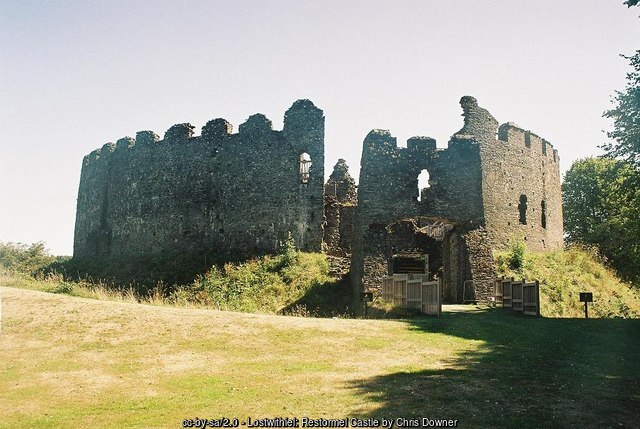
Restormel Castle, a mile north of the town, is one of the most remarkable castles in Britain – a perfectly circular Norman shell keep on a mound above the Fowey valley. Built by the lords who founded Lostwithiel, it was rebuilt in stone by Robert de Cardinham and later became a luxurious residence of the Earls of Cornwall, with piped water and fine chambers. The Black Prince stayed here as Duke of Cornwall. Ruined since the 16th century, it was briefly garrisoned in 1644. It is cared for by English Heritage, and the views from the walls are superb.
About three miles north, the National Trust’s Lanhydrock is one of Cornwall’s great houses: a Victorian country house rebuilt after a fire in 1881 behind its 17th-century gatehouse, with servants’ quarters, kitchens and family rooms to explore, formal gardens, woodland and miles of walking and cycle trails. The estate stretches down to the river at Respryn Bridge.
Next to Restormel Castle, the Duchy of Cornwall Nursery is a large garden centre with a café and The Orangery restaurant, opened by the Prince of Wales in 2023, looking out towards the castle.
↑ Back to top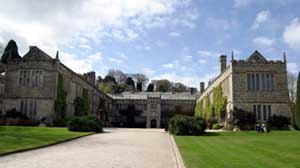
NOTABLE PEOPLE
- Robert de Cardinham (died c.1225) – lord of Restormel, who granted Lostwithiel its charter and rebuilt the castle in stone.
- Edmund, Earl of Cornwall (1249–1300) – who made Lostwithiel the centre of his government, built the Duchy Palace and is said to have called the town his “Lily of the Valley”.
- Edward, the Black Prince (1330–1376) – the first Duke of Cornwall, who made the Duchy Palace his administrative centre in Cornwall and stayed at Restormel Castle.
- Sir Richard Grenville (1600–1659) – the Royalist commander who captured Restormel Castle and Respryn Bridge during the Battle of Lostwithiel in 1644.
WALKS FROM LOSTWITHIEL
There are splendid walks in every direction. A gentle riverside walk follows Quay Street into Coulson Park and on beside the Fowey, and the lane north of the town climbs to Restormel Castle through farmland and woods, with views back over the valley. The Lostwithiel Heritage Highlights town trail links the bridge, the Duchy Palace, the church and the Guildhall.
Further afield, Lanhydrock has miles of woodland and riverside paths, and the creek-side village of Lerryn, a few miles south-east, is the start of lovely woodland walks along the Lerryn river – said to have inspired the Wild Wood in The Wind in the Willows. Downriver, the Saints’ Way passes through Golant on its way to Fowey.
- Lerryn walk – Cornwall Online
- Fowey to Gribbin Head walk – Cornwall Online
- Lostwithiel Heritage Highlights town trail
- Walking in Cornwall – Cornwall Online walks
THINGS TO DO IN AND AROUND LOSTWITHIEL
Lostwithiel is a town for browsing and exploring. Its antique shops specialise in quality furniture, curios and collectables, ceramics, Victoriana and glorious junk, and other shops sell contemporary arts and crafts, paintings and textiles – explore the hidden lanes to find some of them.
For families, there is Coulson Park by the river, Restormel Castle’s walls to walk round and Lanhydrock’s gardens and trails. On rainy days, Lostwithiel Museum, Lanhydrock House, the Eden Project’s biomes and the Bodmin & Wenford Railway are all close by. Here are some of the best things to do in and around Lostwithiel.
- Visit Restormel Castle – Restormel Castle.
- Spend a day at Lanhydrock – Lanhydrock.
- Hunt for antiques in Fore Street, Queen Street and Quay Street.
- Follow the town trail past the bridge, the Duchy Palace and St Bartholomew’s Church.
- Visit Lostwithiel Museum in the old Corn Exchange.
- Picnic in Coulson Park beside the River Fowey.
- Explore Boconnoc and the Civil War country to the east – Boconnoc and district.
- See the Eden Project – Eden Project.
- Ride the Bodmin & Wenford Railway – Bodmin & Wenford Railway.
- Head down the river to Golant and Fowey, and play a round at a nearby course – Golf in Cornwall.
LOCAL EVENTS
- Rotary Club Beer Festival (March) – a charity beer festival at the Community Centre.
- LostFest (May) – a hugely popular free festival of music and street entertainment in the heart of the town, run entirely by volunteers.
- Lostwithiel Carnival Week (late July) – a week of family events, races, music and street parties, ending with the carnival procession.
- Advent window trail (December) – homes and shops around the town decorate their windows in the run-up to Christmas.
- Markets and fairs (through the year) – a regular farmers’ market at the Scout Hut by the main car park and antiques and collectors’ fairs at the Community Centre.
Dates change from year to year – check the Lostwithiel town website for this year’s events.
↑ Back to topBEACHES NEAR LOSTWITHIEL
Lostwithiel is inland, but some of the south coast’s best family beaches are only around 15 minutes away. Sheltered coves and long sands give plenty of variety, and some of the busier beaches have RNLI lifeguards in summer – check the RNLI website before you go.
- Par Sands – a big, flat sandy beach with a car park and café, ideal for young children.
- Polkerris – a tiny sheltered harbour beach on St Austell Bay.
- Readymoney Cove – Fowey’s little sandy beach below St Catherine’s Castle.
- Polridmouth Cove – a secluded cove on the coast path near Gribbin Head.
See our guides to the beaches around Fowey and the beaches of St Austell Bay.
↑ Back to topPLACES NEAR LOSTWITHIEL
- Golant – a peaceful riverside village about four miles downriver.
- Fowey – the historic harbour town at the mouth of the river, about six miles south.
- Lerryn – a pretty creek-side village with woodland walks, a few miles south-east.
- Boconnoc – the great estate three miles east, where Charles I made his headquarters in 1644.
- Bodmin – the old county town, about six miles north.
- St Austell and Charlestown – the clay country town and Georgian harbour to the west.
- Liskeard – the market town on the edge of Bodmin Moor to the east.
VISITOR INFORMATION
Parking & EV Charging
Parking in Lostwithiel is free. The main car park is beside the Community Centre, Pleyber Christ Way, PL22 0HE – turn off the A390 at the brown tourist sign opposite the road to Restormel Castle. There is more free parking along Quay Street beside the river (PL22 0BS), at the far end of Coulson Park, and on some streets.
Electric vehicle charging: public chargers in Lostwithiel are few – check Zapmap before you travel. The nearest rapid chargers are in St Austell and Bodmin:
- Priory Car Park, St Austell – slow and rapid chargers (Evolt), PL25 5AB
- Bodmin Business Park – rapid chargers (GeniePoint), PL31 2RJ
Bus & Train
Lostwithiel station is on the main line between London Paddington and Penzance, just across the bridge from the town, with trains to Plymouth, Bodmin Parkway, Par, St Austell and Truro. Go Cornwall Bus routes 28 and 28A run to St Austell (Monday to Saturday), and a few other infrequent services link the town with Bodmin and Polruan. Check timetables before you travel.
Facilities & Supermarkets
The town has a post office, chemist, butcher, bakeries, a Co-op supermarket with a cash machine, and many independent shops. Public toilets are in Church Lane (a small charge applies). For a big shop:
- Co-op – Quay Street, Lostwithiel
- Tesco Superstore – Daniels Lane, St Austell PL25 3HR
- Lidl – Daniels Lane, St Austell PL25 3HS
- Asda – Cromwell Road, St Austell PL25 4PR
- Other supermarkets in Bodmin
Cafés & Restaurants
Lostwithiel has traditional pubs, cafés and tea rooms around Fore Street, Quay Street and the Parade, and takeaway pasties to eat beside the river. The Duchy of Cornwall Nursery near Restormel has a café and The Orangery restaurant, and Lanhydrock and Lerryn have their own cafés and pubs. Opening hours vary out of season.
Health
Lostwithiel Surgery, North Street, PL22 0EF, is the local GP practice. The nearest Minor Injury Units are at the community hospitals in Bodmin and St Austell. Call NHS 111 for urgent advice and 999 in an emergency. The nearest A&E departments are the Royal Cornwall Hospital, Truro, and Derriford Hospital, Plymouth.
Disabled Access
The town centre is compact and fairly level, though some lanes are narrow and steep, and the free car parks are close to the shops. Coulson Park and the riverside are level. Lostwithiel station is on the main line; check step-free access with the operator before you travel. Restormel Castle and Lanhydrock have uneven ground in places – check their access information.
Vets & Dogs
Dogs are welcome on the riverside walks and in Coulson Park, though not on the playing field. Keep dogs on a lead near livestock on country paths. For a vet, there are practices in St Austell and Bodmin, including Penmellyn Veterinary Group, 54A Holmbush, St Austell PL25 3LQ.
National Trust & English Heritage
The National Trust cares for Lanhydrock, about three miles north, and much of the Fowey estuary downriver. English Heritage looks after Restormel Castle, a mile north of the town, and St Catherine’s Castle at Fowey.
Attractions
Restormel Castle and the Duchy of Cornwall Nursery on the doorstep, Lanhydrock a few miles north, and the Eden Project and Bodmin & Wenford Railway within a short drive.
STAY & EXPLORE NEAR LOSTWITHIEL
Local Attractions
FAMILY HOLIDAYS & SHORT BREAKS IN LOSTWITHIEL
Family holidays in Lostwithiel combine a peaceful riverside town with some of Cornwall’s best days out – castle walls to explore at Restormel, gardens and trails at Lanhydrock, the biomes at the Eden Project and the beaches of Fowey and St Austell Bay all within a short drive. With free parking and a main line station, it is one of the easiest bases in Cornwall.
Choose a cottage in the old town, a farmhouse in the valley or somewhere by the river at Lerryn or Golant. Browse Lostwithiel holiday cottages, or holidays and short breaks in Lostwithiel for every type of accommodation.
Spring and autumn are lovely for a short break, with bluebells and autumn colour in the woods and quiet days for antique hunting. Booking direct with the owner means no agency fees.
↑ Back to topFREQUENTLY ASKED QUESTIONS ABOUT LOSTWITHIEL
Lostwithiel is a small market town in mid Cornwall, at the head of the tidal River Fowey, on the A390 between St Austell and Liskeard. It is about six miles north of Fowey and six miles south of Bodmin, with Restormel Castle a mile to the north.
Yes. There is free parking in the main car park beside the Community Centre (Pleyber Christ Way, PL22 0HE), along Quay Street beside the river (PL22 0BS) and at the far end of Coulson Park, as well as some street parking.
In the Middle Ages, yes in practice. From the late 13th century the Earls and then Dukes of Cornwall ran the county's government and the tin industry from the Duchy Palace in Lostwithiel, where the Stannary Parliament met and tin was assayed and taxed. The Stannary Parliament last met there in 1751.
Restormel Castle is about a mile north of the town, at the end of a lane off the Bodmin road. It is cared for by English Heritage and is one of the best-preserved circular shell keeps in England, with views over the Fowey valley.
In August 1644 the Parliamentarian army of the Earl of Essex occupied Lostwithiel and was trapped there by King Charles I's Royalists. The Royalists took Restormel Castle on 21 August, and by early September Essex's army had been defeated, with his infantry surrendering near Castle Dore. The church was damaged and the Duchy Palace badly harmed during the siege.
Yes. Lostwithiel station is on the main line between London Paddington and Penzance, just across the medieval bridge from the town centre. The branch line from Lostwithiel to Fowey now carries only china clay trains.
Yes. Lostwithiel Museum is at 16 Fore Street, in the Georgian former Corn Exchange below the Guildhall, with displays on the town's history and an 18th-century hand-pumped fire engine. It opens for the season from early April; admission has traditionally been free.
Lostwithiel is known for its medieval bridge, the Duchy Palace, the spire of St Bartholomew's Church, Restormel Castle and its many antique and independent shops. It is also close to Lanhydrock, the Eden Project and the River Fowey.
Cornwall Online | South East Cornwall Towns and Villages | Looe | Talland Bay | Polperro | Polruan | Fowey | Golant | Lostwithiel | Mevagissey | Whitsand Bay & The Rame Peninsula | Kingsand | Cawsand | Mount Edgcumbe Country Park | Torpoint | St Germans | Saltash | Liskeard | Siblyback Lake - Water Park | Minions - Hurlers - Bodmin Moor | St Neot | St Cleer | Callington | Gunnislake | Calstock | Cardinham Woods - Walking & Cycle Trails | Launceston |