Polridmouth Cove
A Wild Beach Beneath Menabilly, With a Historic Wreck and a Daphne du Maurier Connection
Polridmouth Cove, near Fowey, Cornwall, PL23 1HW
Polridmouth Cove - pronounced locally as "Pridmouth", and spelled that way on some older maps - is the wildest and most atmospheric of the beaches close to Fowey, a shingle-and-sand cove tucked beneath the wooded grounds of Menabilly, roughly midway between Coombe Hawne and Gribbin Head. It has no facilities, no car park of its own and no crowds to speak of, yet it is arguably the best-known of Fowey's outlying beaches by reputation, thanks to a striking combination of features found nowhere else on this stretch of coast: a small ornamental lake immediately behind the beach, the visible remains of a shipwreck, and a deep, well-documented connection to one of the twentieth century's best-loved novels.
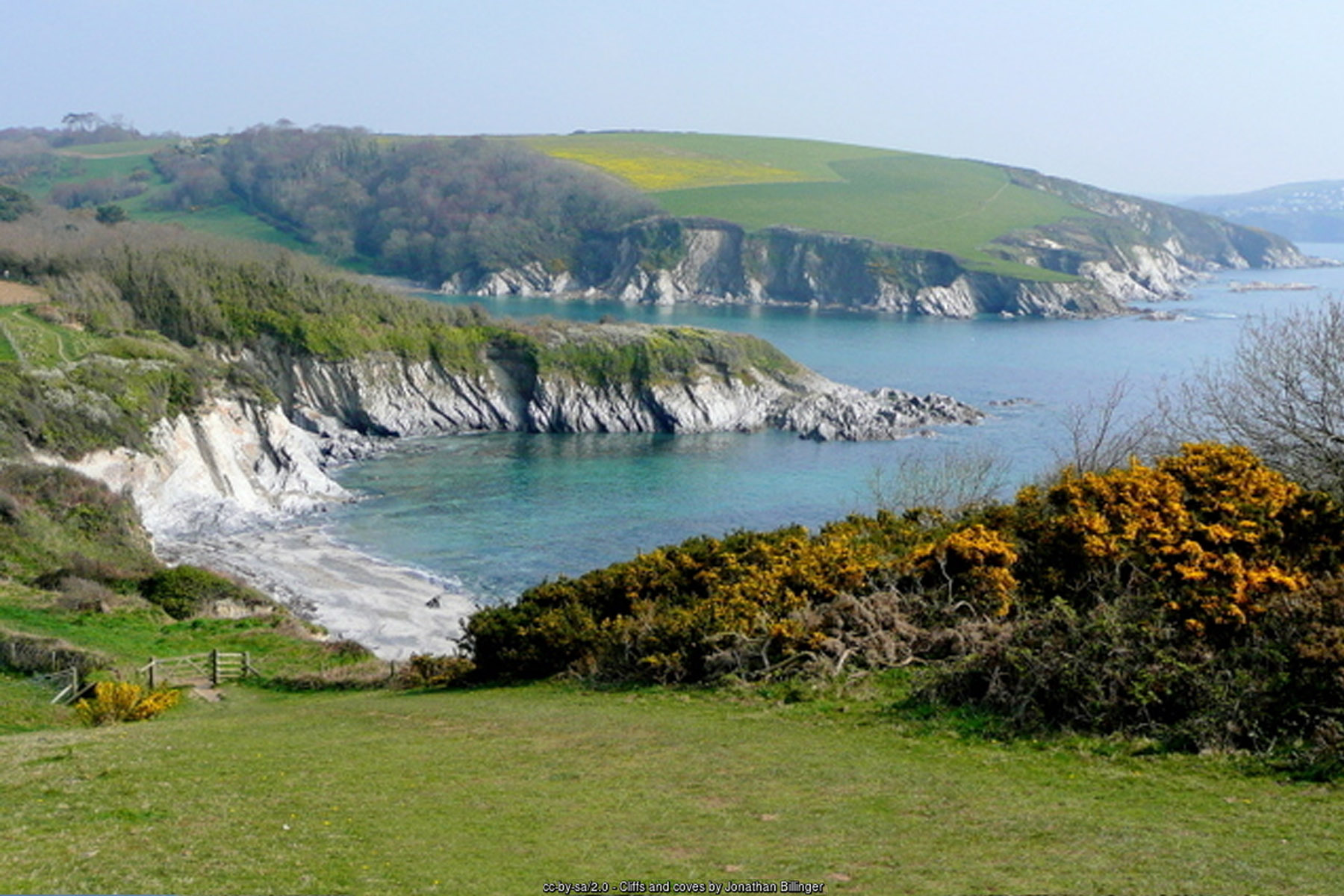
The cove is reached via the car park at Menabilly Barton farm, where an honesty-box fee applies, from which a farm track and section of coast path lead down through fields and woodland to the beach, a walk of around fifteen to twenty minutes. Coast path walkers approaching from Coombe Hawne or Readymoney Cove to the east can also reach Polridmouth on foot, making it a natural extension to a longer walk out from Fowey towards Gribbin Head and its distinctive red-and-white daymark tower, visible from much of this stretch of coast. However it is reached, Polridmouth rewards the effort with a genuinely secluded feel rare this close to a town as popular as Fowey - the beach itself sits in a fold of the coast, screened from view until the last stretch of the path, and even in the height of summer rarely sees the numbers found at Readymoney Cove.
The most immediately striking feature of Polridmouth is the small, reed-fringed ornamental lake sitting directly behind the shingle bar of the beach, separated from the sea by only a narrow strip of shore. Though it looks entirely natural today, part of its history is a good deal more deliberate: during the Second World War the lake and surrounding area were adapted as a decoy site, laid out and lit at night to mimic, from the air, the shape and lights of Fowey harbour a short distance along the coast - one of a network of such decoys built across Britain in the period to draw enemy bombers away from genuinely strategic ports and towns. Fowey's harbour, then handling wartime shipping, was considered enough of a target to warrant the deception, and while the full details of how effective the Polridmouth decoy proved have not survived in detail, its construction is a well-documented part of the cove's history, and a reminder of how even a quiet, out-of-the-way beach like this one had its part to play during the war.
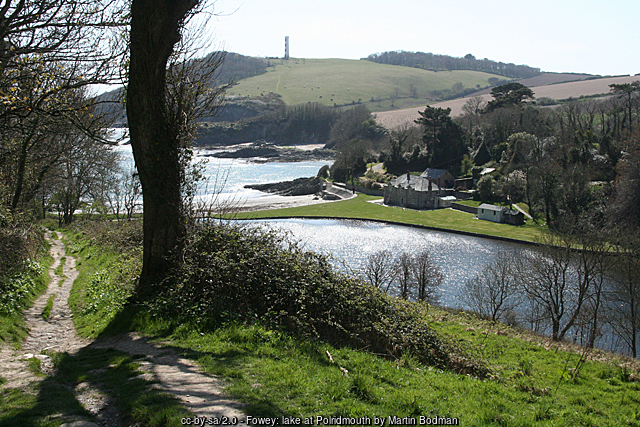
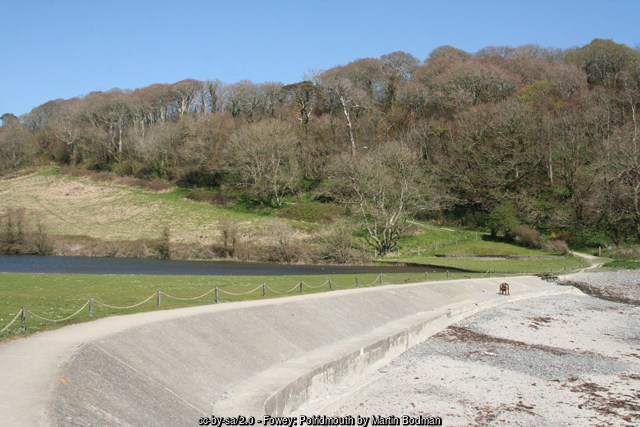
Older than the decoy lake, and still visible today, is the wreck of the Romanie, a Dutch-built steel three-masted sailing ship that came to grief at Polridmouth on 16 January 1930 while sailing from Fowey towards the neighbouring china clay port of Par. All of her crew reached the shore safely, and the vessel, judged not worth the cost of recovery, was left where she lay; parts of her hull and structure remain visible in the cove today, particularly at low tide, giving Polridmouth a genuinely evocative, slightly melancholy quality that few beaches on this coast can match. The wreck has become something of a fixture of the cove's identity, drawing photographers and walkers curious to see a piece of maritime history left largely as the sea found it, rather than salvaged or removed.
It is Polridmouth's connection to Menabilly itself, though, that has done most to put the cove on the map. The novelist Daphne du Maurier, who had lived for a period overlooking nearby Readymoney Cove, fell in love with Menabilly on sight years before she was able to secure it, eventually taking on a twenty-year lease of the house and grounds in 1943 and living there for over two decades. Menabilly is widely believed - and du Maurier herself gave the association considerable encouragement over the years - to have been the inspiration for Manderley, the great, brooding house at the heart of her 1938 novel Rebecca, and Polridmouth Cove below the estate, with its lonely wreck and hidden lake, is generally thought to have inspired the beach and boat-wreck scenes that drive much of the novel's plot. Whether or not every detail lines up precisely with du Maurier's fiction, the atmosphere of the place - isolated, faintly haunted, beautiful in a wild rather than a picture-postcard way - makes the connection entirely easy to believe when standing on the beach itself.
Practically, Polridmouth remains an undeveloped beach in every sense: there are no toilets, no café, no shop and no RNLI lifeguard patrol, so visitors need to come prepared and treat the sea here with the same caution appropriate to any unwatched Cornish cove. Underfoot the beach is a mix of shingle and sand, changing character with the tide, and the lake behind it, while attractive, is private estate land rather than a public amenity to wander into. Dogs are welcome on the beach all year round, with no seasonal restriction, and the walk in - whether from Menabilly Barton or along the coast path from Fowey - is itself one of the more rewarding short stretches of the South West Coast Path in this area, with the Gribbin daymark a further, worthwhile target for anyone continuing on beyond the cove.
The wider Menabilly estate above Polridmouth Cove has its own long history quite separate from du Maurier's tenancy, having been the seat of the Rashleigh family since the sixteenth century, with the present house substantially rebuilt in the Georgian period after an earlier fire. The estate's parkland and coastal woodland, glimpsed from the coast path on the approach to the cove, remain private, and visitors are asked to keep to the public rights of way rather than wandering off them, both out of respect for the estate and because much of the surrounding ground is working farmland. The mix of woodland, farmland and open coast around Polridmouth supports a good range of wildlife, with buzzards a regular sight overhead and, along the shoreline itself, oystercatchers and other wading birds working the tideline at low water.
Visitor Information
Parking
Park at Menabilly Barton farm (an honesty-box fee applies) and follow the farm track and coast path down to the beach, around 15 to 20 minutes on foot. The cove is also reachable on foot along the coast path from Coombe Hawne or Readymoney Cove.
Facilities
There are no facilities of any kind at Polridmouth Cove - no toilets, café or shop. The nearest facilities are back in Fowey town. There is no RNLI lifeguard patrol here.
Disabled Access
Access is via a farm track and coast path over uneven ground, and is not suitable for wheelchairs or limited mobility. No dedicated Blue Badge bays are confirmed at the Menabilly Barton car park - check current signage on arrival.
Things to Do Nearby
- Coombe Hawne & Little Coombe Hawne, a further quiet cove a short coast path walk east
- Readymoney Cove, Fowey's own beach beneath St Catherine's Castle, a longer coast path walk further east
- Gribbin Head and its red-and-white daymark tower, a short walk west, with sweeping views along the coast
- The South West Coast Path, running the length of this stretch of coast from Fowey towards Par and St Austell Bay
Places to Stay
Polridmouth Cove has no holiday accommodation listings of its own - it is a wild, undeveloped beach below private estate land. Fowey, a short drive or coast path walk away, offers the widest range of places to stay:
Frequently Asked Questions
Page last updated: 16 September 2026.