Polkerris
A Sheltered Sandy Cove & Historic Fishing Hamlet on St Austell Bay
Polkerris, near Par, Cornwall, PL24 2TL
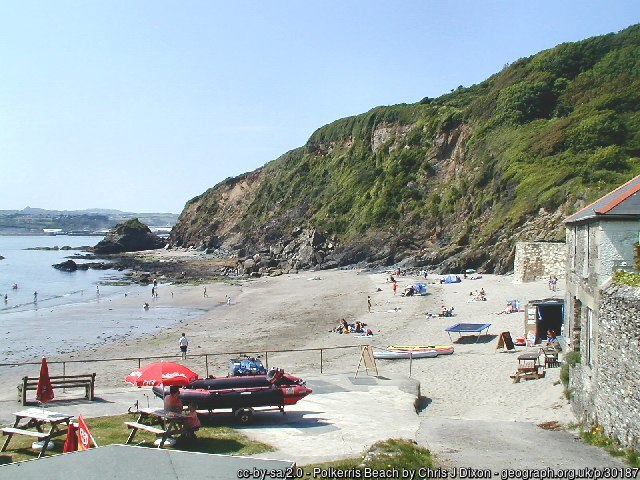
Polkerris is a small, sheltered, horseshoe-shaped cove of sand tucked into the western side of St Austell Bay, wrapped around by low cliffs and a stone harbour wall that between them give it a calm, enclosed character quite unlike the more open, exposed beaches elsewhere along this coast. It is as much an old fishing hamlet as it is a beach: a tight huddle of cottages, a working quay and a beachside pub sit directly behind the sand, giving Polkerris a settled, lived-in feel rather than the car-park-and-dunes arrangement of many Cornish beaches. The cove sits just around Gribbin Head from Fowey, close enough that the two are often mentioned in the same breath, yet different enough in character - Polkerris facing east into the shelter of St Austell Bay, Fowey's own beaches facing the open sea on the far side of the headland - that each is well worth visiting in its own right.
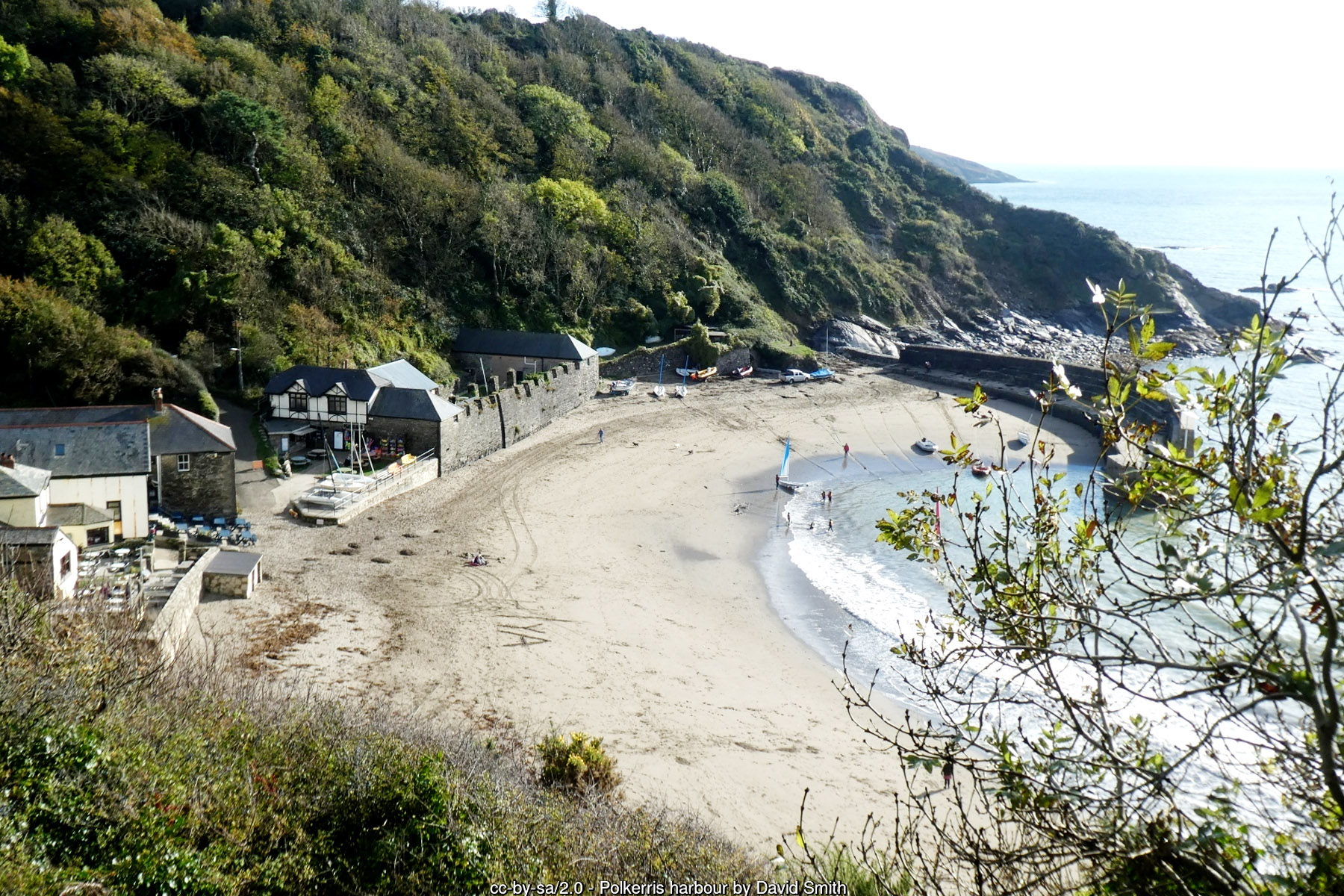
Gribbin Head itself, capped by its distinctive red-and-white striped daymark tower, forms the natural boundary between this stretch of coast and Fowey. On the far, seaward side of the headland lie Fowey's own beaches - Readymoney Cove beneath the Tudor walls of St Catherine's Castle, the quiet cove of Coombe Hawne, and Polridmouth Cove with its wartime decoy lake and shipwreck - all part of a separate stretch of coastline with its own character and history. Polkerris, on the bay-facing side, is connected to all of them by the South West Coast Path, which climbs up and over Gribbin Head and makes the walk from Polkerris to Fowey one of the more rewarding short coastal walks in this part of Cornwall, with wide views back across St Austell Bay for much of the route.
The hamlet's history is bound up almost entirely with a single family. The Rashleighs of the nearby Menabilly estate - the same family connected to Fowey's Readymoney Cove and the Tudor fort of St Catherine's Castle on the other side of Gribbin Head - have owned Polkerris since the late 16th century, and their imprint on the place is still obvious today in its buildings, its quay and even the name of its pub. Menabilly itself, a short distance inland, later became known as the wartime home leased by novelist Daphne du Maurier and widely believed to have inspired Manderley in her novel Rebecca, adding a further layer of literary interest to a family whose estate quietly shaped this whole stretch of coastline.
For most of its working life, Polkerris existed for one purpose: pilchards. Seine-net fishing for pilchards was the hamlet's economic backbone from at least 1590, when a seine house - a building used to store the huge seine nets and process the catch - is recorded here, right through until the fishery went into decline and finally closed in the 1870s. The method relied on a "huer", a lookout stationed on the cliffs above the cove, spotting the tell-tale reddish stain of a shoal of pilchards in the water and directing boats below by voice and signal to encircle it with a vast seine net before a second, smaller "tuck net" was used to draw the catch in close to shore for landing. It was a highly organised, almost industrial operation for its time, employing large numbers of people in the boats, on the beach and in the curing cellars, and for the better part of three centuries it was what Polkerris was for.
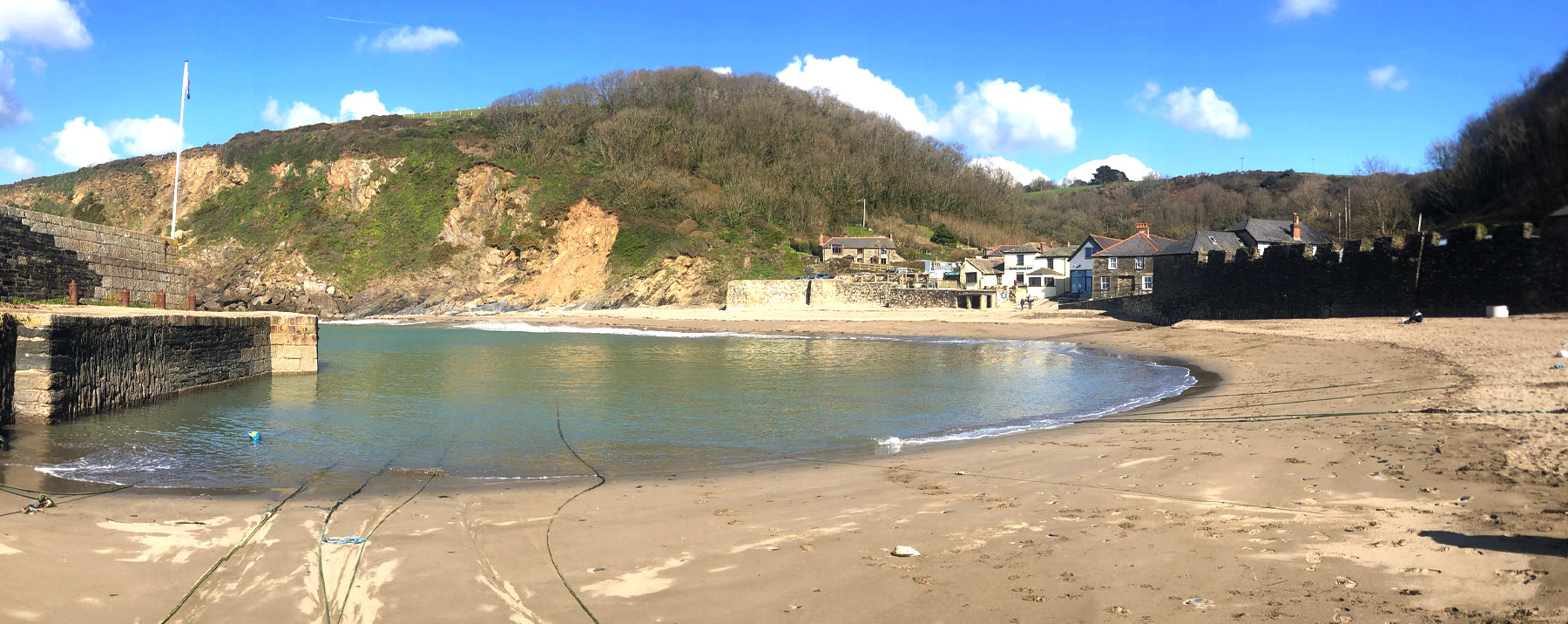
The stone quay that still curls around the cove today, giving Polkerris much of its sheltered, "horseshoe" character, was built by the Rashleighs in 1775 specifically to support the seine-netting company's operations here - a half-moon wall of stone that gave boats and nets somewhere safe to work even when the bay outside was rough. It remains the single most obvious man-made feature of the beach, and it is largely thanks to this 18th-century harbour wall that Polkerris is as sheltered as it is: without it, the cove would face the same open exposure as many of its neighbours along St Austell Bay.
That same sheltered position later made Polkerris a sensible choice for a lifeboat station. An RNLI lifeboat named the Catherine Rashleigh was stationed here from November 1859, housed in a purpose-built boathouse that cost £138 4s to construct, on land donated for the purpose by the Rashleigh family - a further mark of just how completely this one estate shaped the hamlet's development. The station served this stretch of St Austell Bay for over sixty years before it was transferred to Fowey in 1922, by which point improvements in boat design and coverage elsewhere had made a dedicated Polkerris station less essential. The old boathouse building survives to this day and now operates as a restaurant, its high, boat-shaped doorway still hinting at its original purpose to anyone who looks up as they pass.
The other historic building that dominates the cove is the Rashleigh Inn, a pub that sits directly on the beach and, as its name suggests, exists as a lasting tribute to the family's long association with Polkerris. Few Cornish coves can offer quite this combination: a genuine working harbour wall from the 1770s, a former lifeboat station turned restaurant, and a beachside pub, all within a few steps of the sand and all tracing back to the same family estate.
Beyond its buildings, Polkerris' setting itself is a large part of the appeal. The cove sits within a fold of the coastline that keeps out much of the prevailing south-westerly swell that reaches more exposed beaches nearby, giving the low cliffs behind the beach a noticeably softer, more sheltered character than the open ground found further round St Austell Bay. Low rocky outcrops at either end of the sand offer some rock pooling as the tide drops, and the calmer water inside the harbour wall, relative to the open bay beyond it, is a regular sight for gulls, oystercatchers and the occasional cormorant drying its wings on the old stonework of the quay itself.
That quiet, contained character sets Polkerris apart from its nearest neighbour, Par Sands, a short distance away around the bay. Where Par grew into a busy 19th-century china clay port with a working harbour built to serve the wider mining and clay industry inland, Polkerris never developed beyond its original fishing role and, later, its life as a small leisure destination - its own harbour built purely to shelter a seine-netting fleet rather than to serve international trade. The result is two beaches within easy reach of each other by road or coast path that feel like markedly different places: one an industrious working harbour turned family beach, the other a small, historic cove that has changed remarkably little in outline since the Rashleighs built their quay in the 1770s.
As a beach to actually visit today, Polkerris scores well precisely because of that sheltered position. There is no dedicated public car park directly at the beach itself, and parking in the hamlet is limited, with most visitors facing a short walk down from the village or from parking areas a little further up the hill - worth bearing in mind, and worth arriving early for on a fine summer day. What visitors get in return is a gently shelving stretch of sand that tends to offer calmer, safer swimming conditions than many of the more exposed beaches further round the bay, which is a large part of why Polkerris is so popular with families. There is no RNLI lifeguard patrol here, so the usual sensible precautions still apply, but the cove's natural shelter genuinely does make a difference to how forgiving the water tends to be.
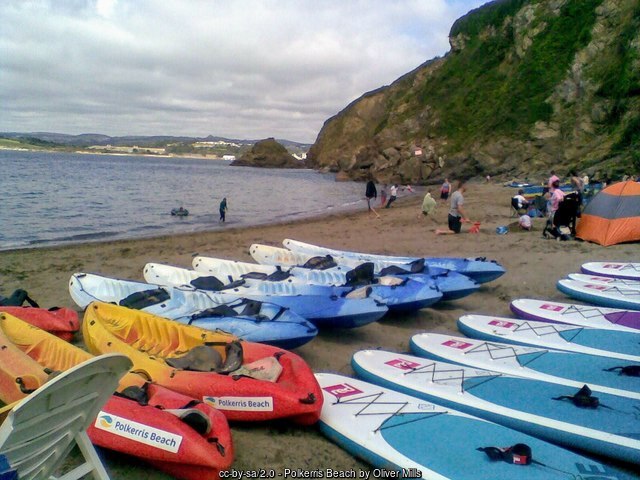
That same shelter makes Polkerris a popular launch point for stand-up paddleboarding and sailing, with the old quay and the surrounding headlands taking much of the sting out of the prevailing wind and swell compared with beaches that face more directly into the open Atlantic. The cove also sits squarely on the South West Coast Path, with a choice of walks in either direction: east around the bay towards Par Sands, a longer, flatter stretch of sand at the mouth of the Par river, or west and up over Gribbin Head towards Fowey, past the daymark tower and down into Readymoney Cove on the far side. Whether the appeal is the history, the walking, or simply a sheltered patch of sand to spend an afternoon on, Polkerris remains one of the most distinctive and characterful small coves anywhere in St Austell Bay.
Visitor Information
Parking
There is no dedicated car park directly on the beach. A small pay-and-display car park sits a short, slightly uphill walk away in the village, with limited spaces that fill quickly on warm days - arriving early, or walking or cycling in along the coast path from Par, is worth considering.
Facilities
The beachside Rashleigh Inn and a café in the former lifeboat boathouse both sit right on the cove. No public toilets at the beach itself are confirmed - check locally. There is no RNLI lifeguard patrol.
Disabled Access
The walk down into the hamlet and onto the beach involves a slope, and the sand itself is soft underfoot, making onward wheelchair or pushchair access difficult beyond the top. No dedicated Blue Badge bays are confirmed at Polkerris - check locally before a visit.
Things to Do Nearby
- Par Sands, the large, flat sandy beach a short distance east around the bay at the mouth of the Par river
- The Eden Project, Cornwall's famous biome gardens a few miles inland at Bodelva, an easy drive or cycle from Polkerris
- The South West Coast Path, which climbs over Gribbin Head and its striped daymark tower to link Polkerris with Fowey's own beaches on the far side
- Gribbin Head and its distinctive red-and-white daymark tower, a well-known coastal landmark and viewpoint reached on foot from the cove
Places to Stay
Polkerris itself has no dedicated holiday accommodation listings of its own, so the nearest established hub is neighbouring Par, a short distance around the bay:
Frequently Asked Questions
Page last updated: 17 September 2026