Pentewan
Sandy Beach at a Historic China Clay Harbour, Gateway to the Pentewan Valley Trail
Pentewan, St Austell Bay, Cornwall, PL26 6BT
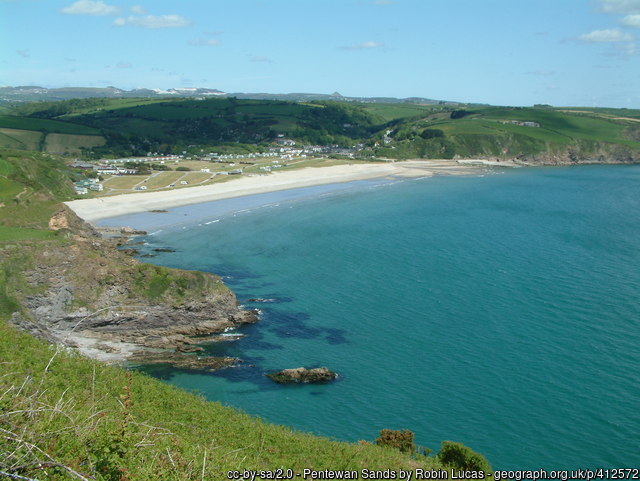
Pentewan is a long, sandy beach at the mouth of the small St Austell river, on the eastern side of St Austell Bay between the remote coves of Hallane and Polgwyn to the west and Portmellon and Mevagissey further round the coast to the east. Backed by dunes and by the large Pentewan Sands Holiday Park, it is one of the more developed and genuinely family-oriented beaches covered anywhere in this St Austell Bay guide - a large pay car park sits at the rear of the beach, with easy, level access straight onto the sand, and the beach is cleaned daily with litter bins set out at regular intervals along its length. For visitors wanting a straightforward, well-equipped sandy beach rather than a walk-in cove, Pentewan is the obvious choice in this part of the bay.
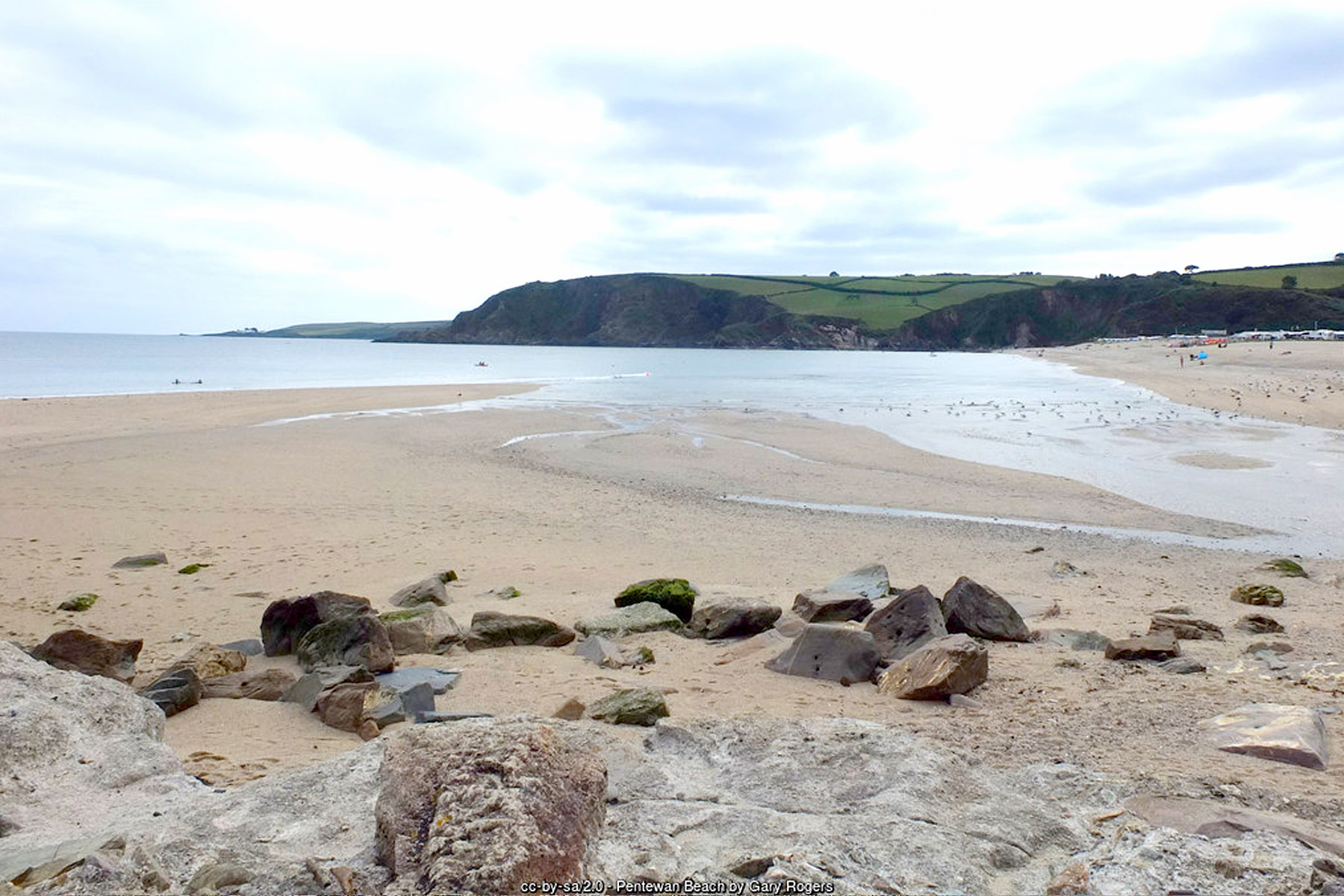
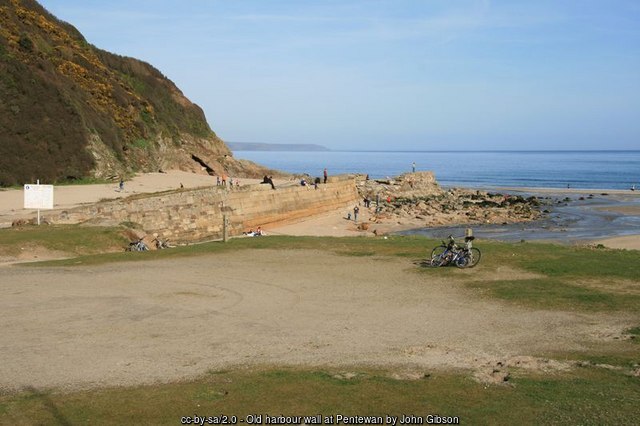
What sets Pentewan apart from most of its neighbours in St Austell Bay, though, is a genuinely significant industrial history that is easy to overlook on a first visit but rewards a closer look. In 1820, Sir Christopher Hawkins bought land here and set about building a proper harbour, completed in 1826 at a cost of some £22,000 - a very substantial sum for the period - with a single, specific purpose: exporting china clay dug from the pits and works of the St Austell district a short distance inland. China clay, or kaolin, had become one of Cornwall's most important export industries through the eighteenth and nineteenth centuries, used in everything from fine porcelain to paper manufacture, and a reliable coastal harbour close to the clay works was a serious commercial asset.
To feed the new harbour efficiently, a horse-drawn tramway opened in 1829, running four miles inland on a narrow, 2ft 6in gauge track. This was, remarkably, only the third public railway ever built anywhere in Cornwall - a genuinely early example of the railway age reaching the county, predating the network of standard-gauge lines that would later connect Cornwall's towns. The tramway carried china clay down to Pentewan for shipment, along with coal, timber and mica travelling the other way, and for several decades the harbour and railway together prospered, forming a small but important part of Cornwall's wider china clay export economy alongside larger ports such as Fowey and Charlestown.
That prosperity did not last indefinitely. After 1876, the Great Western Railway began directing an increasing share of china clay traffic to its own, much larger and more capable harbour at Fowey instead of Pentewan, and the effect on Pentewan's trade was dramatic: tonnage collapsed from 19,672 tons in 1876 to just 5,341 tons the following year alone. Pentewan's harbour struggled against a shallow, difficult approach and increasingly old-fashioned handling methods that simply could not compete with Fowey's superior facilities, even after steam locomotives were introduced on the tramway in 1874 in an attempt to modernise operations. Despite a partial recovery in the years that followed, the writing was on the wall for Pentewan as a serious commercial port. The last china clay left by rail on 29 January 1918, and the very last train ran on 2 March 1918, closing the line for good after not quite ninety years of service.
The legacy of that industrial era lives on today in a much gentler form: the old railway trackbed has become the Pentewan Valley Trail, a flat, easy walking and cycling path that follows the line of the vanished tramway inland from the beach. Usefully for anyone staying in the area, the trail leads directly towards the Lost Gardens of Heligan, one of Cornwall's best-loved and most-visited gardens, a couple of miles inland from Pentewan. It has become a genuinely popular way to combine a beach morning with a garden afternoon on the same day, walking or cycling the level trail between the two rather than needing to drive - a rare and pleasant piece of car-free connectivity between two very different Cornish attractions, and one that owes its existence directly to the same china clay industry that built Pentewan's harbour two centuries ago.
In the water, Pentewan operates a swimming zone marked out with buoys during the summer months, a sensible arrangement given the beach's popularity and its position at a river mouth, where currents can behave differently than on a fully open stretch of coast. There is no permanent RNLI lifeguard patrol, but life-saving equipment is kept on the beach for use in an emergency, and the buoyed zone gives swimmers a reasonably clear sense of where to stay. Toilets and refreshment facilities are available at Pentewan Sands Holiday Park immediately behind the beach, along with a slipway suitable for launching small boats - practical amenities that put Pentewan a clear step ahead of the more remote, facility-free coves elsewhere in this stretch of St Austell Bay.
Pentewan's setting at the river mouth also gives it a slightly different character from the open, cliff-backed beaches further along the bay: the dunes behind the sand, the gentle valley running inland, and the presence of a genuine settlement and holiday park all combine to make it feel more like a small, self-contained resort in miniature than a wild cove. That said, the beach itself remains genuinely attractive on its own terms - a good width and length of sand at most states of the tide, backed by the dunes rather than by hard sea defences, and with views out across the wider sweep of St Austell Bay towards Black Head and the more undeveloped coast around Hallane and Polgwyn to the west.
The beach's sandy character owes something to the same wider forces that shaped St Austell Bay as a whole: a broadly sheltered, south-facing curve of coast where longshore drift and the outflow of several small rivers, including Pentewan's own, have built up sand and shingle against the harder rock headlands at either end of the bay, from Black Head in the west round to Chapel Point and the Dodman in the east. The dunes behind Pentewan's beach are a genuine, if modest, example of this process at work, stabilised over time by marram grass and other dune-binding plants, and they give the back of the beach a softer, more natural edge than the sea walls and revetments found at some of the bay's more industrially developed beaches, such as nearby Charlestown. Tidal range through the bay is significant enough that Pentewan's beach changes noticeably in size between low and high water, so visitors planning a full day on the sand are generally best advised to time their visit around a falling tide, when the beach is at its widest and most walkable.
The dunes and river mouth together also support a modest but genuine range of wildlife, typical of small estuarine and dune habitats along this stretch of Cornish coast: the usual dune flora of marram and sea holly gives way to damper, more sheltered ground close to the river itself, where wading birds and gulls are commonly seen working the tideline and the shallow water at the river's mouth, particularly outside the busiest summer months when the beach is quieter. It is not a wildlife destination in the way that some of Cornwall's larger estuaries or nature reserves are, but it adds a genuine extra layer of interest for anyone walking the dunes or the lower stretch of the Pentewan Valley Trail beyond the immediate beach.
Pentewan itself, the small settlement that gives the beach its name, existed as a modest fishing and farming community well before Sir Christopher Hawkins' harbour scheme transformed it in the 1820s, and it is worth remembering that the china clay era, however dominant it later became in the village's story, was a comparatively short chapter layered on top of a much older pattern of small-scale Cornish coastal life. In that sense Pentewan mirrors the wider story of St Austell Bay, where several once-quiet coves - Charlestown most famously - were remade by the china clay boom of the eighteenth and nineteenth centuries into working industrial harbours, before settling, in the twentieth century, into the quieter, tourism-facing beaches visitors find today. Pentewan's own version of that transition, from ancient fishing hamlet to Georgian industrial harbour to modern holiday beach, is written plainly into its landscape for anyone who takes the time to look: the dunes and sand of today's beach, the harbour walls and the trackbed of the Valley Trail behind it.
Travelling east from Pentewan along the coast, the shoreline leads on towards Portmellon and the harbour village of Mevagissey - genuine geographic neighbours of Pentewan just around the point, and a natural extension for anyone exploring this section of the St Austell Bay coast on foot or by car after a morning on Pentewan's sand. Combined with the Valley Trail's inland route to Heligan, Pentewan makes a genuinely well-connected base for exploring this part of Cornwall: sand and swimming on the doorstep, a real slice of nineteenth-century industrial history underfoot, and two of the area's best-known attractions within easy, mostly level reach in either direction.
Visitor Information
Parking
A large pay car park sits at the rear of the beach, with easy, level access onto the sand - one of the more straightforward beaches in this part of St Austell Bay to reach by car.
Facilities
Toilets, refreshments and a slipway are available at Pentewan Sands Holiday Park behind the beach. A buoyed summer swimming zone and life-saving equipment are provided, though there is no permanent lifeguard patrol.
Disabled Access
Access from the car park to the beach is level and relatively easy compared with most beaches in this guide, though the sand itself will still be firmer near the tideline. No dedicated Blue Badge bays are confirmed - check current signage on arrival.
Things to Do Nearby
- Lost Gardens of Heligan, one of Cornwall's best-loved gardens, reached from the beach via the level Pentewan Valley Trail along the old harbour railway's route
- Hallane & Polgwyn, two remote, walk-in shingle coves a little further west along the coast path
- Portmellon, Pentewan's genuine geographic neighbour further east along the coast towards Mevagissey
Places to Stay
Pentewan has its own range of holiday accommodation:
Frequently Asked Questions
Page last updated: 17 September 2026