Carlyon Bay
Crinnis, Shorthorn & Polgaver - A Wide Sweep of China Clay Sand on St Austell Bay
Beach Road, Carlyon Bay, near St Austell, Cornwall, PL25 3RE
Carlyon Bay is not really one beach but three, run together into a broad, roughly three-quarter-mile sweep of pale sand on the eastern side of St Austell Bay, and most visitors simply talk about "Carlyon Bay" as a whole rather than distinguishing between its individual sections. Officially it is made up of Crinnis Beach in the west, the widest and most developed section, backed by the site of the old Cornwall Coliseum; Shorthorn Beach in the middle, a quieter stretch recognised for the ecological importance of its shoreline; and Polgaver Beach in the east, a smaller, more secluded section tucked below the cliffs on the approach to Charlestown. Together they form one of the largest continuous stretches of open sand anywhere in St Austell Bay, backed not by a town seafront but by a low run of cliffs and scrubby clifftop ground, giving Carlyon Bay a more open, exposed feel than its more sheltered near neighbour Charlestown a short distance along the coast.
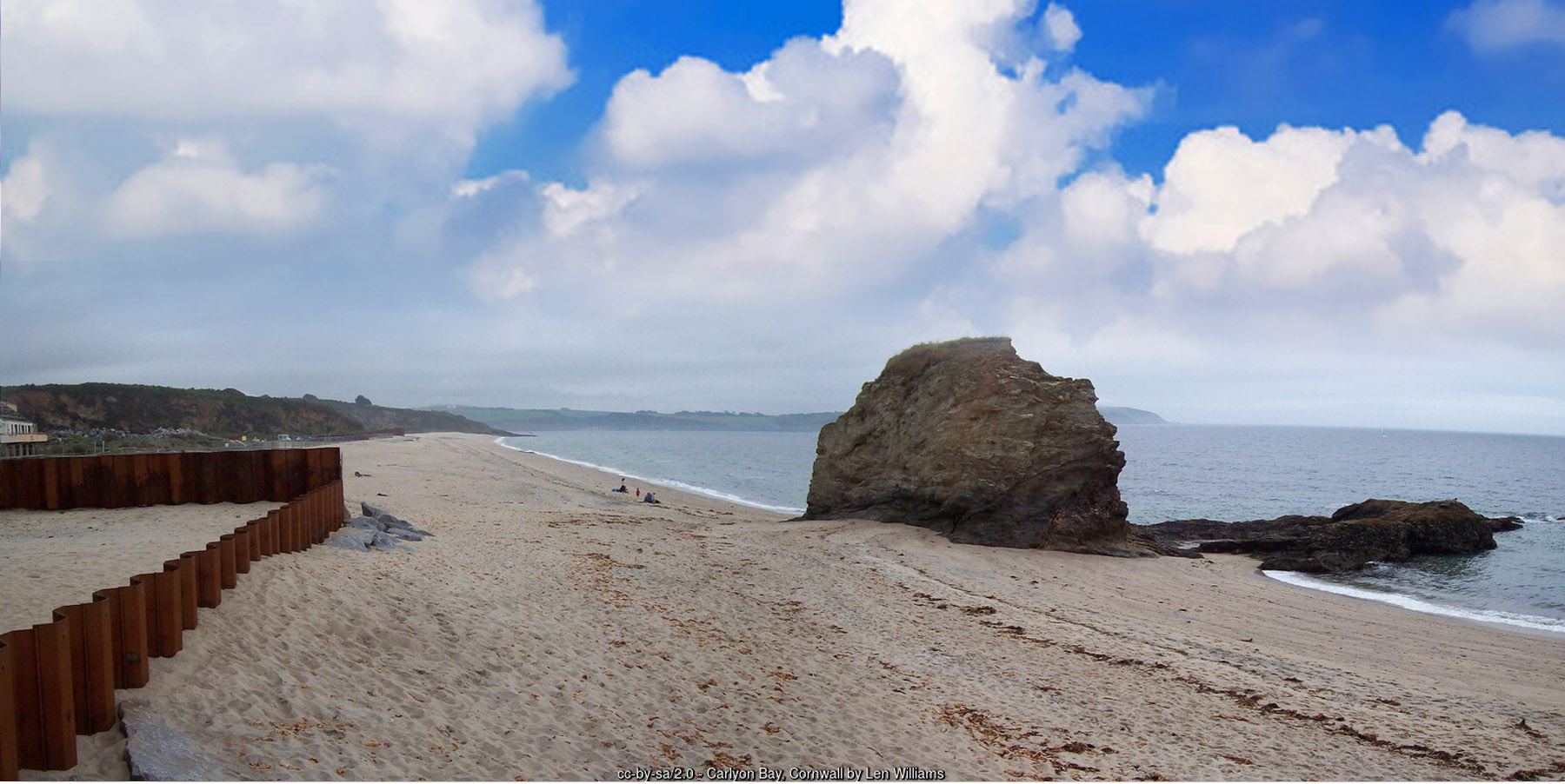
One of the most distinctive things about Carlyon Bay, and something that sets it apart from almost every other beach in Cornwall, is where much of its sand actually comes from. Rather than being entirely natural beach sand built up by the sea over millennia, much of the pale material here is "stent" - the waste product of the china clay industry that has washed down from inland workings and settled along this stretch of coast over the course of more than a century of quarrying inland at St Austell. It gives Carlyon Bay a genuinely unusual origin story among Cornish beaches, a direct physical legacy of the china clay trade that shaped the whole of this part of Cornwall, visible underfoot rather than just in the industrial history books.
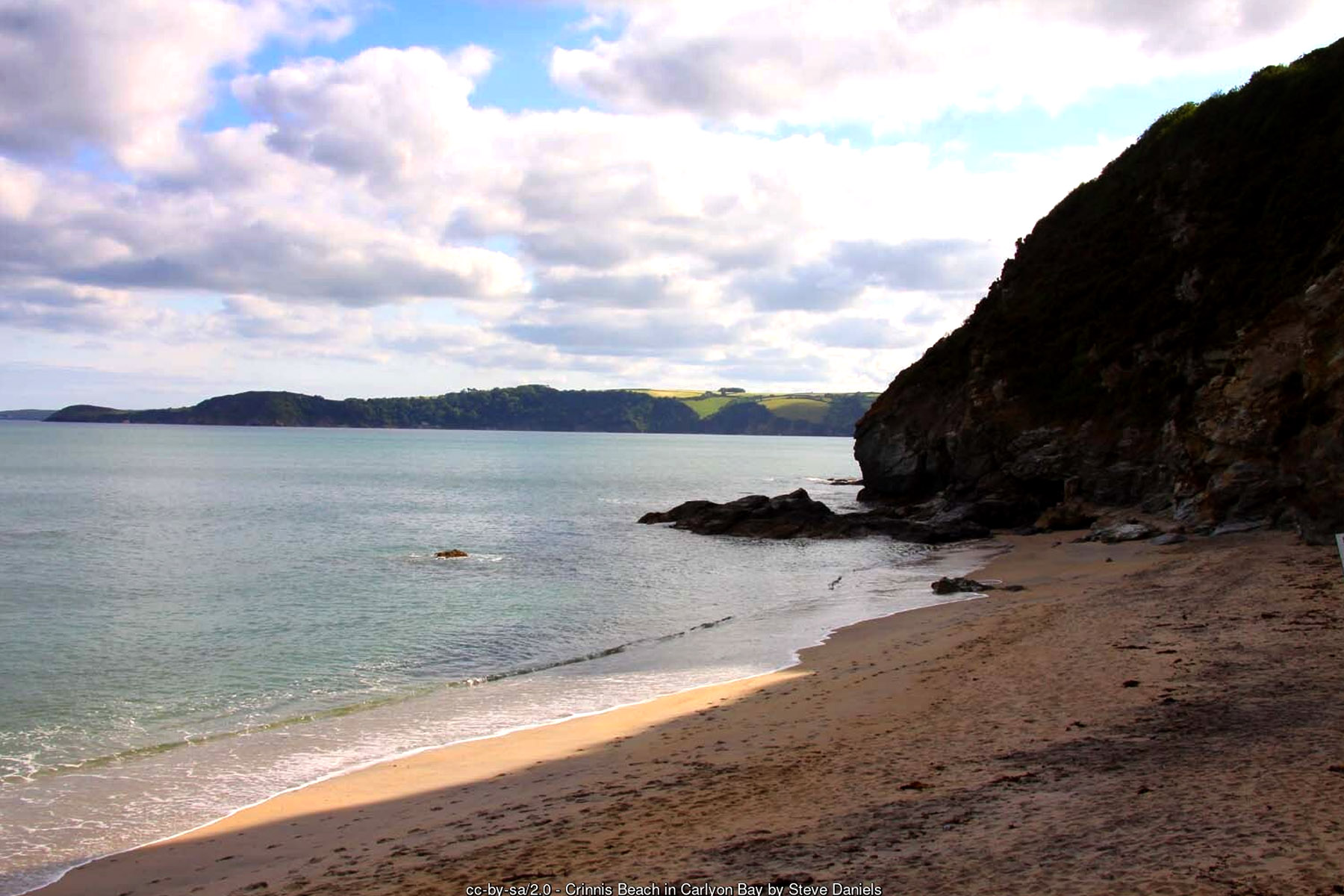
Crinnis Beach, the western and main section of the bay, is the part most visitors think of first: a wide, flat expanse of sand backed by the site of the old Cornwall Coliseum, with the bulk of the car parking and seasonal facilities clustered around it. It is generally the busiest section in summer, popular for its sheer size and the amount of open sand it offers even at higher states of the tide, and it is here that the ongoing Carlyon Beach redevelopment is most visible from the beach itself.
Shorthorn Beach, the middle section of the bay, is quieter and less developed than Crinnis, and has its own real ecological significance: Cornwall Wildlife Trust has identified it as a site of national importance for its shoreline habitat, a detail that gives this stretch a genuine conservation value alongside its role as a pleasant, less crowded place to walk or swim away from the busier western end of the bay.
Polgaver Beach, the smaller eastern section towards Charlestown, is more secluded again, tucked below the cliffs and reached along the beach from Crinnis and Shorthorn or down from the coast path above. It is informally used as a naturist beach by some visitors, a long-standing local custom rather than any official designation, and its quieter, more enclosed character makes it feel distinct from the open, family-oriented sands further west.
The site behind Crinnis Beach has a genuinely significant seaside leisure history of its own. Between 1920 and the Second World War it was home to the New Cornish Riviera Lido and large associated sports facilities, part of a major seaside leisure complex that drew visitors to this stretch of coast in the interwar years in a way that few other Cornish beaches can claim. After the war the site evolved into the Cornwall Coliseum, which opened in the 1950s and went on to host exhibitions, tennis tournaments and concerts for decades, becoming a genuine fixture of Cornish entertainment through the second half of the twentieth century. Its prominence faded after the Plymouth Pavilions opened in 1991, giving the wider region a larger, more modern rival venue, and the Coliseum eventually closed, leaving the site to await redevelopment.
Carlyon Bay has picked up a small but genuine footnote in film and music history along the way. A scene from the 1979 film Dracula was shot on the beach here, and in 1986 the singer Alison Moyet filmed a music video on the sand at Carlyon Bay - two unexpected brushes with popular culture for a beach best known, day to day, as a family seaside spot.
The old Lido and Coliseum site has been the subject of a long-running redevelopment project for some years now, branded "Carlyon Beach" and led by the developer CEG, which aims to build a new beachside neighbourhood of homes, restaurants and cafés on the clifftop land behind Crinnis Beach while maintaining public access to the beach itself. As of 2026 this remains an active, ongoing development rather than a finished one, and the project has brought a welcome seasonal amenity back to the beach in the meantime: the "Shoreside" beach bar and food and drink hub, which returns each year from around Easter, giving visitors a proper spot for food and drinks close to the sand through the spring and summer months even while the wider building work continues on the clifftop above.
Practical facilities at Carlyon Bay reflect that seasonal rhythm. Large pay-and-display car parks sit close to the beach, making access straightforward for most visitors, but the facilities themselves - the beach bar, a seafood shack, a pasty shop and toilets - are seasonal rather than open year-round, geared towards the main spring-to-autumn visitor season rather than a quieter winter footfall. There is no RNLI lifeguard patrol at Carlyon Bay, so visitors, particularly those swimming beyond the shallows, should keep a sensible eye on tide and conditions in the same way they would at any unpatrolled Cornish beach.
The South West Coast Path runs along the clifftop directly above the bay, giving walkers fine views back along the full sweep of Crinnis, Shorthorn and Polgaver beaches and onward across St Austell Bay towards Charlestown and, further round, the Gribbin Head daymark near Fowey. It is an easy, well-used stretch of the path, linking Carlyon Bay westward towards Par Sands and Polkerris and eastward towards Charlestown, and makes a pleasant clifftop walk in its own right even without heading down onto the sand. Looking inland from the same clifftop, the pale, terraced spoil heaps of the china clay industry are still visible on the skyline above St Austell, a reminder that the same industry which shaped this stretch of the Cornish landscape inland is the reason so much of the sand directly underfoot at Carlyon Bay looks and behaves the way it does.
Like most open, west-facing bay beaches in Cornwall, the amount of sand on show at Carlyon Bay changes considerably with the tide. At low water the beach opens out into a genuinely vast expanse across all three sections, more than enough space to spread out even on a busy day, while at high tide the sand narrows back towards the base of the cliffs and the seasonal facilities clustered around Crinnis. The bay's open aspect also means it can pick up a worthwhile swell when conditions are right, and it is a reasonably popular spot locally for bodyboarding and beginner-level surfing on the right day, alongside its more usual role as a family beach for swimming, sandcastles and simply enjoying the space. Because the beach is so broad and open, it tends to feel less crowded than more enclosed coves even in the height of summer, one more point in its favour alongside its unusual sand, its seaside leisure history and the redevelopment slowly reshaping the clifftop above it.
Visitor Information
Parking
Large pay-and-display car parks sit close to the beach off Beach Road, serving all three sections of the bay. Spaces fill quickly on fine summer days, so arriving earlier makes for a less stressful visit in peak season.
Facilities
The seasonal Shoreside beach bar and food and drink hub, a seafood shack, a pasty shop and toilets serve the beach from around Easter, rather than year-round. There is no RNLI lifeguard patrol at Carlyon Bay.
Disabled Access
The main Crinnis Beach car park is close to the sand on largely level ground, though the beach surface itself is soft, open sand, which limits onward wheelchair or pushchair access once away from the car park. No dedicated Blue Badge bays are confirmed - check current signage on arrival.
Things to Do Nearby
- Par Sands, the next beach west around St Austell Bay, a short drive or coast path walk away
- Charlestown, the historic Georgian harbour village a short distance east along the coast path
- The Eden Project, a few miles inland at Bodelva, one of Cornwall's best-known visitor attractions
- The South West Coast Path, running along the clifftop directly above the bay in both directions
Places to Stay
Carlyon Bay itself has no dedicated holiday accommodation listings of its own, so nearby St Austell is the best hub for places to stay within easy reach of the beach:
Frequently Asked Questions
Page last updated: 17 September 2026