Hallane & Polgwyn
Remote, Walk-In Shingle Coves on the Undeveloped Black Head Coast
Hallane & Polgwyn, near Trenarren, St Austell Bay, Cornwall, PL26 6NT
Hallane and Polgwyn are two small shingle coves tucked into one of the least-developed and least-visited stretches of coastline anywhere in St Austell Bay, on the farmland shore between Porthpean to the west and Pentewan to the east. Neither cove has a road leading to it, and neither has a car park - there is no way to drive to either beach at all. They are reached only on foot, either along the South West Coast Path as it threads across the cliffs and fields of this section, or via one of the inland farm tracks that drop down towards the shore from the lanes above. It is precisely this lack of easy access that has kept Hallane and Polgwyn so quiet: while their near neighbours further along the bay have car parks, cafes and steady summer footfall, these two coves remain the preserve of walkers, and of the relatively small number of people prepared to make the journey down on foot for a beach with nothing waiting for them but the beach itself.
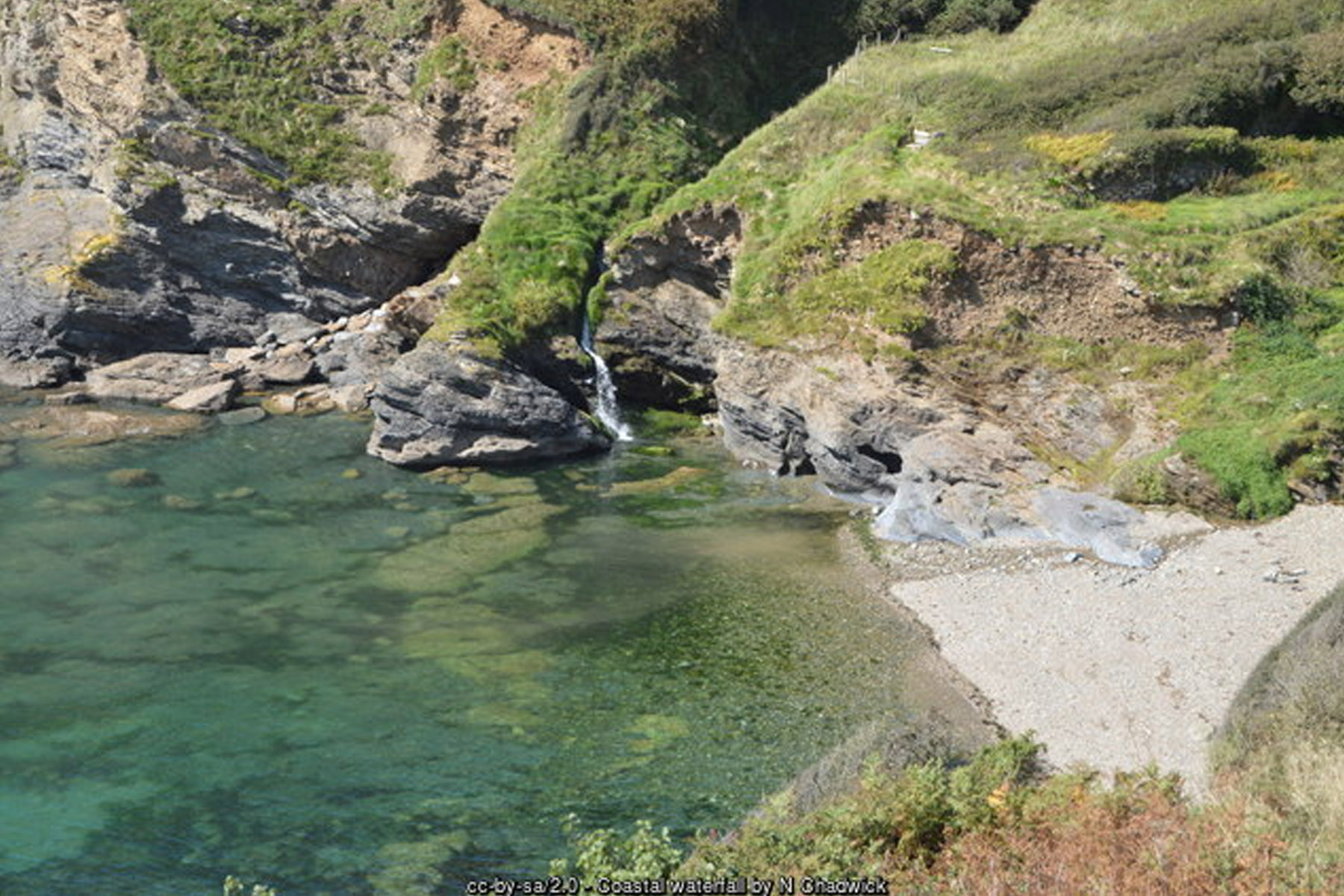
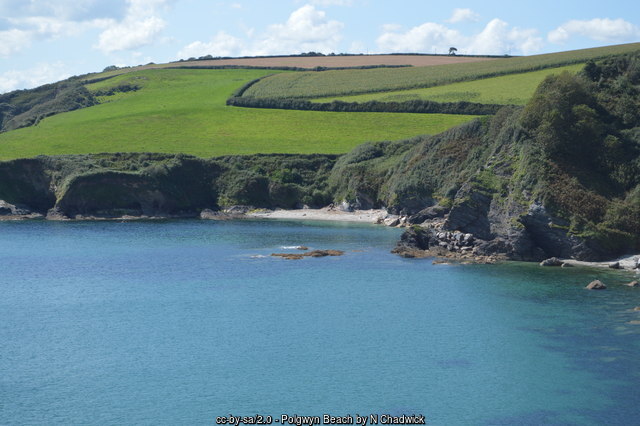
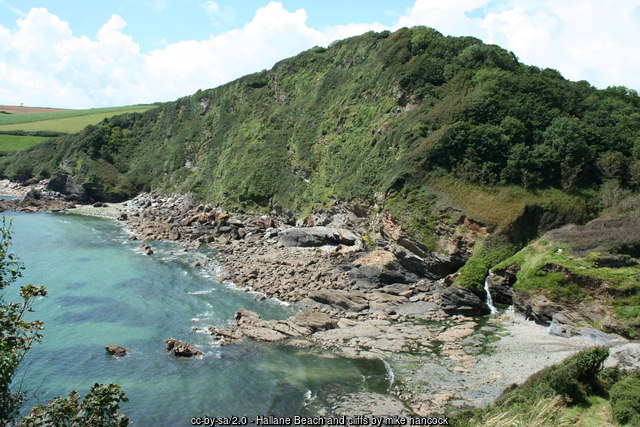
Hallane Beach itself is a south-facing shingle beach, with some submerged rocks lying a short way offshore. It is noted as being very sheltered, which makes it a genuinely pleasant spot for a swim for anyone willing to make the walk down - the kind of calm, protected water that is harder to find on the more exposed, open stretches of this coast. Polgwyn Beach lies close by along the same run of shore, similarly shingle, similarly undeveloped, and similarly reached only on foot. The two coves are best thought of as a pair rather than two entirely separate destinations: walkers exploring this section of coast path typically take both in on the same outing, dropping down to one or the other, or to both in turn, rather than treating either as a single, isolated stop.
What makes this stretch of coast more than simply "another quiet cove," however, is a genuine and well-documented literary connection. The fields, cliffs and coves around nearby Black Head were the landscape loved, walked and written about by the Cornish historian, poet and man of letters A. L. Rowse (1903-1997), who lived at Trenarren House, a short distance inland from Hallane and Polgwyn, from 1953 until his death. Rowse was one of the most distinctive historical voices to come out of Cornwall in the twentieth century - an Oxford academic (a long-time Fellow of All Souls College), a prolific historian of Elizabethan England, and the author of A Cornish Childhood, his celebrated 1942 memoir of growing up in St Austell. He was also, famously, a controversial Shakespeare scholar, having claimed to have identified the real-life models behind the "Dark Lady" and "Mr W.H." of Shakespeare's sonnets - claims that divided academic opinion but cemented his reputation as one of the most self-assured and widely-read historians of his generation.
For all his academic life in Oxford, Rowse's heart never really left this particular corner of Cornwall, and Trenarren, with its view out over Black Head and this same undeveloped coast, was where he chose to spend his final decades and where he is buried, at St Austell's parish church. In 1999, two years after his death, a granite memorial was erected to him at Black Head, inscribed with his own words: "This was the land of my content." The coast path that runs past Hallane and Polgwyn on its way to and from the headland is part of the very same walk that takes in the Rowse memorial, which means that a visit here can genuinely be treated as a literary pilgrimage as much as a straightforward beach outing, for anyone who knows his work - a rare thing among Cornwall's beaches, most of which carry maritime or mining history rather than a specific writer's own attachment to the ground underfoot.
Black Head itself, the headland that gives this stretch of coast its name, is worth a mention beyond its Rowse connection. Like a number of other prominent Cornish headlands, it carries the remains of an Iron Age promontory fort, one of several small cliff castles built along this coastline in the centuries before the Roman period, when a naturally defensible spit of land jutting out to sea made for a readily fortifiable position. Little of the fort survives today beyond earthwork traces, but the headland's long history as a lookout and boundary point adds another, older layer to a landscape that Rowse himself would have known was already ancient when he first walked it.
Practically speaking, Hallane and Polgwyn offer nothing beyond the coves themselves. There is no shop, no toilet block, no cafe and no lifeguard cover of any kind at either beach, and none is likely to appear given the lack of road access. Visitors need to come prepared - water, sun protection, appropriate footwear for a farmland and cliff-path walk, and a realistic sense of how far they are from the nearest facilities, which are back at Porthpean or Pentewan depending on which direction they have walked from. This is not a spot for a family day out laden with beach gear, buckets and spades; it suits confident, self-sufficient walkers and swimmers far better than the typical Cornish beach-holiday crowd, and that is exactly the appeal for those who seek it out.
Access on foot comes from several directions. Most visitors approach either from Porthpean to the west or from Pentewan to the east, both of which have their own beaches, parking and facilities and make natural start or end points for a walk that takes in Hallane and Polgwyn along the way. A number of circular coast-path walks in this part of St Austell Bay also pass this stretch of coast, including routes that start inland at Polgooth or further along the shore at Mevagissey, looping out along the cliffs before returning by a different path. Whichever direction visitors come from, the final approach to either cove involves a proper walk down from the coast path or farm track, rather than a short stroll from a car - worth factoring into any visit, particularly for anyone planning to return the same way with the tide against them.
Because there is no facility infrastructure to draw a crowd, Hallane and Polgwyn remain two of the least-known and least-developed stretches of coast covered anywhere in this guide to St Austell Bay. That is not a criticism - it is precisely the point. For walkers following the South West Coast Path through this section, or for anyone deliberately seeking out a quiet, unspoilt Cornish cove away from the car parks and ice-cream vans of the bay's busier beaches, Hallane and Polgwyn offer a genuinely different kind of visit: a sheltered swim at Hallane, a look at the shingle and rock at Polgwyn, and, for those who make the connection, a quiet stretch of coast that one of Cornwall's own historians considered, in his own words, the land of his content.
Visitor Information
Parking
There is no car park or road access at either Hallane or Polgwyn. Both coves are reached only on foot, via the South West Coast Path or inland farm tracks from Porthpean, Pentewan or nearby villages such as Polgooth.
Facilities
No facilities of any kind at either cove - no shop, no toilets and no refreshments. There is no RNLI lifeguard patrol. Visitors should come fully prepared and treat this as a self-sufficient walk-and-swim visit.
Disabled Access
Access is on foot only, down coast path or farmland tracks, and is not suitable for wheelchairs, pushchairs or limited mobility. There is no parking of any kind, so no Blue Badge provision applies here.
Things to Do Nearby
- Porthpean, the nearest beach to the west, with car parking, facilities and the nearest easy starting point for the walk to Hallane and Polgwyn
- Pentewan, a larger sandy beach a little further east, with parking, facilities and the Pentewan Sands Holiday Park
- The South West Coast Path, which runs along the cliffs above both coves and past the A. L. Rowse memorial at nearby Black Head
Places to Stay
Neither Hallane nor Polgwyn has any dedicated accommodation listings of its own - this is a walk-in pair of coves with no village or resort attached. The nearest accommodation hub geographically is nearby Pentewan:
Frequently Asked Questions
Page last updated: 17 September 2026