Par Sands
A Large Family Beach at the Mouth of the Par River, St Austell Bay
Par Sands, Par, Cornwall, PL24 2AS
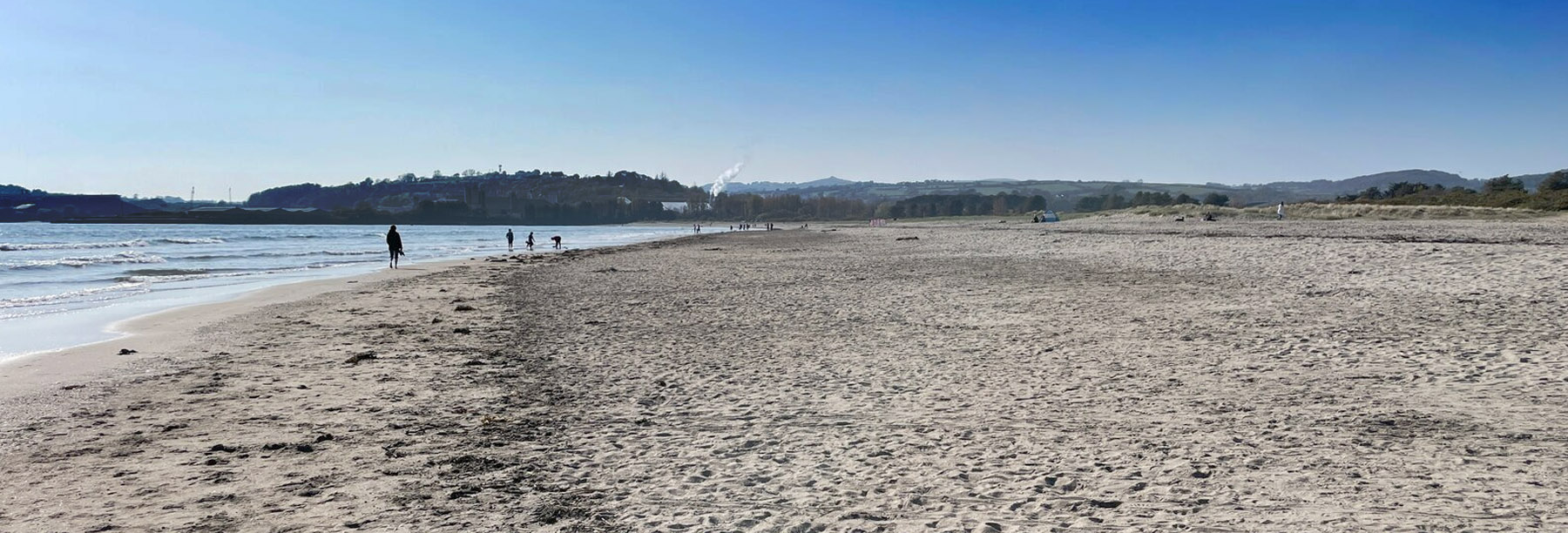
Par Sands is one of the largest and most straightforwardly family-friendly beaches in St Austell Bay: a wide, flat expanse of sand at the mouth of the St Austell, or Par, river, backed by a system of dunes that gives way, just behind the beach itself, to a shallow freshwater lagoon locally known as Par Beach Pool. It is a beach built for space rather than drama - there are no dramatic cliffs or rock arches here, just a long, level run of sand that widens considerably at low tide, making it an easy, unfussy choice for a family day out, and one of the more reliably spacious beaches to find room on even during the busiest weeks of summer.
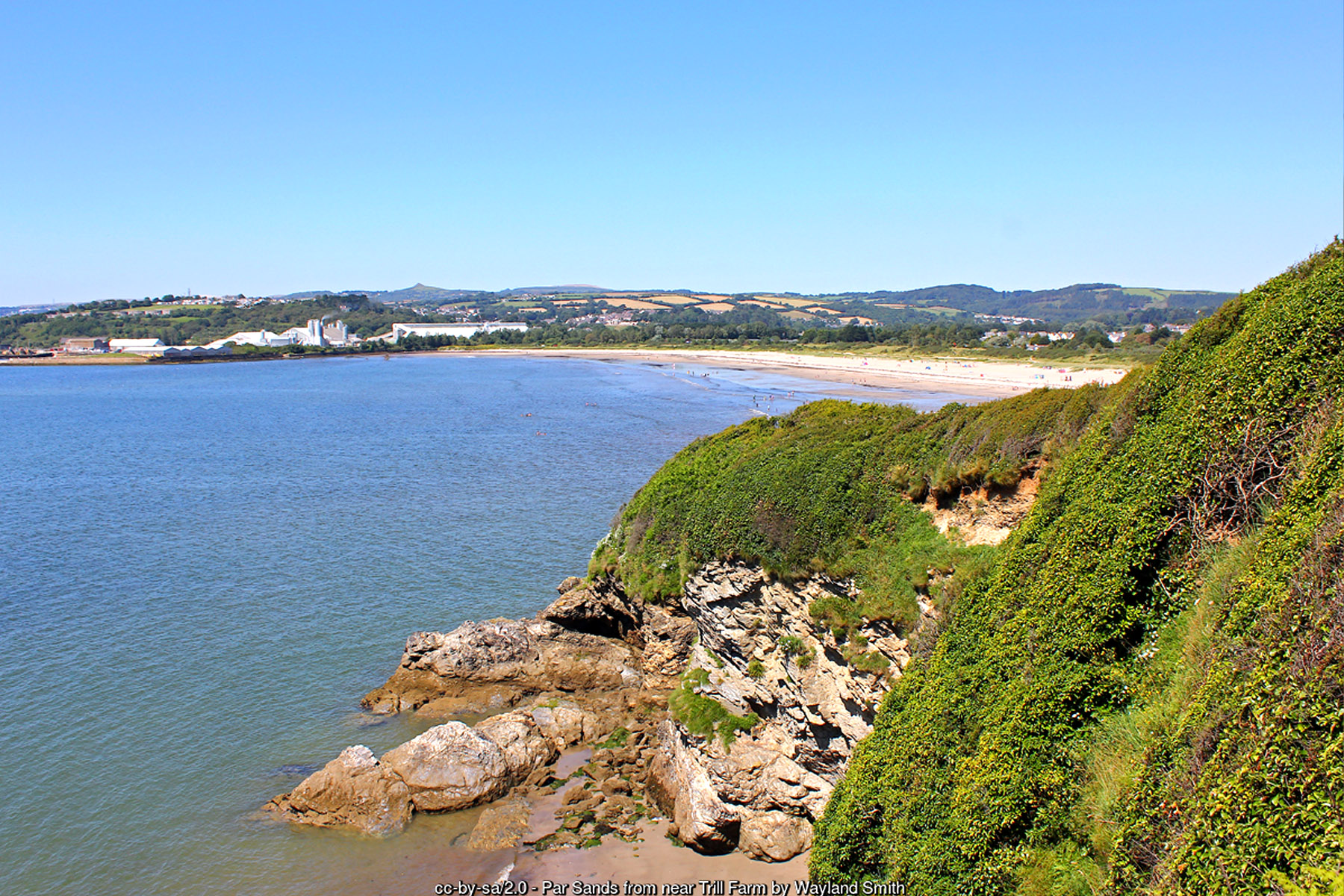
That mix of open sand, dune grass and the freshwater pool immediately behind the beach is what makes Par Sands genuinely interesting beyond the obvious appeal of the sand itself. The pool and its fringing reeds create a habitat quite different from the beach proper, and the combination draws a good range of wading birds and other species to feed and rest, making this stretch of coast a regular stop for local birdwatchers as well as sunbathers and swimmers. It is the kind of beach where a pair of binoculars is just as useful as a bucket and spade, and the pool area rewards a slower look even on a day when the beach itself is busy.
The beach itself sits on a stretch of coast where the underlying geology is softer and more mobile than the granite headlands either side of St Austell Bay, allowing the river to build up the broad sandy delta and dune system that gives Par Sands its size and flatness today. That same softness means the shoreline here has shifted over time, shaped by the interplay of river sediment, longshore drift and the harbour works built to control it, and it is part of why Par Sands feels so different underfoot from the more rock-bound coves, such as Polkerris, only a short distance to the west.
Par itself grew up almost entirely around its harbour, and that industrial history sits just behind the modern holiday scene here. Par Harbour was built in stages from the 1830s by Joshua (also written Joseph in some sources) Treffry, to export china clay and copper ore mined and quarried across the wider St Austell and mid-Cornwall districts - a district that, over the following century and more, became one of the most important china clay producing areas in the world. The harbour continued handling china clay shipments for well over a hundred years afterwards, and Par's whole identity as a working port, rather than simply a resort, grew directly out of Treffry's original scheme to give the china clay industry a proper outlet to the sea.
Treffry's ambitions for Par reached well beyond the harbour itself. He built an extensive network of tramways, and later an inland canal, linking Par to the mining and quarrying districts around St Austell and further north towards Newquay, effectively creating one of Cornwall's earliest integrated transport systems for moving ore and china clay down to the coast. Much of that infrastructure has long since been superseded or dismantled, but its legacy survives in the shape of Par itself - a town whose streets, sidings and harbour basin were all laid out around the practical business of getting Cornish minerals onto ships, with the beach and its holiday visitors arriving only later, as the industry gradually declined through the 20th century.
Today that industrial backdrop has largely given way to a straightforward holiday beach. Par Sands Holiday Park sits directly behind the beach, and much of the modern visitor experience here is built around that easy relationship between accommodation, car park and sand - walk out of the park and you are more or less on the beach. The appeal of Par Sands has always leaned more on its size, flatness and ease of access than on dramatic scenery, and that is very much still the case: this is a beach that suits families with young children, groups wanting plenty of space to spread out, and anyone who would rather not tackle steps or steep paths to reach the sand.
One of the more unusual advantages of staying near Par Sands is quite how close it sits to the Eden Project, one of Cornwall's best-known modern attractions, built inside a disused china clay pit at Bodelva only a few miles inland. The Eden Project is genuinely walkable or cyclable from the Par area via local lanes and the long-distance Saints' Way and Cornish Way routes, which pass through this part of Cornwall on their way between the north and south coasts, making Par Sands a natural, practical base for a visit that combines beach time with a trip to the biomes without needing to move accommodation.
Par Sands is generally dog friendly, though as with most Cornish beaches a seasonal restriction applies to at least part of the sand during the busier summer months; the exact dates set for this kind of restriction can change from year to year, so checking the current signage at the beach itself before a visit is the safest approach rather than relying on any fixed date. There is no RNLI lifeguard patrol at Par Sands, so the usual precautions around checking tides and conditions apply, and it is worth being aware that, sitting as it does at a river mouth, the beach can pick up more shingle and storm debris after rough weather than some of its more open-coast neighbours - a minor trade-off for the shelter and easy access that position also brings.
The flat, open expanse of sand and the steady onshore breeze that often reaches this part of the bay also make Par Sands a reasonable spot for beginners trying windsurfing or kitesurfing, alongside the more usual pastimes of swimming, paddling and simply walking the tideline at low water. The South West Coast Path runs along the top of the dunes here, linking Par Sands directly to Polkerris a short distance west and continuing east towards Carlyon Bay and St Austell, making it easy to combine a morning on the beach with a longer walk in either direction along one of the more accessible, level sections of coast path in this part of Cornwall.
Geographically, Par Sands sits roughly in the centre of St Austell Bay, with the small, sheltered cove of Polkerris a short distance to the west around the bay, and Carlyon Bay's own beaches continuing the coastline eastward towards St Austell. That central position, combined with the size and flatness of the sand and the closeness of the Eden Project inland, makes Par Sands one of the more versatile beaches in this part of Cornwall - equally suited to a quiet family morning on the sand, a longer walk along the coast in either direction, or a day trip that takes in one of the county's most popular modern attractions without ever straying far from the beach itself.
The tidal range across this part of St Austell Bay is fairly typical for the south Cornish coast, but its effect on Par Sands is more pronounced than on many smaller, steeper beaches simply because the sand here is so flat: a modest drop in the tide exposes a disproportionately large stretch of firm, walkable beach, which is part of why families with young children and dogs alike tend to gravitate here rather than to some of the smaller, steeper coves elsewhere in the bay. High water, by contrast, pushes the usable sand back towards the dunes and the pool, making low and mid tide generally the more rewarding times to visit if space is the priority. Either way, the beach's easy, level character, its closeness to Par's shops and services, and its position roughly midway along St Austell Bay's own run of beaches make it one of the more dependable, no-fuss choices on this stretch of coast.
Visitor Information
Parking
A car park at Par Sands Holiday Park sits directly behind the beach, run on a pay basis, giving easy, level access onto the sand. It is popular in summer and can fill on warm days, so arriving earlier is worthwhile.
Facilities
A café, shop and toilets are available at Par Sands Holiday Park, right behind the beach, making this one of the better-served beaches in the bay for everyday facilities. There is no RNLI lifeguard patrol.
Disabled Access
The flat, level beach and nearby car park make Par Sands one of the more accessible beaches in the bay, though the sand itself remains soft underfoot beyond the firmer areas near the car park. No dedicated Blue Badge bays are confirmed at this beach - check locally.
Things to Do Nearby
- Polkerris, the small, sheltered fishing cove a short distance west around the bay
- Carlyon Bay, the next beach east along St Austell Bay towards St Austell itself
- The Eden Project, Cornwall's famous biome gardens a few miles inland at Bodelva, reachable via local lanes or the Saints' Way and Cornish Way routes
- Par Beach Pool, the freshwater lagoon directly behind the beach, a popular spot for birdwatching
Places to Stay
Par has its own range of holiday accommodation close to the beach and Par Sands Holiday Park:
Frequently Asked Questions
Page last updated: 17 September 2026