St Austell, Cornwall – China Clay Town on St Austell Bay
St Austell & the Clay Country
The
Lizard Peninsula | Falmouth
| The Roseland
Peninsula | Truro
| St Mawes
| Veryan
& Portloe | Tregony
| St
Just in Roseland |Gorran
Haven | The
Lost Gardens of Heligan | Mevagissey
| Fowey | Golant | Charlestown |
Portholland | Portloe
| St Austell | Lost
Gardens of Heligan
On This Page
- Holidays in St Austell
- Best Time to Visit
- China Clay Country
- The Eden Project & Attractions
- St Austell Bay Beaches
- History of St Austell
- Key Buildings
- Notable People
- Walking & Cycling Trails
- Things to Do
- Local Events
- Places near St Austell
- Visitor Information
- Stay & Explore
- Family Holidays & Short Breaks
- Frequently Asked Questions
St Austell at a Glance
Mid Cornwall’s largest market town and the capital of the china clay country, a mile inland from St Austell Bay. Main line railway station and bus station; supermarkets, shops and the 15th-century Holy Trinity Church. The Eden Project, Charlestown, Wheal Martyn and St Austell Brewery are all close by, with the beaches of St Austell Bay and the Pentewan Valley Trail on the doorstep.
HOLIDAYS IN ST AUSTELL
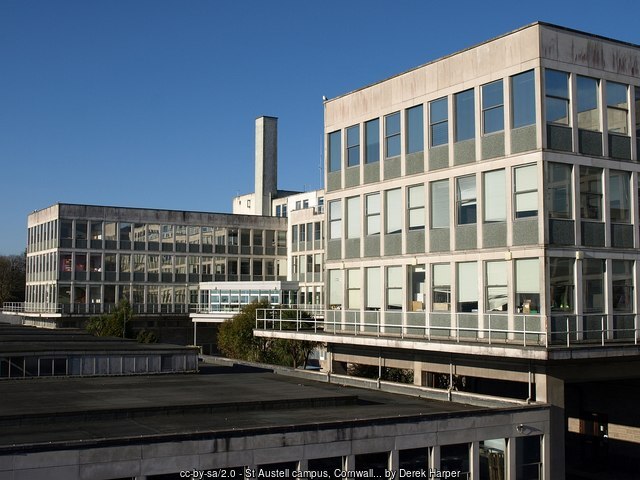
St Austell is the largest town in mid Cornwall and one of the busiest in the county. Little more than a small cluster of houses around a fine church for much of its history, it was utterly transformed in the 18th and 19th centuries by the discovery of huge reserves of china clay to the north and west, and it is still the heart of Cornwall’s clay country.
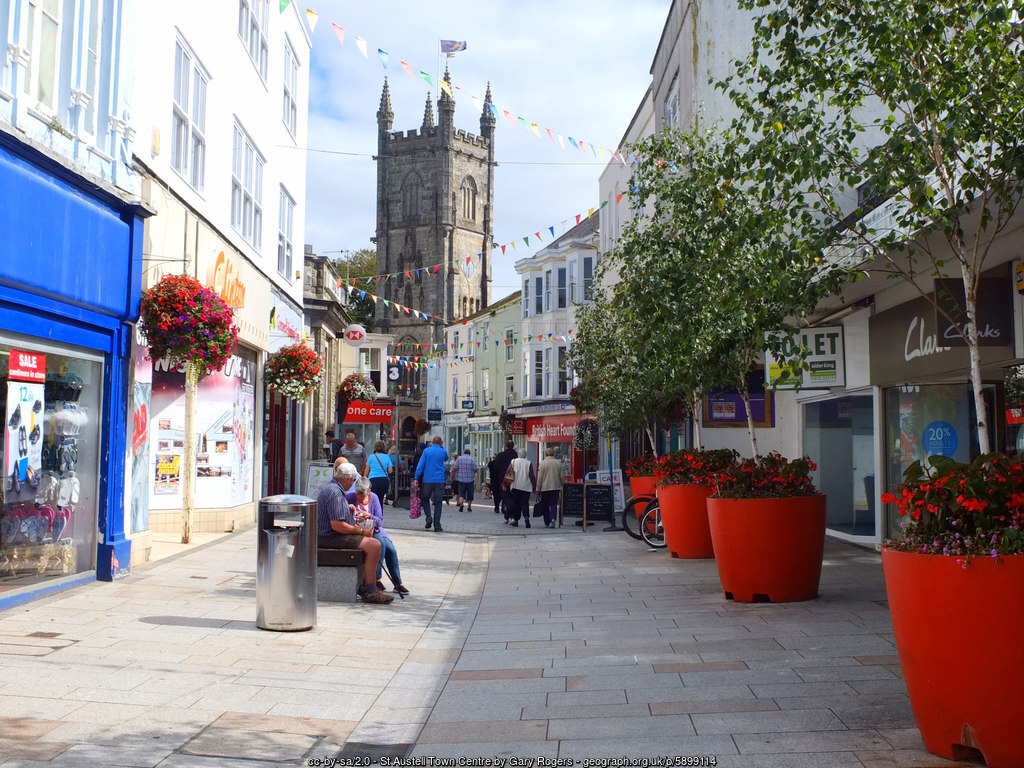
The town stands on a hillside a mile inland from St Austell Bay, with the white peaks of the clay tips – the “Cornish Alps” – on the skyline behind. In the centre, the carved tower of Holy Trinity Church rises above the shopping streets, and the Italianate Market House of 1844 and the old White Hart Hotel recall the prosperous years of the clay boom.
For visitors, St Austell is a practical and well-placed base. It has a main line railway station, a bus station, big supermarkets and a good range of shops, and within a few miles are some of Cornwall’s best-known attractions: the Eden Project, the Georgian harbour at Charlestown, the Wheal Martyn Clay Works museum, the Lost Gardens of Heligan and the St Austell Brewery visitor centre.
For families, St Austell Bay offers a great variety of beaches, from the little coves at Porthpean and Duporth to the long sands of Par and Pentewan, and the traffic-free Pentewan Valley Trail and Clay Trails are perfect for walking and cycling with children. On rainy days, Eden’s biomes, Wheal Martyn and the brewery tours keep everyone entertained.
The coast around the bay is within easy reach of Fowey, Mevagissey and the Roseland, and Truro and Newquay are less than half an hour away by road. Readers keen to learn more about the clay industry should visit Wheal Martyn, on the edge of the town.
This guide covers the clay country, the Eden Project and nearby attractions, the beaches of St Austell Bay, the town’s history and buildings, walking and cycling trails, and practical visitor information. For somewhere to stay, see St Austell holiday cottages and holidays and short breaks in St Austell.
Best Time to Visit St Austell
Spring is the season for gardens – Heligan, Caerhays and the Pinetum are at their best, and the Clay Trails are bright with gorse. Summer brings beach days on St Austell Bay and evening concerts at Eden. Because so many of its attractions are indoors or under cover, St Austell is also a good choice for autumn, winter and rainy days, and the Celtic Beer Festival at the brewery is a highlight of late November.
↑ Back to topCHINA CLAY COUNTRY
Put simply, china clay, or kaolin, is decomposed granite: the feldspar in the rock has broken down into a fine white clay. The process is not common to all granite areas – it is found in very few places in the world – which made the deposits north and west of St Austell particularly valuable.
In 1746 the Plymouth chemist William Cookworthy found china clay at Tregonning Hill in west Cornwall. Its quality was spoiled by specks of mica, but he soon found far better deposits of both clay and china stone at St Stephen-in-Brannel, just west of St Austell, and in 1768 he patented the making of English hard-paste porcelain. Within a century the clay country had become one of Cornwall’s great industries: thousands of men, women and children worked in the pits, dries and ports, and heavy wagons rumbled through St Austell to the harbours of Charlestown, Pentewan and Par.
Most of the clay went into papermaking, and it is also used in ceramics, paint, medicines and cosmetics. The pits, the white sand tips and the green-blue lakes of the old workings created a landscape found nowhere else in Britain – the Cornish Alps on the skyline north of the town.
The industry today: production methods have changed and the workforce is much smaller, but china clay is still worked around St Austell. Since 1999 the pits have been run by Imerys, which took over English China Clays. Clay travels by rail and road to the deep-water docks at Fowey for export, Par harbour having closed to clay shipping in 2007–08. To learn the story, visit the Wheal Martyn Clay Works, Cornwall’s china clay museum, on the edge of the town.
↑ Back to topChina clay at a glance
What: kaolin, from decomposed granite
Found: 1746, by William Cookworthy
Clay country: north and west of St Austell
Ports: Charlestown, Pentewan and Par in the past; Fowey today
Operator: Imerys (since 1999)
Museum: Wheal Martyn Clay Works, Carthew
THE EDEN PROJECT & ATTRACTIONS
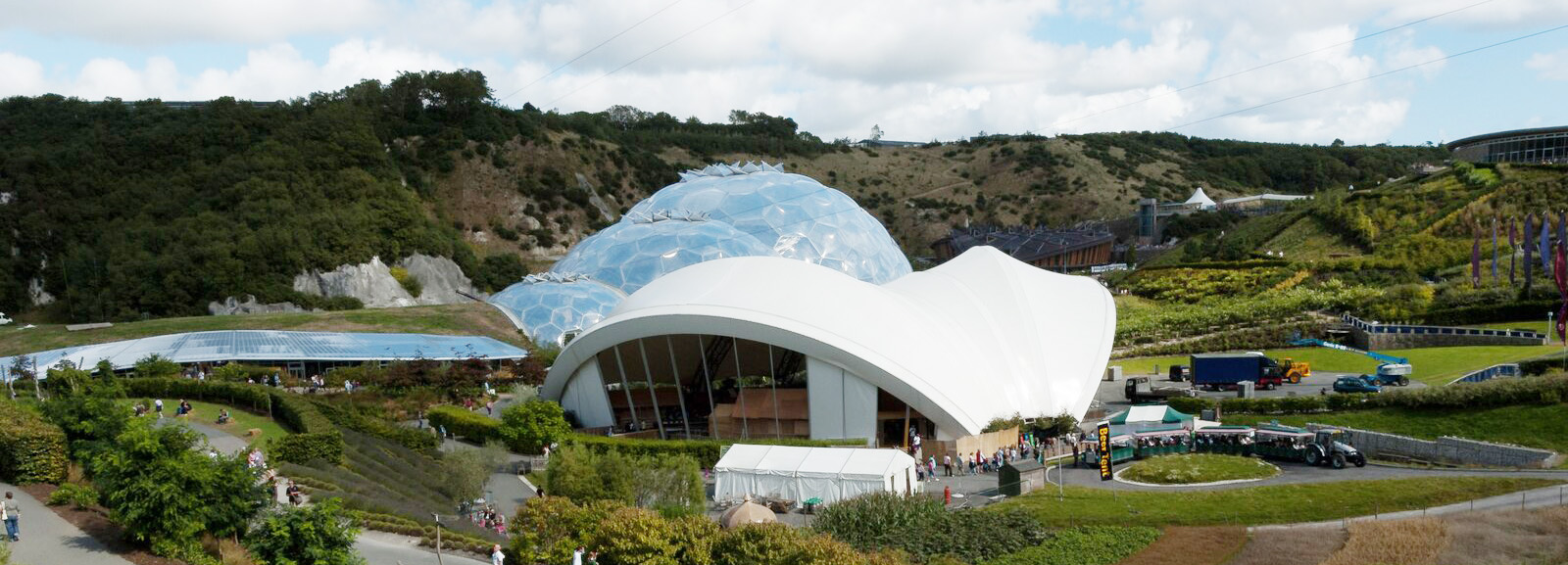
The Eden Project is Cornwall’s best-known attraction. Opened in 2001 in a worked-out clay pit at Bodelva, about three miles east of St Austell, it is famous for its giant domed biomes – the Rainforest Biome, the largest indoor rainforest in the world, and the Mediterranean Biome – surrounded by outdoor gardens. In summer the Eden Sessions bring big-name concerts to the pit.
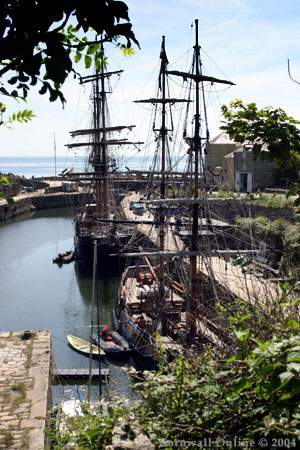
Closer to the town, Wheal Martyn Clay Works tells the story of china clay in its country park, with Victorian clay works, water wheels and a viewpoint over a working pit. St Austell Brewery, founded in 1851, offers tours, a visitor centre and the Hicks Bar, and Charlestown, with its tall ships and the Shipwreck & Heritage Centre, is a mile and a half away.
South of the town, the Lost Gardens of Heligan near Mevagissey are one of the most romantic gardens in Britain, and to the north-east lie Lanhydrock and Restormel Castle.
- Eden Project – Cornwall Online guide
- Wheal Martyn Clay Works
- St Austell Brewery visitor centre
- Lost Gardens of Heligan
Attractions near St Austell
Eden Project – Bodelva, approx. 3 miles
Wheal Martyn – Carthew, approx. 2 miles
St Austell Brewery – Trevarthian Road, in the town
Charlestown – approx. 1½ miles
Lost Gardens of Heligan – approx. 6 miles
Lanhydrock – near Bodmin, approx. 10 miles
ST AUSTELL BAY BEACHES
St Austell Bay is a wonderful place for a family beach holiday, with sheltered south-facing beaches of every size, from tiny coves to long stretches of sand. Most are a short drive from the town, and several can be reached on foot or by bike.
Some of the bay’s busier beaches have RNLI lifeguards in summer – check the RNLI website before you go, and always swim between the red and yellow flags where they are flying.
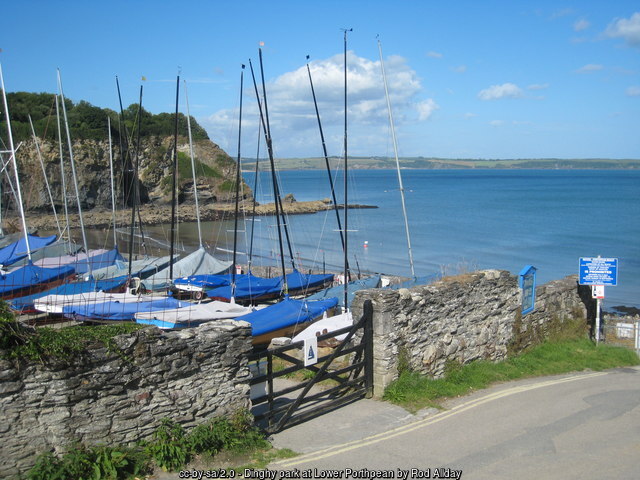
- Porthpean – the nearest beach to the town, a sheltered sandy cove below the cliffs. Seasonal dog ban in summer.
- Duporth and Charlestown – small beaches either side of the Georgian harbour.
- Carlyon Bay – a long beach below the cliffs east of Charlestown.
- Par Sands – a big, flat sandy beach with a car park and café, ideal for young children.
- Polkerris – a tiny harbour beach on the way to Gribbin Head.
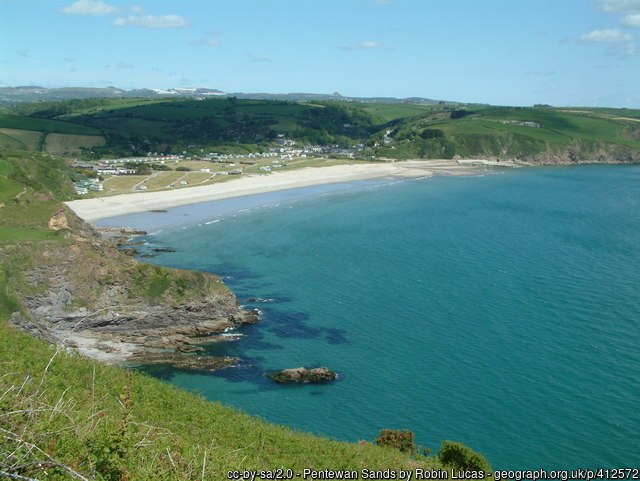
- Pentewan – wide sands at the end of the Pentewan Valley Trail.
- Hallane & Polgwyn – secluded coves on the coast path south of Porthpean.
See our guide to all the beaches of St Austell Bay.
↑ Back to topCheck the Met Office beach forecast and tide times and the RNLI lifeguarded beaches before you go.
HISTORY OF ST AUSTELL
The town takes its name from St Austol, a Breton saint of the 6th century. For most of its history it was a small market town in a farming and tin-working district, gathered around its parish church; the great carved tower of Holy Trinity, faced in Pentewan stone, was built in the late 15th century.
Everything changed with china clay. After Cookworthy’s discoveries in the mid 18th century, the pits spread across the moors to the north and west, and St Austell grew and prospered out of all recognition. Charles Rashleigh built the harbour at Charlestown from 1791 to ship the clay, a horse-drawn railway was opened down the valley to Pentewan in 1829, and harbours at Par and later Fowey followed. The Cornwall Railway reached St Austell in 1859, crossing the valley on a viaduct beside the town.
The wealth of the clay boom left its mark on the town centre. The Market House, built of Trethurgy granite in 1844, became the civic heart of the town – Winston Churchill spoke there on free trade in 1910 – and Walter Hicks founded the business in 1851 that became St Austell Brewery. Much of the old town centre was rebuilt in the 20th century, and the Victorian streets around the church remain the most attractive part of the town.
Today St Austell is a busy service centre for mid Cornwall. The clay industry is smaller than it was but still important, and the opening of the Eden Project in a disused pit in 2001 gave the clay country a new role as one of Cornwall’s great visitor destinations.
↑ Back to topSt Austell – key dates
6th century – St Austol, the town’s patron saint
c.1478–87 – Holy Trinity tower built
1746 – Cookworthy finds china clay in Cornwall
1768 – Cookworthy’s porcelain patent
1791 – Charlestown harbour begun
1829 – Pentewan Railway opens
1844 – Market House completed
1851 – Walter Hicks founds the brewery business
1859 – Cornwall Railway reaches St Austell
1999 – Imerys takes over English China Clays
2001 – Eden Project opens
Key Buildings
- Holy Trinity Church – the Grade I listed parish church in the town centre, with its tall tower of Pentewan stone and Carn Grey granite, richly carved with figures and dated by the arms of Bishop Courtenay to around 1478–87.
- The Market House, Market Street – the Italianate market hall of 1844 by Christopher Eales, built of Trethurgy granite, with a fine timber roof; Grade II* listed.
- The White Hart Hotel, Church Street – the old coaching inn beside the church, Grade II listed. Its panoramic French wallpaper of the Bay of Naples is now in the Victoria and Albert Museum.
- St Austell Brewery, Trevarthian Road – the Victorian brewery above the town, home of the visitor centre and Hicks Bar.
- Menacuddle Holy Well – a small medieval well chapel in a wooded valley on the northern edge of the town.
NOTABLE PEOPLE
- William Cookworthy (1705–1780) – the Quaker chemist from Kingsbridge whose discovery of china clay and china stone at St Stephen, near St Austell, founded the clay industry and English hard-paste porcelain.
- Walter Hicks (19th century) – the farmer who mortgaged his farm in 1851 to start the maltings and wine business in St Austell that grew into St Austell Brewery.
- A. L. Rowse (1903–1997) – the historian and poet, born the son of a clay worker at Tregonissey on the edge of the town and educated at St Austell Grammar School; he wrote A Cornish Childhood and spent his last years at Trenarren on St Austell Bay.
- Jack Clemo (1916–1994) – the clay country poet and novelist, born at Goonamarris near St Austell, whose work, including The Clay Verge and Wilding Graft, is rooted in the landscape of the pits.
WALKING & CYCLING TRAILS
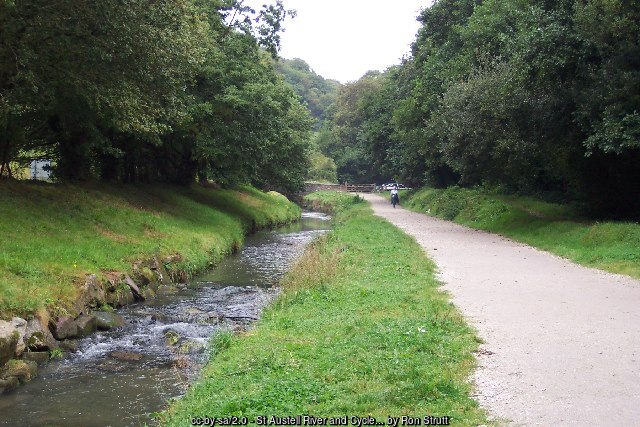
The Pentewan Valley Trail follows the St Austell River south from the town to the beach at Pentewan – a mainly flat, traffic-free route of about three and a half miles along the line of the old Pentewan Railway, which carried clay to Pentewan harbour from 1829 until 1918. It is ideal for families with children on bikes, and bikes can be hired in the valley. From Pentewan, the Cornish Way continues to Heligan and Mevagissey.
North of the town, the Clay Trails, first opened in 2005, are a network of mostly off-road routes for walking, cycling and horse riding through the clay country. The Green Corridor links the town centre with Wheal Martyn, and trails continue from there to the Eden Project, Bugle and Par beach, with views over working pits, mica dams and lakes.
Along the coast, the South West Coast Path runs around St Austell Bay from Pentewan and Black Head – where a memorial stone to A. L. Rowse looks over the bay – to Charlestown, Par and Gribbin Head.
- Pentewan Valley Trail
- Clay Trails to the Eden Project (Sustrans)
- Cycling in Cornwall – Cornwall Online
- Fowey to Gribbin Head walk – Cornwall Online
- Dodman Point & Gorran Haven walk – Cornwall Online
- Walking in Cornwall – Cornwall Online walks
THINGS TO DO IN AND AROUND ST AUSTELL
St Austell makes an excellent base for exploring mid Cornwall, with some of the county’s top attractions on the doorstep and the beaches of St Austell Bay a few minutes away.
For families, there is the Eden Project, the beaches at Par Sands and Pentewan, and a bike ride along the Pentewan Valley Trail. On rainy days, Eden’s biomes, Wheal Martyn’s museum, the brewery tour and the Charlestown Shipwreck Centre are all under cover. Here are some of the best things to do in and around St Austell.
- Visit the Eden Project and walk through the Rainforest Biome – Eden Project.
- Discover the story of china clay at Wheal Martyn Clay Works.
- Take a brewery tour at St Austell Brewery, followed by a meal in the Hicks Bar.
- See the tall ships at Charlestown and visit the Shipwreck & Heritage Centre.
- Cycle the Pentewan Valley Trail to the beach at Pentewan.
- Spend a day on St Austell Bay – St Austell Bay beaches.
- Explore the Lost Gardens of Heligan – Lost Gardens of Heligan.
- Visit Holy Trinity Church and the Market House in the town centre.
- Explore Mevagissey and Fowey – see our Mevagissey and Fowey guides.
- Play a round of golf on St Austell Bay – Golf in Cornwall.
LOCAL EVENTS
- du Maurier Fowey Literary Festival (May) – talks, music and walks in Fowey, eight miles away.
- Mevagissey Feast Week (late June) – music, processions and harbour events in Mevagissey.
- Eden Sessions (early summer) – evening concerts by big-name artists in the arena at the Eden Project.
- Fowey Royal Regatta (mid to late August) – a week of sailing, carnival and fireworks in Fowey.
- Celtic Beer Festival (late November) – St Austell Brewery opens its Victorian cellars for Cornwall’s biggest charitable beer festival.
Dates change from year to year – check St Austell Bay’s visitor website, the Eden Project and St Austell Brewery for this year’s events.
↑ Back to topPLACES NEAR ST AUSTELL
- Charlestown – the Georgian clay port and tall ships harbour, a mile and a half away.
- Mevagissey – the busy fishing harbour, about six miles south.
- Fowey – the historic harbour town on the River Fowey, about eight miles east.
- Lostwithiel – the old stannary town, with Restormel Castle nearby.
- Portloe and Portholland – unspoilt villages on the Roseland coast to the south-west.
- Truro – Cornwall’s cathedral city, about 14 miles west.
- Newquay – the north coast surf resort, about half an hour by road.
St Austell Bay Beaches
From Pentewan and Porthpean round to Charlestown, Carlyon Bay, Par Sands and Polkerris – see all the beaches of St Austell Bay in our Cornwall Beaches guide.
VISITOR INFORMATION
Parking & EV Charging
The main town centre car park is Priory Car Park, Priory Road, PL25 5AB, run by St Austell Town Council, with public toilets. Cornwall Council runs car parks at Clifden Road and Polkyth, and there is parking at the railway station. Most Cornwall Council car parks no longer take cash – pay by card or app.
Electric vehicle charging:
- Priory Car Park – slow and rapid chargers (Evolt), PL25 5AB
- Tesco Superstore, Daniels Lane – chargers (Pod Point), PL25 3HR
- Asda, Cromwell Road – store car park chargers, PL25 4PR
Bus & Train
St Austell station is on the main line between Penzance and London Paddington, with frequent trains to Truro and Plymouth. The bus station is beside it: routes include 24 to Par and Fowey, 25 to Charlestown and Par, 26/26A to the Eden Project, 27 to Truro, 29 to Pentewan, Heligan and Mevagissey and 51 to Tregony and Veryan. Check timetables before you travel.
Facilities & Supermarkets
St Austell has a full range of shops, banks, a library and post office, with the main shopping streets around Fore Street and the church. Public toilets are at Priory Car Park. Supermarkets:
- Tesco Superstore – Daniels Lane, St Austell PL25 3HR
- Lidl – Daniels Lane, St Austell PL25 3HS
- Asda – Cromwell Road, St Austell PL25 4PR
- Aldi – Slades Road, St Austell PL25 4HW
- Iceland – Old Vicarage Place, St Austell PL25 5YY
Cafés & Restaurants
The town centre has cafés, bakeries, pubs and restaurants, and the Hicks Bar at St Austell Brewery serves food alongside the brewery’s beers. Charlestown, a short drive away, has harbourside pubs and cafés, and there are cafés at the Eden Project, Wheal Martyn, Par Sands and Pentewan. Opening hours vary out of season.
Health
St Austell Community Hospital, Porthpean Road, PL26 6AA, has a Minor Injury Unit. GP surgeries in the town include Park Medical Centre, 19 Bridge Road, PL25 5HE, and there are pharmacies in the town centre and at the supermarkets. Call NHS 111 for urgent advice and 999 in an emergency. The nearest A&E is the Royal Cornwall Hospital, Truro.
Disabled Access
The pedestrianised shopping streets in the town centre are paved and fairly level, though St Austell is built on a hillside and some streets are steep. The railway and bus stations are next to each other. The Eden Project has accessible paths, a land train and mobility scooters, and the Pentewan Valley Trail is mainly flat.
Vets & Dogs
Dogs are welcome on the Clay Trails and the Pentewan Valley Trail – keep them on a lead near cyclists and horses. Porthpean Beach has a seasonal dog ban in summer; most other St Austell Bay beaches welcome dogs. Vets in the town include Penmellyn Veterinary Group, 54A Holmbush, St Austell PL25 3LQ.
National Trust & English Heritage
The National Trust cares for Lanhydrock near Bodmin and the coast around Gribbin Head and the Fowey estuary. English Heritage looks after Restormel Castle above Lostwithiel and St Catherine’s Castle at Fowey.
Attractions
The Eden Project, Wheal Martyn, St Austell Brewery and Charlestown on the doorstep, with the Lost Gardens of Heligan a short drive south.
STAY & EXPLORE NEAR ST AUSTELL
Local Attractions
Official Information
FAMILY HOLIDAYS & SHORT BREAKS IN ST AUSTELL
Family holidays in St Austell put the best of mid Cornwall within easy reach – a day at the Eden Project, a bike ride down the Pentewan Valley to the beach, rock pooling at Porthpean and tall ships at Charlestown. With the railway station, buses and big supermarkets in the town, it is one of the easiest bases in Cornwall for a family holiday.
Choose from cottages in and around the town, on the edge of the clay country or close to the beaches of St Austell Bay. Browse St Austell holiday cottages, or holidays and short breaks in St Austell for every type of accommodation.
With so many attractions under cover, St Austell is a good choice for a short break at any time of year. Booking direct with the owner means no agency fees.
↑ Back to topFREQUENTLY ASKED QUESTIONS ABOUT ST AUSTELL
St Austell is a market town in mid Cornwall, about a mile inland from St Austell Bay on the south coast. It lies on the A390 between Truro and Liskeard, about 14 miles east of Truro, and is the main town for the Eden Project, Charlestown and Mevagissey.
The Eden Project is at Bodelva, about three miles east of St Austell town centre. Go Cornwall Bus routes 26 and 26A run from St Austell bus and railway station to Eden, and you can also cycle or walk there on the Clay Trails.
In 1746 William Cookworthy found china clay in Cornwall, and soon after he found better deposits at St Stephen, just west of St Austell. The clay country north of the town became one of the world's great sources of kaolin, and the white spoil heaps known as the Cornish Alps still dominate the skyline. Imerys continues to work clay here today.
St Austell is about a mile from the sea. The nearest beaches on St Austell Bay are Porthpean, Duporth and Charlestown, with Carlyon Bay, Par Sands, Polkerris and Pentewan a short drive away.
Yes. St Austell station is on the main line between Penzance and London Paddington, with regular trains to Truro, Plymouth and beyond. The bus station is right beside it.
The main town centre car park is Priory Car Park on Priory Road, PL25 5AB, run by St Austell Town Council. Cornwall Council also has car parks at Clifden Road and Polkyth, and there is parking at the railway station and the supermarkets.
Yes. St Austell Brewery, founded by Walter Hicks in 1851, has a visitor centre, shop and the Hicks Bar on Trevarthian Road, PL25 4BY, and runs guided tours. Booking is recommended for tours.
The Pentewan Valley Trail is a mainly flat, traffic-free path of about three and a half miles between St Austell and the beach at Pentewan, following the St Austell River and the route of the old Pentewan Railway. It is popular with walkers and families on bikes, and bike hire is available.