Fowey, Cornwall – Harbour Town on the River Fowey
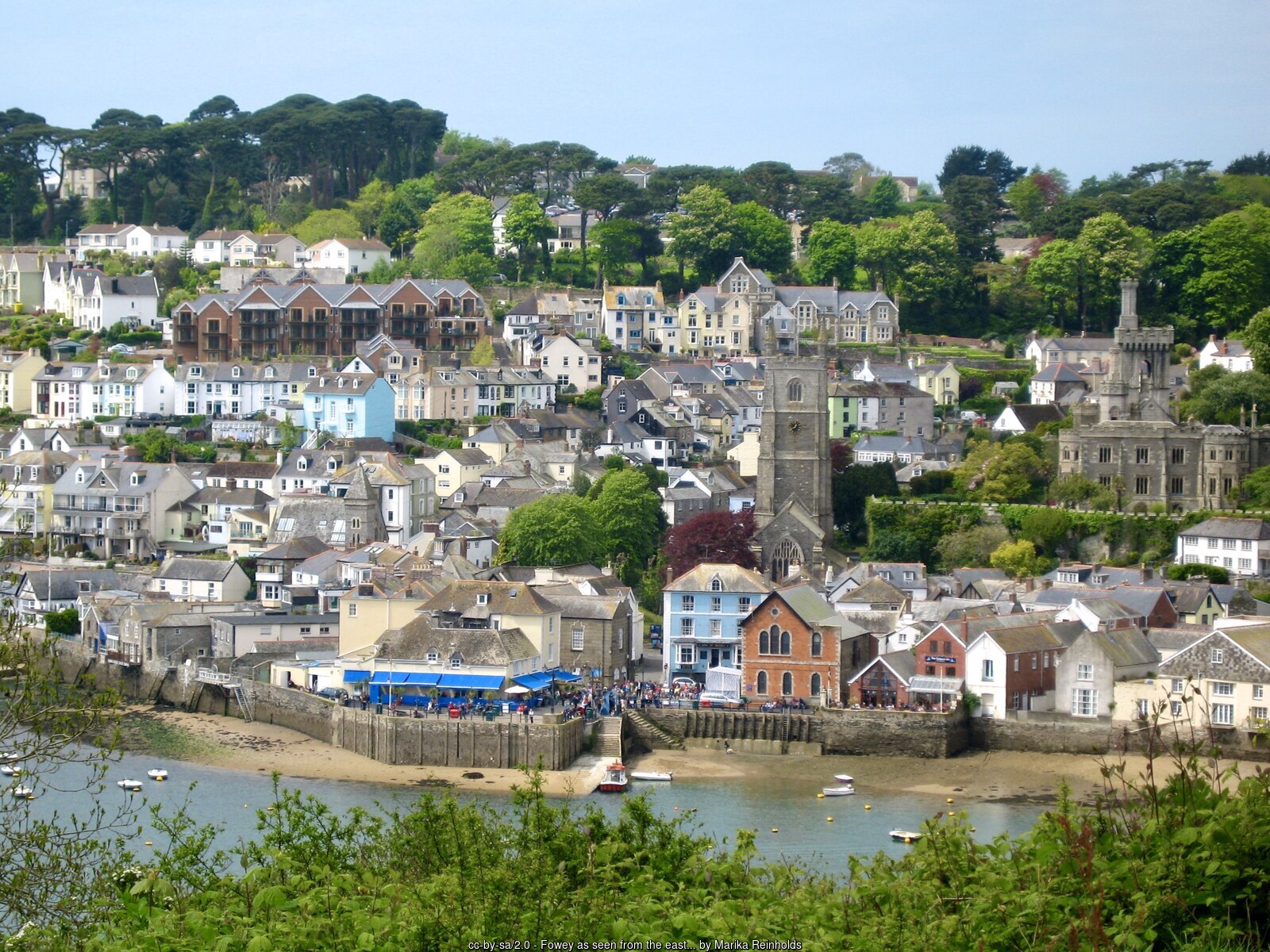
Fowey & the River Fowey Estuary
Cornwall Online | South East Cornwall Towns and Villages | Looe | Talland Bay | Polperro | Polruan | Fowey | Golant | Lostwithiel | Mevagissey | Whitsand Bay & The Rame Peninsula | Kingsand | Cawsand | Mount Edgcumbe Country Park | Torpoint | St Germans | Saltash | Liskeard | Siblyback Lake - Water Park | Minions - Hurlers - Bodmin Moor | St Neot | St Cleer | Callington | Gunnislake | Calstock | Cardinham Woods - Walking & Cycle Trails | Launceston |
On This Page
Fowey at a Glance
Historic harbour town at the mouth of the River Fowey on Cornwall’s south coast, opposite Polruan. Narrow streets of shops, galleries, pubs and restaurants; passenger ferry to Polruan and car ferry to Bodinnick; Readymoney Cove and St Catherine’s Castle a short walk away. A working china clay port, home of the du Maurier Fowey Literary Festival (May) and Fowey Royal Regatta (August). On the South West Coast Path and the end of the Saints’ Way.
HOLIDAYS IN FOWEY
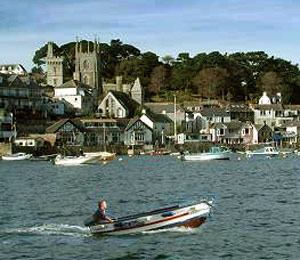
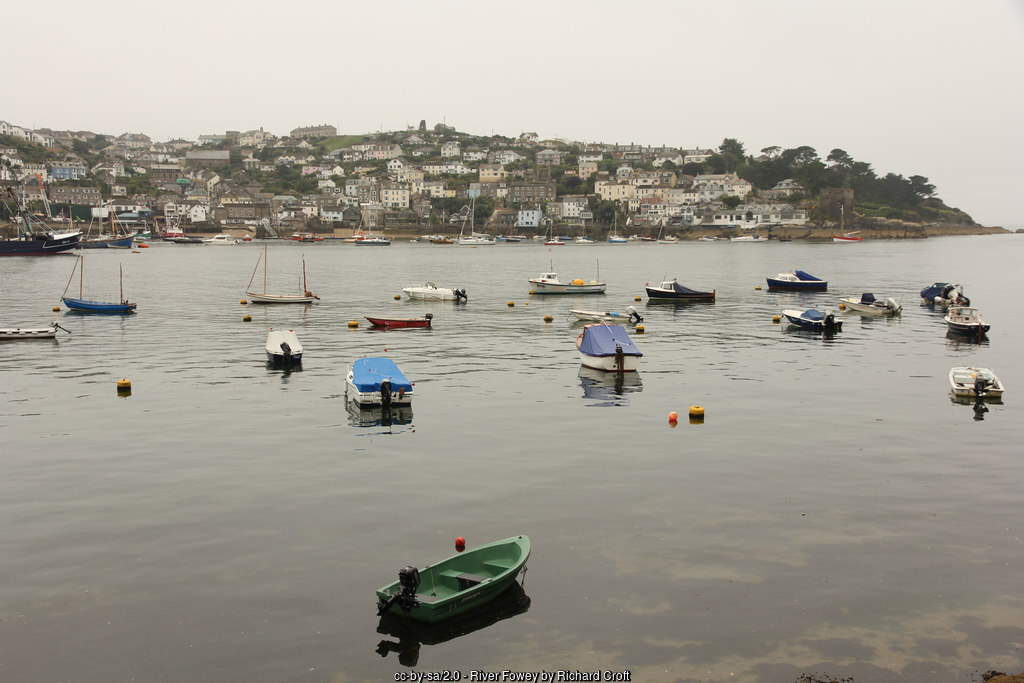
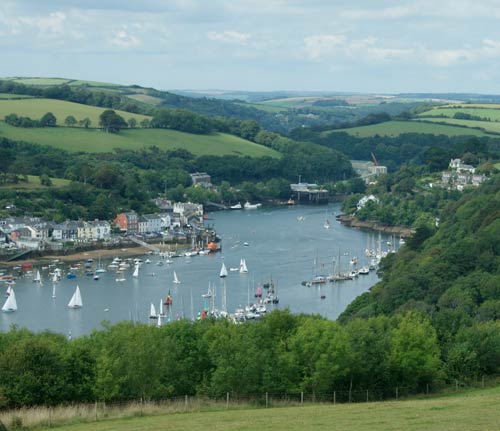
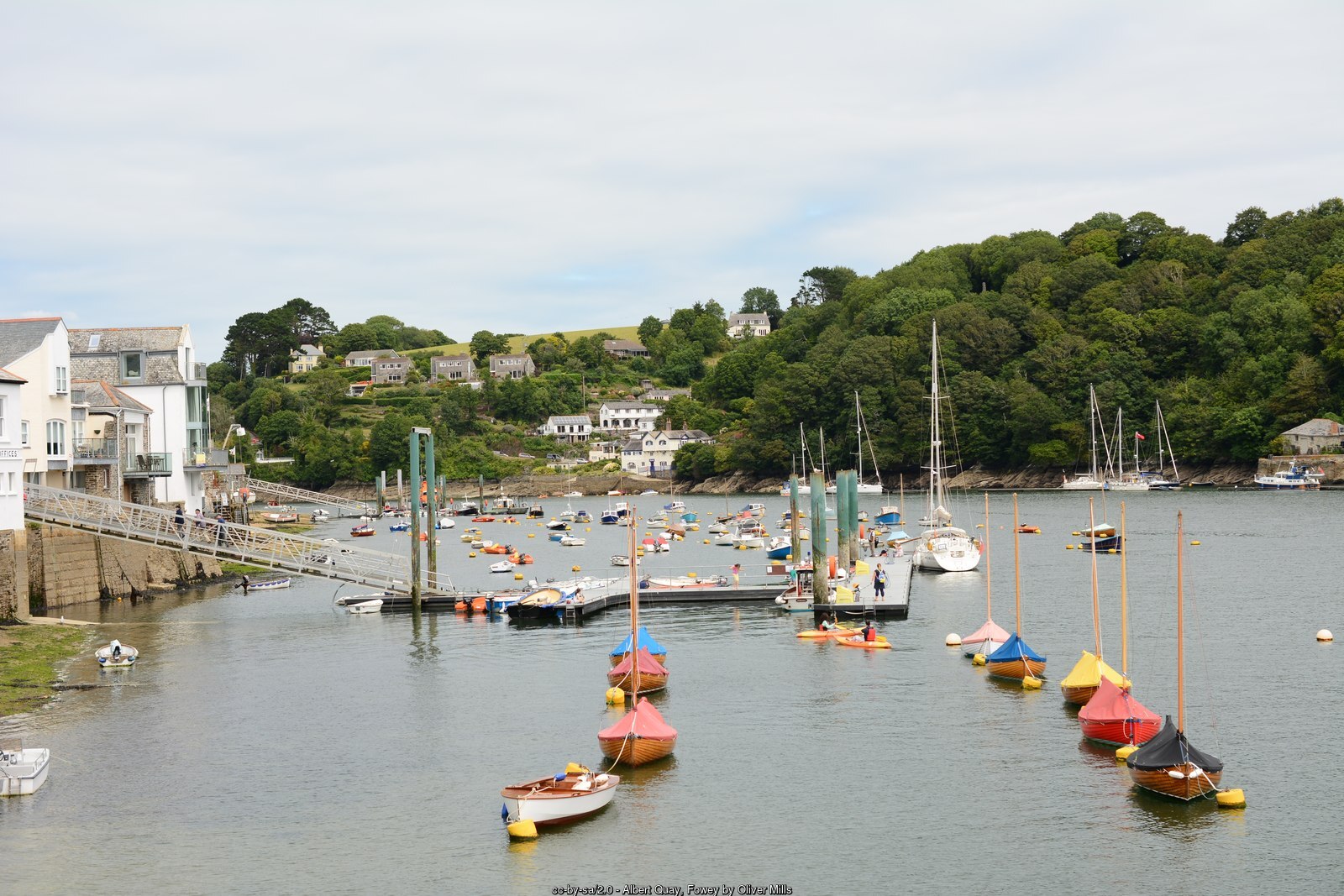
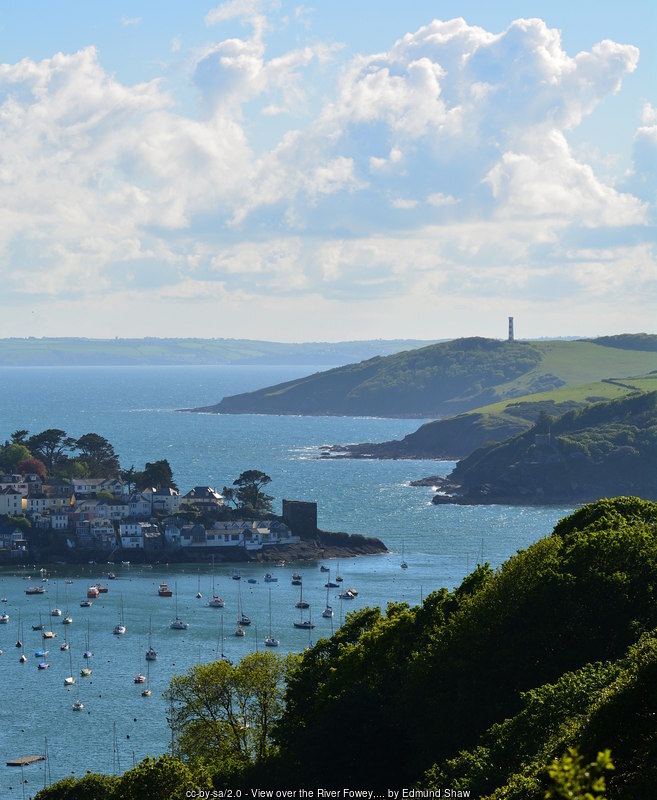
Fowey (pronounced “Foy”) is one of the most attractive small towns in Cornwall. It climbs the steep west bank of the River Fowey where the estuary meets the sea, a tangle of narrow streets, colour-washed houses, old quays and slipways looking straight across the harbour to the village of Polruan. Few places in Cornwall give you such a constant view of boats coming and going, from dinghies and yachts to tugs and ocean-going ships.
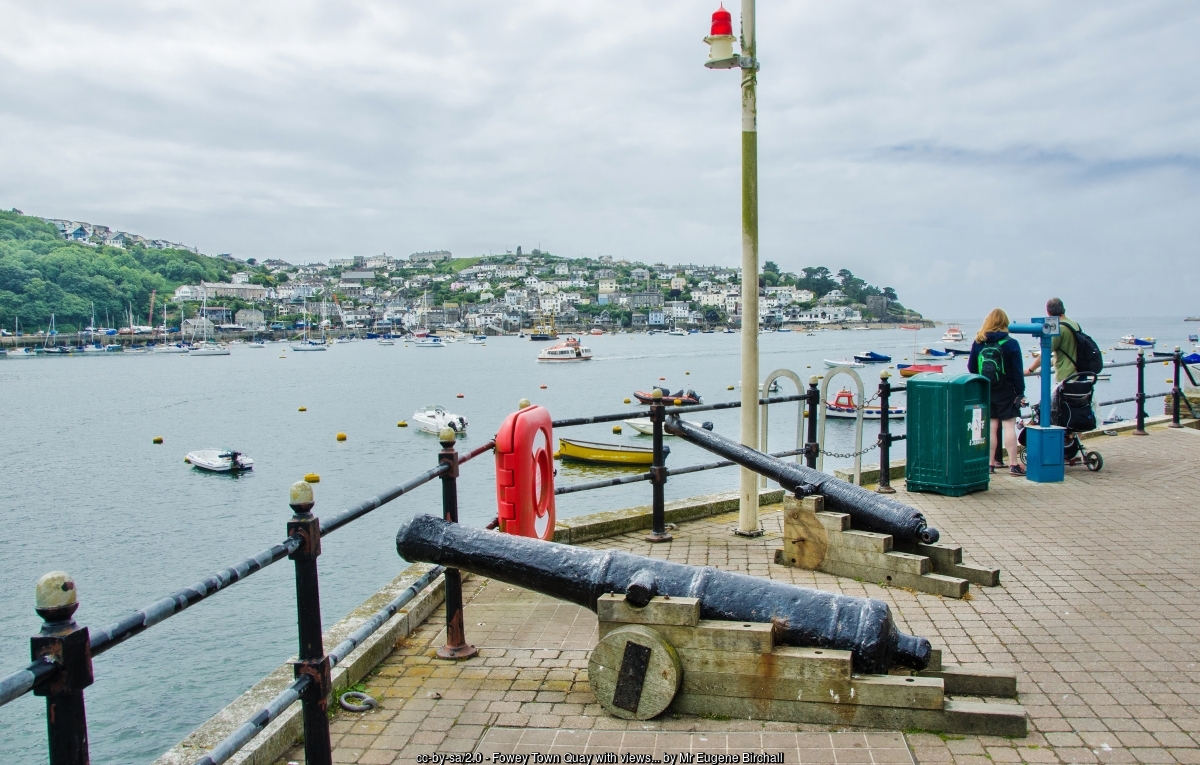
The heart of the town is Fore Street and the Town Quay, lined with independent shops, galleries, delis, pubs and restaurants. Above them rise the tower of St Fimbarrus Church and the turrets of Place, home of the Treffry family for more than seven centuries. South along the Esplanade, the town gives way to woods, the little sandy beach at Readymoney Cove and the ruins of St Catherine’s Castle, built in the reign of Henry VIII to guard the harbour mouth.
Fowey is also a working port. Upriver from the town, ships load china clay at the Imerys jetties and are guided in and out by the harbour pilots and tugs, so the harbour is never still. Ferries cross to Polruan and Bodinnick throughout the day, and in summer a ferry runs along the coast to Mevagissey.
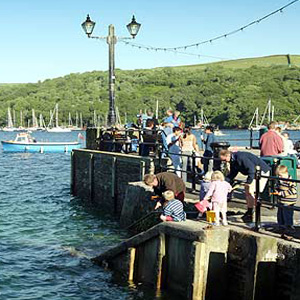
For families, Fowey is a lovely base for a holiday by the water – crabbing from the quays, boat trips up the river, picnics on Readymoney Cove and gentle walks along the estuary. Hiring a self-drive boat or a kayak to explore the creeks at Pont Pill and Lerryn is a highlight for many visitors. There are no lifeguards on the town’s small beaches, so for surf and big sands head west to St Austell Bay or round to the north coast.
The town has a famous literary history. Daphne du Maurier lived on the Fowey estuary for most of her life, Sir Arthur Quiller-Couch (“Q”) made his home here, and Kenneth Grahame married in Fowey’s church before writing The Wind in the Willows. Their stories are celebrated at the du Maurier Fowey Literary Festival each May.
The estuary and the coast on either side lie within the Cornwall National Landscape (formerly the Area of Outstanding Natural Beauty), and much of the surrounding countryside is cared for by the National Trust. The Hall Walk, the coast path to Gribbin Head and the Saints’ Way all start on the doorstep. For somewhere to stay, see Fowey holiday cottages and holidays and short breaks in Fowey.
Best Time to Visit Fowey
Spring brings the du Maurier Fowey Literary Festival in early May, bluebells in the riverside woods and quieter streets. Summer is the liveliest season, with the ferry to Mevagissey running, boat trips on the river and Regatta Week in August, when the town is at its busiest. Autumn and winter are peaceful and atmospheric – the views across the harbour are just as good, the walks are empty and the pubs have their fires lit.
The streets are narrow and parking is limited, so in high summer it is best to arrive early and use one of the car parks on the edge of town.
↑ Back to topFOWEY HARBOUR & THE FERRIES
Fowey has one of the finest natural harbours on the south coast – deep, sheltered and accessible at all states of the tide. For centuries it sent ships and men to fight England’s wars and traded in tin, copper and fish, and today it is still a busy commercial port.
The first cargo of china clay was shipped from Fowey in 1869, after the railway from Lostwithiel reached the jetties above the town. Clay is now the port’s main export: Fowey handles around 450,000 tonnes of cargo a year, loaded at the Imerys terminals upriver, and the harbour also handles rock salt and aggregates. Fowey Harbour Commissioners provide the pilots and run two tugs, Cannis and Morgawr, to bring the bigger ships safely through the narrow harbour mouth. Cruise ships also call, anchoring in the harbour off the town.
Alongside the ships, the harbour is busy with yachts, dinghies and the town’s own classes of racing boats, the Fowey Rivers and the Troys, sailed from the Royal Fowey Yacht Club and the Fowey Gallants Sailing Club.
The Ferries
- Polruan ferry – a foot passenger ferry running all year between Polruan Quay and Fowey. In summer daytime it lands at Whitehouse Slip on the Esplanade; early mornings, evenings and from mid September to mid May it uses Town Quay. Dogs, bikes and pushchairs are welcome, but access is by steps.
- Bodinnick car ferry – a vehicle and foot ferry from the slipway beside Caffa Mill car park (PL23 1DF) to Bodinnick, saving a long drive round by Lostwithiel when travelling east towards Polperro and Looe.
- Fowey to Mevagissey ferry – a seasonal summer service from Whitehouse Slip across St Austell Bay to Mevagissey, taking around 40 minutes.
The Polruan and Bodinnick ferries are run by C. Toms & Son – see their website for current times. All services are subject to the weather.
↑ Back to top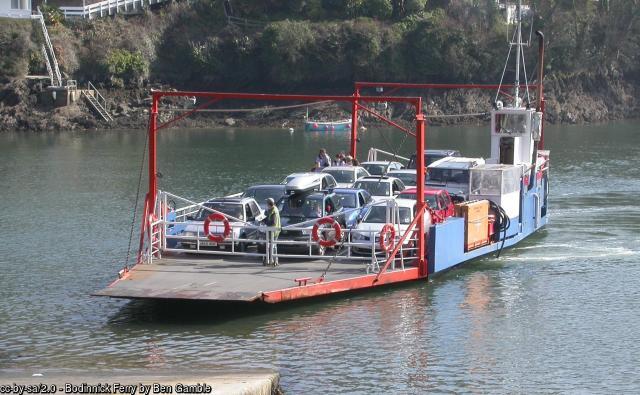
The Port of Fowey
Type: deep-water commercial port, open at all states of tide
Main cargo: china clay (first shipped 1869)
Tonnage: around 450,000 tonnes a year
Terminals: Imerys, upriver of the town
Tugs: Cannis and Morgawr
Ferries: Polruan (foot), Bodinnick (cars), Mevagissey (summer)
BEACHES NEAR FOWEY
Fowey’s beaches are small, sheltered and full of character – perfect for families with young children who want to paddle, build sandcastles and explore rock pools. Within a few miles there is a real variety, from the little town beach at Readymoney to secluded coves on the coast path and the long sands of St Austell Bay.
None of the beaches immediately around Fowey has RNLI lifeguard cover. For lifeguarded beaches in summer, check the RNLI website and head to the bigger beaches of St Austell Bay or the north coast; at Fowey, keep an eye on children in the water and watch the tide.
- Readymoney Cove – Fowey’s own beach, a ten-minute walk from the town along the Esplanade. A small, sheltered sandy cove below St Catherine’s Castle, with toilets and a seasonal kiosk. Dogs are banned from 1 July to 31 August, 10am–6pm.
- Coombe Hawne – two small, quiet coves reached along the coast path beyond Readymoney.
- Polridmouth Cove – a beautiful secluded cove below Menabilly on the way to Gribbin Head, said to have inspired scenes in Rebecca. Dogs welcome all year.
- Polruan beaches – small beaches across the harbour, a short ferry ride away.
- Polkerris and Par Sands – a sheltered harbour beach and a long sandy beach on St Austell Bay, a short drive west.
See our guide to the beaches around Fowey and the beaches of St Austell Bay.
↑ Back to top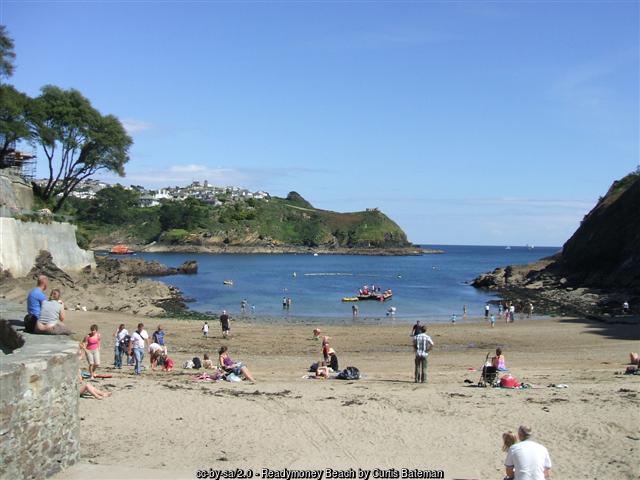
No lifeguards on Fowey’s beaches. Check the Met Office beach forecast and tide times before you go.
HISTORY OF FOWEY
A church has stood on the site of St Fimbarrus since early times, and by the Middle Ages Fowey had grown into one of the most important ports in the West Country. Pilgrims sailed from here for Rome and Santiago de Compostela, and the town sent ships and men to the siege of Calais in 1346.
During the Hundred Years’ War, Fowey’s privateers – the Fowey Gallants – were licensed to seize French ships, and the line between privateering and piracy was often blurred. The French took their revenge. Fowey was raided and burned in 1457, when the church was badly damaged; at Place, Elizabeth Treffry, in her husband’s absence, led the defence of the house against the raiders, reputedly pouring molten lead from the walls. The church was rebuilt from 1460 with help from the Earl of Warwick.
After the raid, towers were built on each side of the harbour entrance, and under Henry VIII Thomas Treffry built St Catherine’s Castle (c.1538–40) above Readymoney as part of the king’s chain of coastal forts. The harbour saw action again in the Civil War, when the Parliamentarian army of the Earl of Essex was trapped between Lostwithiel and Fowey and surrendered in 1644, and in 1645 a Barbary raid on Fowey carried off some 240 people into slavery.
In the 18th and 19th centuries Fowey traded in pilchards, tin, copper and timber, and was famous for its schooners. The arrival of the railway from Lostwithiel in 1869 brought the first shipments of china clay, and dredging in the early 20th century allowed larger ships to reach the jetties, making Fowey the leading clay port. Passenger trains to Fowey ended in 1965, but the line still carries clay to the docks.
At the end of the 19th century Fowey became a favourite of writers and yachtsmen, and in the 20th century it found lasting fame through Daphne du Maurier. Today the old town is a conservation area within the Cornwall National Landscape.
↑ Back to topFowey – key dates
1346 – Fowey ships at the siege of Calais
1457 – French raid; Elizabeth Treffry defends Place
1460 – church rebuilding begins
c.1538–40 – St Catherine’s Castle built
1644 – Essex’s army surrenders near Fowey
1645 – Barbary raid on Fowey
1787 – Town Hall built on the Town Quay
1869 – railway opens; first china clay exported
1899 – Kenneth Grahame marries in Fowey
1926 – the du Mauriers buy Ferryside
1965 – passenger trains end
1997 – first Daphne du Maurier Festival
Key Buildings
- Church of St Fimbarrus – the Grade I listed parish church, rebuilt after the 1457 raid, with its tall tower, Norman font and a pulpit said to have been made in 1601 from the panelling of a Spanish galleon.
- Place – the Grade I listed home of the Treffry family beside the church, with a 15th-century tower strengthened and largely rebuilt in the early 16th century and remodelled in the 19th. Private, but its turrets dominate the town.
- St Catherine’s Castle – Henry VIII’s fort above Readymoney Cove, built by Thomas Treffry c.1538–40 and later re-used in the Crimean War and the Second World War. Cared for by English Heritage, free to visit.
- Fowey Town Hall, Town Quay – built in 1787, Grade II listed, now home to Fowey Town Council. The older building behind houses Fowey Museum, and the Fowey Aquarium, opened in 1952, is on the ground floor.
- The Haven, Esplanade – the house above the Polruan ferry slip where Sir Arthur Quiller-Couch lived from 1892 until his death.
- Ferryside, Bodinnick – the former boatbuilder’s shed across the river bought by the du Maurier family in 1926, where Daphne wrote her first novel. Still a private family home.
LITERARY FOWEY
Few small towns have inspired so many writers. Sir Arthur Quiller-Couch made Fowey his main home from 1892 and wrote about it as “Troy Town” in his novels. Through him, Kenneth Grahame came to Fowey in 1899 and married Elspeth Thomson at St Fimbarrus Church the same year; boating on the river with Q is said to have fed into the river world of The Wind in the Willows. J.M. Barrie also visited the circle at Fowey.
Daphne du Maurier first came to Fowey as a teenager, when her family bought Ferryside at Bodinnick in 1926. She wrote her first novel, The Loving Spirit, there, set in Polruan, and married Frederick “Boy” Browning at Lanteglos church across the river in 1932. Later she leased Menabilly, the Rashleigh house in the woods near Gribbin Head that inspired Manderley in Rebecca. She completed Q’s unfinished novel Castle Dor, set around Golant and the Fowey river.
You can follow their footsteps on foot: the Hall Walk passes the memorial to Q on Penleath Point, the ferry to Bodinnick lands beside Ferryside, and the coast path to Gribbin Head passes Polridmouth Cove below Menabilly. Each May the town celebrates its writers at the du Maurier Fowey Literary Festival, first held in 1997 as the Daphne du Maurier Festival.
↑ Back to topNOTABLE PEOPLE
- Elizabeth Treffry (15th century) – the “Lady of Place”, who led the defence of Place House against the French raiders in 1457.
- Sir Arthur Quiller-Couch, “Q” (1863–1944) – novelist, critic and editor of The Oxford Book of English Verse, who lived at The Haven on the Esplanade from 1892 and is buried in Fowey churchyard.
- Kenneth Grahame (1859–1932) – author of The Wind in the Willows, who married Elspeth Thomson at St Fimbarrus Church in 1899 and spent many holidays boating on the river.
- Daphne du Maurier (1907–1989) – the novelist who lived at Ferryside, then Menabilly and later Kilmarth near Fowey, and set Rebecca, The Loving Spirit and other novels in the area.
WALKS FROM FOWEY
The Hall Walk is one of the classic short walks in Cornwall – a circuit of about four miles that crosses the river twice by ferry. Take the car ferry to Bodinnick, climb past the Old Ferry Inn and follow the path high above the harbour, past the memorial to Q on Penleath Point and round the wooded creek of Pont Pill, then down into Polruan for the passenger ferry back to Fowey.
Heading west, the South West Coast Path leaves Fowey along the Esplanade, passes Readymoney Cove and St Catherine’s Castle and follows the cliffs to Polridmouth Cove and Gribbin Head, crowned by its red-and-white daymark of 1832. A circular route returns through the Menabilly woods. Fowey is also the southern end of the Saints’ Way, the 29-mile route across Cornwall from Padstow, which follows the river north to Golant.
- Fowey to Gribbin Head walk – Cornwall Online
- Lansallos to Polruan walk – Cornwall Online
- Lerryn walk – Cornwall Online
- Fowey Hall Walk (National Trust)
- Walking in Cornwall – Cornwall Online walks
THINGS TO DO IN AND AROUND FOWEY
Fowey is a town to explore slowly, on foot and by water. Wander the lanes behind Fore Street, browse the galleries and bookshops, watch the ships come in from the Town Quay and take the ferry across for a pint in Polruan or Bodinnick.
For families, there is crabbing from the quays, the little aquarium on Town Quay, boat trips on the river and an afternoon on Readymoney Cove. On rainy days, Fowey Museum, the Eden Project’s biomes, the Charlestown Shipwreck & Heritage Centre and Lanhydrock House near Bodmin are all within easy reach.
On the water, you can hire a self-drive motor boat, join a guided kayak trip up the creeks, or take a harbour and river cruise past the clay jetties to Golant. Here are some of the best things to do in and around Fowey.
- Take the ferry to Polruan and climb to the coastguard lookout for views of the harbour mouth.
- Walk the Hall Walk – two ferries, woodland, creeks and the Q memorial.
- Visit St Catherine’s Castle and spend an hour on Readymoney Cove – English Heritage in Cornwall.
- Hire a boat and explore the river and Pont Pill – Fowey River Hire.
- Walk to Gribbin Head and Polridmouth Cove – Fowey to Gribbin Head walk.
- Follow the du Maurier trail – Ferryside, Menabilly, Lanteglos church and the festival in May.
- Visit Fowey Museum and Aquarium on the Town Quay.
- Take the summer ferry to Mevagissey – see our Mevagissey guide.
- See the Eden Project, about six miles away – Eden Project.
- Explore upriver to Golant and Lostwithiel, with Restormel Castle above the valley.
LOCAL EVENTS
- du Maurier Fowey Literary Festival (May) – Cornwall’s longest-running literary festival, with talks, music, walks and workshops around the town. It usually runs in the week of Daphne du Maurier’s birthday on 13 May, and 2027 marks its 30th anniversary.
- Fowey Royal Regatta & Carnival Week (mid to late August) – a week of yacht and dinghy racing, working boat races in the harbour, the carnival procession, fireworks and family events.
- Mevagissey Feast Week (late June) – music, processions and harbour events across St Austell Bay, reached by the summer ferry.
Dates change from year to year – check the festival and regatta websites, and Enjoy Fowey for other events.
↑ Back to topPLACES NEAR FOWEY
- Polruan – the village across the harbour, a few minutes away by passenger ferry.
- Bodinnick – the hamlet at the eastern end of the car ferry, with the Old Ferry Inn and Ferryside.
- Golant – a peaceful riverside village about two miles upriver.
- Lostwithiel – the old stannary town at the head of the estuary, with Restormel Castle close by.
- Charlestown and St Austell – the Georgian harbour and the clay country town, about eight miles west.
- Mevagissey – the busy fishing harbour across St Austell Bay, by road or summer ferry.
- Polperro and Looe – the fishing villages to the east, via the Bodinnick ferry.
Fowey & St Austell Bay Beaches
From Readymoney Cove and Polridmouth round to Polkerris, Par Sands, Carlyon Bay and Pentewan – see the Fowey beaches and St Austell Bay beaches in our Cornwall Beaches guide.
VISITOR INFORMATION
Parking & EV Charging
Fowey’s streets are narrow and steep – park on the edge of town and walk in. The Main (Town Centre) car park, Hanson Drive, PL23 1ET, is above the town, about five minutes’ walk down, with a town minibus. Caffa Mill, PL23 1DF, is next to the Bodinnick ferry, with a fairly level walk into town; the Harbour Commissioners’ Station Yard car park is alongside. Readymoney car park, PL23 1JD, is near the beach. Most Cornwall Council car parks no longer take cash – pay by card or app.
Electric vehicle charging:
- Main car park, Saffron Close – 7kW chargers (Evolt)
- Caffa Mill car park, PL23 1DF – 7kW chargers (Evolt)
- St Saviour’s car park, Polruan, PL23 1PZ – across the river
Bus & Train
The nearest railway station is Par, about four miles away, on the main line between Penzance and Plymouth, with connections to St Austell and Newquay. Go Cornwall Bus routes 24, 24A and 24B run between Fowey, Par and St Austell, stopping at the Main car park. A small town minibus runs between the church and the Main car park (national bus passes not accepted). Check timetables before you travel.
Facilities & Supermarkets
Fowey has a post office, banks, chemist, bakeries, butchers, delis and plenty of independent shops in the town centre. Public toilets are on the Town Quay and at Readymoney. Supermarkets:
- Co-op – Polvillion Road, Fowey PL23 1HJ
- Co-op – Middleway, St Blazey PL24 2JH
- Tesco Superstore – Daniels Lane, St Austell PL25 3HR
- Lidl – Daniels Lane, St Austell PL25 3HS
Cafés & Restaurants
Fowey is well known for its food, with harbourside pubs, cafés, bakeries, fish restaurants and fine dining in the town centre and along the Esplanade. Across the water, Polruan and Bodinnick have their own waterside pubs, reached by ferry. Booking ahead is wise in summer and during Regatta Week; some places close or shorten their hours in winter.
Health
Fowey River Practice, Rawlings Lane, Fowey PL23 1DT (01726 829272), is the local GP surgery, with branches in Par and Polruan. The nearest Minor Injury Unit is at St Austell Community Hospital, Porthpean Road, PL26 6AA. Call NHS 111 for urgent advice and 999 in an emergency – ask for the Coastguard on the coast or the water. The nearest A&E is the Royal Cornwall Hospital, Truro.
Disabled Access
The old town is built on a steep hillside, with narrow streets and steps, but the Town Quay, Fore Street and the Esplanade are fairly level, and Caffa Mill car park has a level walk into town. Accessible toilets are on the Town Quay and at Readymoney (open all year) and at the Main car park (summer only). The Polruan ferry is reached by steps.
Vets & Dogs
Dogs are welcome on the ferries and in many pubs. Readymoney Cove has a seasonal dog ban from 1 July to 31 August, 10am–6pm; Polridmouth Cove is dog-friendly all year. Keep dogs on a lead where there is livestock on the coast path. Vets nearby include Penmellyn Veterinary Group, 54A Holmbush, St Austell PL25 3LQ.
National Trust & English Heritage
The National Trust cares for much of the Fowey estuary, including the Hall Walk, Pont Pill and the coast at Gribbin Head and Lantic Bay, and Lanhydrock near Bodmin. English Heritage looks after St Catherine’s Castle above Readymoney and Restormel Castle near Lostwithiel.
Attractions
Boat hire and river trips in the town, with the Eden Project, Charlestown, Lanhydrock and the Lost Gardens of Heligan all within a short drive.
STAY & EXPLORE NEAR FOWEY
Local Attractions
FAMILY HOLIDAYS & SHORT BREAKS IN FOWEY
Family holidays in Fowey are all about the water – crabbing from the quays, ferry rides across the harbour, boat trips up the river and lazy afternoons on Readymoney Cove. With the Eden Project, Charlestown and the beaches of St Austell Bay all close by, it makes a wonderful base for a family holiday on Cornwall’s south coast.
Choose a cottage in the old town with views across the harbour, a house on the hill above, or somewhere quieter upriver or across the water in Polruan. Browse Fowey holiday cottages, or holidays and short breaks in Fowey for every type of accommodation.
Short breaks are a treat out of season, when the town is quiet and the walks are empty, and May brings the literary festival. Booking direct with the owner means no agency fees.
↑ Back to topFREQUENTLY ASKED QUESTIONS ABOUT FOWEY
Fowey is a harbour town on the west bank of the River Fowey estuary on the south coast of Cornwall, between Mevagissey and Polperro. It is about eight miles east of St Austell and six miles south of Lostwithiel, with the village of Polruan directly opposite across the harbour.
Two ferries cross the harbour. The Polruan passenger ferry runs all year, landing at Whitehouse Slip in summer daytime and at Town Quay at other times. Upriver, the Bodinnick car ferry carries vehicles and foot passengers from the slipway next to Caffa Mill car park. Both are run by C. Toms & Son and are subject to weather.
Use the car parks on the edge of town rather than driving into the narrow streets. The Main (Town Centre) car park on Hanson Drive, PL23 1ET, is a five-minute walk above the town and has a town minibus service. Caffa Mill car park, PL23 1DF, is next to the Bodinnick ferry, with a fairly level walk into town. Readymoney car park is near the beach.
Yes. Readymoney Cove, a short walk south of the town centre along the Esplanade, is a small sheltered sandy beach below St Catherine's Castle. There are more beaches at Coombe Hawne, Polridmouth Cove on the way to Gribbin Head, and across the harbour at Polruan. None of them has lifeguards.
Dogs are allowed on Readymoney Cove for most of the year, but there is a seasonal ban from 1 July to 31 August between 10am and 6pm. Polridmouth Cove, further along the coast path, has no seasonal ban.
Daphne du Maurier lived in the Fowey area for most of her life. Her family bought Ferryside, the house beside the ferry at Bodinnick, in 1926, and she later lived at Menabilly near Gribbin Head, the inspiration for Manderley in Rebecca. She married at Lanteglos church across the river in 1932, and the town's literary festival is named after her.
Fowey Royal Regatta and Carnival Week is held each August, usually in the second half of the month. It combines one of Britain's best-known sailing regattas with a carnival procession, fireworks and events around the harbour. Check the regatta website for this year's dates.
Yes. Fowey is a deep-water commercial port handling around 450,000 tonnes of cargo a year, mainly china clay shipped from the Imerys jetties upriver from the town. Large ships are piloted in and out of the harbour, and cruise ships also visit.
The nearest railway station is Par, on the main line between Penzance and Plymouth, about four miles away. Go Cornwall Bus routes 24, 24A and 24B link Fowey with Par and St Austell, stopping at the Main car park. There is no railway station in Fowey itself.
Cornwall Online | South East Cornwall Towns and Villages | Looe | Talland Bay | Polperro | Polruan | Fowey | Golant | Lostwithiel | Mevagissey | Whitsand Bay & The Rame Peninsula | Kingsand | Cawsand | Mount Edgcumbe Country Park | Torpoint | St Germans | Saltash | Liskeard | Siblyback Lake - Water Park | Minions - Hurlers - Bodmin Moor | St Neot | St Cleer | Callington | Gunnislake | Calstock | Cardinham Woods - Walking & Cycle Trails | Launceston |