Back to English Heritage Cornwall
St Catherines Cove, Fowey, Cornwall PL23 1JH | 0370 333 1181
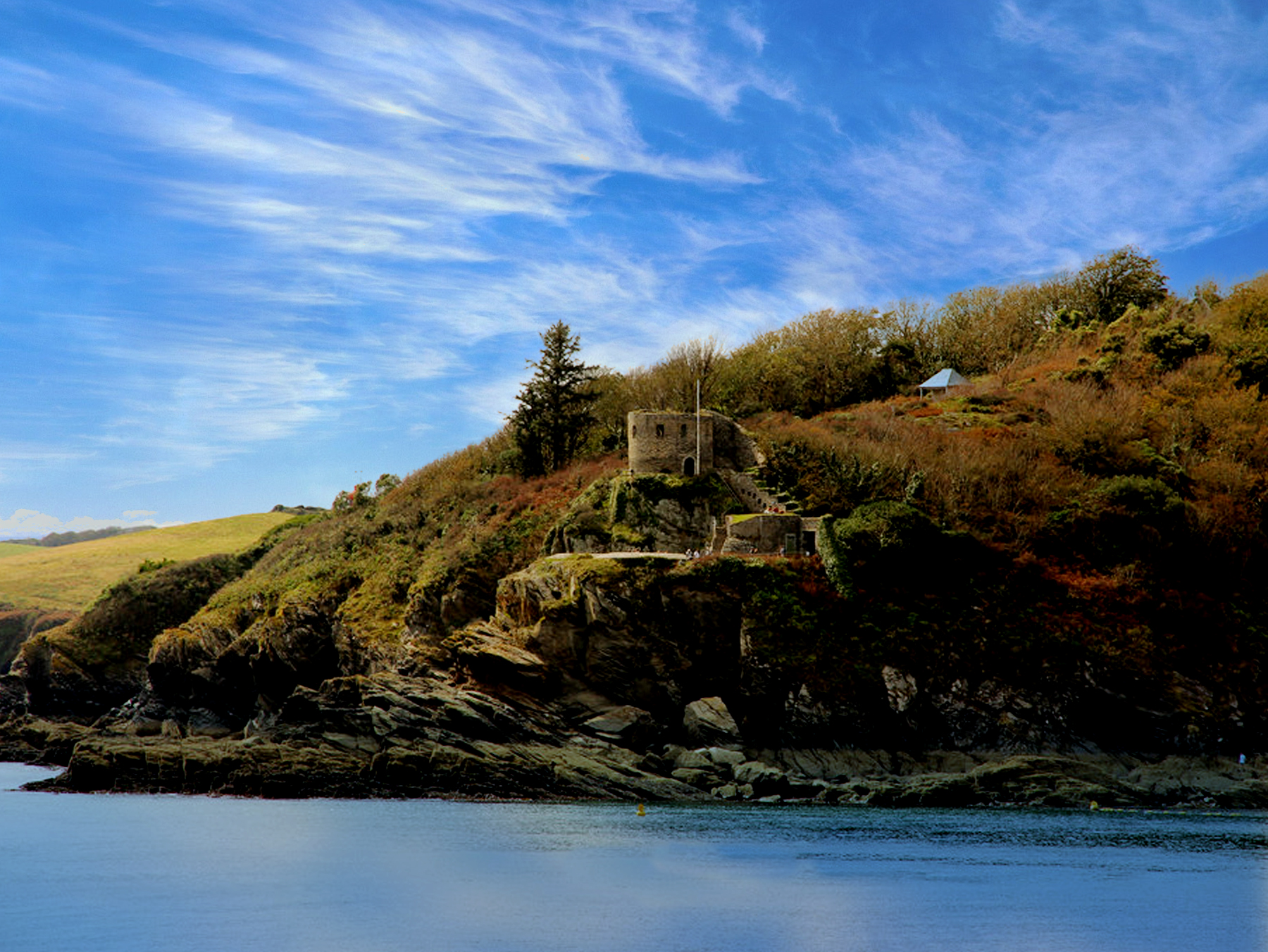
Tucked among trees on a wooded headland above the mouth of the River Fowey, St Catherine's Castle is one of the smallest and most atmospheric of Henry VIII's Cornish coastal forts. Built to guard the narrow entrance to Fowey Harbour, a natural deep-water anchorage the Tudor crown was determined to protect, the castle's compact ruins still command one of the finest views of any English Heritage site in Cornwall, looking straight out past the harbour mouth to the open sea.
The fort was raised around 1538 to 1540 as part of Henry VIII's nationwide programme of artillery defences, prompted by the very real threat of invasion after the Pope encouraged Catholic France and the Holy Roman Empire to move against Protestant England. Rather than being built and paid for directly by the crown, as at Pendennis or St Mawes, St Catherine's Castle was funded and overseen locally by Thomas Treffry, a prominent Fowey merchant, reflecting the vital importance of defending the harbour to the town's own trading community.
At its heart is a distinctive D-shaped gun tower of three storeys, its ground floor pierced by gun embrasures for heavy ordnance and its upper floors fitted with openings for muskets and swivel guns, together with an open lower battery for heavier artillery and a short defensive wall closing off the landward approach across the headland. Positioned where the river narrows to little more than 230 metres, the fort was designed to bring concentrated fire to bear on any enemy ship attempting to force its way into the harbour.
St Catherine's Castle saw remarkably little actual combat over its long working life, its only recorded engagement coming in 1666 against a Dutch warship, yet it remained in active military use for centuries, refitted for the Napoleonic Wars, rebuilt as a Victorian battery during the Crimean War, and reactivated one final time during the Second World War. Today it is owned by English Heritage, free to visit throughout the year, and reached by one of the most rewarding short coastal walks in this part of Cornwall.
Location Map
Visitor Guide
St Catherine's Castle is reached on foot from a charged car park close to Ready Money Beach, on the edge of Fowey. The walk begins with a gentle slope down towards the beach itself, popular with swimmers and paddleboarders in summer, before climbing steeply through coastal woodland to reach the headland above — a path that can become muddy and slippery in wet weather, so sturdy, grippy footwear is essential.
The reward for the climb is one of the best coastal views in this part of Cornwall: from the castle's ruined gun tower and battery, the eye is drawn straight out through the narrow, cliff-lined entrance to Fowey Harbour towards the open sea, with the smaller settlement of Polruan visible across the water. Interpretation panels around the site explain the fort's Tudor origins and later adaptations, while the surrounding woodland, part of the Coombe Wildlife Reserve, offers further paths for those wanting to extend their walk.
Because access is on foot only, with a genuinely steep final approach, this is not a site for visitors with limited mobility, and pushchairs are impractical beyond the beach. Allow around an hour for the return walk and a proper exploration of the ruins, longer if combining the visit with time on Ready Money Beach itself or a wider walk along the coast path towards Polridmouth. Fowey, a short walk or drive from the car park, offers a full range of shops, galleries, cafes and restaurants for refreshments afterwards.
History
St Catherine's Castle was built around 1538 to 1540 as part of Henry VIII's ambitious national programme of coastal artillery fortifications, a response to genuine fears of invasion after Pope Paul III attempted to broker a treaty between France's Francis I and the Holy Roman Emperor Charles V, urging them to move against England over Henry's break with Rome. Fowey, with its deep, sheltered natural harbour and long history as a significant trading and, at times, privateering port, was judged to need proper defence, and the resulting fort was built on the rocky, wooded headland at the harbour's mouth, close to a medieval chapel dedicated to St Catherine that gave the castle its name.
Unlike the grander crown-funded forts at Pendennis and St Mawes guarding the Fal estuary, St Catherine's Castle was financed and organised locally by Thomas Treffry, a wealthy Fowey merchant whose family had long-standing interests in the town's maritime trade. The fort he built comprised a three-storey, D-shaped gun tower with embrasures for heavy guns at ground level and openings for muskets and swivel guns above, an open lower battery capable of mounting heavier ordnance, and a short defensive wall sealing off the approach across the headland from the landward side. Its position, where the River Fowey narrows to around 230 metres, allowed its guns to command the entire width of the harbour entrance.
Despite this careful design, St Catherine's Castle saw very little actual fighting across its long history. Its one clearly recorded engagement came during the Second Anglo-Dutch War in 1666, when a 70-gun Dutch warship sailed into the estuary and exchanged fire with the fort for around two hours before withdrawing, an encounter that stands as the castle's single documented brush with genuine combat. For long stretches afterwards the fort lay quiet, garrisoned only intermittently as the threat of invasion ebbed and flowed with the fortunes of European war.
The castle was returned to active use during the Napoleonic Wars, when volunteer artillery units manned the site between 1797 and 1815 against the renewed threat of French invasion. It was substantially remodelled during the Crimean War era, rebuilt between 1855 and 1858 as "Fowey Battery" and equipped with more powerful rifled guns reflecting mid-Victorian advances in artillery technology. The fort's final period of active military service came during the Second World War, when it was fitted with 4.7-inch guns and minefield control apparatus to protect shipping using the harbour, and also became home to an anti-aircraft gun and ammunition store defending against enemy air raids.
Today St Catherine's Castle is owned and managed directly by English Heritage, its layered structure, part original Tudor gun tower, part Victorian battery, part wartime emplacement, standing as a compact but vivid record of four centuries of coastal defence at one of Cornwall's most important harbours. It remains freely open to visitors throughout the year, its dramatic clifftop setting drawing walkers along the South West Coast Path as much as visitors seeking out its military history.
Important Features
- The gun tower: a three-storey, D-shaped Tudor structure with gun embrasures at ground level and openings for muskets and swivel guns above.
- The lower battery: an open-air platform built to mount heavier artillery, covering the harbour entrance.
- The defensive wall: a short curtain wall sealing off the headland from a landward assault.
- Crimean War remodelling: rebuilt as "Fowey Battery" in 1855–58 with modern rifled guns.
- WWII emplacements: 4.7-inch guns, minefield control apparatus and an anti-aircraft gun position.
- The clifftop setting: sweeping views over the entrance to Fowey Harbour and out to the open sea.
Visitor Information
Parking
A charged car park near Ready Money Beach, managed by Cornwall Council, is the nearest parking; the castle is then a three-quarter-mile walk.
Facilities
No facilities at the castle itself. Public toilets are available at Ready Money Beach; Fowey offers a full range of cafes and shops.
Disabled Access
Not suitable for wheelchairs. The approach is on foot only, with a steep, uneven woodland climb from the beach.
- Opening times: open any reasonable time during daylight hours, year-round.
- Public transport: regular bus services run to Fowey; the castle is then a walk of just under a mile via Ready Money Beach.
- Toilets: available at Ready Money Beach, close to the start of the walk.
- Food and drink: none on site; Fowey has a wide choice of cafes, pubs and restaurants.
- Shop: no shop on site; shops are available in Fowey.
- Dogs: welcome on leads.
- Booking: not required — free entry, no ticketing.
- Family facilities: none on site; sheer, unguarded drops within the ruins mean children should be supervised closely.
- Additional access: climbing on the walls is not permitted; smoking, vaping, barbecues and naked flames are prohibited.
- Visit duration: around an hour, including the walk from the car park.
Things to Do Nearby
Restormel Castle
Lostwithiel
A near-perfect circular Norman shell keep overlooking the River Fowey, once visited by the Black Prince.
Find Out MoreFowey
Nearest town
A historic sailing and fishing town with narrow streets, galleries, shops and waterside restaurants.
Find Out MorePolruan
Across the harbour
A picturesque fishing village reached by foot ferry from Fowey, with its own coastal defences and coast path walks.
Find Out MoreLanhydrock
Nr. Bodmin
A grand Victorian country house and estate with extensive gardens, cared for by the National Trust.
Find Out MoreLostwithiel
River Fowey
Cornwall's former medieval capital, a charming market town on the River Fowey with antique shops and cafes.
Find Out MoreFrequently Asked Questions
Official English Heritage Site
For the latest access information, events and any temporary restrictions, check the official English Heritage page for St Catherine's Castle before you travel.
Explore More Cornwall Heritage
All English Heritage Sites Cornwall Attractions National Trust Cornwall
Page last updated: 25 August 2026.