Trevaunance Cove
St Agnes's Sandy Surf Beach and Historic Harbour Cove
Trevaunance Cove, St Agnes, Cornwall, TR5 0RU
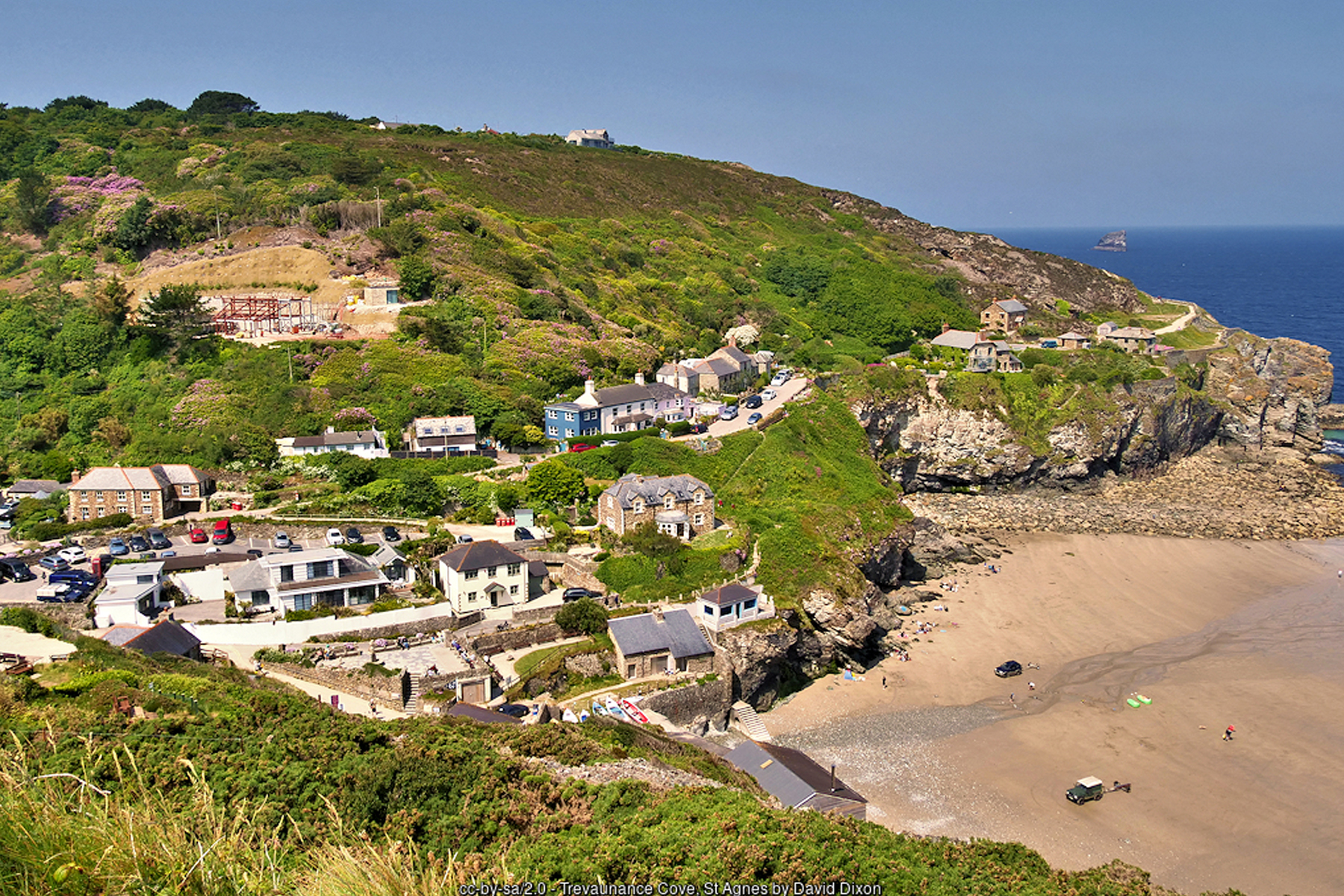
Trevaunance Cove is the main beach of the north Cornwall village of St Agnes, reached by a short, steep road and footpath down from the village through Trevaunance Coombe. A compact, sheltered sand-and-shingle cove framed by dark cliffs, it faces almost due north into the Atlantic and is one of the most popular beaches on this stretch of coast with surfers, swimmers and families alike, helped by its location a genuinely short walk from the village's pubs, cafes and shops rather than a long drive from anywhere.
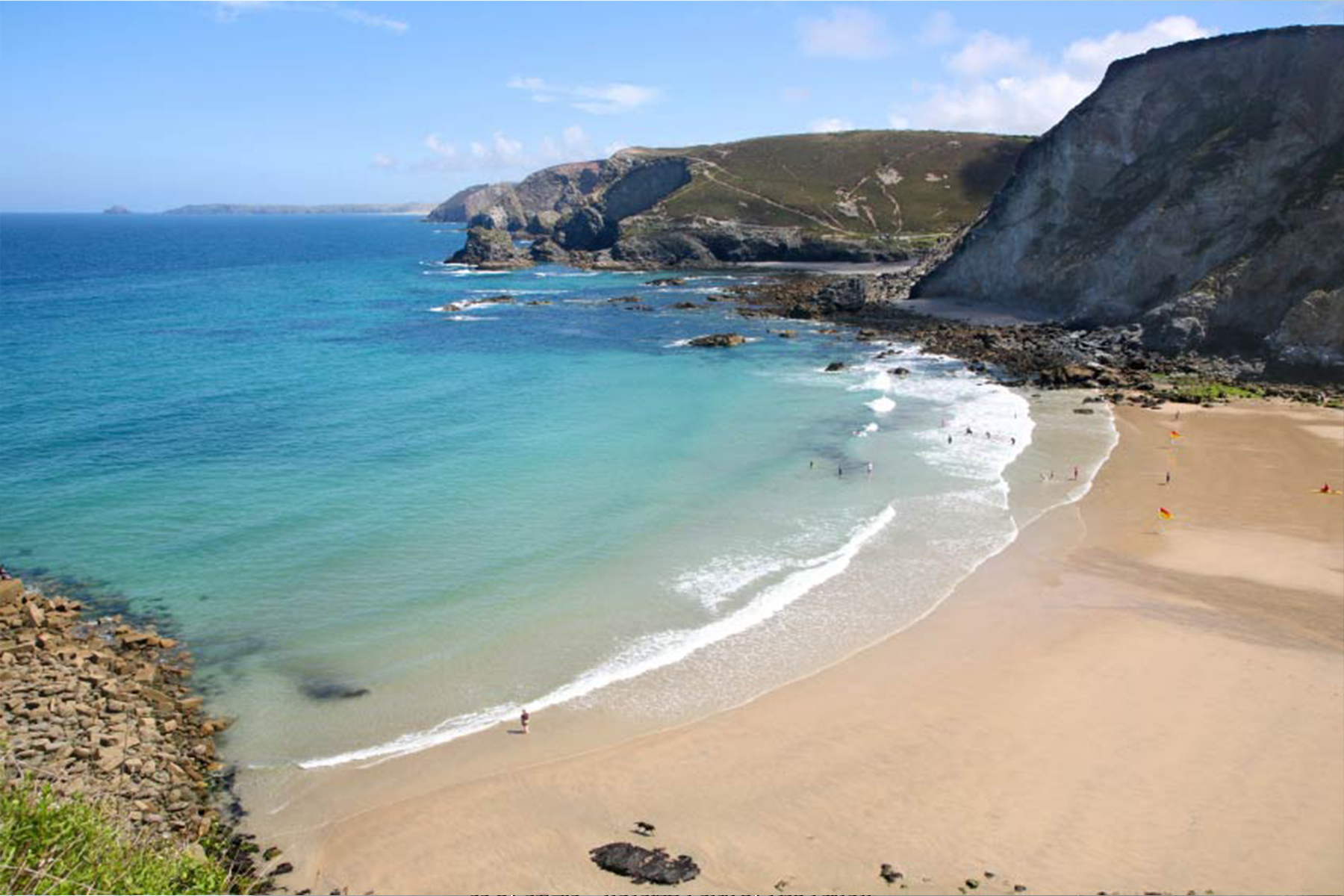
The beach itself is a mix of sand and shingle, backed by a low sea wall and the granite remains of a long-vanished harbour. At low tide a good expanse of sand is exposed along with extensive rocks and rock pools at each end of the cove, and it is possible to walk around the rocks to the neighbouring beach at Trevellas Porth; by high tide, particularly on a big spring tide, the sand narrows sharply and much of the beach is covered, leaving only a shrinking strip in front of the sea wall. RNLI lifeguards patrol through the main season, broadly from late May to the end of September, and swimmers are advised to keep between the flags whenever they are on duty. Dogs are allowed at Trevaunance Cove throughout the year, though they should be kept on a lead over the busiest summer months - a more relaxed policy than the seasonal bans enforced on many nearby beaches.
Trevaunance's history as a harbour goes back further than most Cornish coves. The lords of the manor of Trevaunance, the Tonkin family, made no fewer than three attempts to build a harbour here in the 17th century, in 1632, 1684 and again in 1699, the last with the help of the engineer Henry Winstanley - better known for having built, and later died at, the first Eddystone Lighthouse, swept away with him in the Great Storm of 1703. Winstanley's harbour at Trevaunance survived barely two years before it too was destroyed, in a violent storm in 1705. Undeterred, the Tonkins rebuilt again in 1710, using limestone shipped in from South Wales at a cost of some £6,000, but the new harbour proved impossible to maintain and was gradually broken up by the sea over the following two decades, leaving the family close to ruin.
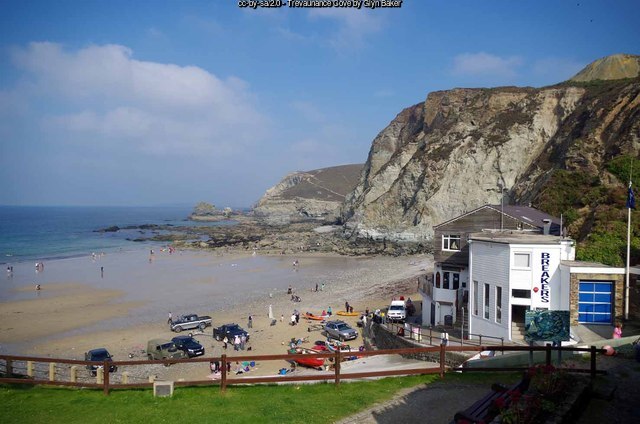
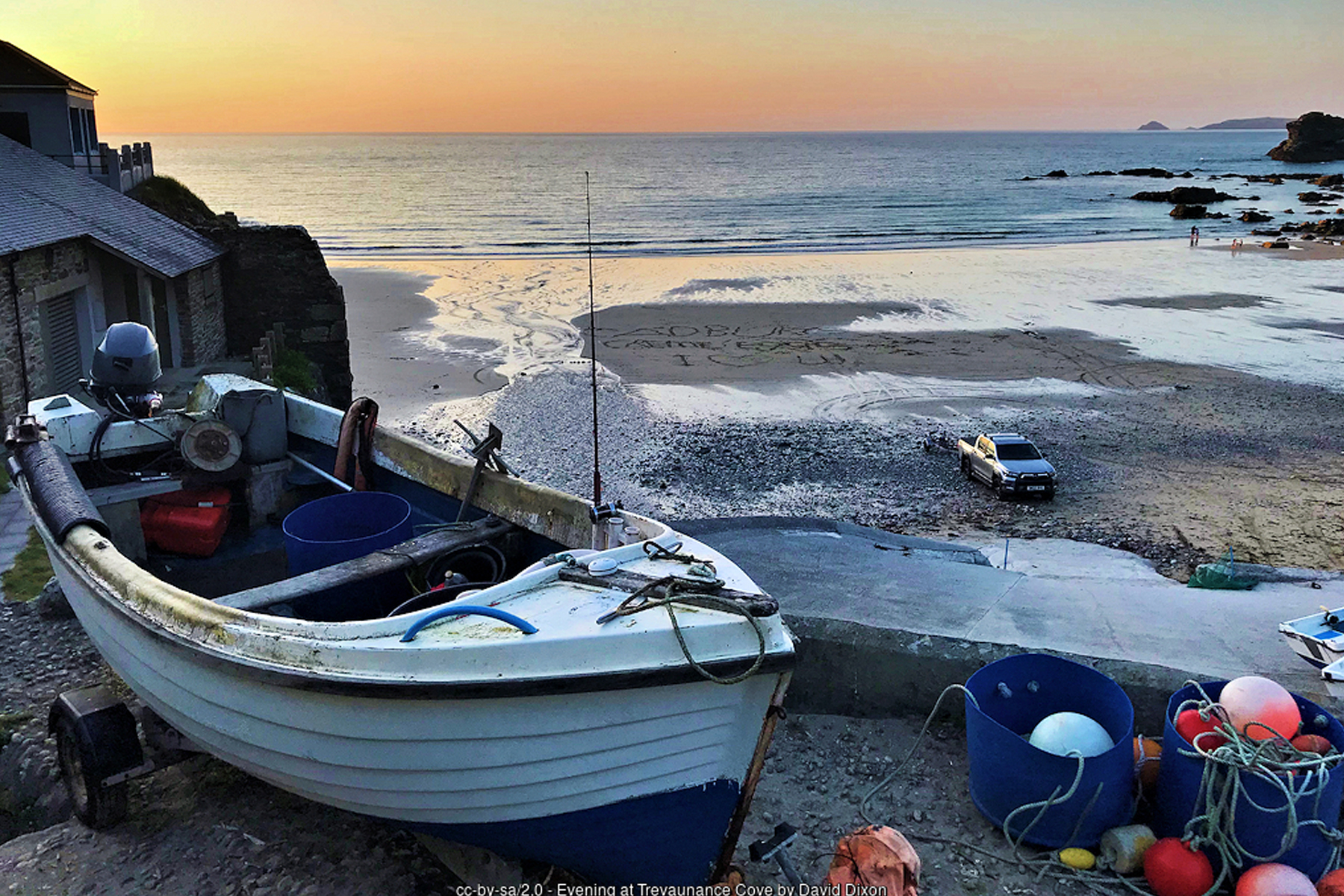
A second, more lasting harbour followed nearly ninety years later, built in 1798 by a company of local mining investors during the height of Cornwall's copper boom. The cove became a genuinely busy little port: sailing vessels loaded copper ore mined in the surrounding hills for smelting at Swansea and returned with coal for the mine engines, along with limestone and slate, while the same harbour supported a working pilchard and mackerel fishery and a weekly Thursday market. This second harbour lasted well over a century, longer than any of its predecessors, until winter storms in 1915-16 finally breached the harbour wall beyond repair; by then the mines it had served were already in steep decline, and it was never rebuilt. Weathered granite blocks from the pier and quay walls are still scattered along the western side of the beach, most visible at low tide, the last tangible trace of nearly three centuries of attempts to tame this exposed stretch of coast.
Above the cove, the village's most photographed feature is Stippy Stappy, a Grade II listed terrace of nine small cottages that steps steeply down Town Hill towards Trevaunance Coombe, built in the early-to-mid 19th century for mine captains and other relatively prosperous mining families. Each stone cottage has its own low front garden wall and a distinctive brick archway over the door, and the terrace's stepped, laddered profile - said to give it its rhyming local name - makes it one of the most recognisable sights in St Agnes, familiar to television viewers as a location used in the Poldark adaptations as well as to the generations of walkers who pass it on the way down to the beach.
The cliffs either side of Trevaunance Cove are geologically significant enough to have been designated a Site of Special Scientific Interest and included in the national Geological Conservation Review. They expose folded Devonian sandstones and mudstones around 380 million years old, crumpled during the same Variscan mountain-building episode that shaped much of Cornwall's coastline, and cut through by later mineral veins formed as hot fluids rose around the local granite. Quartz-tourmaline veins here carry cassiterite, the tin ore that first drew miners to this coast, while separate sulphide veins contain chalcopyrite, the copper ore that later dominated the local economy, alongside sphalerite, arsenopyrite and pyrite - a genuinely instructive cross-section of the processes that made St Agnes one of Cornwall's richest mining parishes. Collecting or hammering the rock is not permitted, and the best exposures are found on the beach known locally as Star Beach, reachable only at low tide.
That mining wealth is still visible on the cliffs above the cove and across the surrounding heritage coast, part of the wider St Agnes Mining District within the Cornwall and West Devon Mining Landscape World Heritage Site. The ruined engine houses and spoil tips of mines including Wheal Kitty, Penhalls and the tourist mine at Blue Hills sit within easy walking distance along the coast path, a landscape that reached its peak of activity in the mid-19th century, when the parish's population and its mines briefly rivalled anywhere else in Cornwall.
The clifftops either side of the cove, part of the National Trust's St Agnes Head, are one of a handful of Cornish sites where the Cornish chough - a red-billed, red-legged crow that features on the county's coat of arms and had been extinct as a Cornish breeding bird for decades - has re-established itself in recent years, alongside more familiar fulmars, kittiwakes and stonechats working the gorse and heather. Grey seals and, less predictably, dolphins are sometimes spotted from the cove and the surrounding cliffs, something the sea kayaking trips that launch from the beach make a particular feature of, and the rock pools exposed at low tide either side of the sand are worth a slow look for anemones, blennies and hermit crabs.
Surfing is a genuine part of Trevaunance Cove's identity rather than an afterthought: it is a popular, sometimes crowded beach break that works across most states of the tide, with board and wetsuit hire and lessons available in the village for anyone wanting to try, and it has long been one of the more consistent spots on this stretch of coast for surfers based around St Agnes and Perranporth. Its north-facing aspect means it can hold a decent swell even when more exposed beaches further along the coast are blown out, though the same exposure means it takes the full force of the prevailing north and north-westerly winds, so conditions and crowds vary considerably from day to day.
The South West Coast Path runs both ways from Trevaunance Cove, north over St Agnes Head towards Trevellas Porth, Perranporth and beyond, and south towards Chapel Porth and the dramatic ruins of Wheal Coates perched above the cliffs at St Agnes Beacon, one of the most photographed views in Cornish mining country. At low tide it is also possible to walk around the rocks directly from Trevaunance Cove to Trevellas Porth without using the coast path at all, though this route is cut off as the tide comes in and should not be relied on to get back.
Trevaunance Cove's two small car parks - one right beside the beach, one a short walk up the hill - are limited and fill early on fine days through the summer holidays, so an early start, or a walk down from further into the village, is the more reliable option in July and August. Outside the busiest weeks, and especially in spring and autumn when the surf is often at its best and the village at its quietest, Trevaunance Cove is one of the more rewarding beaches on this part of the coast, combining an easy walk to genuine pubs, a cafe and a beach shop with a real sense of the mining and maritime history layered into the cliffs and cove around it.
Visitor Information
Parking
Two small car parks close to the beach - one right beside the cove, one a short walk up the hill - both limited in size and prone to filling on fine summer days; arrive early in July and August.
Facilities
Pubs, a cafe and a beach shop within a minute or two of the sand, plus board and wetsuit hire and surf lessons in the village. Toilets are a short walk away. RNLI lifeguards patrol through the main season, broadly late May to the end of September.
Disabled Access
The walk down from the village is steep in places and the beach itself is part sand, part shingle and rock, so access is not straightforward for wheelchairs or pushchairs without assistance. No dedicated Blue Badge bays are confirmed at either car park - check locally before you travel.
Things to Do Nearby
- Trevellas Porth, the next cove north, reachable around the rocks at low tide
- Chapel Porth, a National Trust beach below Wheal Coates and St Agnes Beacon
- Koru Kayaking, guided sea kayak adventures launching from Trevaunance Cove itself
- St Agnes & Trevaunance Cove Village Guide - more on the village and surrounding area
- Perranporth, a short drive north along the coast
Places to Stay
Frequently Asked Questions
Page last updated: 8 September 2026.