Porthtowan Beach
A Blue Flag Surf and Family Beach on Cornwall's North Coast
Beach Road, Porthtowan, Truro, Cornwall, TR4 8AA Blue Flag 2026
Porthtowan is a wide, west-facing sweep of golden sand on Cornwall's north coast, tucked into a steep-sided valley between Chapel Porth to the east and Portreath to the west. Backed by sand dunes and rearing slate cliffs, and opening onto a broad expanse of firm, flat sand at low tide, it has long been one of the most popular surf and family beaches along this stretch of coast - helped enormously by a large car park sitting almost directly behind the sand, a genuine rarity on a coastline where most beaches demand a walk down a coastal valley to reach the water.
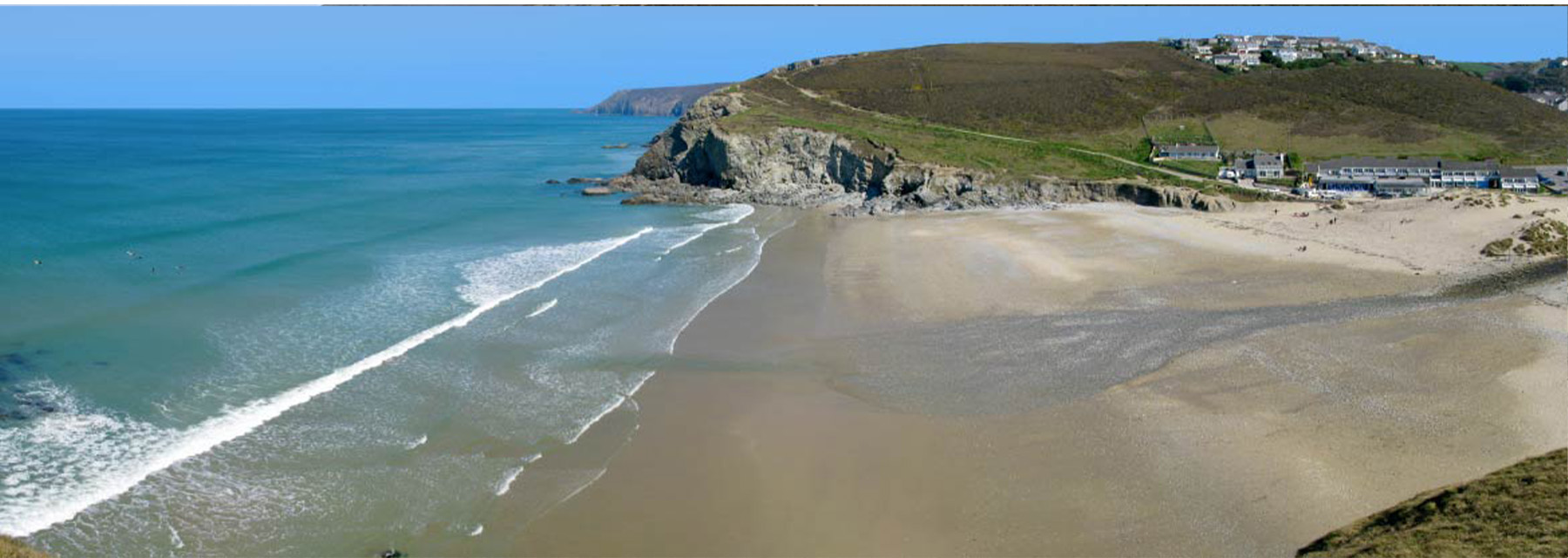
The beach takes its name from the Cornish for "landing place at the sand dunes" - porth meaning cove or landing place, towan meaning sand dune - a fitting description of a beach where the dunes behind the sand have always been as much a part of the place as the water in front of it. Porthtowan grew from a scatter of mining cottages into a fully-fledged Victorian and Edwardian seaside resort as the tin and copper industry that built the village went into decline, and it has stayed a popular holiday destination ever since; Allen's Corn Mill, which ground grain in the valley from 1752 until 1816, is one of the few physical reminders of the working village that came before the tourists.
That mining history runs deep here. The valley behind the beach was once home to Wheal Towan, one of the most prolific copper mines in 18th-century Cornwall, said to have cleared profits of well over £130,000 before it closed around 1826 - and the site, remarkably, of the first underground steam engine ever built, installed in 1785. The mine was reworked from 1872 as West Wheal Lucy, and neighbouring setts including Wheal Ellen, Wheal Lushington and South Wheal Towan continued raising copper ore through the mid-19th century; the ivy-clad ruins of their engine houses can still be picked out in the valley and on the cliffs above the beach today. A little further east, more substantial remains at Wheal Charlotte stand above the coast path on the walk towards Chapel Porth, while Tywarnhayle Mine, which opened in 1826 and had produced almost 87,000 tons of copper ore by the early 1900s, was the scene of one of the district's worst mining disasters when a boiler explosion killed nine men in February 1830. This whole stretch of coast, from Porthtowan through St Agnes to Chapel Porth and beyond, forms part of the Cornwall and West Devon Mining Landscape, a UNESCO World Heritage Site recognising the international importance of Cornish mining technology and its influence on industrial development worldwide.
Just west of the main beach, past a rocky spur at Lushington Cove, stands Porthtowan's best-known natural landmark: the Tobban Horse, a triangular sea stack rising from the water that has watched over this coastline for generations and taken its name, by most accounts, from its distinctive silhouette. The stack changed shape after a landward rockfall in the 1960s, but it remains a striking and easily recognised feature of the view west along the beach, and a popular subject for photographers at sunset. The cliffs themselves are part of the Godrevy Head to St Agnes Heritage Coast, 627 hectares of protected coastline designated in 1986 and now part of the wider Cornwall Area of Outstanding Natural Beauty - built from alternating bands of Devonian slate and sandstone, folded and hardened over hundreds of millions of years, and still actively eroding today, which is why loose rock and occasional cliff falls are worth being alert to anywhere along this coast.
At low tide the beach expands dramatically, exposing rock ledges and gullies at both ends that are excellent for rockpooling - anemones, shore crabs, blennies and the occasional small fish are typical finds among the pools - and revealing a little-known tidal pool tucked into the rocks that is submerged again as the tide rises, a quiet spot favoured by those who know to look for it. The retreating sea also opens up a shoreline walk east towards Chapel Porth, one of the best short low-tide rambles on this part of the coast, though it should only be attempted on a dropping tide and checked against the tide tables, since the return route can be cut off as the water comes back in.
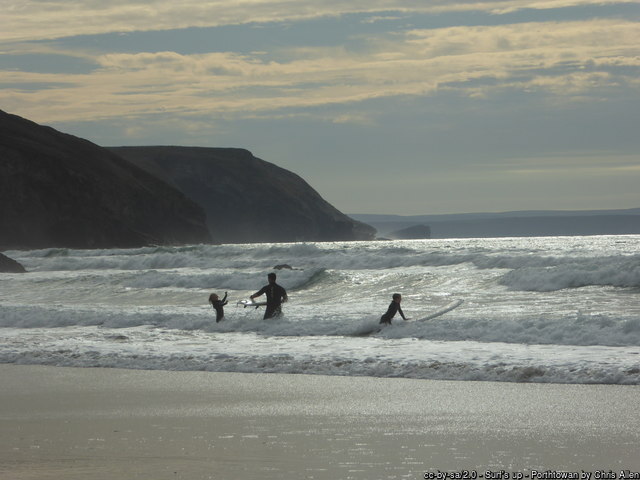
Surfing has shaped Porthtowan every bit as much as mining did in an earlier century. The west-facing bay picks up a good, consistent Atlantic swell and, thanks to the sandbanks that build up across the bay, throws up well-shaped, curling waves across a wide range of conditions - enough to hold the interest of experienced surfers while still being forgiving enough, on smaller days, for improvers and confident beginners. Surf hire and lessons are available on the beach when conditions allow, and Porthtowan is regularly ranked among north Cornwall's better all-round surf beaches alongside its neighbours at Chapel Porth and Perranporth. RNLI lifeguards patrol the main bathing area through the season, broadly from the start of May to the last weekend of September (with additional cover over the Easter and October half-term holidays), with red-and-yellow flags marking the safest zone for swimming and separate areas set aside for surfing and other watersports.
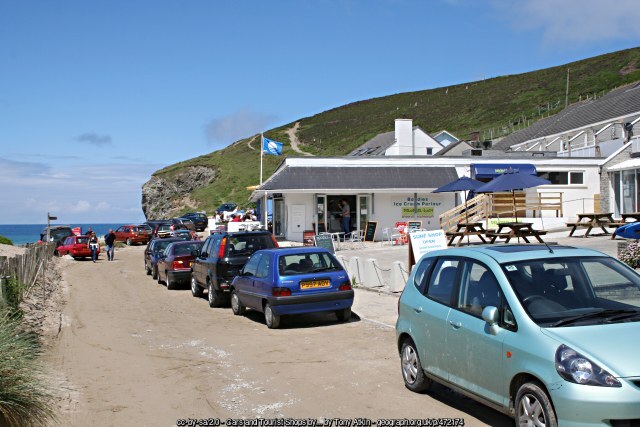
Porthtowan's social scene has grown up around the beach itself rather than a traditional high street: the Blue Bar, a well-known beach bar and kitchen open through the day and into the evening for food and sunset drinks, sits right on the sand alongside a beach shop and surf hire outlet, a children's play park at the top of the beach, and a scatter of cafes in the village behind. It is this combination of a working beach community, decent facilities and easy car park access that has made Porthtowan a firm favourite for both day-tripping families and surfers making the most of a good swell, without ever quite losing the slightly scruffy, unpretentious character of a former mining hamlet.
The South West Coast Path runs along the clifftop above the beach in both directions, giving walkers a choice of routes: east past the Wheal Charlotte engine house towards Chapel Porth and the iconic Wheal Coates engine houses above St Agnes Head - among the most photographed mining remains in Cornwall - or west past the site of the former RAF Portreath airfield and the Nancekuke headland towards Portreath itself, a walk of a few miles either way with fine cliff-top views and, in season, good numbers of seabirds working the updraughts along the cliff line. Inland, the village keeps a strong community spirit of its own: the Porthtowan Players, an amateur theatre group founded in 1968, still stage productions today, and a Methodist chapel on the hillside above the beach is one of the few older buildings to have survived the village's transformation from mining settlement to holiday resort largely intact.
Conditions here can change quickly, as they can anywhere on this exposed stretch of Atlantic coast - a flat, gentle morning can turn blustery by afternoon, and the tide swings the character of the beach from a broad, generous expanse of sand at low water to a much narrower, steeper strip banked hard against the dunes at high tide. For that reason it is worth checking the tide times before setting out, particularly for anyone planning the walk to Chapel Porth or hoping to reach the rock pools and the hidden tidal pool at the western end. Whatever the state of the tide, Porthtowan's rare combination of a big, accessible car park, a lively beach-level social scene and consistently good surf keeps it near the top of most locals' list of north Cornwall's best all-round beaches.
Visitor Information
Parking
Beach Road car park sits directly behind the beach, with around 137 spaces. Pay-and-display applies from 1 April to 31 October (free overnight and through the winter months); coins, chip and pin, contactless, Apple Pay and Google Pay are all accepted.
Facilities
Toilets, a beach shop, surf hire, a children's play park and the beach-level Blue Bar for food and drinks. RNLI lifeguards patrol through the main season, broadly May to September, plus Easter and October half-term.
Disabled Access
Access from the car park to the sand is mostly level via ramps and paths, though soft sand and the steeper bank near high tide can be harder going for a wheelchair user. An accessible toilet is on site, and four Blue Badge parking bays are provided at the car park - standard charges still apply to Blue Badge holders unless a Cornwall Council exemption applies.
Things to Do Nearby
- Chapel Porth, reachable along the coast path or the low-tide shoreline walk east
- Portreath Beach, a few miles west along the coast path past the former RAF Portreath site
- Wheal Coates (National Trust), the iconic clifftop engine houses above St Agnes Head
- Porthtowan Village Guide - the wider village, its history and holiday information
- Cornwall Surfing Guide - surf schools, hire and conditions across the county, including Porthtowan
Places to Stay
Frequently Asked Questions
Page last updated: 8 September 2026.