Flushing, Cornwall – Waterside Village across the River from Falmouth
Flushing & the Penryn River
Cornwall Online | Mid Cornwall Towns and Villages | Truro | Feock | Devoran | Restronguet Creek | Mylor | Flushing | Falmouth | The Roseland Peninsula | St Mawes | St Anthony Head | St Just in Roseland | Portscatho | Gerrans | Philleigh | Ruan Lanihorne | Tregony | Veryan | Portloe | Portholland | Gorran Haven | Mevagissey | The Lost Gardens of Heligan | St Austell | Charlestown | Fowey | Golant | Lostwithiel | The Lizard Peninsula
On This Page
- Holidays in Flushing
- Best Time to Visit
- The Flushing Ferry & the Quays
- Packet Captains & the Waterfront
- Beaches & the Riverside
- History of Flushing
- Key Buildings
- Notable People
- Walks from Flushing
- Things to Do
- Local Events
- Places near Flushing
- Visitor Information
- Stay & Explore
- Family Holidays & Short Breaks
- Frequently Asked Questions
Flushing at a Glance
A waterside village on the Penryn River, facing Falmouth across the water. Year-round passenger ferry to Falmouth’s Prince of Wales Pier (about 10 minutes). Quays built by Dutch engineers in the 17th century; Georgian houses of the Falmouth packet captains; two pubs, a waterside restaurant and a village shop; small beaches at Kiln Quay; the shoreline path to Mylor. Regatta week in July.
HOLIDAYS IN FLUSHING
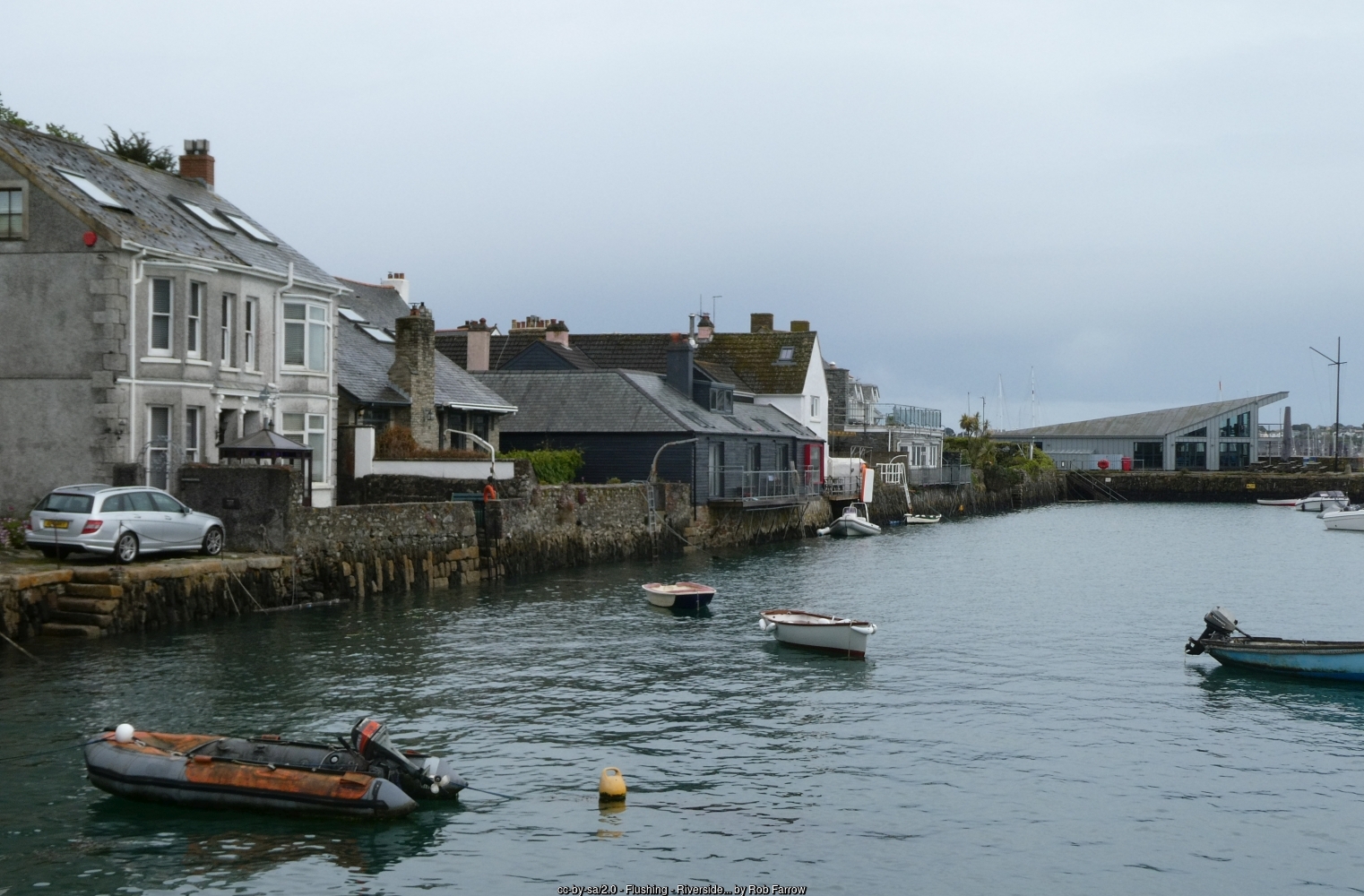
Flushing is a delightful waterside village tucked into the shore of the Penryn River, directly across the water from Falmouth. Its colourful houses line the quays, small boats bob on their moorings, and the view across to Falmouth’s waterfront and the masts of the harbour is one of the best in Cornwall.
The village has an unusual history. It was built up in the 17th century by the Trefusis family, and its quays were constructed by Dutch engineers, who named the village after their home port of Flushing – Vlissingen in the Netherlands. In the 18th and early 19th centuries it became the favourite home of the captains and officers of the Falmouth packet ships, whose elegant houses still line St Peter’s Hill and Trefusis Road.
The easiest and most enjoyable way to arrive is on the little Flushing Ferry, which runs all year round from Falmouth’s Prince of Wales Pier and takes about ten minutes. Step ashore on the quay and you can spend a lazy day at the pubs and restaurant by the water, swimming from the small beaches at Kiln Quay, or walking the shoreline path towards Mylor.
Flushing makes a peaceful base for a holiday on the Fal, with Falmouth’s shops, museum and castle just across the water, and the creeks of Mylor and Restronguet a short walk or drive away. Sailing is a way of life here – the village has its own sailing club and a lively regatta week every July.
For somewhere to stay, see Flushing holiday cottages and holidays and short breaks in Flushing.
Best Time to Visit Flushing
Spring brings mild days – Flushing was described in the 19th century as reputedly the warmest place in Cornwall – and quiet walks along the shore. Summer is the time for swimming at Kiln Quay, eating outside by the water and the regatta week in July. Autumn is lovely for walking to Mylor, and in winter the ferry still runs and the village pubs are cosy.
Parking in the village is very limited – the ferry from Falmouth or the bus is the best way to visit.
↑ Back to topTHE FLUSHING FERRY & THE QUAYS
The Flushing Ferry is a small, family-run passenger ferry that links Flushing Quay with the Prince of Wales Pier in Falmouth. It runs seven days a week, all year round, and the crossing takes about ten minutes, with views up the river to Penryn and down the harbour to the docks and Pendennis. Dogs, bikes and pushchairs are welcome on board.
The ferry makes Flushing an easy day out from Falmouth – and makes Falmouth easy to reach for anyone staying in Flushing, without the long drive round by road through Penryn. Sailings depend on the tide, weather and circumstances, so check the times before you travel; there are extra late sailings for some events, such as the Falmouth sea shanty festival.
The village grew up around its quays, built by the Dutch engineers who gave Flushing its name. A little slipway and harbour cuts into the riverside, where the tide rises almost to the road on the highest spring tides. Today the quays are used by pleasure boats, gig crews and local fishermen.
↑ Back to top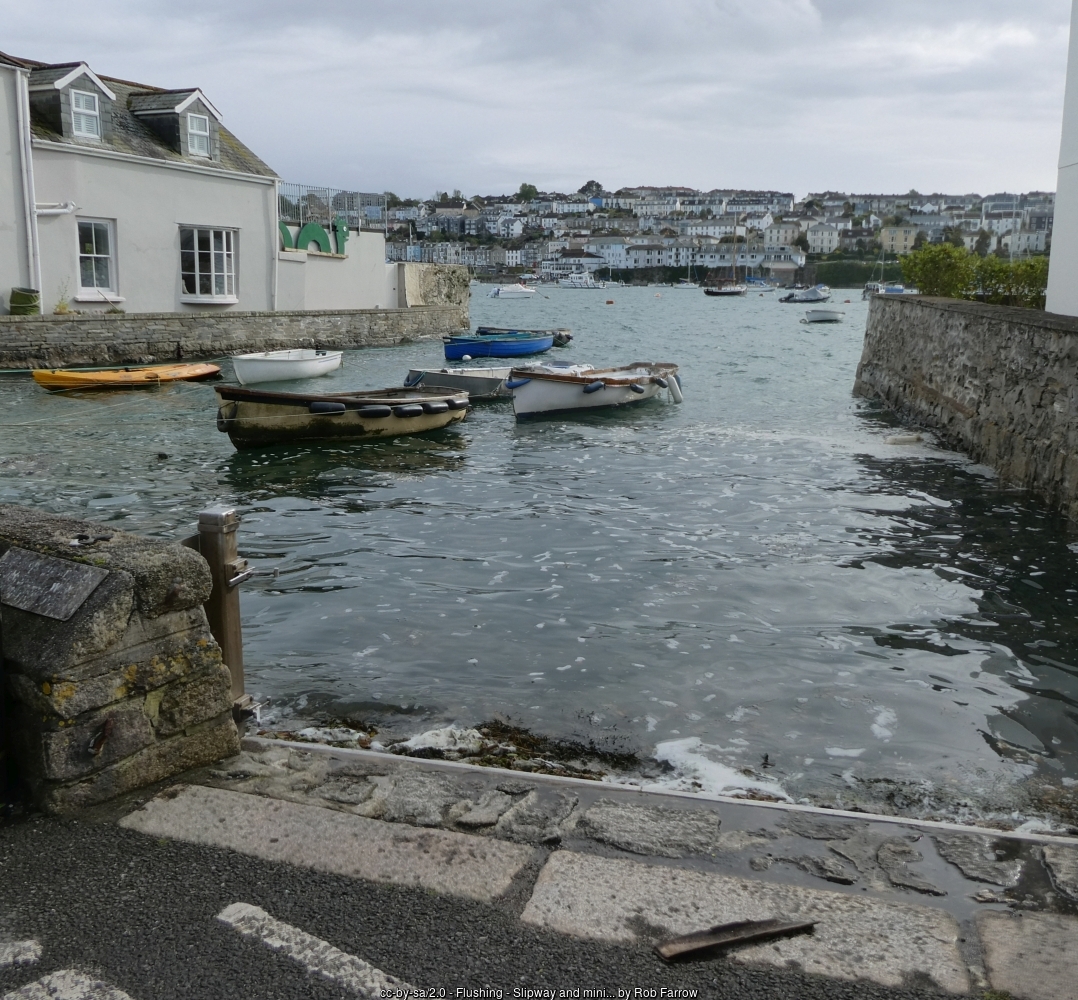
Flushing Ferry
Route: Flushing Quay – Falmouth Prince of Wales Pier
Runs: 7 days a week, all year
Crossing: about 10 minutes
On board: dogs, bikes and pushchairs welcome
Note: subject to tide and weather
PACKET CAPTAINS & THE WATERFRONT
From 1689 to 1850 Falmouth was the home of the Post Office Packet Service, whose fast sailing ships carried the mails to Spain and Portugal, the Mediterranean, the West Indies and the Americas. Samuel Trefusis (1676–1724) developed Flushing to supply and support the service, building houses for the commanders, officers and crews, and the village’s shipbuilding and repair yards made it a favourite place for captains and officials to live.
The writer James Silk Buckingham, who grew up here in the 1790s, recalled that most of the packet captains and officers lived in the village with their families, along with many of the crews. There were dinners, balls and evening parties almost every night at the captains’ houses, and dances for the sailors – much of it paid for by prize money and by the contraband the packet ships carried.
Many of their fine houses survive. Walk up St Peter’s Hill, the road into the village, and along Trefusis Road by the water to see the grand Georgian homes of the packet captains, some of them listed buildings. After the Packet Service left Falmouth in 1850, Flushing remained a home for naval officers and seafaring families, and later for workers at Falmouth Docks.
↑ Back to topThe Falmouth Packets
Packet Service: Falmouth, 1689–1850
Flushing: home of many packet captains, officers and crews
See: St Peter’s Hill and Trefusis Road
Learn more: the National Maritime Museum Cornwall, across the water in Falmouth
BEACHES & THE RIVERSIDE
Flushing’s beaches are small and sheltered, on the shore of the Penryn River where it opens into the Carrick Roads. The best known are at Kiln Quay, at the end of Trefusis Road, which are extremely popular for swimming and picnics in the summer months, with views across the harbour to Falmouth and out towards St Mawes.
These are quiet riverside beaches rather than surf beaches, with no lifeguards and no facilities on the beach itself – bring what you need from the village. The water is usually calm, but keep an eye on boats and on the tide, which covers much of the shore at high water.
For sandy beaches with lifeguards, take the ferry across to Falmouth, where Gyllyngvase and the town’s other beaches are a short walk or bus ride from the Prince of Wales Pier.
↑ Back to topBeaches near Flushing
Kiln Quay: small riverside beaches, popular for summer swimming
Falmouth: Gyllyngvase, Swanpool, Castle Beach and more, by ferry
Lifeguards: none at Flushing
HISTORY OF FLUSHING
Before the village was built, the place was known as Nankersey, the “valley of the reed swamp”, and its Cornish name today is Nanskersys. The land belonged to the Trefusis family of Trefusis, whose manor stands on the headland north of the village. In the 17th century they brought in Dutch engineers – probably directed by the drainage engineer Cornelius Vermuyden – to build the quays, and the engineers named the new village after their home port of Flushing (Vlissingen).
The village quickly became a place for loading and unloading ships using the Fal, and with the arrival of the Packet Service at Falmouth in 1689 it grew into the favoured home of the packet captains. Flushing was part of the parish of Mylor until 1844, when it became a parish of its own, with St Peter’s Church on St Peter’s Road.
In the 19th and 20th centuries the village lived mainly by fishing, by the two farms and old manors of Trefusis and Tregew, and by work at Falmouth Docks across the water. Today Flushing is a quiet residential village of around 670 people in its centre, much loved by sailors, and it lies within the Cornwall National Landscape (Area of Outstanding Natural Beauty).
↑ Back to topFlushing – key dates
17th century – Dutch engineers build the quays
1661 – traditional date of the founding of the village
1689 – Packet Service comes to Falmouth
c.1700–1724 – Samuel Trefusis develops the village
1786 – James Silk Buckingham born
1844 – Flushing becomes a separate parish from Mylor
1850 – last Falmouth packet sails
Key Buildings
- The quays – the waterfront quays built by Dutch engineers in the 17th century, still the heart of the village and the landing place for the Falmouth ferry.
- The packet captains’ houses, St Peter’s Hill and Trefusis Road – elegant Georgian houses built for the captains of the Falmouth packet ships, several of them listed.
- St Peter’s Church, St Peter’s Road – the parish church of Flushing, which became a parish separate from Mylor in 1844.
- Trefusis – the farm and former manor of the Trefusis family, Barons Clinton since 1791, on the headland north of the village.
NOTABLE PEOPLE
- Samuel Trefusis (1676–1724) – of the Trefusis family who owned the land, he developed Flushing to supply and support the Falmouth Packet Service, providing houses for its commanders, officers and crews.
- James Silk Buckingham (1786–1855) – the author, journalist, politician and social reformer was born in Flushing and spent his childhood here, and later wrote vividly about life among the packet captains.
- The Sulivan family – the naval family of Admiral Bartholomew James Sulivan (1810–1890), who sailed with Darwin on HMS Beagle, kept a house in Flushing, as did many Royal Navy and merchant navy officers in the 19th century.
WALKS FROM FLUSHING
The classic walk from Flushing follows the shore north-east along Trefusis Road, past the packet captains’ houses to Kiln Quay, then on round Trefusis Point on a permissive path through the fields, with wide views over the Carrick Roads to St Mawes and the Roseland. The path continues to Mylor Churchtown and its yacht harbour – a lovely walk of a couple of miles each way, with a café at the end.
From Mylor you can carry on up the creek to Mylor Bridge, or over the hill to the Pandora Inn on Restronguet Creek. Or take the ferry to Falmouth and walk round Pendennis Point.
- Mylor – Cornwall Online
- Restronguet Creek – Cornwall Online
- Walking in Cornwall – Cornwall Online walks
THINGS TO DO IN AND AROUND FLUSHING
Flushing is the perfect place to do very little – to sit by the water with a drink, watch the boats and the comings and goings of the ferry, and enjoy the view of Falmouth across the river.
- Take the ferry across from Falmouth’s Prince of Wales Pier.
- Admire the packet captains’ houses on St Peter’s Hill and Trefusis Road.
- Swim and picnic at Kiln Quay on a summer’s day.
- Walk round Trefusis Point to Mylor – Mylor.
- Visit the National Maritime Museum Cornwall to learn about the packet ships – National Maritime Museum Cornwall.
- Explore Pendennis Castle across the water – Pendennis Castle.
- Watch the racing during Flushing regatta week in July.
- Have lunch at the Pandora Inn on Restronguet Creek – Restronguet Creek.
LOCAL EVENTS
- Flushing Regatta (July) – the village’s yearly regatta week, with sailing and rowing races on the river and events ashore.
- Falmouth International Sea Shanty Festival (mid June) – across the water in Falmouth, with late ferry sailings on some evenings – see Falmouth.
- Falmouth Week (August) – the big sailing regatta in Falmouth Bay and the Carrick Roads.
Dates change from year to year – check local noticeboards and the Fal River website for this year’s events.
↑ Back to topPLACES NEAR FLUSHING
- Falmouth – across the river by ferry, with Pendennis Castle, the Maritime Museum and the beaches.
- Mylor – Mylor Churchtown, its yacht harbour and church, and the village of Mylor Bridge.
- Restronguet Creek – the Pandora Inn and quiet creekside walks.
- Penryn – Falmouth’s older neighbour at the head of the Penryn River, with its railway station.
- St Mawes – across the Carrick Roads by ferry from Falmouth.
- Truro – Cornwall’s cathedral city, by bus 66.
VISITOR INFORMATION
Parking & EV Charging
Parking in Flushing is very limited and the lanes are narrow, so it is best to come by ferry or bus. Visitors to Falmouth can use the town’s car parks or the summer park and ride, then take the ferry across from the Prince of Wales Pier.
Electric vehicle charging:
- Falmouth – chargers at Town Quarry, Grove Place and Gyllyngvase car parks
Bus, Ferry & Train
The Flushing Ferry runs all year to Falmouth’s Prince of Wales Pier. Bus 66 runs from Penryn through Flushing and Mylor Bridge to Truro, and bus 69 links Falmouth and Mylor Bridge. The nearest railway station is Penryn, on the Maritime Line between Truro and Falmouth. Check timetables before you travel.
Facilities & Supermarkets
Flushing has a village shop (Flushing Village Stores), a primary school, a village hall and a sailing club. Supermarkets in Falmouth and Penryn:
- Sainsbury’s – Ponsharden, Falmouth TR11 2RZ
- Lidl – Falmouth Road, Ponsharden, Penryn TR10 8AB
- Asda – Jennings Road, Penryn TR10 9LY
- Tesco – Killigrew Street, Falmouth TR11 3PQ
Pubs & Restaurants
Flushing has two pubs, including the Royal Standard on St Peter’s Hill, and a restaurant on the quay, all close to the water and the ferry landing. Falmouth’s many cafés and seafood restaurants are a ten-minute ferry ride away. Booking ahead is wise on summer evenings.
Health
The nearest GP surgeries include Mylor Surgery, Lemon Hill, Mylor Bridge TR11 5ND (01326 315615), and the practices in Falmouth and Penryn. Falmouth Community Hospital, Trescobeas Road, has a Minor Injury Unit, and the nearest A&E is the Royal Cornwall Hospital, Truro. Call NHS 111 for urgent advice and 999 in an emergency – ask for the Coastguard on the water.
Disabled Access
The waterfront and quays are fairly level, but the village climbs steeply behind, and some streets have narrow pavements. Check with the ferry operator about access on board, as boarding depends on the state of the tide. Falmouth has a Changing Places toilet at Grove Place and a Shopmobility service on The Moor.
Vets & Dogs
Dogs are welcome on the Flushing Ferry and in many local pubs, and the riverside beaches are popular with dog walkers. The nearest vet is Rosemullion Veterinary Hospital, Bickland Water Road, Falmouth TR11 4SN (01326 313991).
National Trust & English Heritage
English Heritage cares for Pendennis Castle, across the water in Falmouth, and St Mawes Castle. The National Trust cares for Trelissick on the Fal and Glendurgan Garden on the Helford.
Attractions
Falmouth’s museum and castle are a short ferry ride away, with the gardens of the Helford and the Fal close by.
STAY & EXPLORE NEAR FLUSHING
Nearby Towns & Villages
Local Attractions
Official Information
FAMILY HOLIDAYS & SHORT BREAKS IN FLUSHING
Family holidays in Flushing combine the peace of a village with the fun of a harbour town on the doorstep. Children love the ferry ride across to Falmouth, crabbing from the quays, swimming at Kiln Quay and watching the boats – and Falmouth’s beaches, castle and museum are just across the water.
Choose a cottage on the waterfront with views of Falmouth, one of the old captains’ houses on St Peter’s Hill, or somewhere quiet near Trefusis. Browse Flushing holiday cottages, or holidays and short breaks in Flushing for every type of accommodation.
Short breaks in Flushing are lovely all year round – the ferry runs every day, and the mild climate makes it a pleasant place in spring and autumn. Booking direct with the owner means no agency fees.
↑ Back to topFREQUENTLY ASKED QUESTIONS ABOUT FLUSHING
Flushing is a waterside village on the Penryn River, directly opposite Falmouth across the water. It is a few miles from Falmouth by road through Penryn, but only a ten-minute ferry ride from Falmouth’s Prince of Wales Pier.
The Flushing Ferry runs seven days a week, all year round, between the Prince of Wales Pier in Falmouth and Flushing Quay. The crossing takes about ten minutes, and dogs and bikes are welcome. Sailings depend on the tide and weather, so check the times before you travel.
The village was given its name by Dutch engineers who built its quays in the 17th century, naming it after their home port of Flushing (Vlissingen) in the Netherlands. Before that the place was known as Nankersey, meaning valley of the reed swamp.
Many of the grand Georgian houses on St Peter’s Hill and Trefusis Road were built for the captains of the Falmouth packet ships, which carried the mails overseas from 1689 to 1850. Flushing was the favoured home of the packet captains, officers and crews.
Yes. There are small, sheltered riverside beaches at Kiln Quay, at the end of Trefusis Road, which are very popular for swimming in summer. There are no lifeguards or beach facilities, and Falmouth’s sandy beaches are a short ferry ride away.
Yes. A path follows the shore from Flushing round Trefusis Point to Mylor Churchtown and its yacht harbour, a walk of a couple of miles each way with wide views over the Carrick Roads.
Parking in Flushing is very limited and the lanes are narrow. It is usually easier to park in Falmouth and take the ferry across, or to come by bus 66 from Penryn or Truro.
Cornwall Online | Mid Cornwall Towns and Villages | Truro | Feock | Devoran | Restronguet Creek | Mylor | Flushing | Falmouth | The Roseland Peninsula | St Mawes | St Anthony Head | St Just in Roseland | Portscatho | Gerrans | Philleigh | Ruan Lanihorne | Tregony | Veryan | Portloe | Portholland | Gorran Haven | Mevagissey | The Lost Gardens of Heligan | St Austell | Charlestown | Fowey | Golant | Lostwithiel | The Lizard Peninsula