Devoran, Cornwall – the Old Mining Port at the Head of Restronguet Creek
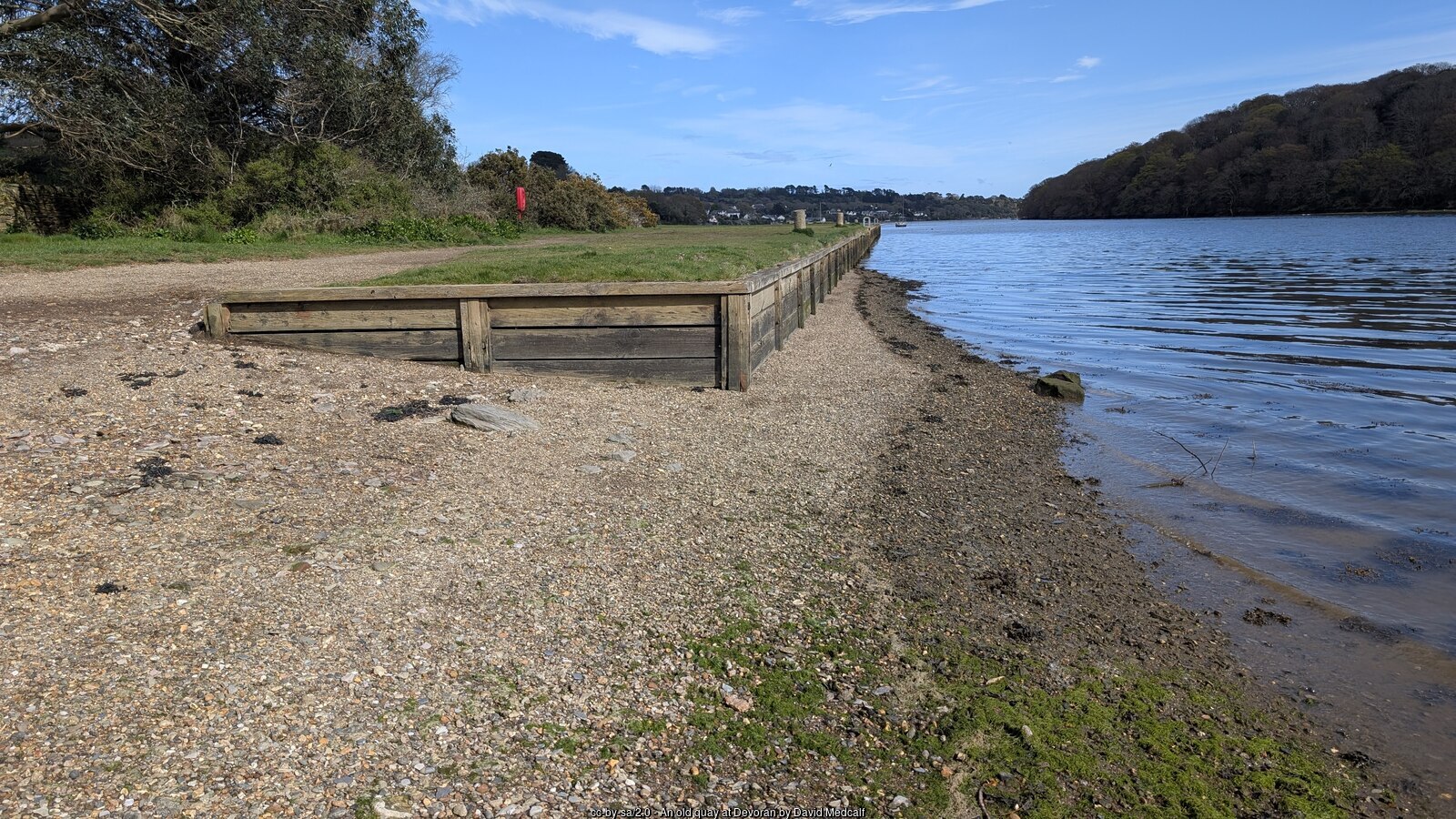
Devoran & Restronguet Creek
Cornwall Online | Mid Cornwall Towns and Villages | Truro | Feock | Devoran | Restronguet Creek | Mylor | Flushing | Falmouth | The Roseland Peninsula | St Mawes | St Anthony Head | St Just in Roseland | Portscatho | Gerrans | Philleigh | Ruan Lanihorne | Tregony | Veryan | Portloe | Portholland | Gorran Haven | Mevagissey | The Lost Gardens of Heligan | St Austell | Charlestown | Fowey | Golant | Lostwithiel | The Lizard Peninsula
On This Page
- Holidays in Devoran
- Best Time to Visit
- The Port & the Railway
- The Coast to Coast Trail
- St John & St Petroc’s Church
- History of Devoran
- Key Buildings
- Notable People
- Walks from Devoran
- Things to Do
- Local Events
- Places near Devoran
- Visitor Information
- Stay & Explore
- Family Holidays & Short Breaks
- Frequently Asked Questions
Devoran at a Glance
A creekside village at the head of Restronguet Creek, about five miles south-west of Truro, just off the A39. Built up in the 19th century as the port of the Redruth and Chasewater Railway (1826–1915); old quays, a church by J. L. Pearson, the Old Quay Inn and a GP surgery. The southern end of the traffic-free Coast to Coast Trail to Portreath. Part of the Cornwall and West Devon Mining Landscape World Heritage Site.
HOLIDAYS IN DEVORAN
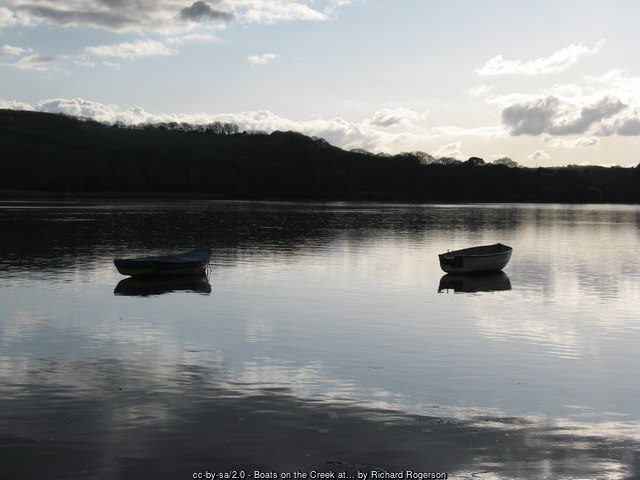
Devoran is a quiet, attractive village at the head of Restronguet Creek, where the Carnon River meets the tidal waters of the Fal. Its terraces of cottages climb the hillside above the old quays, and the views down the creek, with boats on their moorings and wooded shores, are lovely at any state of the tide.
It is hard to believe now, but in the 19th century Devoran was one of the busiest ports in Cornwall. The Redruth and Chasewater Railway brought copper ore down the Carnon Valley from the great mines of Gwennap to the quays here, where ships loaded it for the smelters of South Wales and unloaded coal and timber for the mines. The village grew up as a planned new town for the railway and port workers.
The trains stopped running in 1915, and today the old railway is the Coast to Coast Trail, a traffic-free path for walkers and cyclists that runs from Devoran right across Cornwall to Portreath on the north coast. It is one of the most popular family cycle rides in the county.
Devoran makes a peaceful base for exploring the Fal and its creeks, with Truro, Falmouth, Feock and Mylor all close by. The village has a pub with views over the creek, a GP surgery and a primary school, and the shops of Carnon Downs are a short way up the hill.
For somewhere to stay, see Feock holiday cottages – Devoran lies in the parish of Feock – and holidays and short breaks in Feock.
Best Time to Visit Devoran
Spring and autumn are perfect for cycling and walking the Coast to Coast Trail, when it is quieter than in the school holidays. Summer brings the Devoran Regatta and gig racing on the creek, and long evenings at the Old Quay Inn. In winter the creek is peaceful, with wading birds on the mud at low tide.
The trail car park and the village lanes can be busy on fine summer weekends – arrive early, or come by bus.
↑ Back to topTHE PORT & THE RAILWAY
In the early 1800s a series of small quays developed at the head of Restronguet Creek to serve the mines of the Carnon Valley and Gwennap. The great step forward came with the Redruth and Chasewater Railway, authorised by Act of Parliament in 1824 and opened on 30 January 1826. Masterminded by the mining engineer John Taylor to serve his Consolidated Mines, it ran for about nine miles from Redruth down the Carnon Valley to Devoran, with an extension along the creek to Point Quay. It never carried passengers, and despite its name it never reached Chacewater.
At first the wagons were pulled by horses, but in 1854 the company bought two steam locomotives, Miner and Smelter, and a third, Spitfire, followed; the line to Point was still worked by horses. Devoran was the railway’s headquarters, with its engine sheds and workshops. In the mid-19th century as many as twenty cargo ships a week docked here, loading copper ore and tin for the smelters of South Wales and bringing in coal for the mine engines.
But the mud washed down from the mines was a constant problem, slowly silting up the channel. As the mines declined, so did the railway: the last train ran on 25 September 1915, when Miner made the final trip back to the engine sheds at Devoran, and the last coal ship sailed out of Restronguet in the summer of 1916. The quays and the shape of the old port can still be seen along the creekside today.
↑ Back to top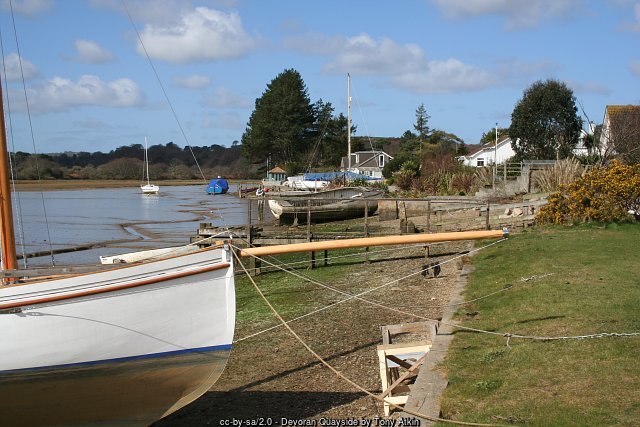
Redruth and Chasewater Railway
Opened: 30 January 1826
Length: about 9 miles, Redruth to Devoran and Point
Gauge: 4 feet
Steam: from 1854 (Miner, Smelter and Spitfire)
Passengers: never carried
Closed: 25 September 1915
THE COAST TO COAST TRAIL
Devoran is the southern end of the Coast to Coast Trail, also known as the Bissoe Trail, part of the Mineral Tramways network and the National Cycle Network. It follows the routes of old mineral tramways right across Cornwall to the harbour at Portreath on the north coast – about 11 miles, almost all of it traffic-free and fairly level, so it is ideal for families and less experienced cyclists.
From Devoran the trail runs up the Carnon Valley beside the river, passing beneath the tall stone piers of the Carnon Viaduct on the main railway line, to Bissoe, about two miles away, where there is a café and bike hire. Beyond, it climbs gently through the Bissoe Valley Nature Reserve, a former mine site returned to nature with heathland, woods and ponds, and on past some of the best-preserved mine buildings in Cornwall to the sea at Portreath.
The landscape along the trail is part of the Cornwall and West Devon Mining Landscape World Heritage Site. Many people cycle from Portreath to Devoran and back in a day, or start at Bissoe for a shorter ride down to the creek and lunch in Devoran.
↑ Back to topCoast to Coast Trail
Route: Devoran – Bissoe – Portreath
Length: about 11 miles
Surface: mostly traffic-free, gentle gradients
Bike hire and café: at Bissoe
Parking: Devoran, Bissoe and Portreath
Also: part of the Mineral Tramways network
ST JOHN & ST PETROC’S CHURCH
As the port grew, Devoran needed its own church. The church of St John the Evangelist and St Petroc was built in 1855–56 to designs by John Loughborough Pearson, the architect who later designed Truro Cathedral. It is a simple building of nave and chancel only, with a tall slender bellcote, and was renovated in 1879. Until 1873 Devoran was part of the parish of Feock; that year the parish was divided to create the new parish of Devoran.
In the churchyard lies Thomas Lobb, the Victorian plant hunter who, like his brother William, collected plants in Asia for the famous Veitch nurseries, and a memorial garden near his headstone remembers the two brothers. The church is now one of the Waterside Churches, a group of parishes around the Fal.
↑ Back to top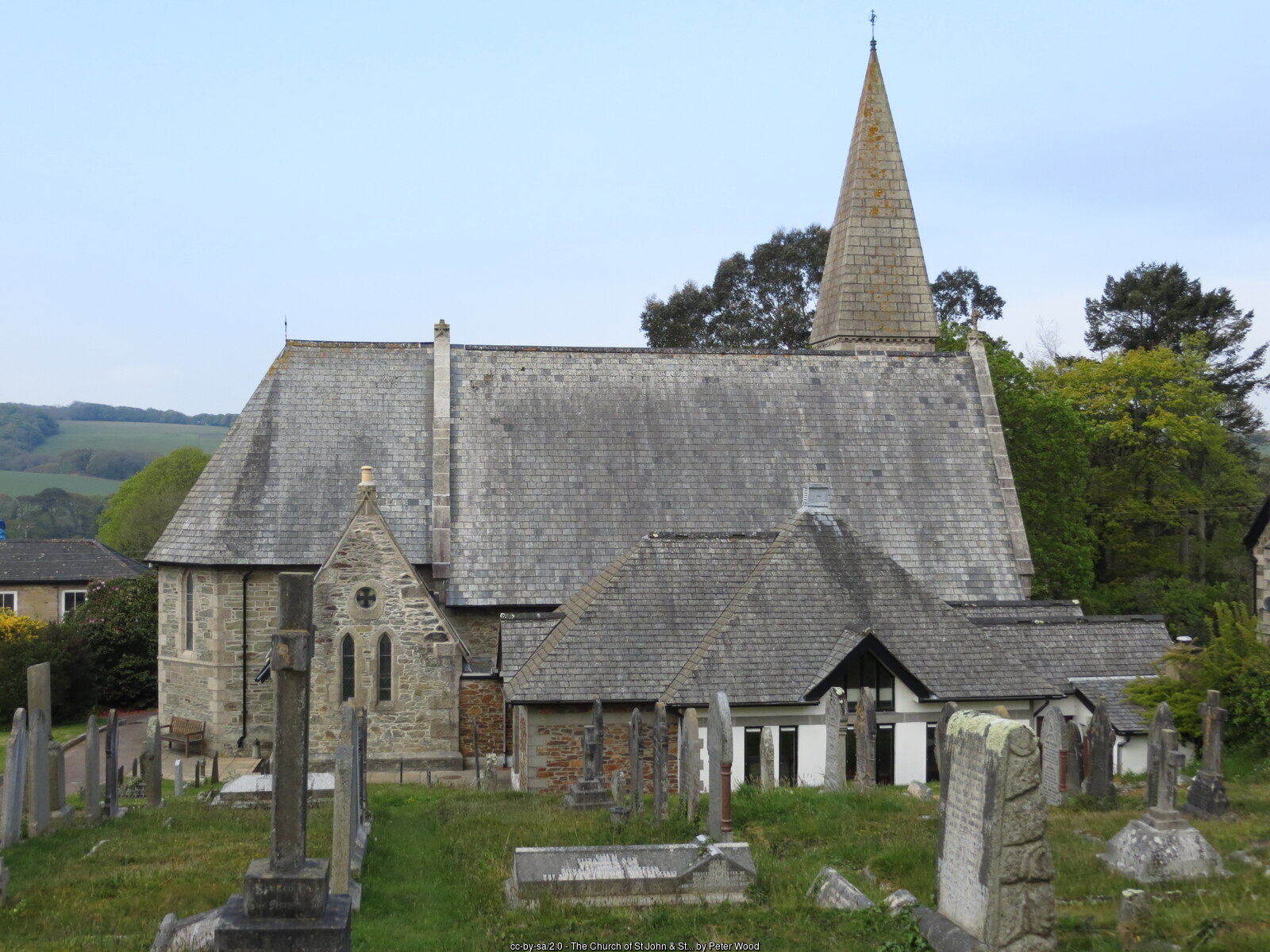
HISTORY OF DEVORAN
The Carnon Valley above Devoran had been worked for tin since prehistoric times, and the tin streamers followed the tin-rich gravels down into the creek itself. In the 18th century the copper mines of Gwennap, then among the richest in the world, needed a way to ship their ore, and quays at Point, Pill and Roundwood in Feock parish handled the trade. In the early 1800s local businessmen saw the potential for a new, improved port at the head of the creek, and the opening of the Redruth and Chasewater Railway in 1826 gave it a great boost.
Devoran grew rapidly, and a new town was laid out for the railway and port workers. The full plan was never completed, but parts of the village still keep the character of the original layout. The village hall was built around 1854 as a workshop for the railway company, using granite railway blocks in its walls. On the bank of the estuary nearby stands the ruined engine house of Carnon Mine.
The railway closed in 1915 and the port soon followed. Today Devoran is a peaceful residential village, the home of Feock Parish Council at the Old Market Hall, of the Devoran Gig Club and an annual regatta, and of countless walkers and cyclists setting out on the Coast to Coast Trail.
↑ Back to topDevoran – key dates
Early 1800s – quays develop at the head of the creek
1824 – Act of Parliament for the railway
1826 – Redruth and Chasewater Railway opens
1854 – steam locomotives introduced; railway workshop (now the village hall) built
1855–56 – church built, designed by J. L. Pearson
1873 – Devoran becomes a separate parish
1915 – railway closes
1916 – last coal ship leaves
2006 – Cornish Mining World Heritage Site inscribed
Key Buildings
- Church of St John and St Petroc – the church of 1855–56 by John Loughborough Pearson. See the church above.
- The quays – the old wharves of the railway port along the creekside, some still with their original bollards.
- The village hall – built around 1854 as a workshop for the Redruth and Chasewater Railway.
- The Old Market Hall, Market Street – now the offices of Feock Parish Council.
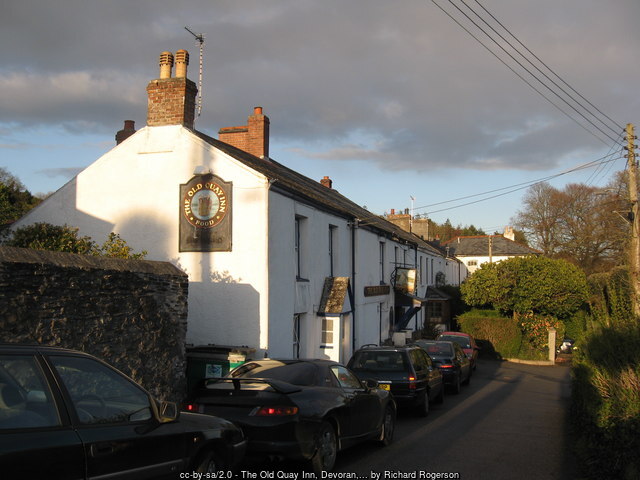
- The Old Quay Inn, St John’s Terrace – the village pub, with views over the creek.
NOTABLE PEOPLE
- John Taylor (1779–1863) – the mining engineer behind the Gwennap Consolidated Mines and the Redruth and Chasewater Railway, which created the port of Devoran.
- John Loughborough Pearson (1817–1897) – the architect of Devoran’s church of 1855–56, who went on to design Truro Cathedral.
- Thomas Lobb – the Victorian plant hunter, who collected plants in Asia for the Veitch nurseries, is buried in Devoran churchyard, with a memorial garden to him and his brother William.
WALKS FROM DEVORAN
Feock Parish Council’s Feock Trails include a walk around Devoran – “a railway, a port and a new town” – starting from the village hall, with its account of the village’s industrial history, and following the quay edges around the creek. Another trail follows the Old Tram Road, the horse-worked extension of the railway, along the creek to Point Quay, returning past the remains of Carnon Mine and through the woods.
For a longer outing, walk or cycle the Coast to Coast Trail up the Carnon Valley to Bissoe and its nature reserve, or all the way to Portreath on the north coast.
- Feock Parish Council – Feock Trails
- Restronguet Creek – Cornwall Online
- Walking in Cornwall – Cornwall Online walks
THINGS TO DO IN AND AROUND DEVORAN
- Cycle the Coast to Coast Trail to Bissoe or all the way to Portreath.
- Explore the old quays and the story of the railway port.
- Walk the Old Tram Road to Point Quay – Restronguet Creek.
- Visit the church by J. L. Pearson, then see his masterpiece, Truro Cathedral.
- Have lunch at the Pandora Inn across the creek, or at the Old Quay Inn in the village.
- Swim or paddle at Loe Beach – Feock.
- Visit Trelissick, the National Trust garden on the Fal – Trelissick.
- Spend a day in Truro or Falmouth – Truro, Falmouth.
LOCAL EVENTS
- Devoran Regatta (summer) – the village’s annual regatta on Restronguet Creek, with gig racing, sailing and fun on the quay, hosted with the Devoran Gig Club.
- Feock Regatta (summer) – working boats and sailing races off Feock – see Feock.
- Truro events – the Truro Food Festival in late September and the Christmas market from late November – see Truro.
Dates change from year to year – check Feock Parish Council and local noticeboards for this year’s events.
↑ Back to topPLACES NEAR DEVORAN
- Restronguet Creek – Point Quay, Restronguet Point and the Pandora Inn.
- Feock – Loe Beach, St Feock’s church, Trelissick and the King Harry Ferry.
- Mylor – Mylor Bridge and the yacht harbour at Mylor Churchtown.
- Truro – Cornwall’s cathedral city, about five miles north-east.
- Falmouth – about seven miles south along the A39.
- Portreath – on the north coast, at the other end of the Coast to Coast Trail – Portreath beach.
VISITOR INFORMATION
Parking & EV Charging
There is a car park near the quay at the Devoran end of the Coast to Coast Trail, and further parking for the trail at Bissoe. Village streets are narrow, with limited on-street parking – please park considerately.
Electric vehicle charging:
- Ferris Garage, Feock – 22kW charger
- Truro – park and ride and city car parks
Bus & Train
Bus 36A runs between Truro and Devoran, continuing via Frogpool to Penryn. The nearest railway station is Perranwell, on the Maritime Line between Truro and Falmouth; the Redruth and Chasewater Railway Trail can be reached from Perranwell Station. Check timetables before you travel.
Facilities & Supermarkets
Devoran has a village hall, a primary school, a GP surgery and the parish council offices. The nearest shops and post office are at Carnon Downs, just up the hill. Supermarkets:
- SPAR – Smithy Lane, Carnon Downs TR3 6HW
- Tesco – Garras Wharf, Truro TR1 2TN
- Sainsbury’s – Treyew Road, Truro TR1 3XL
- Asda – Jennings Road, Penryn TR10 9LY
Pubs & Cafés
The Old Quay Inn on St John’s Terrace (TR3 6NE) is the village pub, with views over the creek. Along the trail, there is a café at Bissoe, and across the creek the thatched Pandora Inn is a short drive away. Truro and Falmouth have a wide choice of restaurants.
Health
Devoran Surgery, Quay Road, Devoran TR3 6PW (01872 562200), and Carnon Downs Surgery, Bissoe Road, Carnon Downs TR3 6JD (01872 863221). The nearest A&E is the Royal Cornwall Hospital, Truro. Call NHS 111 for urgent advice and 999 in an emergency.
Disabled Access
The quaysides are fairly level, and the Coast to Coast Trail is mostly level and well surfaced, though some sections are rough gravel. The Old Tram Road to Point is a quiet lane with a 20mph limit. The village streets climb steeply away from the creek.
Vets & Dogs
Dogs are welcome on the Coast to Coast Trail – keep them under control near cyclists and horses. The nearest vets are in Truro, including Highertown Vets, 23 Highertown, TR1 3QE, and Clifton Villa Veterinary Surgery, Coronation Terrace, TR1 3HJ (01872 273694).
National Trust & English Heritage
The National Trust cares for Trelissick in Feock parish, a few miles away. English Heritage cares for Pendennis Castle in Falmouth and St Mawes Castle.
Attractions
Cornwall’s mining heritage along the trail, and gardens, castles and museums in Truro, Falmouth and along the Fal.
STAY & EXPLORE NEAR DEVORAN
Nearby Towns & Villages
Local Attractions
Walks & Cycling
Official Information
FAMILY HOLIDAYS & SHORT BREAKS IN DEVORAN
Family holidays in Devoran are ideal for active families – cycling the traffic-free Coast to Coast Trail, exploring the old quays and the story of the mining railway, crabbing and paddling on the creek, and days out to Loe Beach, Truro and Falmouth.
Devoran lies in the parish of Feock, and its holiday homes are listed with Feock’s. Browse Feock holiday cottages, or holidays and short breaks in Feock for every type of accommodation.
Short breaks in Devoran are perfect for a cycling weekend in spring or autumn, when the trail is quiet. Booking direct with the owner means no agency fees.
↑ Back to topFREQUENTLY ASKED QUESTIONS ABOUT DEVORAN
Devoran is a village at the head of Restronguet Creek, where the Carnon River meets the tidal waters of the Fal, just off the A39 between Truro and Falmouth. It is about five miles south-west of Truro.
In the 19th century Devoran was the port of the Redruth and Chasewater Railway, which opened in 1826 to carry copper ore from the mines of Gwennap down the Carnon Valley. Ships loaded the ore here for the smelters of South Wales and brought in coal and timber for the mines.
The railway closed on 25 September 1915, when the locomotive Miner made the last trip back to the engine sheds at Devoran. The last coal ship sailed out of Restronguet Creek in the summer of 1916.
The Coast to Coast Trail runs between Devoran on the south coast and Portreath on the north coast, about 11 miles, almost all traffic-free. You can start at either end, or at Bissoe, about two miles from Devoran, where there is a café and bike hire.
The church of St John and St Petroc was built in 1855–56 to designs by John Loughborough Pearson, the architect who later designed Truro Cathedral.
Yes. The Old Quay Inn on St John’s Terrace is the village pub, with views over Restronguet Creek. The Pandora Inn is across the creek at Restronguet Passage.
Bus 36A runs between Truro and Devoran, continuing to Penryn. The nearest railway station is Perranwell, on the Maritime Line between Truro and Falmouth. Check the current timetables before you travel.
Cornwall Online | Mid Cornwall Towns and Villages | Truro | Feock | Devoran | Restronguet Creek | Mylor | Flushing | Falmouth | The Roseland Peninsula | St Mawes | St Anthony Head | St Just in Roseland | Portscatho | Gerrans | Philleigh | Ruan Lanihorne | Tregony | Veryan | Portloe | Portholland | Gorran Haven | Mevagissey | The Lost Gardens of Heligan | St Austell | Charlestown | Fowey | Golant | Lostwithiel | The Lizard Peninsula