About Glendurgan Garden
Glendurgan is one of the great sub-tropical gardens of the South West. It fills three wooded valleys that drop steeply from Mawnan Smith down to the hamlet of Durgan, on the shore of the Helford River.
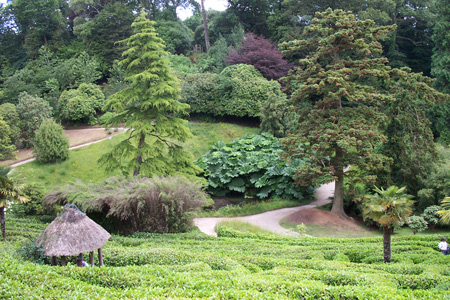
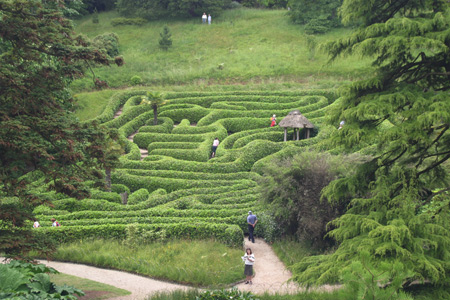
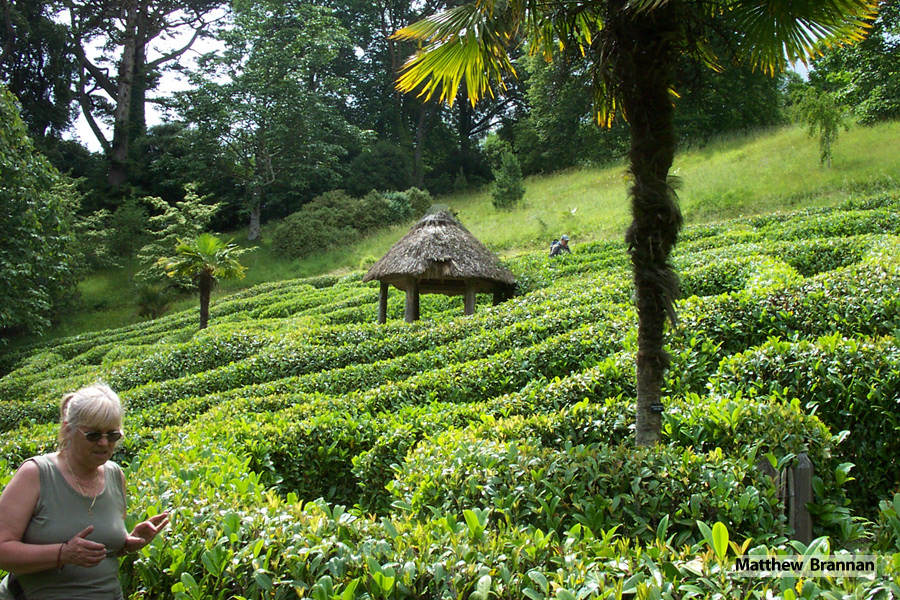
The mild climate of the Helford lets a huge range of exotic trees and shrubs flourish here among open glades carpeted with wild flowers. The garden is best known for its cherry laurel maze, planted in 1833 and still a firm favourite with children.
Gallery
History
Glendurgan was created by Alfred Fox, of the Falmouth Fox family of shipping agents, and his wife Sarah. In the 1820s Alfred rented cellars and orchards at Durgan, then bought land in the valley above, and around 1826 built a thatched cottage there as a family retreat.
In 1829 Alfred and Sarah opened a Schoolroom in the garden for local children and their own twelve. In 1833 they planted the maze, using a design taken from the Sydney Gardens in Bath — most of the original cherry laurel hedges still survive. The thatched cottage burned down in 1837 and Alfred replaced it with the house that stands today. It is still the Fox family's home and is not open to visitors.
In 1890 the garden passed to the Foxes' son George Henry Fox, a keen botanist who added many of its rare trees and shrubs. The family added the Giant's Stride, a rope swing around a tall pole, in 1913; its pole was replaced in 2022. In 1962 Cuthbert Fox and his family gave Glendurgan to the National Trust.
The Garden
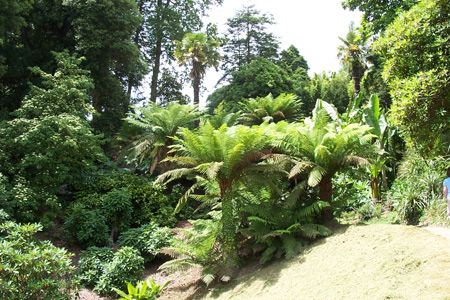
Paths wind down through stands of English trees such as oak, lime, sycamore and beech, then into sheltered sub-tropical glades of palms, tree ferns and bamboo, with ponds in sunlit clearings. Named areas include the Cherry Orchard, Camellia Walk and Valley Head.
The garden is at its best in spring, when camellias, rhododendrons, azaleas and magnolias are in full bloom above carpets of primroses and bluebells. In summer, hydrangeas, aquilegias and foxgloves take over and the lush foliage of the valley floor is at its most jungle-like.
Highlights
- The maze — the cherry laurel maze of 1833, one of the garden's best-loved features.
- The Giant's Stride — a rope swing around a five-metre pole, popular with children and adults.
- The Schoolroom — a recreation of the schoolroom Alfred and Sarah Fox opened in 1829.
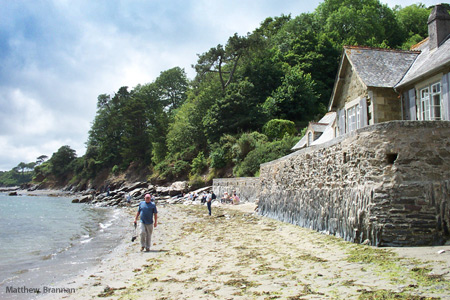
- Durgan — follow the path down to the hamlet and its sheltered pebbly beach on the Helford River.
Visiting Information
- Address
- Glendurgan Garden, Mawnan Smith, near Falmouth, Cornwall, TR11 5JZ
- Getting there
- Four miles south-west of Falmouth and half a mile south-west of Mawnan Smith. Parking costs £2.50 for up to 4 hours or £5 all day, and is free for National Trust members. Four EV charging points in the car park.
- Contact
- 01326 252020 • glendurgan@nationaltrust.org.uk
- Opening times
- Garden usually 10:30–17:00 (last entry 16:00), and open on bank holiday Mondays and Mondays in August. Days vary through the year, so check the official Glendurgan Garden page before travelling.
- Admission
- Adult £14.00, child (5–17) £7.00, family (2 adults + up to 3 children) £35.00, one-adult family £21.00 (£15.40, £7.70, £38.50 and £23.10 with Gift Aid). Free for National Trust members and children under 5.
- Facilities
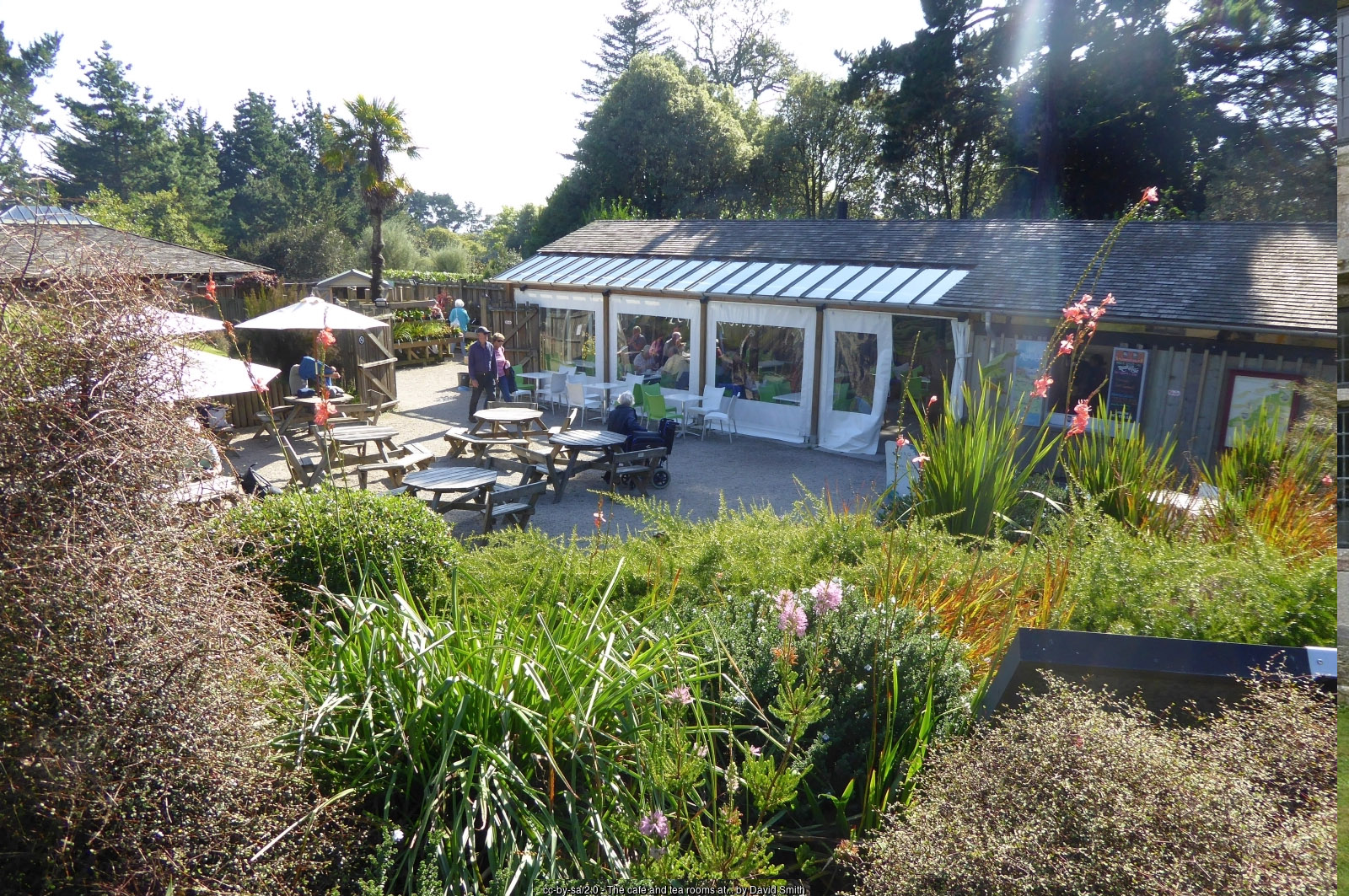
- Tea-house (10:00–17:00), second-hand bookshop (10:30–16:00), picnic areas and toilets, including an accessible toilet.
- Dogs
- Welcome in the garden on short fixed leads. Assistance dogs only in the maze, orchard and Schoolroom.
- Accessibility
- The valley has steep slopes, steps and gravel paths. A step-free route is marked, though parts of it are steep. Accessible parking, a drop-off point, an induction loop and large-print guides are available, and a Tramper mobility scooter can be hired.
- Note
- Durgan beach can be reached through the garden or along the South West Coast Path. The garden gates are locked 30 minutes before closing, so allow time to walk back up the valley.
Opening times, admission prices and facility availability change seasonally — please confirm details on the official National Trust site before your visit. Hero image: the maze at Glendurgan Garden — Photo © Derek Voller (cc-by-sa/2.0).