Swanpool Beach
Sheltered Sand and a Rare Nature Reserve Lagoon on the Edge of Falmouth
Swanpool, Falmouth, Cornwall, TR11 5BG Local Nature Reserve & SSSI
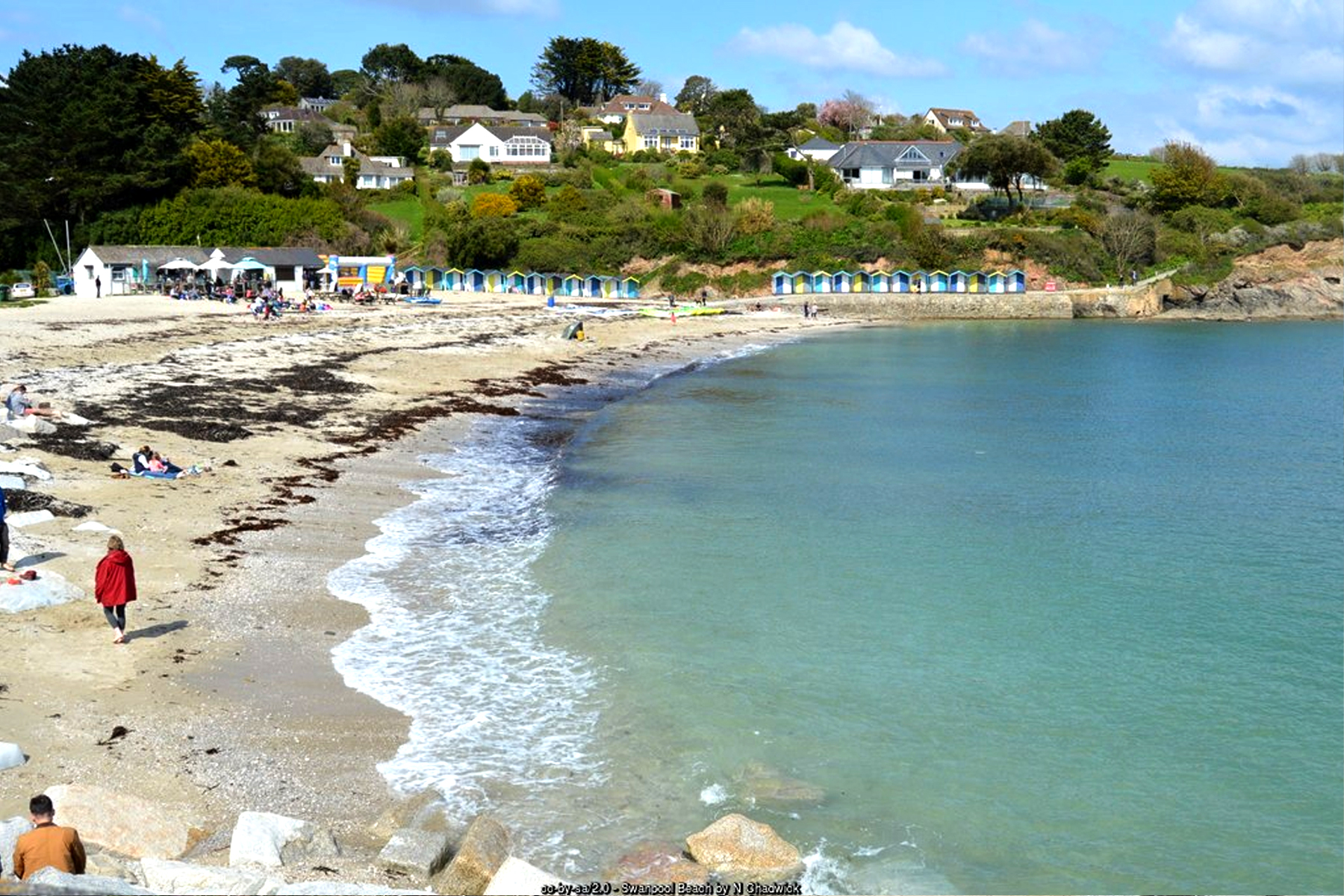
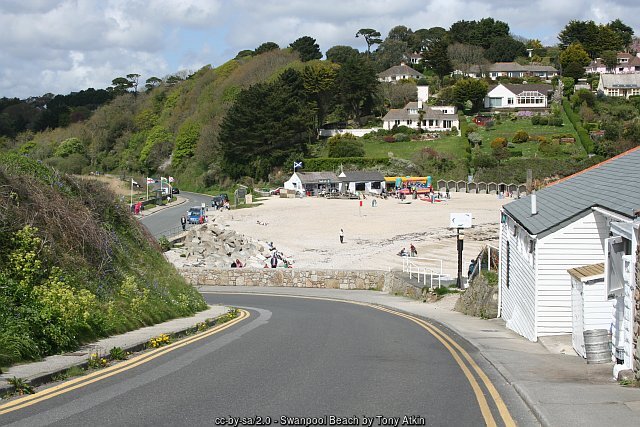
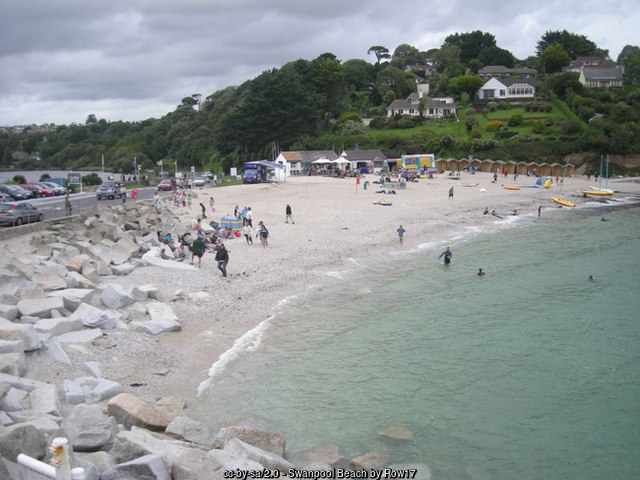
Swanpool Beach sits on the southern outskirts of Falmouth, tucked into a sheltered, east-facing bay between the town's flagship Gyllyngvase Beach and the quieter Maenporth further along the coast path. It is one of the easiest beaches in the area to simply turn up and enjoy: a large car park sits directly opposite the sand, giving level, step-free access that suits families, pushchairs and anyone who would rather not tackle a cliff path to reach the water. The beach takes its name from Swanpool itself, the small lake or lagoon that lies immediately behind it, separated from the open sea by nothing more than a narrow bar of shingle - and it is that lake, every bit as much as the beach, that makes this stretch of coast genuinely unusual.
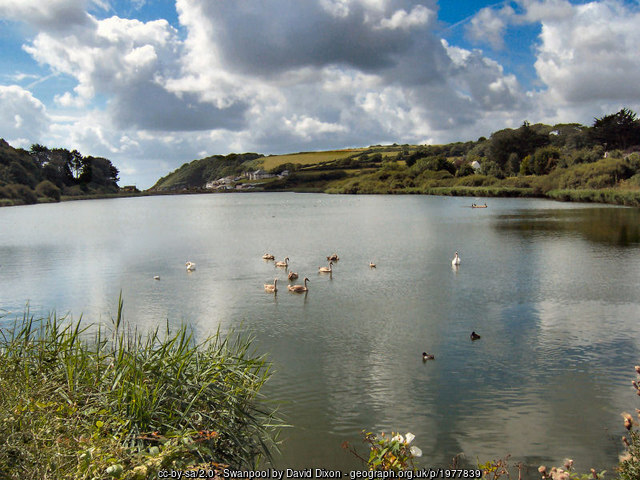
Swanpool lake formed naturally in the few thousand years since the last Ice Age, as rising sea levels pushed shingle and sand into a bar across the mouth of a small coastal valley, damming the stream that ran down through it and trapping a body of water behind the beach - the same basic process that shaped Loe Bar near Porthleven and Slapton Sands in Devon, on a much smaller scale. For a long stretch of its history the pool was effectively a freshwater lake, but a culvert cut through the shingle bar in the early nineteenth century (most sources point to 1824 or 1826) reintroduced a controlled trickle of seawater, and it is that culvert, together with continual percolation through the porous shingle itself, that gives Swanpool its defining characteristic today: a permanent mix of salt water from Falmouth Bay and fresh water from its feeder stream and rainfall, sitting in genuinely stratified layers rather than blending evenly. Denser, saltier water settles at depth beneath a lighter, less saline layer near the surface, a stable annual halocline that is unusual enough in Britain to have made Swanpool a site of real scientific interest.
That stratified brackish water supports a genuinely rare piece of British wildlife: the trembling sea mat (Victorella pavida), a tiny colonial bryozoan - an animal, not a plant, despite the mat-like, velvety colonies it forms - that filter-feeds through minute tentacle crowns barely a millimetre across. Swanpool is its only confirmed location anywhere in Britain, a fact recognised when the lagoon was formally notified as a Site of Special Scientific Interest (SSSI) in September 1995, cited both for the trembling sea mat itself and for the rarity of the brackish lagoon habitat more broadly - a habitat type covering well under a thousand hectares nationally, of which Swanpool's roughly nine hectares rank among the eleven most significant examples in the whole of Britain. Alongside that SSSI status, the lake and its fringing reedbed and willow carr woodland are also managed as a Local Nature Reserve, giving Swanpool the same genuine dual protected designation - honestly earned rather than a marketing flourish - that a small number of other Cornish coastal sites carry. Away from the specialist interest of the trembling sea mat, the reserve is simply an attractive place to pause: mute swans, mallards and tufted ducks work the open water, coots and herons feed along the reedy margins, kingfishers are regularly reported darting along the stream inlet, and yellow flag iris and cuckoo flower colour the wetland fringe through spring and early summer. Older local accounts describe the pool freezing solid enough for skating during the exceptionally cold winter of 1830 - a reminder of how much smaller and shallower a body of water this became once the nineteenth-century culvert let much of its original depth drain away.
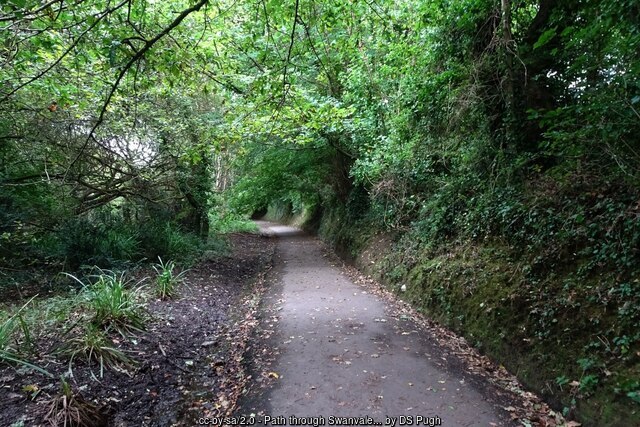
Long before anyone thought about conservation, this valley and the ground around it were being worked for metal. A silver-lead mine operated at Swanpool from the early 1700s, eventually reaching a recorded depth of around 80 fathoms - roughly 480 feet, or about 150 metres - and producing ore valued at some £60,000 during its working life, a very substantial sum for a small Cornish mine, before closing in 1865 as the county's wider mid-Victorian mining slump took hold. It found one more, brief chapter of life in November 1880, when it was reopened with financial backing from Sir Julius Vogel - a colourful figure better known as a former Premier of New Zealand and a driving force behind that country's ambitious 1870s public-works borrowing programme - before closing for good only a few years later, shortly after 1885. Mining activity around Swanpool was not confined to that one shaft: nineteenth-century workings in the area also drew lead ore from beneath the pool itself and produced arsenic as a byproduct of calcining, some of it reportedly shipped as far as the United States for use as a cotton-pest control agent, with faint traces of the old arsenic works remaining visible on the cliffs to the west of the beach until they were grassed over in relatively recent decades. It is a genuinely different side of Swanpool's history from the nature reserve most visitors come to enjoy today, but it is a real and well-documented one.
Just above the lake stands Swanpool House, a nineteenth-century building that has seen its own share of change. During the Second World War it was occupied by American military forces, part of the substantial US build-up around Falmouth's deep-water harbour in the run-up to D-Day, and the servicemen based here left a lasting, if unglamorous, mark on the beach itself: the car park opposite the sand is said to have been built by American troops using spoil from the old mine workings, raising it clear of the marshy ground on which it sits - the reason the car park still stands noticeably higher than the road beside it. Swanpool House itself has since been converted into holiday apartments, a quieter modern use for a building that once housed servicemen a world away from home. Combined, the lake, the mine remains and Swanpool House give this small stretch of coast a surprising depth of layered history for what looks, at first glance, like a simple family beach.
The beach itself is straightforward and family-friendly: a stretch of sand facing broadly east into a sheltered bay, protected from the worst of the prevailing south-westerlies that batter more exposed parts of the Cornish coast, and popular for swimming as a result. That same shelter, plus the easy car park access, has also made Swanpool one of Falmouth's best-known spots for watersports - Elemental UK runs a dedicated watersports centre based at the beach, hiring out kayaks, paddleboards and sailing dinghies and running coasteering and raft-building sessions through the season, which brings a livelier, more active crowd to Swanpool than some of Falmouth's quieter coves. Families are well catered for too, with a café at the beach, a crazy golf course, and the level, flat approach from the car park that makes this one of the more accessible beaches in the area for pushchairs, small children and anyone who finds a steep cliff path off-putting.
Swanpool does not currently hold Blue Flag or Seaside Award status for the 2026 season - among Falmouth's beaches, only Gyllyngvase carries the Blue Flag, and none currently hold a Seaside Award - but its genuine Local Nature Reserve and SSSI designation gives it a different, arguably rarer, kind of distinction: very few beaches anywhere in Britain sit directly beside the only confirmed home of a nationally scarce species. A short stretch of the South West Coast Path crosses the shingle bar between the beach and the lake, making it easy to combine a swim or a paddle with a walk around the reserve, or to continue on towards Maenporth to the south or back into Falmouth and Gyllyngvase to the north. Dogs are kept off the main beach during the busiest summer stretch - 1 July to 31 August, 10am to 6pm - a shorter seasonal window than Falmouth's Blue Flag beach requires, reflecting Swanpool's slightly less formal, more come-as-you-are character even as its lake quietly holds one of the more scientifically important habitats on this whole coastline.
Visitor Information
Parking
A large pay-and-display car park sits directly opposite the beach, built up on old mine spoil above the surrounding marshy ground. It gets busy on warm days during school holidays, so arrive early for the best chance of a space.
Facilities
Public toilets in the car park, a café at the beach, a crazy golf course, and kayak, paddleboard and sailing hire through Elemental UK's watersports centre based on site.
Disabled Access
Level, easy access from the car park straight onto the beach, with no steps or steep path to negotiate - one of the more accessible beaches in the Falmouth area. Blue Badge holders can park in the standard bays closest to the beach entrance; no separately marked disabled bays are provided.
Things to Do Nearby
- Gyllyngvase, Falmouth's flagship Blue Flag beach, a short walk or drive north along the coast
- Maenporth, the next sheltered beach south along the coast path, popular for its own café and rockpools
- National Maritime Museum Cornwall, on Falmouth's Discovery Quay, a short drive into town
- Swanpool Nature Reserve - the reserve's own site, with more on its wildlife and history
- South West Coast Path Guide - the coastal walking route linking Swanpool with Gyllyngvase and Maenporth
Places to Stay
Frequently Asked Questions
Page last updated: 10 September 2026.