Tunnel Beach
Falmouth's Secret Cove, Reached Through a Tunnel Beneath the Promenade
Tunnel Beach, Cliff Road, Falmouth, Cornwall, TR11 4LY
Tunnel Beach is one of Falmouth's smallest and least conventional beaches - a modest cove of flat rock ledges and shingle patches tucked in immediately beside Castle Beach on Cliff Road, between the town centre and Gyllyngvase. What makes it worth seeking out isn't sand or size but the way you get there: rather than a slipway or a simple flight of steps, Tunnel Beach is reached through an honest-to-goodness tunnel running beneath the seafront promenade, entered via a distinctive stone spiral staircase opposite the seafront entrance to Princess Pavilion. It's the kind of hidden-in-plain-sight feature that regular dog-walkers and locals know well and most visitors to Falmouth's bigger beaches never notice at all.
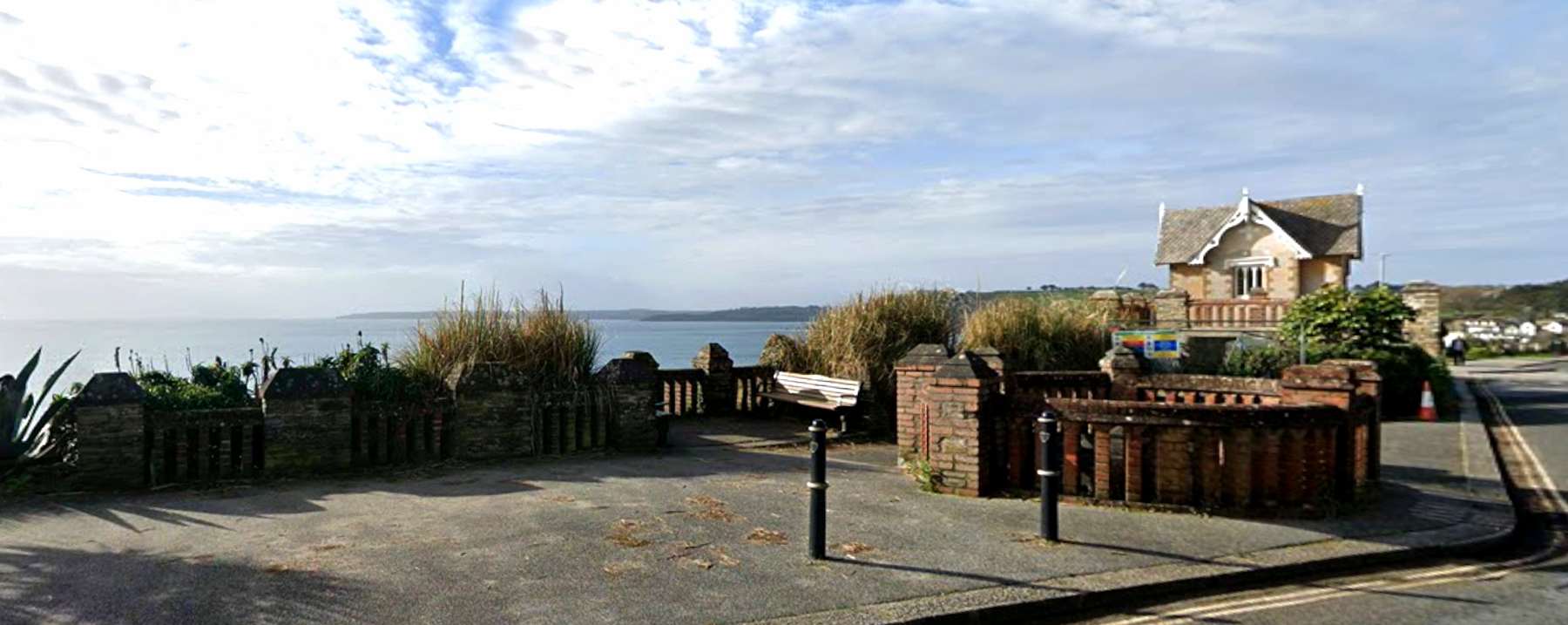
The staircase itself has become something of a minor attraction in its own right. Visitors on the promenade sometimes assume the round stone structure is an old well before realising, on closer inspection, that it conceals a spiral staircase descending to a tunnel running under the road and prom, which then opens onto a small platform with steps down onto the beach. It's a genuinely practical piece of Victorian or Edwardian-era civil engineering rather than a folly - a way of getting people from the clifftop straight down to the shore without a long walk round - and it's usually described by the people who find it as quirky, unexpected and well worth a look, even by those who don't attempt the steps themselves. Exactly when the tunnel was built isn't well documented in any source we could verify, and nothing in the available local history pins the date precisely; what is documented is its purpose and its name, which comes directly from this access route rather than from any geological feature of the beach.
Once down through the tunnel, the beach itself is unpretentious: a series of flattish rock platforms and ledges with patches of shingle rather than a stretch of open sand, more suited to a quiet sit, a paddle among the rockpools, or a spot of low-tide exploring than to sandcastles or sunbathing. Like its neighbour Castle Beach, a good deal of the exposed rock and shingle here disappears under the sea as the tide comes in, so a visit is best timed for low to mid-tide, when the flat ledges are at their most walkable and the rockpools at their most rewarding. Those rockpools are a genuine draw for anyone who enjoys a slower, more curious kind of beach visit - shore crabs, anemones and small fish tucked among the weed-covered rocks - and the general quiet of the place, away from the crowds of Gyllyngvase a kilometre round the headland, gives it a different character from almost anywhere else on this stretch of coast.
There's a plausible thread connecting Tunnel Beach to one of Falmouth's better-documented local histories. The land immediately above the beach, running back from Cliff Road, was once part of the Gyllyngdune Estate, established in 1837 by General William Jesser Coope; after his death the following year, his son - the local vicar - and his five daughters spent decades developing the grounds into the elaborate shell-decorated gardens now known as Gyllyngdune Gardens, using shells gathered locally and sent home from around the world by Packet ship. Some local sources describe a beach on this stretch of shore as having been the Coope family's own private beach in the 1800s, before public access opened up later in the century - a claim we can't independently verify in full, but one that fits neatly with the Coope family's documented ownership of the clifftop land directly above. The estate was sold on in 1900 to Frederick Horniman, of the tea-trading family and Falmouth's MP at the time, who in 1903 sold the coastal strip to Falmouth Town Council, clearing the way for Cliff Road to be completed and for the gardens to open to the public in 1907 as Gyllyngdune Gardens, complete with a cast-iron bandstand.
The building that gives Tunnel Beach's staircase its usual landmark reference, Princess Pavilion, was built in 1897 as part of the town's celebrations for Queen Victoria's Diamond Jubilee, originally as a concert hall and entertainment venue on this same clifftop site. It took its present name in 1911, when Princess Alexander of Teck formally named it during the Spring Flower Show, a year after the original pavilion building had been opened by Princess Christian, one of Queen Victoria's daughters. More than a century on, and following a Heritage Lottery Fund-backed restoration of the wider gardens completed in 2011, it remains a working year-round venue for concerts, theatre, comedy and community events, with the Garden Cafe and Gyllyngdune Gardens' shell grottoes, Quarry Garden and restored Edwardian veranda all within a couple of minutes' walk of the top of the Tunnel Beach staircase - so a visit down to the cove pairs naturally with an hour spent in the gardens above it.
Because it sits tucked below the promenade rather than facing the open sea directly, Tunnel Beach is fairly sheltered, and the water here is generally recognised as good quality - though it isn't, itself, one of the handful of Cornwall beaches with an officially monitored and classified bathing water, unlike its near neighbour Gyllyngvase. There's no lifeguard cover at Tunnel Beach at any time of year; the nearest RNLI lifeguard patrol during the summer season is at Gyllyngvase, about a kilometre away round the headland, and that's the beach to head for if a lifeguarded swim matters to your visit. Given the tunnel-and-staircase access, the tidal cover of the rocks, and the total absence of facilities at beach level, Tunnel Beach suits confident, self-sufficient visitors - a quiet detour on a longer walk along Cliff Road - rather than a first choice for young families or anyone needing straightforward, level access.
Dogs are welcome for most of the year but are restricted from the beach between 1 July and 31 August, 10am to 6pm, under Cornwall Council's seasonal beach dog controls - the same summer-only window that applies at Castle Beach, Swanpool and Maenporth along this stretch of the Falmouth seafront, and a shorter restriction than the mid-May to end-of-September window that applies at Gyllyngvase itself. Outside that window, and outside those hours even in high summer, dogs are free to use the beach as normal.
For anyone extending a Tunnel Beach visit into a longer walk, Cliff Road continues south towards Pendennis Point, where Pendennis Castle stands guard over the mouth of the Carrick Roads. Henry VIII had it built between 1539 and 1545 as part of a chain of coastal artillery forts responding to the threat of Catholic invasion from Europe, its circular keep designed to allow gunners to fire from several levels at once, and it was positioned deliberately opposite the twin fort of St Mawes Castle on the far shore so the two could cover the anchorage between them. Its best-known moment came during the English Civil War, when a Royalist garrison of around a thousand soldiers and their dependants held out through a five-month siege by Parliamentary forces in 1646, finally agreeing an honourable surrender only once their food ran out - one of the last Royalist strongholds in England to fall. Remodelled repeatedly over the centuries that followed and still garrisoned as late as 1956, it's a striking contrast in scale to Tunnel Beach's modest little tunnel a short walk back along the same clifftop road.
Visitor Information
Parking
No dedicated car park at the beach itself. Limited on-street parking is available along Cliff Road above Castle Beach and Tunnel Beach, with pay-and-display car parks a short walk away at Gyllyngvase Beach and on Pendennis Point.
Facilities
None at Tunnel Beach itself - no toilets, shop or cafe. The nearest facilities, including toilets and cafes, are a short walk away at Gyllyngvase Beach or in Falmouth town centre.
Disabled Access
Not suitable for wheelchair users or pushchairs - the only access is via a spiral staircase and tunnel with a number of steps, and no ramp or lift alternative exists. No Blue Badge parking is provided at the beach itself.
Things to Do Nearby
- Castle Beach, immediately next door on Cliff Road, sharing a similar rock-and-shingle character
- Gyllyngvase Beach, Falmouth's main beach, about a kilometre away with full facilities and lifeguard cover
- National Maritime Museum Cornwall, on Discovery Quay in Falmouth harbour
- Princess Pavilion and Gyllyngdune Gardens, right at the top of the Tunnel Beach staircase, with shell grottoes, a bandstand and a year-round events programme
- Pendennis Point coastal path, a short walk south along Cliff Road towards Pendennis Head
Places to Stay
Frequently Asked Questions
Page last updated: 10 September 2026.