Widemouth Bay
Two Miles of Blue Flag Sand and Consistent Surf
Widemouth Bay, near Bude, Cornwall, EX23 0AW Blue Flag 2026
Widemouth Bay is a two mile stretch of flat, west-facing sand a few minutes' drive south of Bude, backed by low cliffs and grassy fields and holding Blue Flag award status for 2026. Its sheer size means it rarely feels as crowded as Bude's smaller town beaches even at the height of summer, and it faces squarely into the Atlantic, making it one of the most consistent and popular surf beaches in the area.
Widemouth Bay is widely regarded as one of Cornwall's premier surf beaches, and its size is part of the reason why: the sweep of sand is long enough to spread out the crowds that gather on a good day, and several peaks tend to form along its length, so there is usually a rideable wave somewhere on the beach regardless of the state of the tide. The bay faces west into the open Atlantic with no offshore islands or headlands to soften the swell, which has given it a reputation among local surfers as one of the most dependable spots in the Bude area - reliable enough that several surf schools run lessons here throughout the year, teaching everyone from complete beginners to more experienced surfers building on existing skills. Conditions range from gentle, forgiving white water suitable for first-timers through to powerful, well-organised beach breaks that draw visiting surfers from across the South West, which is part of why Widemouth so often features on lists of Cornwall's best surf beaches alongside Fistral and Watergate Bay near Newquay.
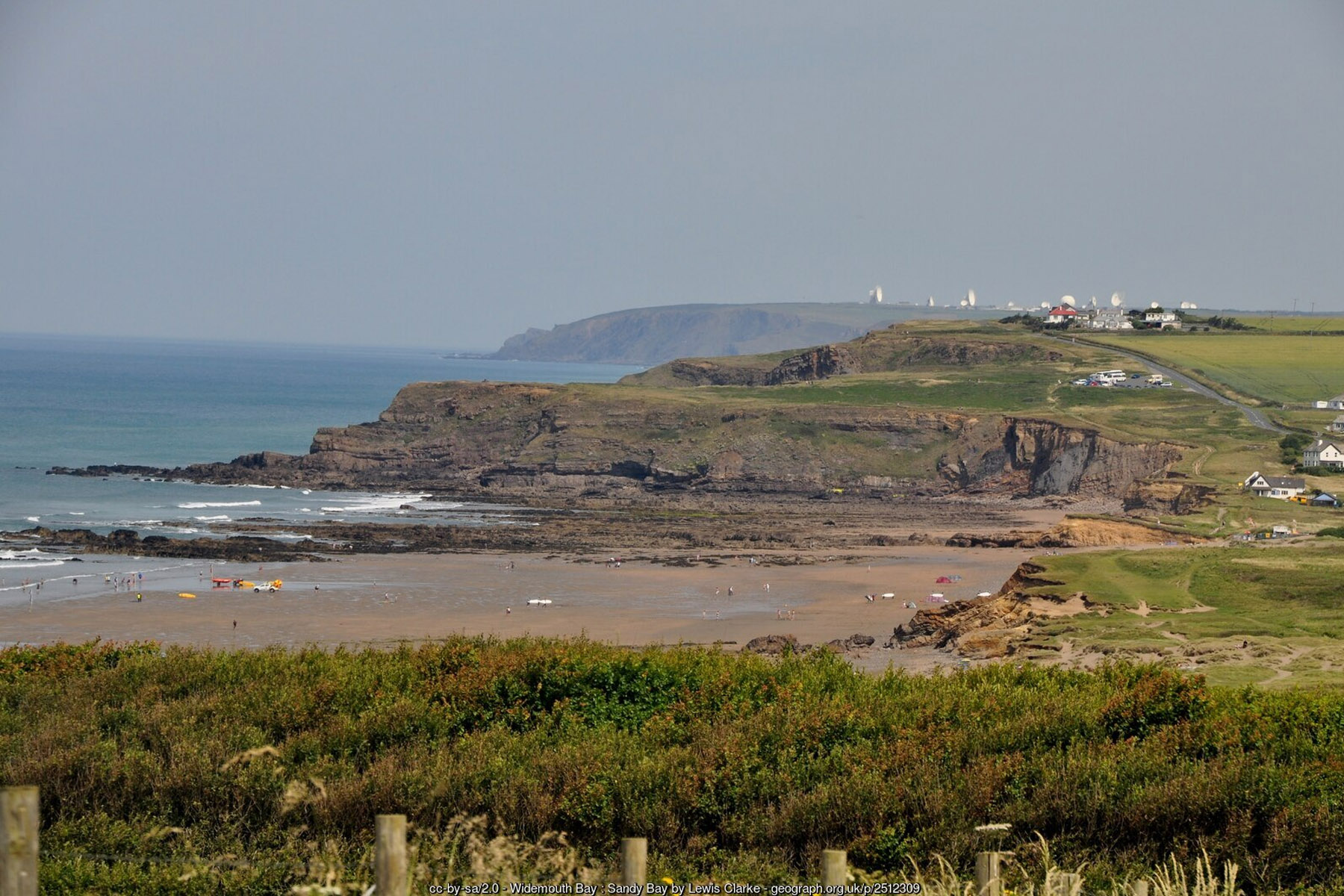
Free car parking is available at both the north and south ends of the beach - unusually generous for Cornwall, where beachside parking charges are the norm - and facilities include cafes and toilets along with a ramp providing good disabled access onto the sand. The southern end, known locally as Black Rock, becomes rockier at lower tides and is good for rock pooling, while the rest of the bay is open sand throughout.
The beach's exposure to the full force of the Atlantic makes it excellent for surfing but means conditions can turn powerful quickly, so it is worth watching the safety flags and swimming or surfing when RNLI lifeguards are on duty - broadly Easter weekends, April weekends, daily from early May to the end of September, and October weekends. Dogs are welcome all year on the Black Rock / South Beach section; on the rest of the beach, dogs face the same seasonal restriction as elsewhere in Bude, banned between 10am and 6pm from 15 May to 30 September.
The cliffs and foreshore at Widemouth Bay are also of considerable interest to geologists, and the beach is a well-known teaching site for university and school field trips studying rock structure. The rocks here belong to the Bude Formation and the underlying Crackington Formation, part of the Culm Measures laid down around 310 million years ago during the Carboniferous period, when this part of Cornwall lay beneath a shallow sea receiving thick sequences of mud and sand. Those originally horizontal beds were later folded, faulted and tilted almost on end during the Variscan mountain-building episode, and the result is spectacularly visible today: alternating bands of buff sandstone and dark grey shale run in tight, contorted folds across the wave-cut shore platform, with individual folds ranging from a few centimetres across up to structures as tall as the cliffs themselves. A prominent geological boundary, the Widemouth South Fault, marks a sharp change partway along the bay from the paler sandstones typical of its northern half to the darker shales and mudstones further south. The exposures have also yielded fossils typical of the Upper Carboniferous, including goniatites (an extinct relative of the ammonite), fish remains and worm burrows preserved in the shale bands - though the beach's Site of Special Scientific Interest (SSSI) status means the bedrock itself must not be hammered or removed; only loose material already detached from the cliff may be collected.
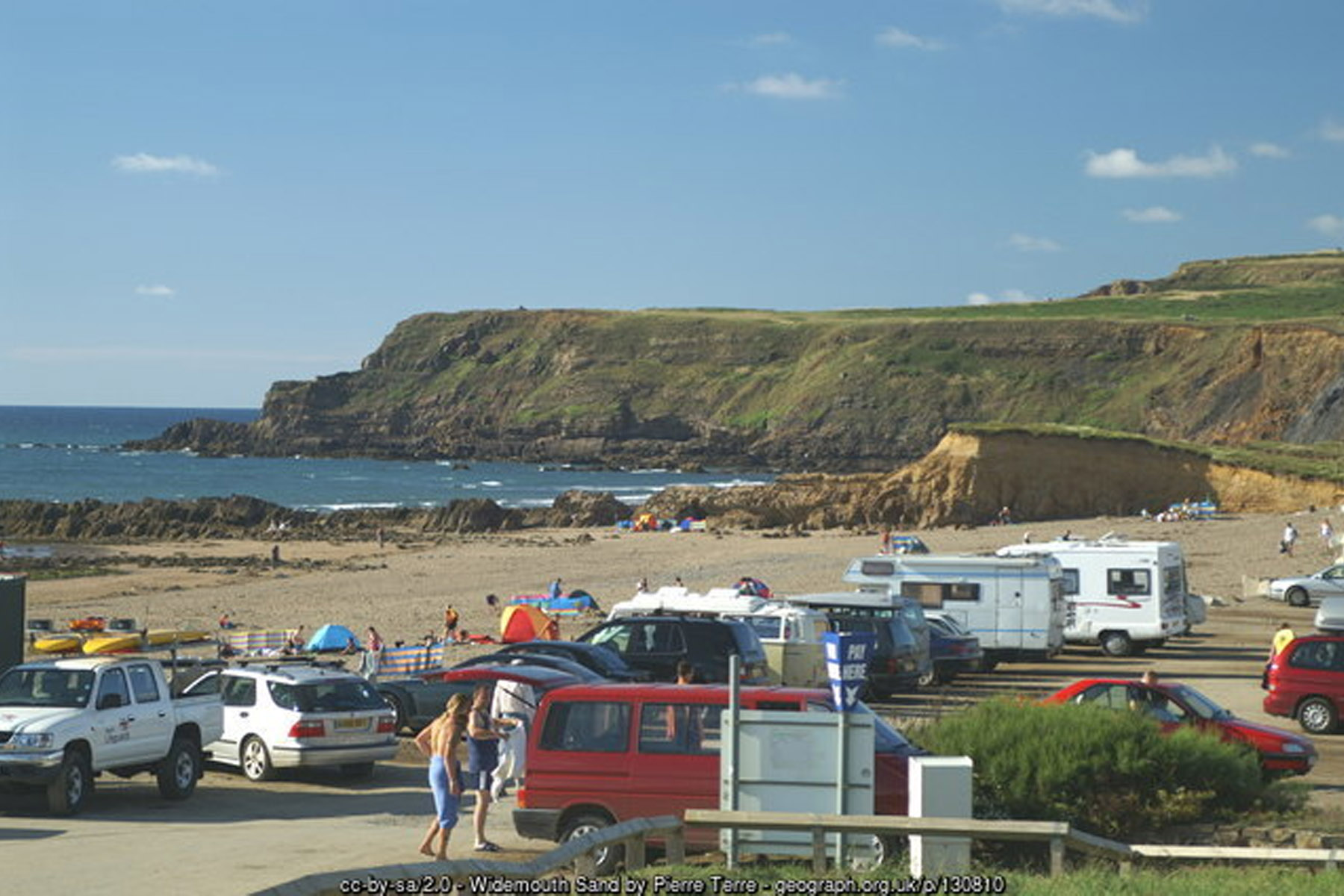
At low tide the sand at Widemouth stretches for around two kilometres, from Wanson Mouth in the south to Salthouse Beach in the north, giving walkers and surfers a huge expanse to explore that simply isn't there once the tide comes back in. As the sea rises, low rocky headlands and reef-like outcrops re-emerge to divide the beach into a series of smaller sandy coves, and by high water only a much-reduced strip of sand remains, backed in places by pebbles and cobbles rather than fine sand - a result of the coarse, dark, lithic-rich material eroded from the surrounding shale and sandstone cliffs. This tidal rhythm is worth building into any visit: a falling tide opens up the widest stretch of sand and the best rock pools, while a rising sea against the cliffs is often when the most clearly defined surf breaks.
The bay sits within several overlapping conservation designations that reflect the importance of this stretch of coast, including the Boscastle to Widemouth Site of Special Scientific Interest, the Tintagel-Marsland-Clovelly Special Area of Conservation, the Hartland to Tintagel Marine Conservation Zone, and the wider Cornwall National Landscape (formerly Area of Outstanding Natural Beauty). The low dunes behind the beach support nationally scarce plants such as sea holly and sea bindweed alongside more typical coastal species, although conservation work is ongoing to control garden escapees such as Japanese rose and hottentot fig that have become established here. Seabirds are regularly seen working the cliffs and headlands at either end of the bay, and the rock pools exposed at low tide around Black Rock and the southern end of the beach are good for spotting anemones, crabs, small fish and other typical rock-pool life - it is always worth checking tide times before heading out, since the pools are covered again as the tide turns.
Long before it became a surfing destination, Widemouth Bay had a working life as a small trading beach. Welsh sloops are recorded as having used the bay from the eighteenth century onwards, running cargoes of coal and limestone across the Bristol Channel and returning with Cornish exports such as copper, tin, slate and granite. Like much of this coastline, the bay also carries a smuggling history from the same period, when the relatively isolated beaches and coves of North Cornwall's Atlantic coast offered plenty of opportunity to land contraband away from the excise officers based in Bude.
Widemouth Bay's flat, sandy beach and stable underlying geology also made it an important landing point for undersea communications cable, a role that continues today largely out of sight beneath the sand. The first transatlantic telephone cable to come ashore here, TAT-3, was laid in 1963, linking Britain directly to Tuckerton, New Jersey, over three and a half thousand nautical miles away - a considerable feat of engineering for its time. An underground cable repeater station was built into the cliff above the beach around the same period, reportedly constructed to withstand a nuclear attack, complete with blast doors and its own air filtration system; it remains in place today, a low-key reminder of the beach's role in global telecommunications. Several more submarine cables have landed at Widemouth since, including the TAT-14 system, and by some estimates a significant share of the data travelling between the UK, North America and beyond still passes through cables buried under this stretch of sand - an unusual claim to fame for a beach best known locally for its surf. The GCHQ Bude satellite station a few miles north has at times been linked in press reporting to interception of data carried by cables landing on this coast, though Widemouth's own documented role is simply as a cable landing point.
The South West Coast Path runs along the top of the cliffs at Widemouth Bay, linking it to Bude's other beaches a couple of miles north and, heading south, to the dramatic zig-zag road and tightly folded cliffs at Millook and on to the wide sweep of Crackington Haven - one of the more strenuous and rewarding sections of coast path in North Cornwall. Inland from the beach, Widemouth Bay has grown into a small holiday village of mostly twentieth-century bungalows, static caravan and holiday parks, a handful of hotels, cafes and a pub, plus Our Lady and St Anne's Church - functional rather than picturesque, but well placed for a beach with this much to offer. Because it faces almost due west with nothing out to sea to break the swell, Widemouth can pick up rideable waves even when more sheltered beaches nearby are flat, and it tends to hold a swell for longer after a storm than many of Cornwall's more enclosed bays - useful to bear in mind for surfers planning a trip around the weather, and equally useful for anyone who simply wants a good stretch of sand to walk regardless of the forecast.
Visitor Information
Parking
Free car parking at both the north and south ends of the beach.
Facilities
Cafes and toilets. RNLI lifeguards on duty from Easter through to the end of October weekends, daily May-September.
Disabled Access
A ramp provides good disabled access onto the sand - one of the more accessible beaches in the Bude area. Free parking at both ends makes this one of the more Blue Badge-friendly beaches near Bude - check locally for dedicated bays.
Things to Do Nearby
- Summerleaze Beach, a short drive north in Bude town
- Crackington Haven, a scenic drive further south
- Bude Town Guide - shops, restaurants, the canal and Bude Castle
- Bude Surf Beaches Map & Complete Surf Guide - other surf spots near Widemouth Bay
Places to Stay
Frequently Asked Questions
Page last updated: 8 September 2026.