Trebarwith Strand
A Mile of Sand at Low Tide - Gone Almost Entirely at High Tide
Trebarwith Strand, near Tintagel, Cornwall, PL33 9DF
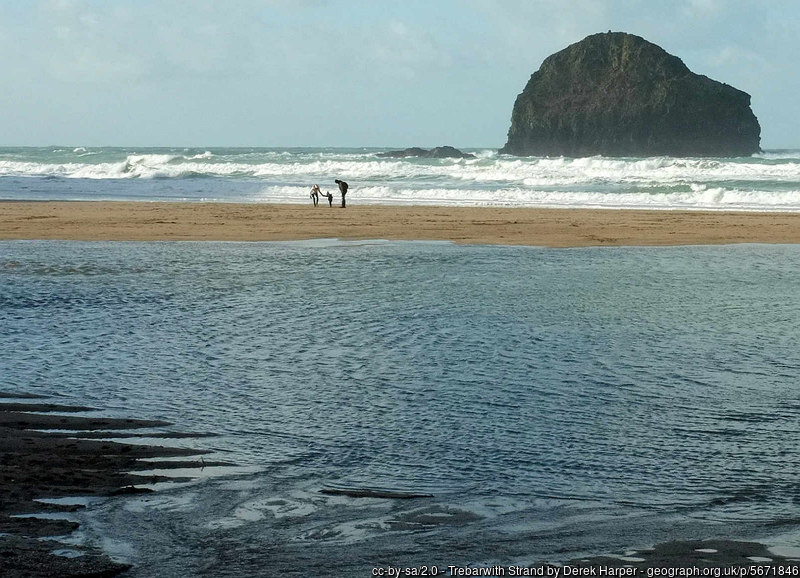
Trebarwith Strand sits at the foot of a deep, wooded valley on the coast between Tintagel and Port Isaac, one of the most photogenic beaches in north Cornwall, with views along the Heritage Coast towards Gull Rock. At low tide it is a genuinely large beach of sand and rock, easily among the biggest in the area - but its single most important characteristic is tidal, and it changes the beach completely.
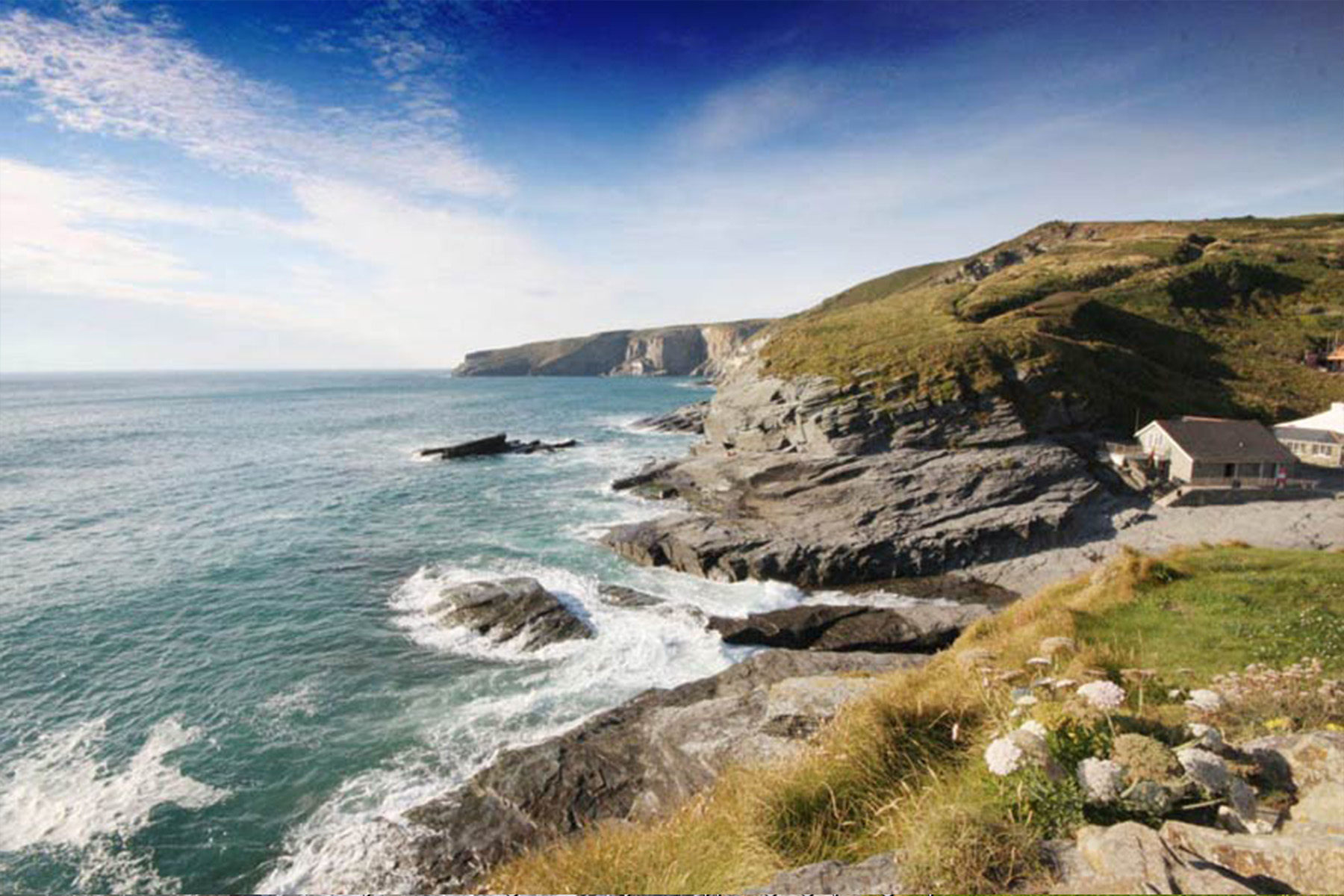
Check the tide before you go: at low tide, Trebarwith Strand extends almost a mile of open sand. As the tide pushes in, this all but disappears, leaving only rocks at the base of the cliffs - and every year a number of people need rescuing after becoming cut off by the incoming water. Always check tide times before visiting, and keep a close eye on the tide while you are there, particularly with children.
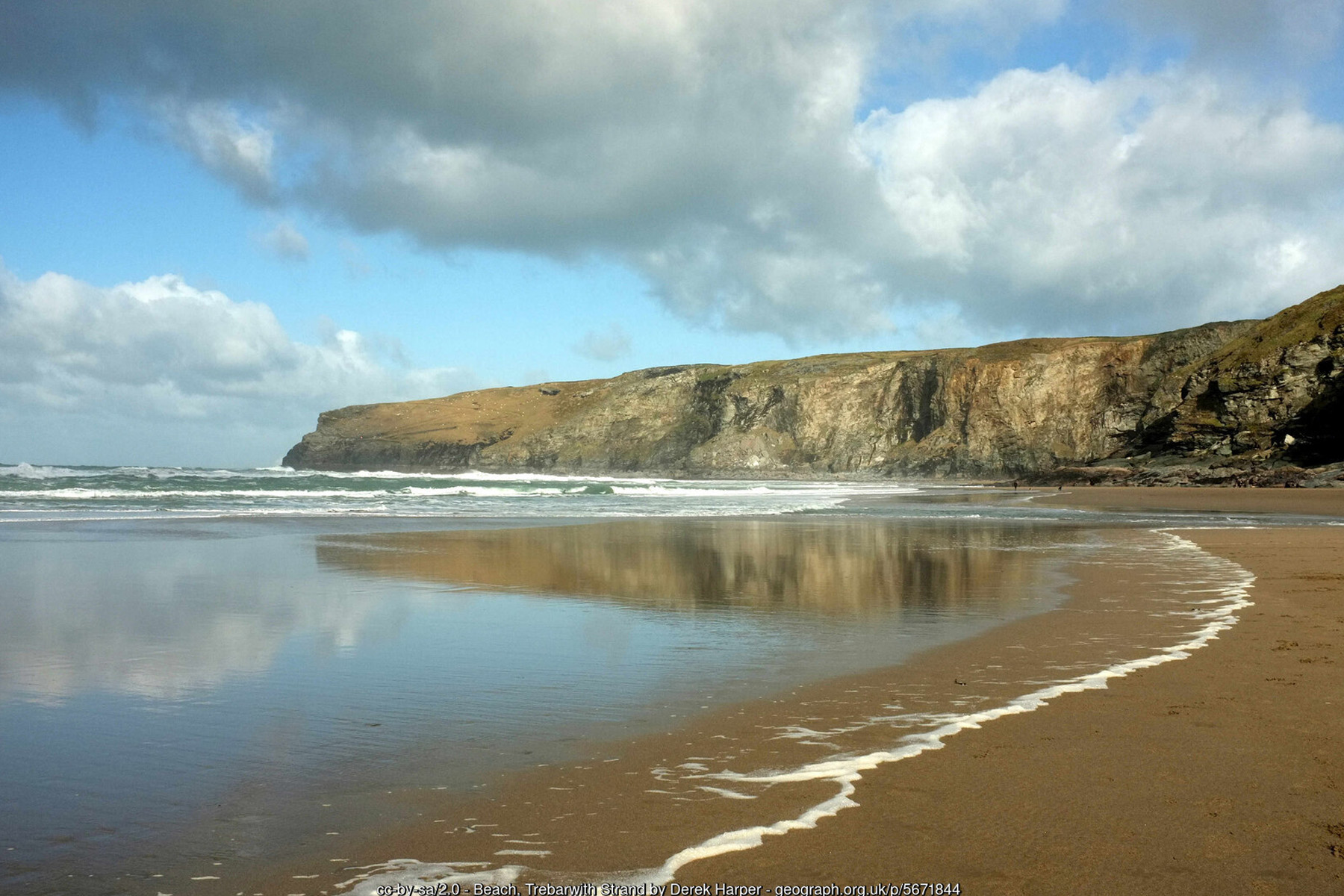
The village above the beach has cafes and places to eat, though availability varies by season, so it is worth checking ahead outside the main holiday period. RNLI lifeguards provide daily cover from around 16 May to 27 September, 10am to 6pm, and visitors are advised to swim only when lifeguards are on duty given how quickly conditions and the available beach area can change. Dogs are allowed at Trebarwith Strand all year round with no restriction.
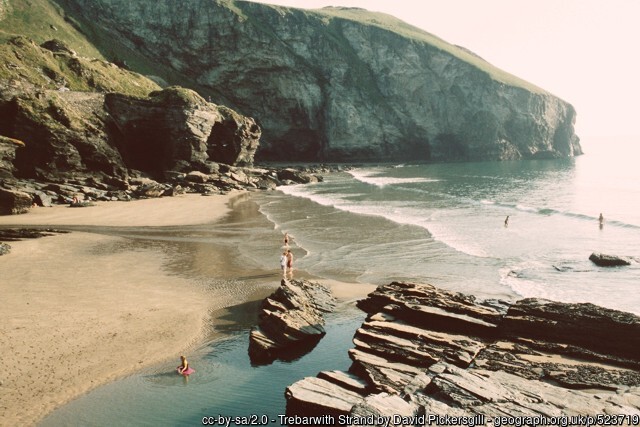
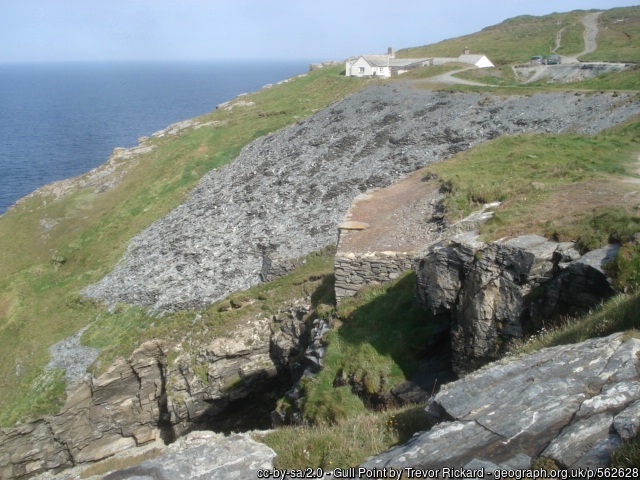
Because the beach all but disappears at high water, timing a visit around the tide matters more here than at most Cornish beaches. The two or three hours either side of low tide are when Trebarwith Strand is at its biggest and most straightforward to enjoy, with the widest stretch of sand, the most rockpools uncovered, and the easiest approach for families with young children. Arriving as the tide is rising rather than falling is the pattern most likely to catch people out, since the sea can cut off sections of sand and rock faster than it looks from a distance above on the cliffs. Outside the lifeguarded season, or outside lifeguard hours, that caution matters even more.
The beach's setting is as dramatic as its tides. Trebarwith Strand sits within a steep coastal valley cut by a small stream down to the sea, hemmed in by high cliffs of dark Upper Devonian and Lower Carboniferous slate that have been shaped, quarried and undercut by the Atlantic for centuries. Caves and gullies riddle the base of the cliffs, exposed only when the tide allows, and the rock itself is the same fine-grained slate that gave this stretch of coast its long working history. Just south of the main beach, at Lill Cove, the collapsed remains of a small copper mine can still be traced, though its cliff-face workings have long since been sealed by rockfalls.
For several centuries this valley was as much a working shoreline as a holiday beach. At least eight quarries were cut into the cliffs between Trebarwith and Tintagel Castle, extracting the blue-grey and olive-green slate that roofed buildings across Cornwall and well beyond it. The oldest, Lanterdan Quarry, immediately north of the beach, is thought to have been worked from the late fifteenth century, and a distinctive slate pinnacle known locally as "the Stack" still stands where the surrounding rock was cut away around it.
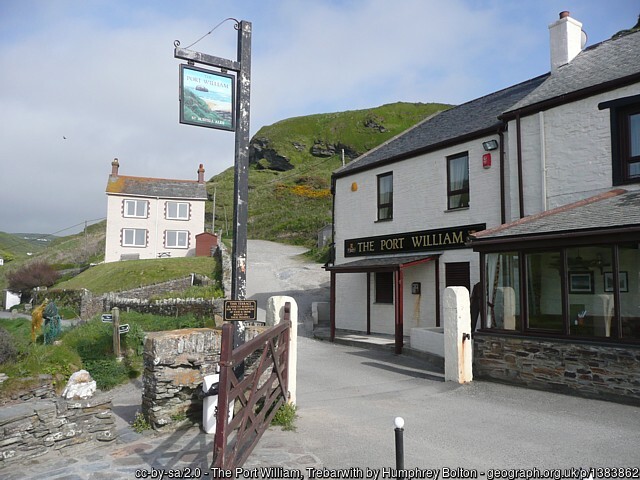
Getting finished slate away from such an isolated, cliff-bound site was the industry's constant problem, and for much of its working life the answer was the sea itself: slate was lowered down the cliffs by crane and winch to small ships that could only come in close enough to load at high water. The wharf used for this at Trebarwith is remembered in the name of the beach's pub, the Port William, and quarrying continued at intervals along this coast into the twentieth century before the last of the coastal workings, at Long Grass, closed in 1937. The scars are still legible today - a walk along the coast path towards Tintagel passes several of the old quarry faces, tramway routes and spoil tips, long grown over but still recognisably industrial.
Slate was not the only cargo this valley produced. In the nineteenth century, sand from the beach was also gathered for use as an agricultural soil improver on nearby farms, and a route down to the shore known locally as the Sanding Road was built, around 1825, to make that work easier, with donkeys and ponies carrying panniers of sand back up the valley. A pool near the top of the path, sometimes referred to locally as the horses' pool, is said to have been used to cool the animals after the climb. Little of this trade is visible today beyond the line of the path itself, but it is a reminder that, like the slate quarries, the beach's working life ran on the same rhythm of tide and effort that still shapes a visit here now.
The Port William itself began life as a nineteenth-century hotel, with its former stable block converted into the pub that trades on the beach today, now run as part of the St Austell Brewery estate with food, Cornish ales and rooms looking straight out over the sand. It remains a popular stop for surfers and coast path walkers alike, though as with any pub, opening hours and food service can vary by season, so it is worth checking ahead if a visit depends on it.
Trebarwith has a reputation as one of north Cornwall's more serious surf beaches. It picks up plenty of Atlantic swell and can produce fast, powerful beach-break waves, generally working best from around mid to low tide when there is enough exposed sand for the swell to break cleanly - at high water there is often no beach left to surf from at all. It suits competent, experienced surfers more than complete beginners, and conditions can change quickly as the tide turns, one more reason to keep a close watch on the sea throughout a visit.
Offshore, the rocky outcrop of Gull Rock (marked on some older charts as Otterham Rocks) sits a short distance out from the beach and is a well-known local landmark, home to nesting seabirds and a favourite subject for photographers working from the coast path above. At low tide, the rocks and gullies exposed along the sand reward a closer look for rockpooling, with periwinkles, limpets, barnacles, mussels and small crabs among the typical finds - though, as everywhere on this stretch of coast, rockpoolers need to keep half an eye on the tide behind them.
The South West Coast Path runs through Trebarwith Strand in both directions, and both stretches rank among the finer sections of this part of the Heritage Coast. Heading north, the path climbs past the old quarry workings towards Dennis Point, Backways Cove and on to Bossiney Cove and Tintagel, with Tintagel Castle a few miles distant. Heading south, it follows the cliffline towards Tregardock, a quieter, harder-to-reach beach with a dramatic setting of its own, before continuing on towards Port Gaverne and Port Isaac. Both directions involve genuine climbs and descents rather than flat coastal walking, and are best tackled in sturdy footwear rather than beach sandals.
The combination of sand, slate and sea has also drawn film-makers over the years, with Trebarwith Strand used as a location for productions including Malachi's Cove, Twelfth Night and Oscar and Lucinda. For visitors today, the practical takeaway is much the same whatever draws them here: this is a beach defined above all by its tide, so checking the tide tables before setting off does more to shape a good visit than almost anything else, whether the plan is a walk on the sand, a surf session, some rockpooling below the cliffs, or simply a pint at the Port William looking out over the bay.
Visitor Information
Parking
Main car park with around 130 spaces, plus a smaller car park closer to the beach and some roadside spaces. Fills quickly in season.
Facilities
Toilets and places to eat and drink in the village, availability varies by season. RNLI lifeguards from around 16 May to 27 September.
Disabled Access
The walk down into the valley from the car park is steep in places, and the beach surface is sand and rock - access is limited for wheelchairs. No dedicated Blue Badge bays are confirmed - check locally before you travel, particularly given how limited parking becomes in season.
Things to Do Nearby
- Bossiney Cove, a short drive north towards Tintagel
- Port Gaverne, a short drive south towards Port Isaac
- Trebarwith Strand Village Guide - more on the village itself
- Tintagel Castle (English Heritage), a short drive north
Places to Stay
Frequently Asked Questions
Page last updated: 8 September 2026.