Stanbury Mouth
One of North Cornwall's Quietest and Least-Known Coves
Stanbury Mouth, near Kilkhampton, Bude, Cornwall
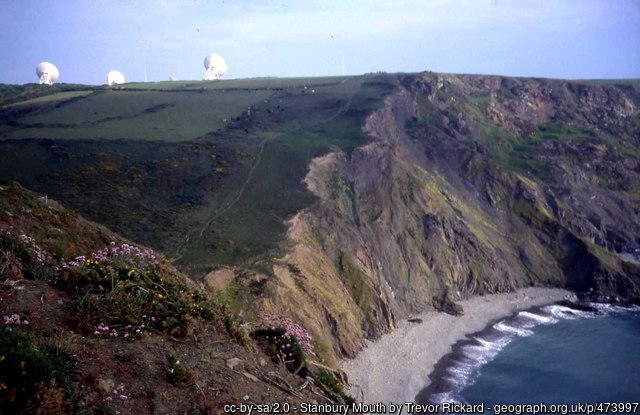
Stanbury Mouth is one of the smallest and least-known coves on the stretch of Heritage Coast north of Bude, tucked into the cliffs a little over a mile north of Duckpool on the way towards Stowe Barton, Kilkhampton and the Devon border beyond. There is no sign from the road, no facilities, and for much of the year barely another visitor - which is precisely why walkers, dog owners and anyone chasing genuine solitude seek it out. The beach itself is a modest mix of sand, shingle and rock, with more sand uncovered as the tide falls and a scatter of boulders and low reef at either end. It sits beneath the same line of dark, folded cliffs that runs the length of this coast, reached only on foot - there is no direct road access and no car park at the beach itself.
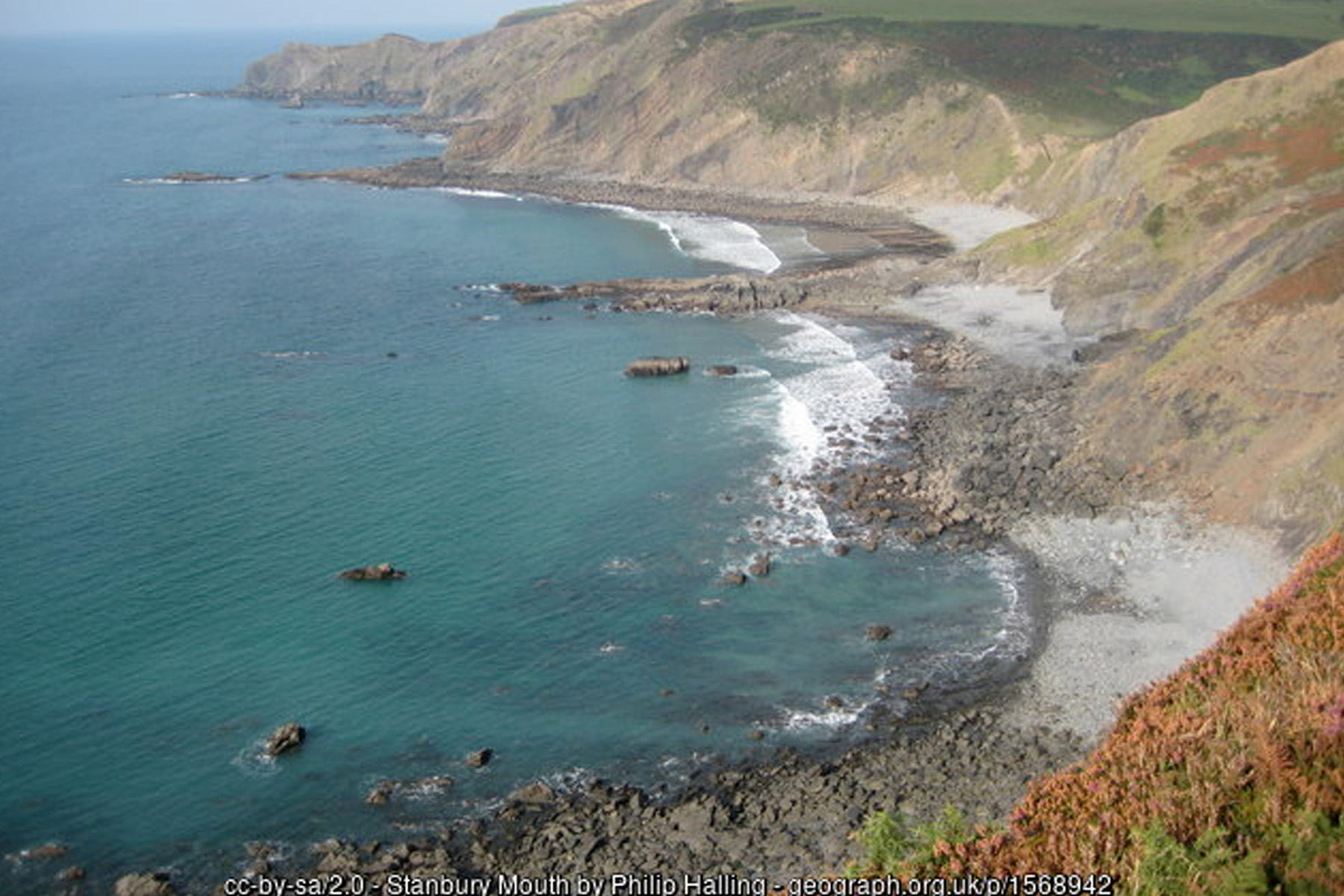
Getting there takes a bit more effort than most Cornish beaches, which is part of the appeal. The nearest parking is the small National Trust car park at Duckpool, from where a stretch of the South West Coast Path leads north along the clifftop before a steep, unmade path drops down to the cove - allow fifteen to twenty minutes each way, and be ready for a proper climb back up. A little roadside space can sometimes be found nearer Stanbury and Stowe, but it is informal, limited to a handful of cars, and not something to rely on in season. Either way, this is not a beach for pushchairs, wheelchairs or anyone who struggles with steep, uneven ground; there is no direct vehicle access and no easy alternative route down. Sturdy footwear is worth the effort - the path can be slippery after rain, and the final stretch onto the beach is often loose underfoot.
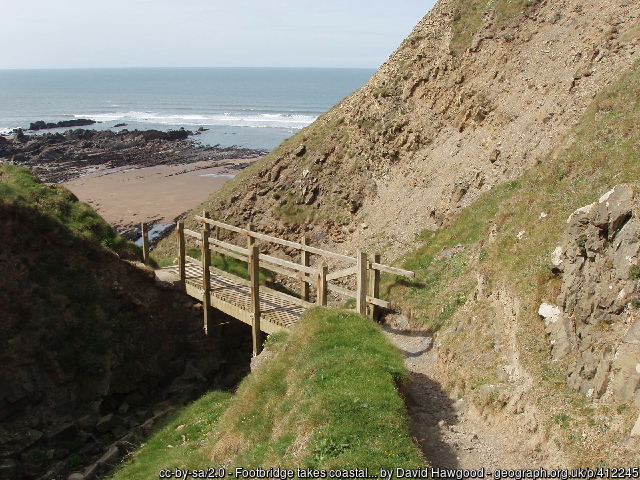
There is no lifeguard cover at Stanbury Mouth, and none is likely given how remote and lightly used it is - anyone visiting should treat it as an unsupervised beach and plan accordingly. The sea here can be genuinely hazardous: currents run close to the rocks at either end of the cove, and low or turning tide is generally considered the riskiest time to be in the water. Swimming is not recommended, and surfers or bodyboarders who do use it should already know the break and its hazards well. The beach is also tide-dependent in a more basic sense - much of the sand disappears as the tide comes in, leaving mostly rock and a narrow strip of shingle, so it is worth checking tide times before setting off on the walk down, and not lingering once the tide turns.
Geologically, Stanbury Mouth sits within the same Bude Formation that shapes so much of this coastline - a sequence of Upper Carboniferous shales, mudstones, siltstones and sandstones, folded and contorted over millions of years into the tight zig-zag patterns visible in the cliff faces from Bude north to the Devon border. It is part of a wider stretch of coast recognised as a Site of Special Scientific Interest for its geology, and the cliffs around Stanbury Mouth show the same dramatic banding and folding that draws geologists to better-known outcrops nearby at Millook and Duckpool. The rock underfoot on the beach itself is a mix of this shale and sandstone, worn into ledges and boulders rather than the smoother granite reefs found further south and west in Cornwall - a reminder that this stretch of coast has a very different geological story to the county's more famous surf beaches.
The farmland immediately inland, around Stowe Barton, has a surprisingly grand history. It was once the site of Stowe House, a substantial brick mansion built in the 1670s for John Grenville, 1st Earl of Bath, from the same Grenville family that produced Sir Richard Grenville of Revenge fame and the Civil War commander Sir Bevil Grenville. Stowe House was said to rival the finest houses in the West Country, with its own chapel, a real tennis court and formal gardens, but it fell into disrepair after the earldom died out and was largely demolished in 1739 - some of its fittings reportedly turned up afterwards in other West Country buildings. Today Stowe Barton is National Trust farmland, part of a large holding of coastal fields and a little woodland managed alongside the Trust's other land between Sandymouth and Duckpool, and the Trust has been reviewing how the farm is managed in recent years as part of a wider push to improve the land for wildlife along this coast. Little of that grandeur is visible from the beach itself, but it is a reminder that this quiet stretch of coast has a much longer story than its emptiness today suggests.
Despite - or perhaps because of - how few people visit, Stanbury Mouth and the cliffs around it are a good spot for wildlife. Seals are occasionally seen offshore or hauled out on the rocks, and the clifftop slopes above the beach support breeding linnets, blackcaps and stonechats in season. In late spring and summer the coast path here is edged with wildflowers typical of this exposed, salt-blown grassland - wild thyme, milkwort, thrift and yellow iris among them - and green hairstreak butterflies can be spotted along the same stretch. Rockpools among the boulders at the beach's fringes are worth a look at low tide, though they are smaller and less abundant than at some of the more sheltered coves further along the coast. As with anywhere this undisturbed, it rewards a slow, quiet approach rather than rushing straight down to the sand.
Stanbury Mouth sits directly on the South West Coast Path, and makes a natural extension to walks from Duckpool or, in the other direction, from Morwenstow a few miles north - home to the clifftop Hawker's Hut, reputedly the National Trust's smallest building, built by the eccentric Victorian vicar and poet Robert Stephen Hawker as a lookout over what became known as this stretch of shipwreck coast. A circular route linking Morwenstow to Stanbury Mouth and back is a popular way to see the cove without needing a car park at the beach itself, taking in cliff-edge views, stiles and a genuinely varied stretch of coastal scenery. The walking here is graded moderate to strenuous rather than easy - unfenced cliff edges, stone stiles and a real climb in and out of the cove - so it suits confident walkers more than a casual afternoon stroll.
Compared with its neighbours, Stanbury Mouth is very much the quiet outlier. Duckpool, a mile or so south, has a proper National Trust car park and toilets; Sandymouth, a little further again, has seasonal facilities and a much bigger beach. Stanbury Mouth has none of that, and is unlikely ever to - which is exactly why it appeals to people looking to get away from even Bude's quieter beaches. Dog walkers use it particularly often, since - unlike Duckpool's seasonal restriction - most current guides describe it as dog-friendly year-round, though as with anything on such an informal, unsignposted beach it is worth checking locally if this matters for your visit. Visit at low tide, wear proper footwear for the path, and do not expect anything beyond sand, rock and cliff - for many, that is the whole point.
Visitor Information
Parking
No car park at the beach itself. Nearest option is the small National Trust car park at Duckpool, just over a mile south via the coast path, or limited informal roadside space near Stanbury and Stowe.
Facilities
None at Stanbury Mouth itself - no toilets, cafe or shop. The nearest facilities are at Duckpool's car park or in Bude, several miles south.
Disabled Access
Not suitable for wheelchairs or pushchairs. The path down is steep and uneven, around fifteen to twenty minutes each way from the nearest parking. No dedicated Blue Badge parking - there is no car park directly at the beach, and access is via a steep, unmade coast path.
Things to Do Nearby
- Duckpool Beach, a mile or so south along the coast path, with a National Trust car park and toilets
- Sandymouth Beach, a little further south again, with seasonal facilities and a much bigger beach
- Bude Town Guide - shops, restaurants, the canal and Bude Castle, a few miles south
- Bude Surf Beaches Map & Complete Surf Guide - other surf spots near Stanbury Mouth
Places to Stay
Frequently Asked Questions
Page last updated: 7 September 2026.