Summerleaze Beach
Bude's Flagship Beach and Home of the Sea Pool
Summerleaze Beach, Bude, Cornwall, EX23 8HJ Blue Flag 2026
Summerleaze is Bude's flagship beach, a wide, west-facing bay of golden sand within a five minute walk of the town centre, bordered by dunes on one side and the historic Bude Canal on the other. It holds Blue Flag award status for 2026, one of Cornwall's ten Blue Flag beaches, reflecting consistently high water quality and safety standards, and it is easily the most complete beach in Bude for visitors wanting facilities right on the sand.
Bude's rise as a holiday destination dates back to the Victorian era: Bradshaw's Guide of 1866 already described the town as having achieved "the dignity of a fashionable marine resort", and by the 1920s it supported around 59 boarding houses and five hotels. Summerleaze has a specific place in that history, too - Victorian bathing etiquette kept the sexes on separate beaches, with Crooklets to the north set aside for ladies and Summerleaze reserved for gentlemen, a division that lingered long after mixed bathing became the norm elsewhere in Britain. Ever since, Summerleaze has been Bude's principal town beach, the natural extension of the high street rather than somewhere you have to drive to.
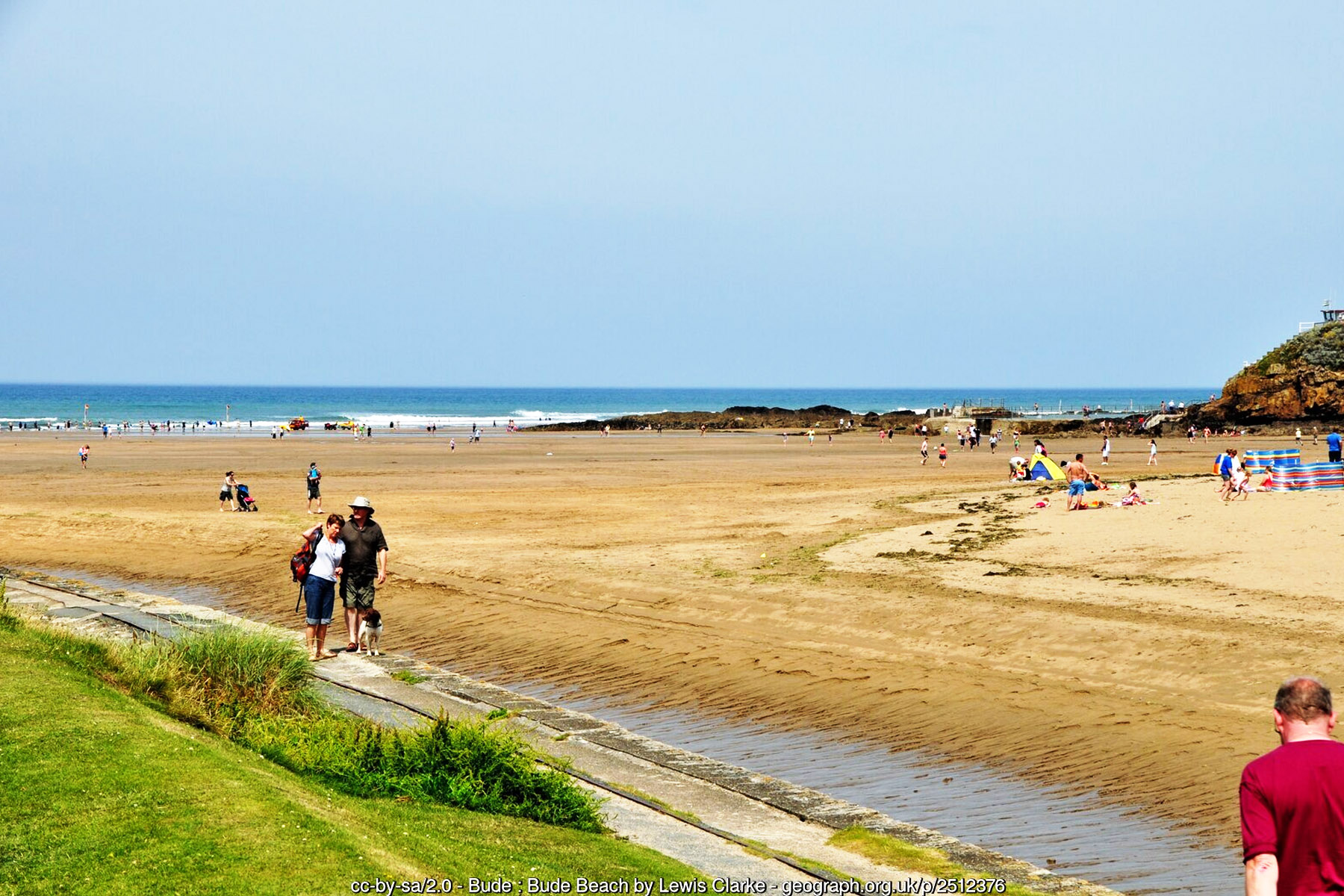
The low cliffs and wave-cut rock ledges around Summerleaze are part of the Bude Formation, a roughly 1.3km-thick sequence of alternating sandstone and dark mudstone laid down around 300 million years ago in the Carboniferous period, when this stretch of Cornwall lay beneath a shallow tropical lake system. Look closely at the exposed rock at low tide and you can still pick out ripple marks preserved from that ancient lake bed, along with the zigzag "chevron folds" punched into the layers when the collision of ancient landmasses crumpled and uplifted the rock to help form the hills of Cornwall. The same rock formation has even yielded its own fossil fish species, Cornuboniscus budensis, found nowhere else in the world - a reminder that the ground underfoot at Summerleaze is a genuine geological rarity, not just scenery.
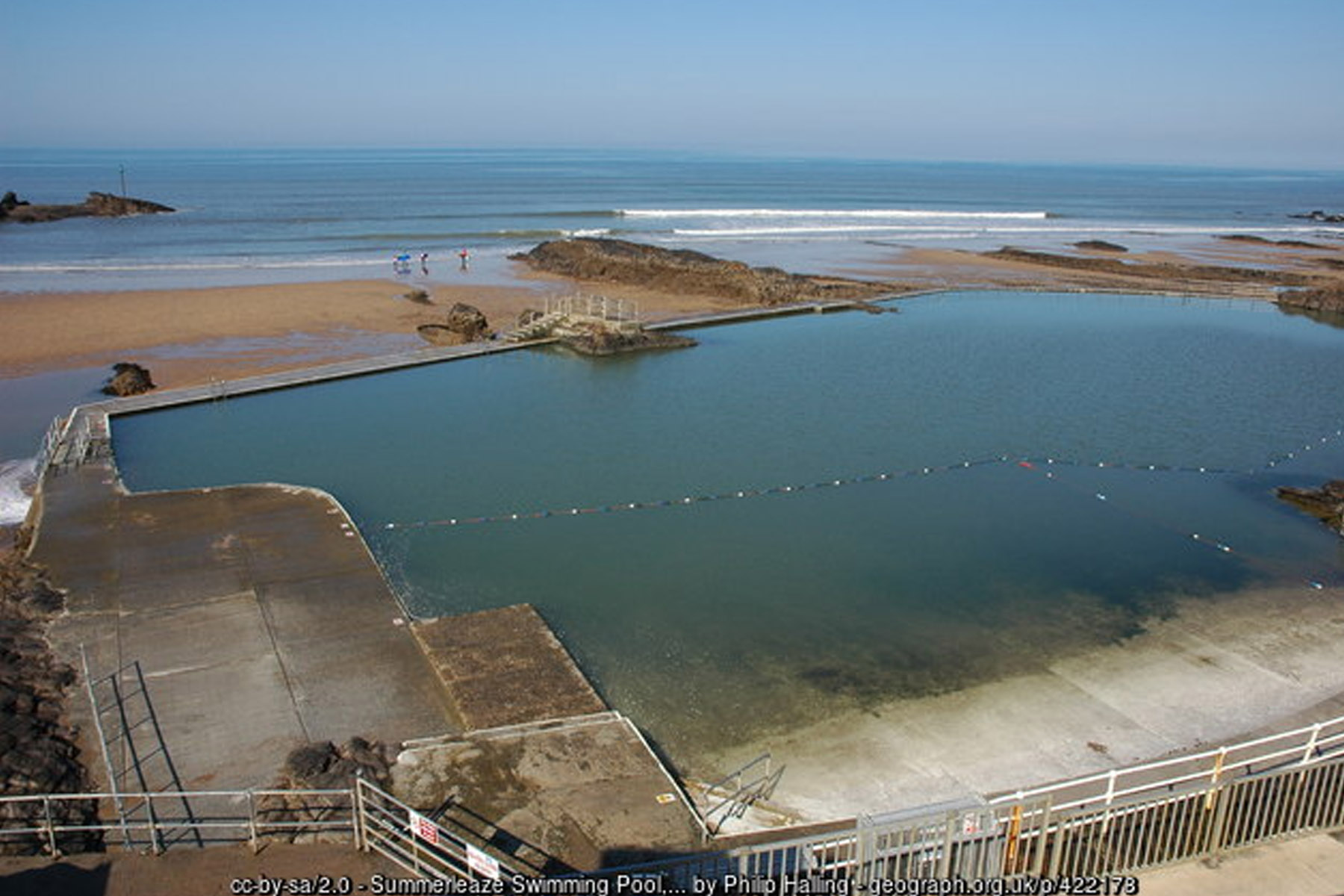
The beach's best-known feature is the Bude Sea Pool, a large tidal swimming pool built into the rocks at the northern end, naturally refilled by the tide. It offers calmer, more sheltered swimming than the open beach and is popular year-round, not just in summer, giving families with younger children a safer alternative when the Atlantic swell is up. The open beach itself can produce powerful waves, which is great news for surfers but worth bearing in mind with young children in the water.
The pool dates to 1930, when it was built into the natural rock ledge with funding partly provided by the local Thynne family, and at roughly 90 metres long by up to 45 metres wide it holds something in the region of 4,000 cubic metres of seawater - around 880,000 gallons - at full tide, making it one of the largest, and among the oldest, tidal lidos still in regular use in Britain. Because it depends entirely on the tide to refill, it is really only worth visiting for a proper swim in the couple of hours either side of low water; at high tide the pool all but disappears beneath the sea, and around dead low tide it can run shallow, weedy, or still be draining down from the wall. Entry has always been free, and the pool is used not only by casual swimmers of all ages but by RNLI lifeguards and the Bude Surf Life Saving Club for training and assessments. Its future has not always been secure, either: Cornwall Council withdrew its funding for the pool in 2010, and it survives today only because local volunteers formed the Friends of Bude Sea Pool charity the following year and have since raised and spent several hundred thousand pounds on repairs and upkeep - a genuine community-rescue story, and one worth bearing in mind if the collection buckets are out on the day you visit.
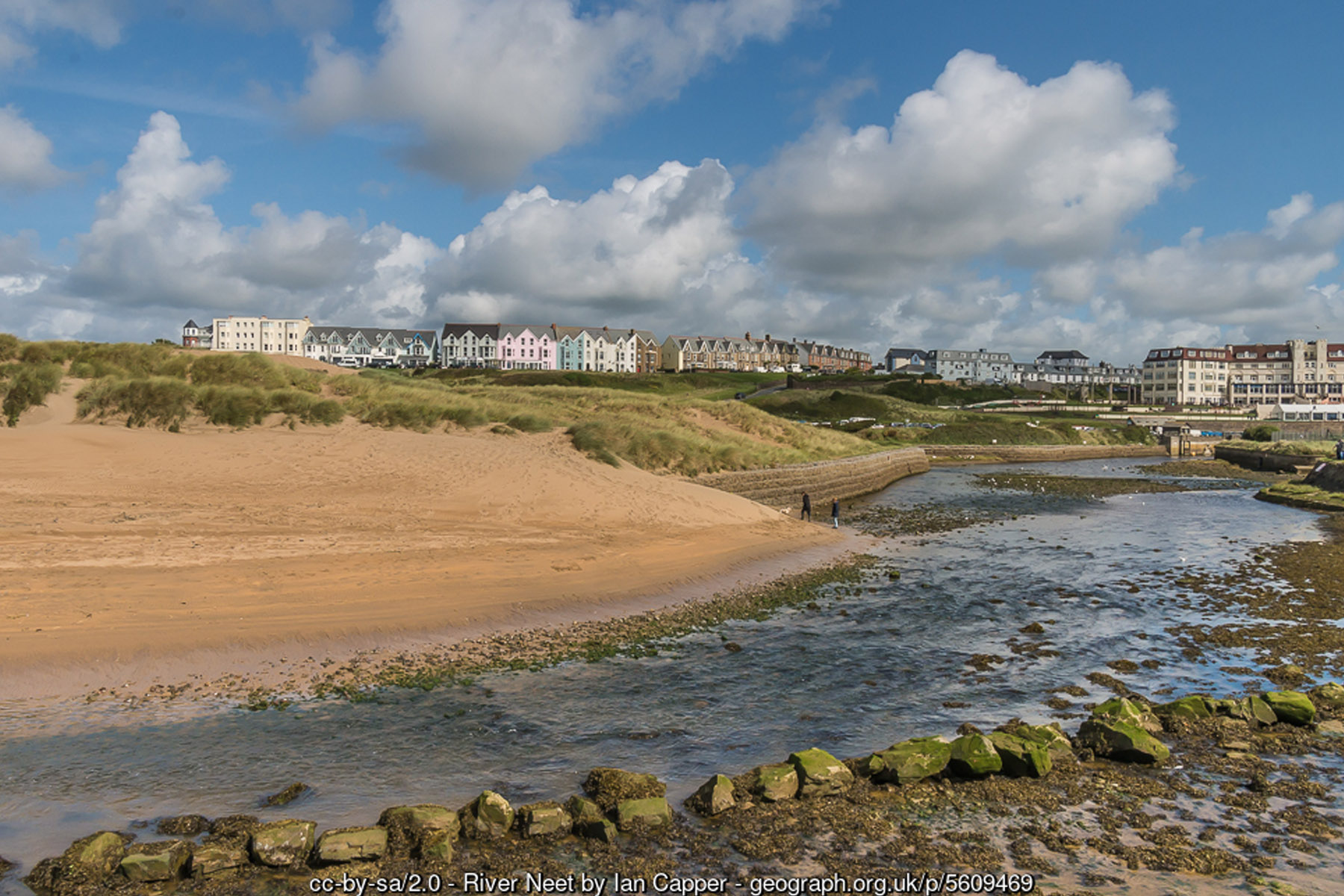
The canal running along Summerleaze's landward edge is almost as historic as the sea pool itself. An initial scheme authorised by Parliament in 1774 collapsed for lack of money, but a revised plan by the engineer James Green finally opened in 1823 following a fresh Act of Parliament in 1819. Rather than conventional locks, most of its 35-mile course inland was climbed using a series of inclined planes on which wheeled tub-boats were hauled up and down, the steepest of them - Hobbacott Down - rising at a gradient of around 1 in 4.5 by way of a water-filled counterbalance wagon system that was, remarkably, faster in practice than a steam engine of the day. The canal's original purpose was almost entirely agricultural: sea sand from Summerleaze is naturally rich in calcium carbonate from crushed shell, and inland farmers prized it as a fertiliser for the acidic soils of the Devon-Cornwall border, so barge-loads of sand were carried up from the beach for decades. Most of the upper canal is now overgrown, disused or built over, but the sea lock and lower basin beside Summerleaze remain in use, and the towpath towards Helebridge makes for an easy, level walk inland from the beach.
Summerleaze's calm, sheltered character owes a great deal to Bude Breakwater, built between 1819 and 1823 from granite and limestone shipped in from Plymouth, Penryn and Wales to protect the canal's sea lock. That original structure was destroyed in a severe storm in February 1838; its replacement, built over the following three years, was deliberately made lower and more rounded so that wave energy could spill across its curved back rather than strike it head-on, and it is essentially that Victorian breakwater which still shelters the harbour mouth today. Chapel Rock, the outcrop on the inner side of the breakwater, takes its name from a small mediaeval chapel once believed to have stood there, dedicated - like its far larger namesake at St Michael's Mount - to St Michael. Once the breakwater was in place, sand began building up on Summerleaze in enough quantity to support its own narrow-gauge tramway, radiating from a turntable on the beach, which carried sand down to barges on the canal well into the twentieth century.
A large car park sits right on the beach, with further parking available in the town, and Summerleaze has the fullest range of facilities of any Bude beach: toilets, disabled toilets, a cafe and shops, plus a bookable sand chair through the Summerleaze Beach Office (01288 352226). RNLI lifeguards are on duty from around early May to the end of September, with additional cover over the Easter bank holiday. Dogs are welcome at Summerleaze throughout the year, but must be kept on a lead between 10am and 6pm from 15 May to 30 September.
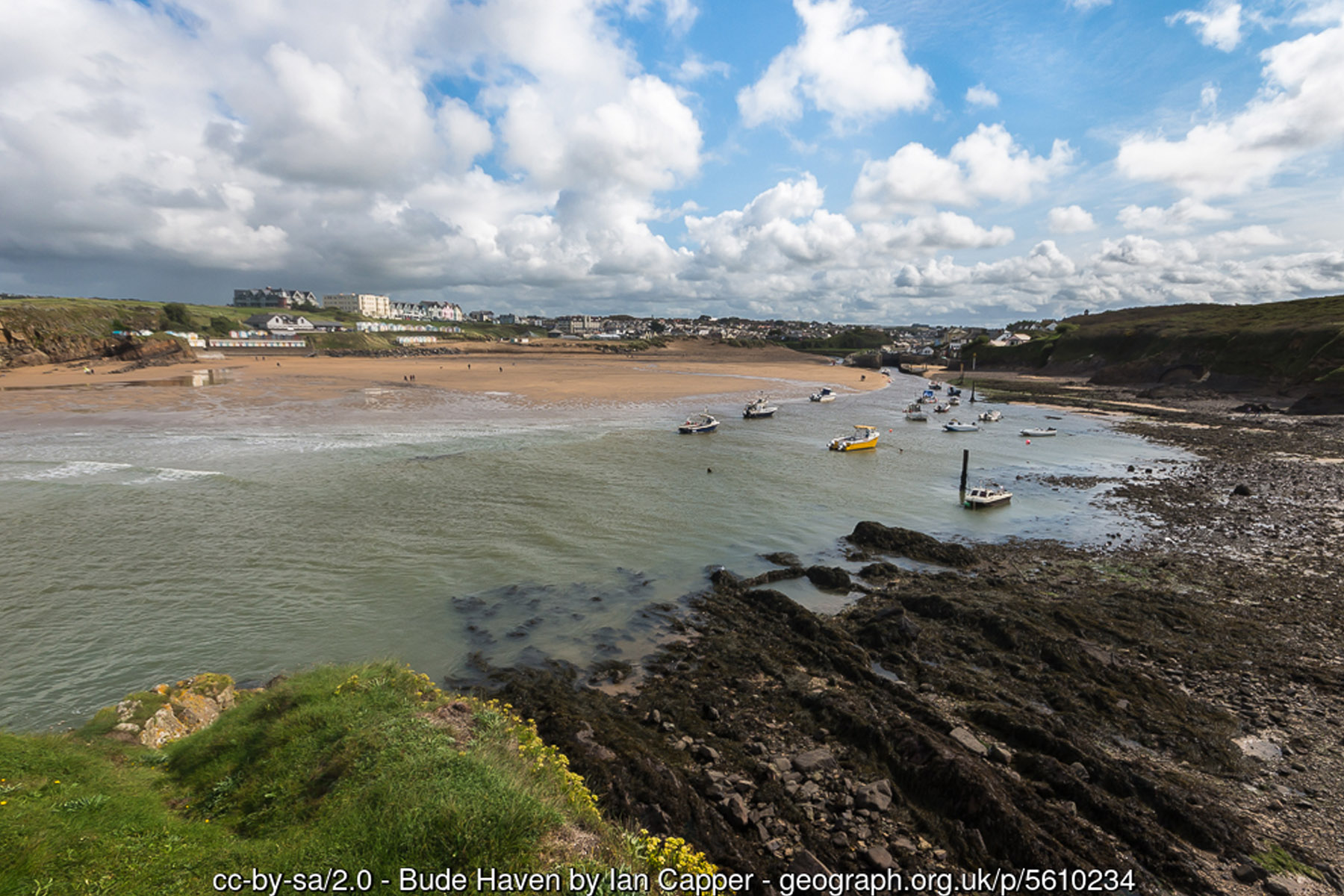
Sitting in the lee of the breakwater, Summerleaze is gentler and more forgiving than some of the more exposed surf beaches further down the coast, and its waves work across most states of the tide, making it a popular choice for beginner surfers and bodyboarders as well as for families paddling closer to shore - though, as on any open Atlantic beach, conditions and rip risk can change quickly, and it always pays to check with the lifeguards on duty before going in. Low tide exposes rock ledges and pools at the northern end of the beach, below the low cliffs, which reward a slow explore for anemones, crabs and small fish, and the margins of the sea pool itself attract their own share of limpets and seaweed. Beach huts can be hired by the day close to the sea pool, and a beach cafe and RNLI shop sit right on the sand for anyone not wanting to stray far from the water.
Because so much of what makes Summerleaze special - the sea pool, the rock pools, the sand itself at the northern end - is tide-dependent, it is worth checking the tide times before setting off rather than simply turning up: a falling tide towards low water gives the best of the sea pool and the rock ledges together, while a rising tide towards high water suits those after open sand and open-water swimming or surfing instead. Out of season, the beach and pool are far quieter than at the height of summer, and the pool itself stays open all year round for anyone happy to brave a bracing dip, lifeguard cover or not.
Visitor Information
Parking
Large car park right on the beach, plus further car parks in Bude town, a five minute walk away.
Facilities
Toilets, disabled toilets, cafe and shops. Home to the Bude Sea Pool. RNLI lifeguards from around early May to late September, plus Easter.
Disabled Access
Level access from the car park, disabled toilets, and a bookable sand chair via the Summerleaze Beach Office (01288 352226). Blue Badge parking is available at the beachside car park, one of the most accessible in Bude.
Things to Do Nearby
- Crooklets Beach, a short walk north
- Widemouth Bay, a short drive south
- Bude Town Guide - shops, restaurants, the canal and Bude Castle, five minutes' walk away
- Bude Surf Beaches Map & Complete Surf Guide - other surf spots near Summerleaze
Places to Stay
Frequently Asked Questions
Page last updated: 8 September 2026.