Port Isaac
Cornwall's Most Famous Working Fishing Harbour
Port Isaac, Cornwall, PL29 3SG
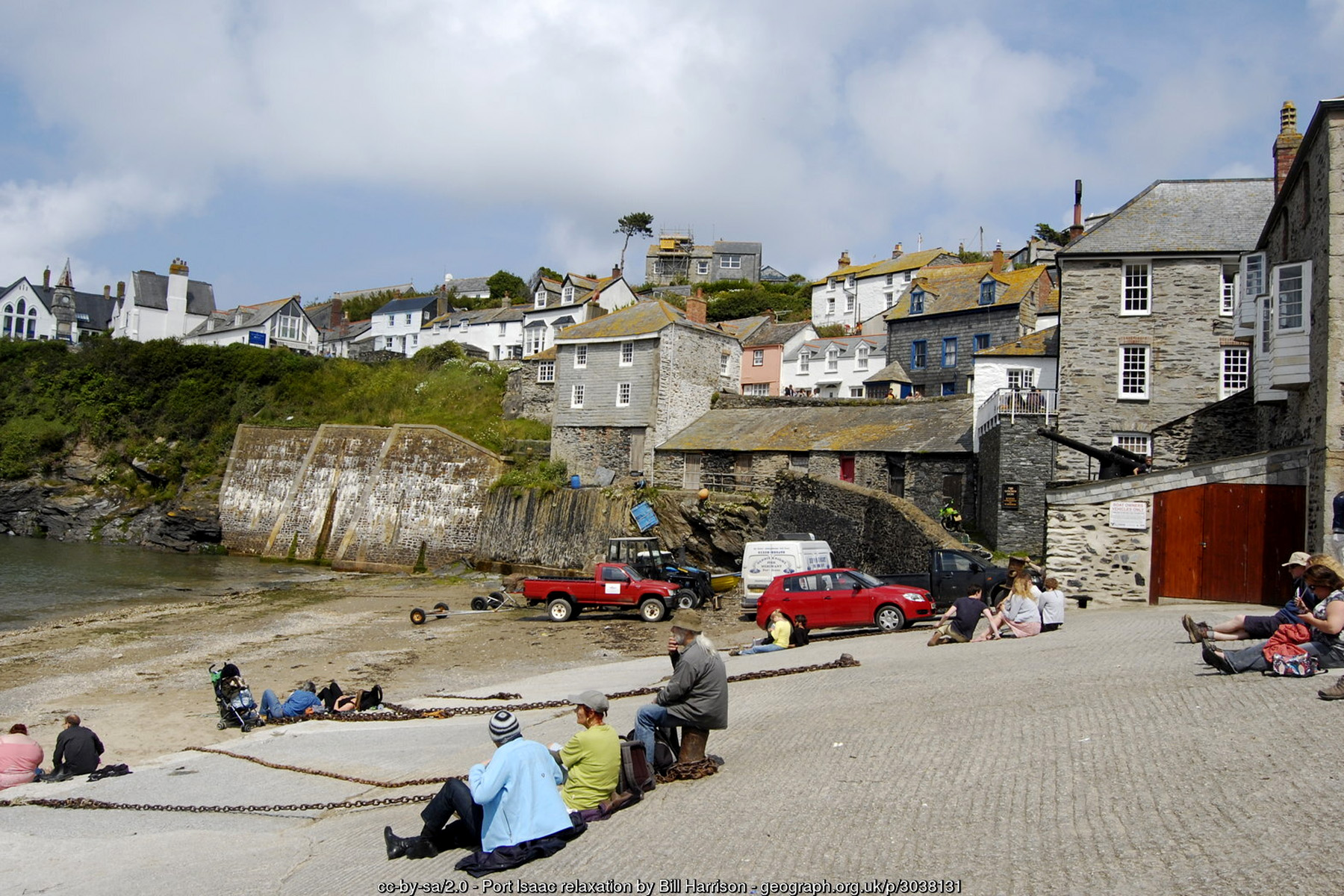
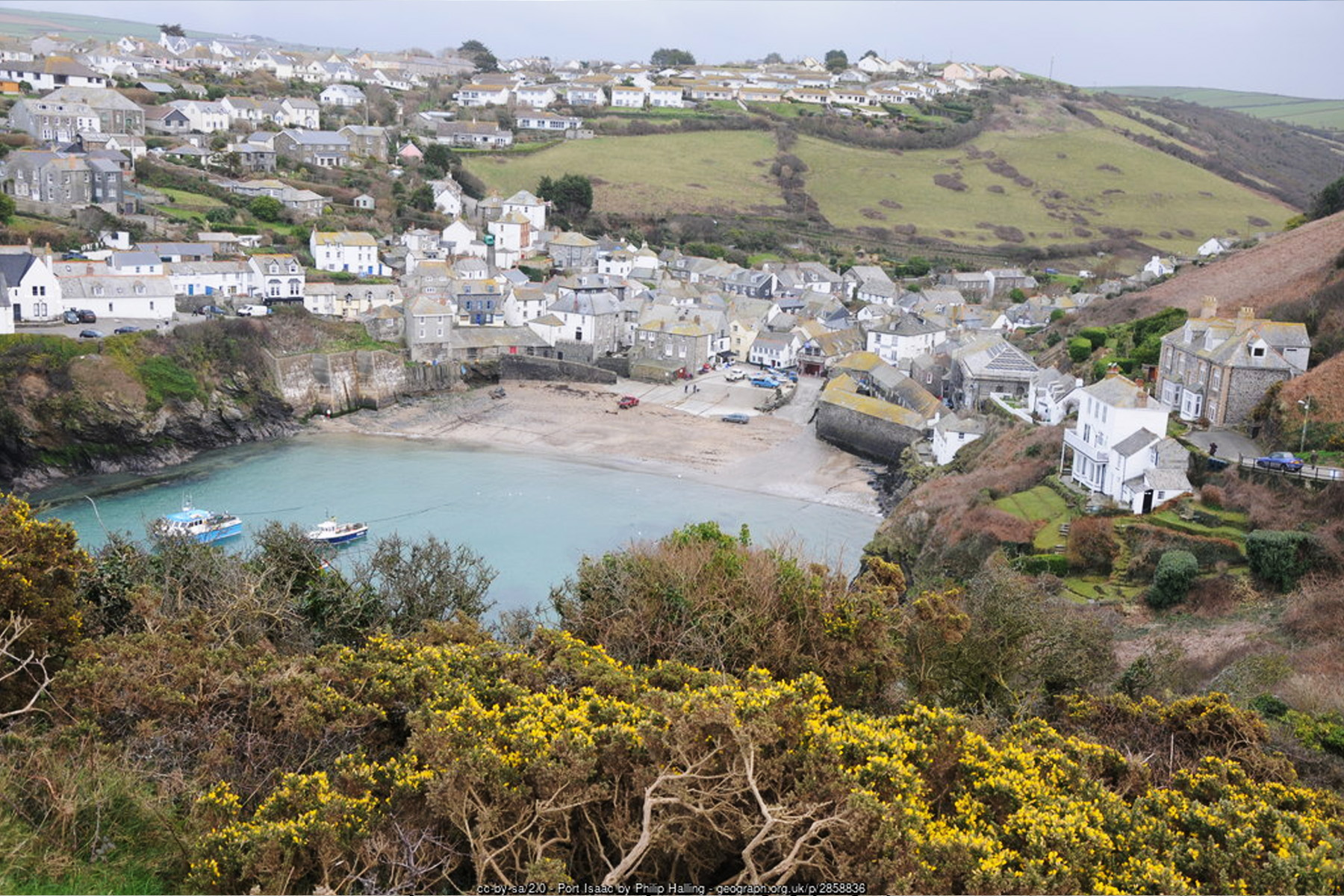
Port Isaac's beach is not a beach in the usual Cornish sense of dunes and open surf - it is the sandy, shingly floor of a genuine working fishing harbour, cupped between two stone piers in one of the most photographed villages in England. At low tide a broad expanse of firm sand and pebble opens up between the harbour walls, criss-crossed by a small stream and scattered with crab pots and mooring chains; at high water the sea reclaims almost all of it, right up to the slipways of the cottages that line the front. It is this working, tidal, faintly untidy authenticity - a beach that still has a fishing fleet's business going on around it - that sets Port Isaac apart from the surf beaches further down this stretch of coast, and that has made it, quite improbably for a village of a few hundred people, one of the most recognisable places in Cornwall on television and in film.
The village's history stretches back centuries longer than its fame. There is evidence of Iron Age occupation on the headlands around the cove, and Port Isaac is generally reckoned to have been first formally registered as a fishing settlement in the 14th century. Its old Cornish name, sometimes rendered Porthysek or Porth Izzick, is generally translated as "corn port," a reminder that the harbour's earliest importance was as an outlet for agricultural trade rather than fishing. A stone pier was first built here in the reign of Henry VIII, and by the 18th and 19th centuries Port Isaac had grown into a genuinely busy little port, shipping out slate quarried a few miles away at Delabole along with locally worked stone and ore, and bringing in coal, timber and other goods that arrived more easily by sea than over Cornwall's poor inland roads. Most of the village's roughly ninety listed buildings, tightly packed along winding lanes above the harbour, date from this period of coastal trading prosperity.
As the railways reached Cornwall and undercut small coastal shipping in the second half of the 19th century, Port Isaac's economy turned increasingly to pilchard fishing, which had already been carried out alongside general trade for generations. By around 1850 the village had close to fifty registered fishing boats and several fish cellars around the harbour, where pilchards were salted, pressed and packed for export - a trade that, in good years, brought real wealth to the village. Like pilchard fisheries all along the Cornish coast, this declined sharply in the early 20th century as shoals became less reliable and markets changed; herring fishing was tried in its place but largely failed by the 1940s. Crab, lobster and mackerel fishing gradually took over as the mainstay, and it is this smaller-scale, boat-based fishery - rather than the pilchard seine fleets of old - that still operates from the harbour today, alongside a growing tourism trade that had already begun after the First World War as motoring visitors discovered the village.
The harbour itself, known locally as the Platt, remains the working and social heart of Port Isaac. Small fishing boats land crab and lobster here through the year, and it is a genuinely good spot to watch a working harbour rather than a recreated one - crab pots stacked against the walls, boats resting on the sand at low water, and gulls working the tideline. Visitors are welcome to try their own hand at crabbing off the harbour wall with a line and bait, a popular, low-key activity for families that needs nothing more than patience and a bucket. The beach itself, tucked between the two protecting piers, is at its best for a couple of hours either side of low tide, when the sand is exposed and safe to walk, and the rock and sand at the harbour mouth turns up small pools worth a look for crabs, anemones and blennies. As the tide rises, the water comes in quickly over the flat harbour floor, and by high water there is very little beach left at all - a pattern worth understanding before planning a visit built around the sand rather than the village.
Port Isaac's built fabric is as much a draw as its harbour. The village's medieval street pattern survives almost intact, a warren of steep, narrow lanes - Fore Street, Middle Street, Roscarrock Hill and others - that climb away from the Platt between whitewashed and slate-hung cottages. The most celebrated of these is Temple Bar, universally known by its nickname "Squeezy Belly Alley," a passage so narrow in places that the 1978 Guinness Book of Records listed it as the narrowest thoroughfare in the world. It is a genuine, still-passable alleyway rather than a tourist prop, and walking it - sideways, in places - is one of the small rituals of a Port Isaac visit.
It is this combination of a working harbour and an almost impossibly picturesque, unspoiled street plan that has made Port Isaac one of British television's most enduring locations. Since 2004 the village has played the fictional Cornish town of Portwenn in the ITV comedy-drama Doc Martin, starring Martin Clunes, with the harbour, the Platt and the surrounding streets and cottages appearing throughout the show's long run - the crotchety GP's fictional surgery is in fact a real cottage on Fore Street, one of the village's most photographed doorways and, at various points, available as a holiday let in its own right. Port Isaac's screen history goes back further still, with earlier appearances in productions including Poldark and Saving Grace, and it found a second wave of fame as a real-life filming location for the 2019 film Fisherman's Friends and its 2022 sequel, both inspired by the village's own Fisherman's Friends - a group of local fishermen and villagers who have sung traditional sea shanties together, informally at first for visitors on the Platt, since the mid-1990s. Their surprise signing to a major record label in 2010 and subsequent UK Top 10 album made international news and turned what had been a local tradition into the best-known sea shanty group in the country. The Golden Lion, a Grade II listed pub on Fore Street overlooking the harbour and thought to date from at least the early 19th century, doubled as the group's "local" in the Fisherman's Friends film and remains one of the village's landmark buildings.
The harbour has its own long lifesaving history alongside its fishing one. An RNLI lifeboat was first stationed at Port Isaac in 1869, funded by public subscription, and in the days before a purpose-built station existed the lifeboat had to be hauled by carriage through the village's narrow streets down to the water for every launch - a striking image given how tight those streets still are today. A dedicated station opened in 1927 but closed only six years later; inshore lifeboat cover returned in 1967 and has continued ever since, with today's D-class inshore lifeboat still launching from the harbour to cover this exposed and rocky stretch of coast.
The cliffs that shelter the harbour on either side are built from the folded, dark slates and shales typical of this section of the North Cornwall coast - the same rock quarried in much larger quantities a few miles inland at Delabole - and their sheltering effect is a genuine part of Port Isaac's appeal: the village sits in a naturally sheltered fold of coastline, protected from the worst of the prevailing south-westerly winds by high ground to seaward, which keeps the harbour noticeably calmer than the open, surf-facing beaches further along the Bude and North Cornwall coast. Boat trips from the harbour in summer regularly report sightings of seals and, less predictably, dolphins working the bay, while the cliffs either side hold nesting seabirds in spring and early summer. The South West Coast Path passes directly through the village, and from Port Isaac it is a short, easy walk east to the quieter pebble cove at Port Gaverne, and a slightly longer, more dramatic clifftop route northwest via Doyden Point - passing the eccentric Victorian folly of Doyden Castle - to the wild, cliff-backed inlet of Port Quin. Longer coast path days run on to Tintagel, around nine miles to the north, or south towards Padstow, a walk of eleven miles or more that takes in some of the finest coastal scenery in Cornwall.
Port Isaac rewards a visit at almost any time of year, though it is worth planning around both the tide and the crowds. Low tide is the only time the beach itself is worth the walk down, so check tide times before you go if the sand is the point of the visit; outside a handful of midsummer weeks the village itself is far quieter than its fame suggests, and a spring or autumn visit gives a much better sense of the working harbour without the day-trip crowds that Doc Martin's popularity brings in July and August. There is no lifeguard cover at any point of the year, and while the harbour is naturally sheltered, the tide floods in quickly across the flat beach and any parked cars or lingering visitors on the sand need to keep a close eye on the rising water. Fishing line, rope and other harbour debris can also turn up on the beach and around the rocks, so it is worth keeping small children and dogs from investigating too closely.
Visitor Information
Parking
The main car park is uphill from the harbour, around a 10-minute walk down, and is paid parking that fills quickly in summer. Very limited tide-dependent parking exists down by the harbour itself.
Facilities
Public toilets, pubs, restaurants, cafes and shops throughout the village, many with harbour views along Fore Street and around the Platt.
Disabled Access
The village is built on a steep hillside with narrow, sloping streets down to the harbour, and the beach itself is sand and shingle - access is difficult for wheelchairs and pushchairs. No dedicated Blue Badge bays directly at the harbour - the steep approach roads and narrow lanes make close parking limited; check locally on arrival.
Things to Do Nearby
- Port Gaverne - a quiet pebble cove a short, level walk east
- Port Quin - a wild, near-deserted inlet reached via the coast path over Doyden Point
- Port Isaac, Port Quin & Port Gaverne Guide - a fuller village guide with walks and local information
- Cornish Rock Tors - coasteering, kayaking and climbing based just along the coast at Port Gaverne
- South West Coast Path Guide - walking routes along this stretch of coast, including on to Tintagel and Padstow
Places to Stay
Frequently Asked Questions
Page last updated: 8 September 2026.