Back to English Heritage Cornwall
Castle Road, Tintagel, Cornwall PL34 0HE | 01840 770328
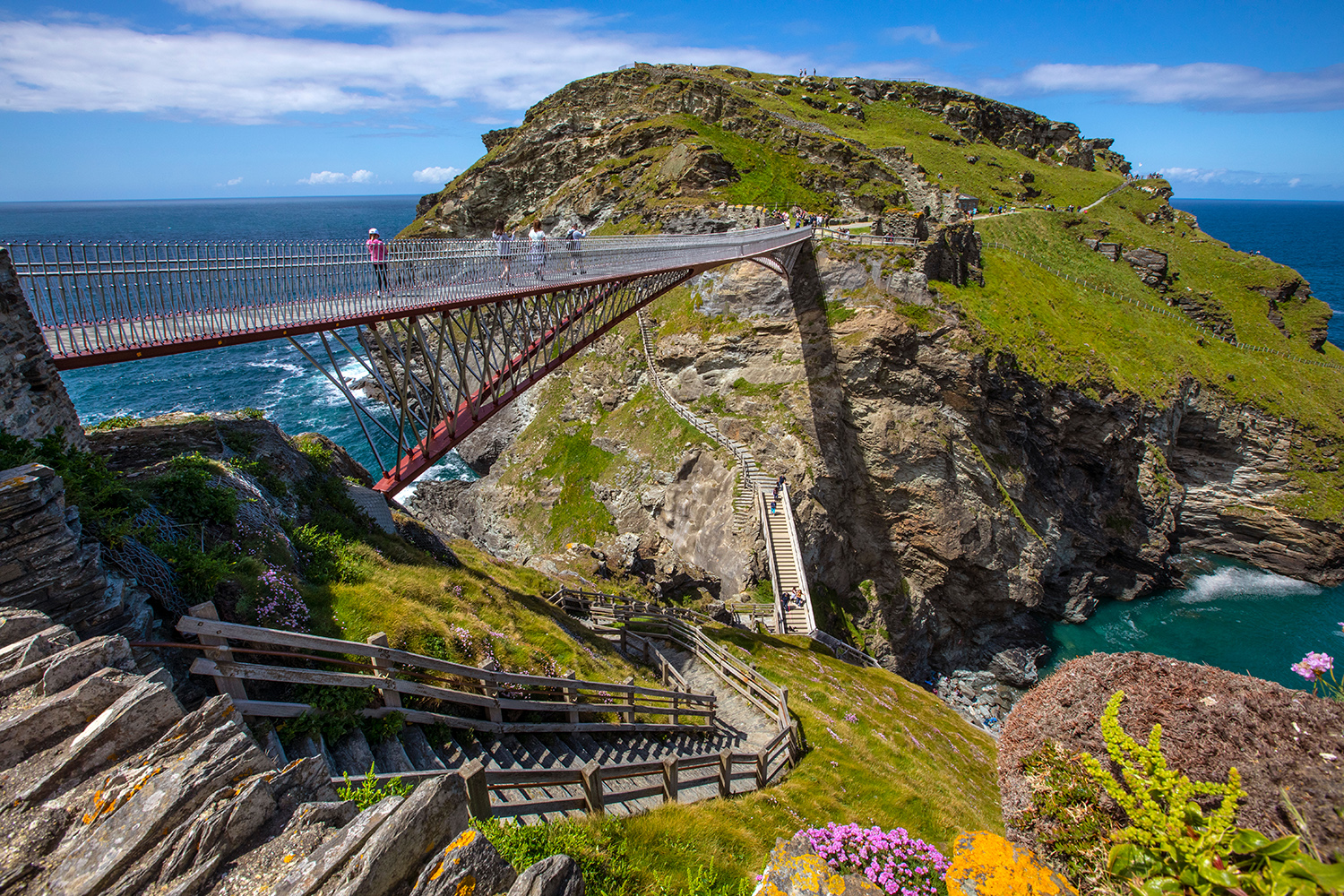
Tintagel Castle is one of Cornwall's most extraordinary historic places: a spectacular ruin perched on a rugged Atlantic headland, where archaeology, medieval history and the legend of King Arthur come together. The site occupies both the mainland and the rocky headland traditionally known as Tintagel Island, separated by a dramatic natural chasm. Visitors cross the modern footbridge before exploring the remains of the medieval castle, earlier settlement, chapel and great hall, with magnificent views along the north Cornish coast.
Although the visible castle is largely the work of Richard, Earl of Cornwall, in the 13th century, Tintagel's importance is considerably older. Archaeological evidence shows that the headland was an important high-status settlement during the 5th to 7th centuries AD and was closely involved in long-distance trade with the Mediterranean. Centuries later, Geoffrey of Monmouth's writings connected Tintagel with the conception of King Arthur, helping to create the powerful Arthurian tradition for which the site is now famous. English Heritage describes the place as one where history and legend are inseparable, but the archaeological evidence is compelling in its own right. Managed by English Heritage on land owned by the Duchy of Cornwall, Tintagel pairs naturally with the National Trust's Old Post Office in the village, or with a walk along the coast path towards Boscastle.
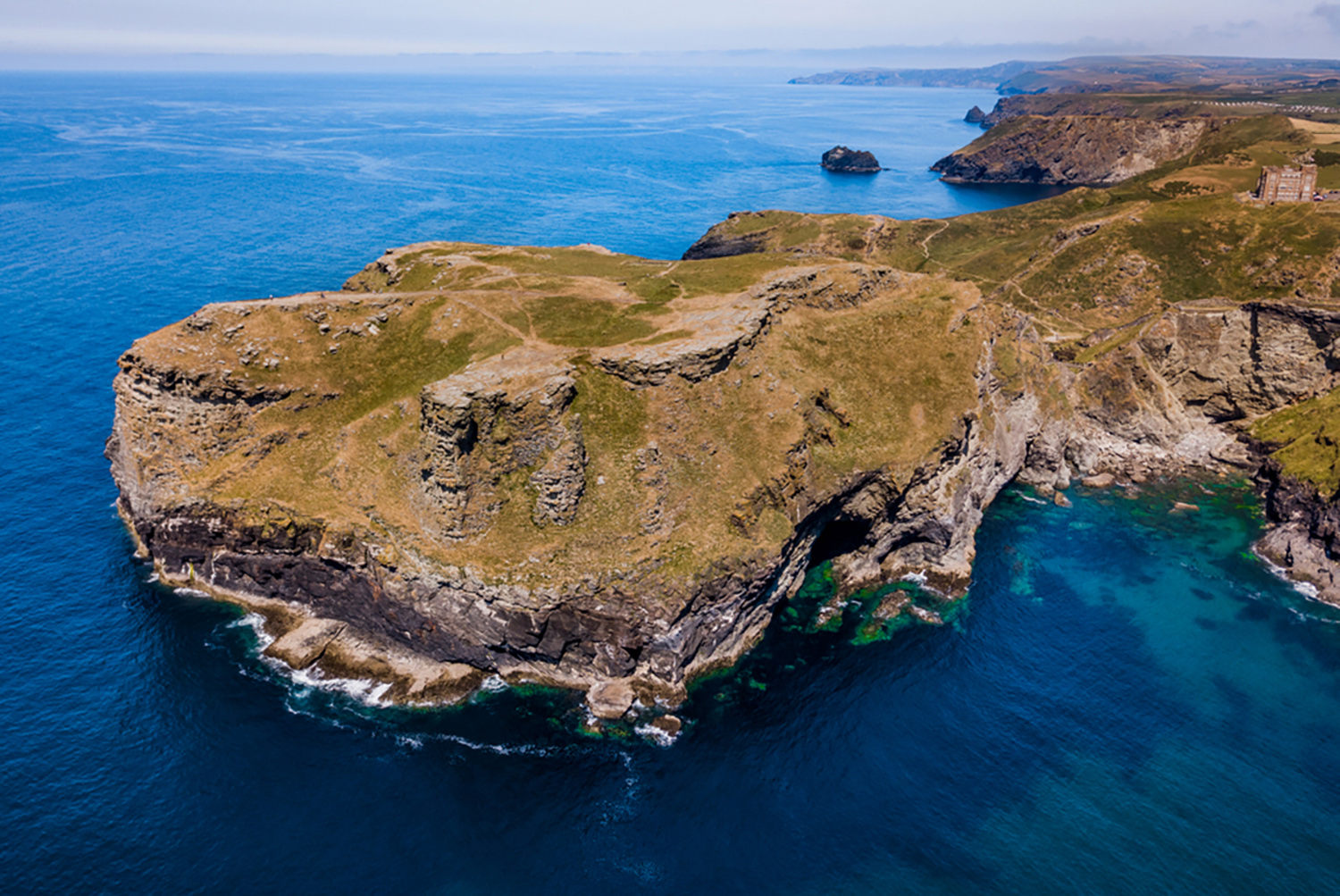
Beyond the castle itself, Tintagel occupies one of the most dramatic stretches of the North Cornwall coastline, and the South West Coast Path runs directly past the site, drawing walkers and photographers as well as history enthusiasts. The cliffs either side of the headland offer some of the county's most striking coastal views, with seabirds, sea caves and blowholes adding to the sense of a landscape shaped as much by the Atlantic as by human hands. Many visitors combine a castle visit with a longer walk along the coast path towards Boscastle or Trebarwith Strand, taking in the same wild scenery that has long fed Tintagel's legendary reputation.
As one of Cornwall's five major English Heritage attractions, alongside Pendennis Castle, St Mawes Castle, Launceston Castle and Restormel Castle, Tintagel makes an easy and rewarding day out for families exploring the county's heritage coast. Its combination of dramatic scenery, genuine archaeology and Arthurian storytelling appeals across age groups, and its position in Tintagel village puts it within easy reach of North Cornwall's other attractions. A visit pairs particularly well with the nearby National Trust's Old Post Office and with King Arthur's Great Halls in the village, making it straightforward to build a full day of Arthurian-themed exploration without a long drive between sites.
Location Map
Visitor Guide
A visit to Tintagel is as much about the landscape as the ruins. The castle stands high above the sea, and the combination of cliffs, Atlantic light, sea caves and broken stone walls gives the site an atmosphere unlike almost any other historic attraction in Cornwall. The approach from Tintagel village is part of the experience: there is no car access to the castle itself, and visitors should allow time to walk from the village car parks to the entrance.
The modern footbridge, opened in 2019, reconnects the mainland and headland and follows approximately the line of the historic crossing. Crossing it gives visitors a remarkable view into the gorge below and out towards the Atlantic. Once on the island, the route leads through the remains of the castle and earlier settlement. The medieval Great Hall is one of the most evocative parts of the site, while the surviving walls and terraces reveal how the headland was adapted for occupation.
Visitors should allow at least two hours for a proper visit, and longer if they want to explore the surrounding coastline, exhibition, café and beach. The site is rugged rather than conventionally landscaped, with steep slopes, uneven surfaces and numerous steps, and exposed cliff edges in places. Sturdy footwear is strongly recommended, and families should keep children close, particularly around the cliff edges and steep paths.
Tintagel also rewards visitors who take time to look beyond the castle itself. The Beach Café provides a place to stop for food and drink, while the exhibition near the visitor facilities introduces the history and legends of the site. Below the castle, Tintagel Haven and Merlin's Cave can be explored subject to tide and conditions. Merlin's Cave is not itself part of the English Heritage site and access to the beach is via steep steps, but together they help explain why Tintagel has inspired generations of writers and visitors.
History
Tintagel's history begins long before the medieval castle. The headland appears to have been an important settlement during the early medieval period, approximately from the 5th to the 7th centuries AD. Archaeological excavations have revealed the foundations of numerous buildings and large quantities of imported pottery from the Mediterranean world. These finds indicate that the community occupying Tintagel was wealthy and connected to long-distance trade networks.
The site's defensive position is striking. The headland projects into the Atlantic and is protected by cliffs on several sides, while the narrow connection with the mainland could be defended. Its position and the evidence for high-status occupation have led archaeologists to regard Tintagel as a probable stronghold or residence of the rulers of south-west Britain, associated with the kingdom of Dumnonia and the emerging political landscape of Cornwall and Devon.
The importance of the early settlement was eventually transformed into literary fame. In the 12th century Geoffrey of Monmouth wrote his influential History of the Kings of Britain, in which Tintagel was identified as the place where King Arthur was conceived. According to the story, Merlin used magic to enable Uther Pendragon to assume the appearance of Gorlois, Duke of Cornwall, and enter the castle. Later Arthurian traditions developed further associations with Tintagel, including stories of King Mark, Tristan and Iseult.
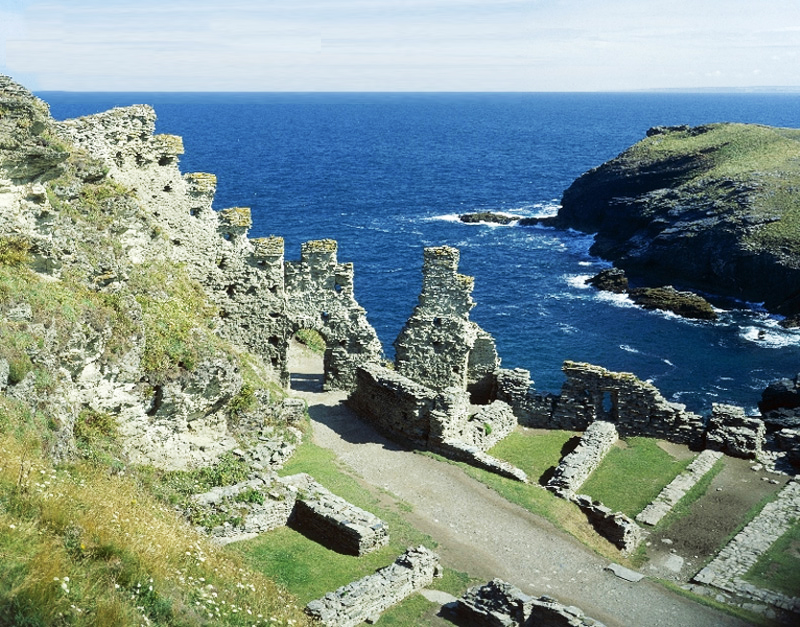
By the 13th century the literary reputation of Tintagel had become sufficiently powerful to influence its physical history. Richard, Earl of Cornwall, brother of King Henry III, acquired the site in the 1230s and constructed a castle here. The choice was unusual because Tintagel was not primarily a strategically useful location for controlling Cornwall's roads or settlements — its value was symbolic and political, associating Richard with the mythology and prestige of the Cornish past. The medieval castle was substantial, with buildings on both the mainland and island: a great hall, chapel, curtain walls and other structures were built or adapted during the 13th and 14th centuries.
After the creation of the Duchy of Cornwall in 1337, Tintagel became part of the Duchy's estates. By this period parts of the castle were already deteriorating; coastal erosion, exposure and the difficulty of maintaining buildings on the headland all contributed to its decline, and by around 1600 it had ceased to be an important occupied stronghold. The site's legendary reputation, however, continued to grow. Arthurian literature and antiquarian interest helped turn Tintagel into a destination for travellers, and the association with King Arthur became particularly influential during the Victorian period, when Cornwall's dramatic scenery, legends and ancient monuments became increasingly popular with tourists, writers and artists.
Modern archaeology has transformed understanding of Tintagel. Excavations during the 20th century, followed by important research and discoveries in the 21st century, demonstrated the exceptional status of the early medieval settlement. Finds of imported ceramics, glass and other objects provide evidence for connections extending across the Mediterranean and demonstrate that Tintagel was far more than an isolated Cornish cliff-top settlement. The modern visitor experience also reflects the site's continuing evolution: the footbridge opened in 2019, replacing the difficult former crossing and reconnecting the mainland and island while creating a dramatic new viewpoint. Today Tintagel is managed by English Heritage and remains one of Cornwall's best-known historic attractions, drawing visitors because of both its documented archaeology and its extraordinary place in Arthurian tradition.
Important Features
- The 2019 footbridge: the modern bridge reconnects the mainland and island and provides dramatic views across the natural chasm and Atlantic coast.
- The medieval Great Hall: one of the most recognisable surviving elements of Richard of Cornwall's castle.
- Early medieval settlement: archaeological remains show high-status occupation here centuries before the medieval castle.
- Imported Mediterranean pottery: finds demonstrate Tintagel's participation in long-distance trade during the 5th to 7th centuries.
- Castle walls and terraces: the surviving masonry reveals the extent and complexity of the medieval buildings.
- Chapel remains: religious buildings formed part of the medieval complex.
- Gallos: a life-sized modern sculpture representing a legendary Cornish ruler, and one of the site's most recognisable viewpoints.
- Atlantic cliffs: panoramic views towards the rugged north Cornish coastline.
- Tintagel Haven: the beach below the castle, reached by steep steps, subject to tides and conditions.
- Merlin's Cave: a natural sea cave beneath the headland, strongly associated with later Arthurian tradition, although outside the English Heritage property.
Visitor Information
Parking
There is no parking at the castle. Pay-and-display car parks are available in Tintagel village, about 600 metres from the site, and are not operated by English Heritage. There is no disabled parking at the castle.
Facilities
The Beach Café serves lunches, cakes, scones, Cornish pasties, drinks and ice cream, with outdoor seating overlooking the coast. The visitor shop sells books, Arthurian and medieval souvenirs, gifts and English Heritage merchandise. Toilets, including baby-changing facilities, are beside the visitor centre and shop — there are none on the island.
Disabled Access
Access is limited by the rugged landscape, steep gradients, uneven surfaces and steps, including around 140 steps on part of the route. Wheelchair access is possible only on a limited basis; a wheelchair loan is available, and assistance dogs are welcome. Contact English Heritage in advance if accessibility is a concern.
- Opening times: English Heritage lists Tintagel Castle as generally open daily, though hours vary by season. Seasonal arrangements and events can change, so check the official website before travelling.
- Public transport: the nearest bus stop is Tintagel Visitor Centre, with services connecting Tintagel to Bude, Newquay, Camelford and Wadebridge.
- Toilets: beside the visitor centre and shop, including an accessible toilet and baby-changing facilities. There are no toilets on the island itself.
- Food and drink: the Beach Café serves lunches, cakes, scones, Cornish pasties, drinks and ice cream, with outdoor seating overlooking the coast.
- Shop: the visitor shop sells books, Arthurian and medieval souvenirs, gifts and English Heritage merchandise.
- Dogs: welcome throughout the site on leads. There are steep drops, steps and nesting birds, so dogs should be kept under close control.
- Booking: access to the castle and the footbridge crossing is ticketed, with timed entry applying to the bridge. English Heritage recommends booking ahead, especially in school holidays and peak summer.
- Family facilities: the site suits older, confident children well; the terrain is rugged with steps and cliff edges, so pushchairs are difficult beyond the visitor centre area.
- Additional access: a wheelchair loan is available and assistance dogs are welcome; visitors with access needs should contact English Heritage ahead of their visit to plan the route.
- Visit duration: English Heritage recommends allowing at least two hours; groups are advised that a typical visit takes approximately two to three hours.
Things to Do Nearby
Tintagel Old Post Office
Tintagel village
A National Trust 14th-century yeoman's farmhouse with a famously wavy roof, on Tintagel's high street.
Find Out MoreKing Arthur's Great Halls
Tintagel village
The story of King Arthur and the Knights of the Round Table, told through stained glass and illuminated halls.
Find Out MoreBoscastle Harbour
Boscastle, nr. Tintagel
A picturesque natural harbour and fishing village a short drive up the coast, with the Museum of Witchcraft & Magic.
Find Out MoreTrebarwith Strand
Nr. Tintagel
A dramatic sandy beach backed by cliffs, a short drive or coastal walk south of the castle.
Find Out MoreTintagel Village
Tintagel
Independent shops, cafés and Arthurian-themed attractions a short walk from the castle entrance.
Find Out MoreFrequently Asked Questions
Official English Heritage Site
For the latest opening times, admission prices, booking and any event or access changes, check the official English Heritage page for Tintagel Castle before you travel.
Explore More Cornwall Heritage
All English Heritage Sites Cornwall Attractions National Trust Cornwall
Page last updated: 24 August 2026.