Newquay, Cornwall – Visitor Guide to Beaches, Surfing, Family Holidays & Nightlife
St
Ives | Carbis Bay | Hayle | Gwithian
Towans | Godrevy Head | Portreath
| Porthtowan | St
Agnes | Trevaunance Cove
| Perranporth | Holywell
Bay | Crantock Bay | Newquay
| Porth | Mawgan Porth | Harlyn Bay
| Constantine Bay & Trevone | Padstow
& The Camel Estuary
Back to Mid-Cornwall Towns & Villages – Newquay, Truro, Falmouth
On This Page
- Holidays in Newquay
- Newquay’s Beaches
- Surfing in Newquay
- Family Holidays & Attractions
- Nightlife, Food & Drink
- Newquay Harbour
- Map
- History of Newquay
- Things to Do
- Walks around Newquay
- Around Newquay
- Boardmasters & Events
- Getting to Newquay
- When to Visit
- Visitor Information
- Stay & Explore
- Family Holidays & Short Breaks
- FAQs
Newquay at a Glance
Cornwall’s best-known beach resort, on the north coast about 12 miles north of Truro. Around ten named beaches, Fistral’s world-famous surf, Newquay Zoo, the Blue Reef Aquarium, Boardmasters every August and the liveliest nightlife in Cornwall. Railway station, airport and bus station. Sat-nav: TR7 1HR (harbour).
Something for Everyone
Families come for the sheltered beaches, rock pools and attractions; surfers for Fistral and the reefs; and groups of friends for the bars, clubs and festivals. Newquay suits all of them – often on the same holiday.
HOLIDAYS IN NEWQUAY
Newquay is Cornwall’s most popular holiday resort and the surf capital of the UK. Few towns anywhere in Britain pack so many sandy beaches into such a short stretch of coast: from the world-famous waves of Fistral to the family sands of Towan, Tolcarne and Porth, the clifftop cove of Lusty Glaze and the two-mile sweep of Watergate Bay, there is a beach here for every kind of day out.
The town stands on the north coast of Cornwall, on cliffs above Newquay Bay, between Towan Head and the Gannel estuary. It grew from a small fishing harbour into a resort after the railway arrived in 1876, and its grand Victorian hotels, the Huer’s Hut on the headland and the harbour where the pilchard boats once landed their catch still tell that story. Today around 24,000 people live here, and in the height of summer the population can be several times that.
Newquay is two holidays in one. For families, it has sheltered beaches with RNLI lifeguards, rock pools, crabbing in the harbour, Newquay Zoo, the Blue Reef Aquarium, Trenance Gardens and boating lake, and steam trains and adventure parks a short drive away. For young people and groups of friends, it offers surf lessons and surf culture, beach bars, live music, nightclubs and Boardmasters, the great surf and music festival held every August.
It is also one of the easiest places in Cornwall to reach. The Atlantic Coast railway line runs right into the town centre from Par, Cornwall Airport Newquay is just a few miles away at St Mawgan, and National Express coaches run direct from London and Birmingham. Once here, you can walk or take the bus to almost every beach.
Beyond the town lie some of the finest stretches of the Cornish coast: Crantock and Holywell Bay across the Gannel, the dramatic cliffs of Bedruthan Steps and Mawgan Porth to the north, and Padstow, Perranporth and St Agnes all within easy reach. Inland are the Elizabethan manor of Trerice, the Lappa Valley Steam Railway and, a little further, the Eden Project.
This guide covers everything you need for a holiday in Newquay: the beaches, surfing, family attractions, nightlife, the harbour and the town’s history, things to do, walks, places nearby, Boardmasters and other events, plus practical visitor information on parking, trains, buses, shops and health services.
↑ Back to top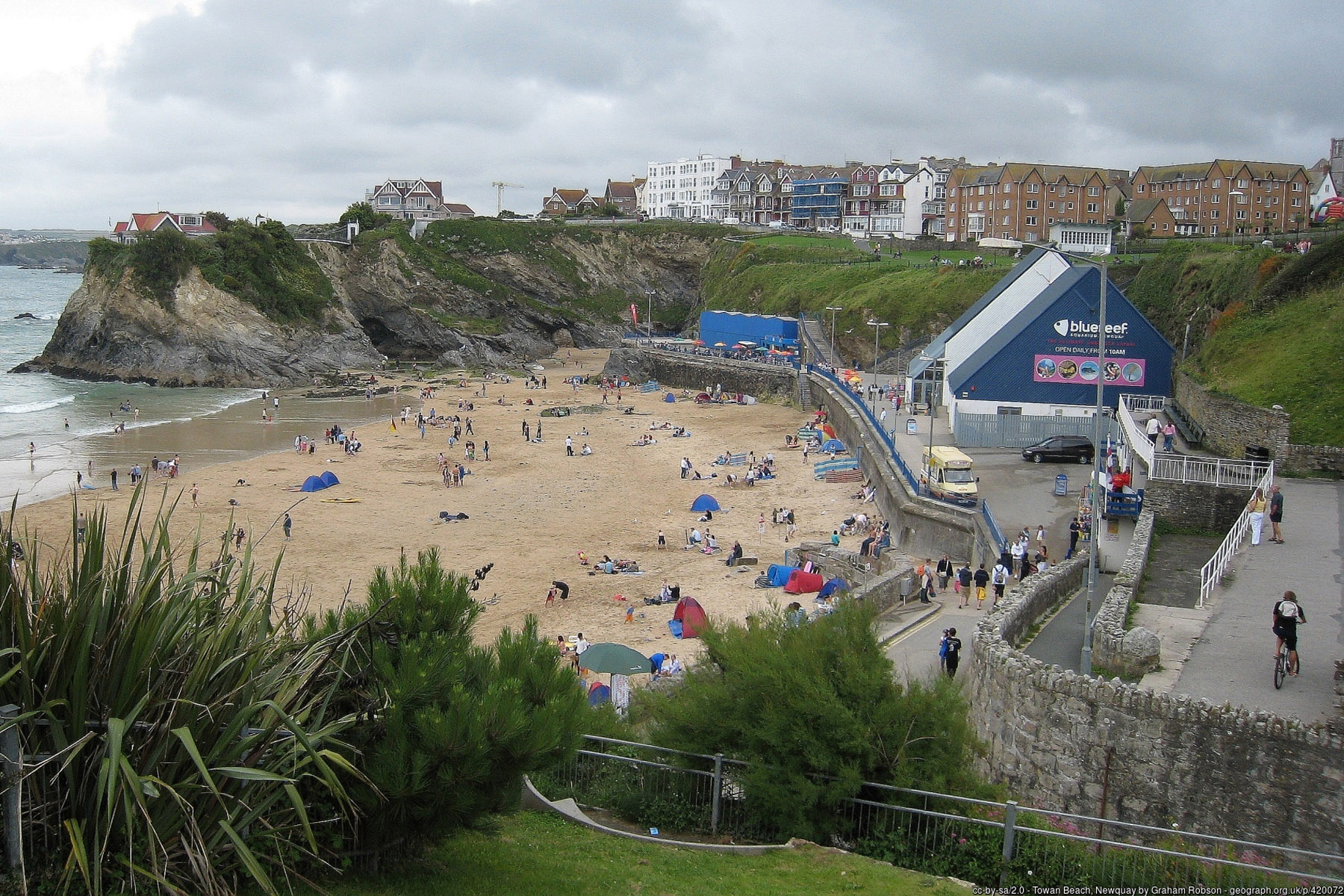
NEWQUAY’S BEACHES
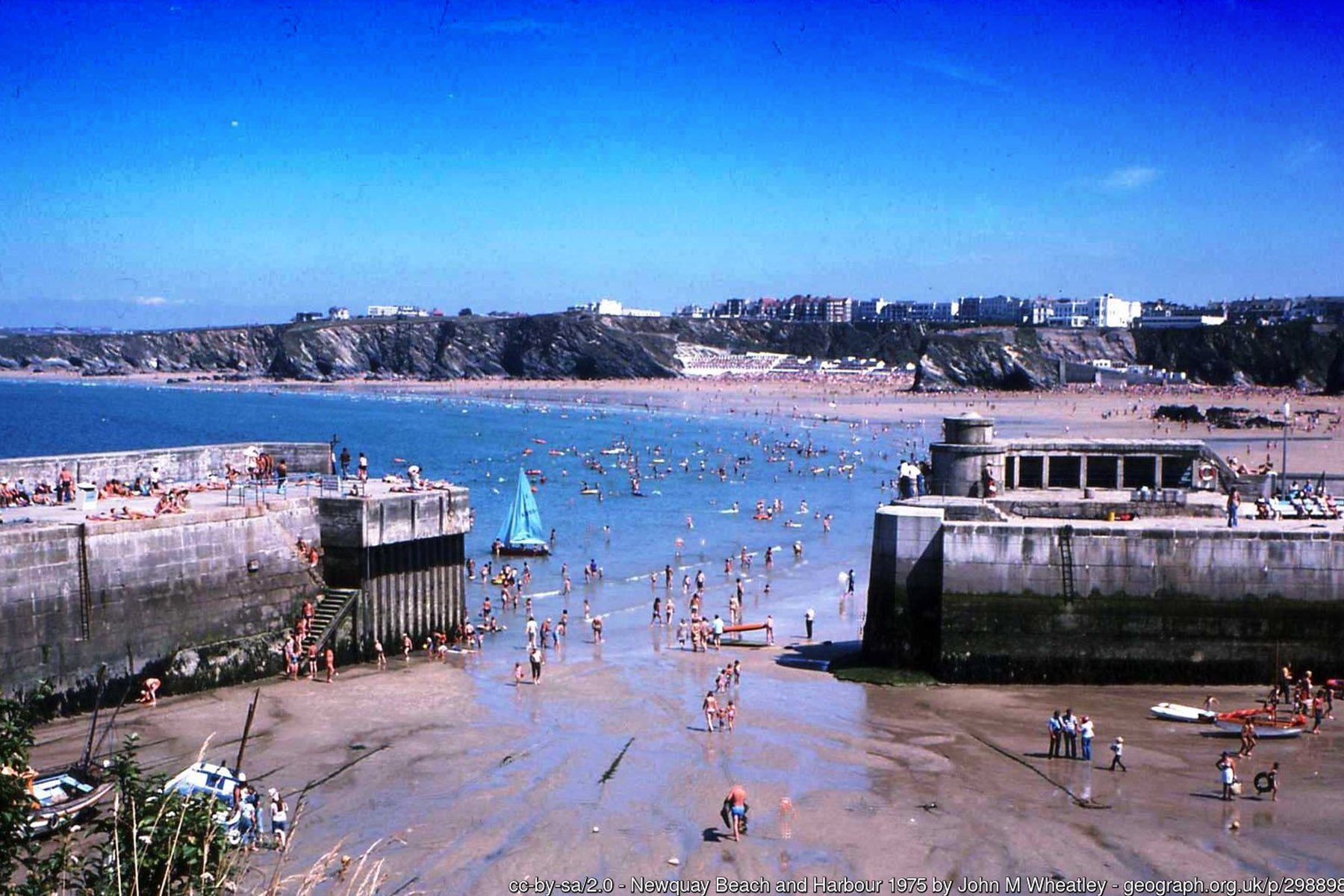
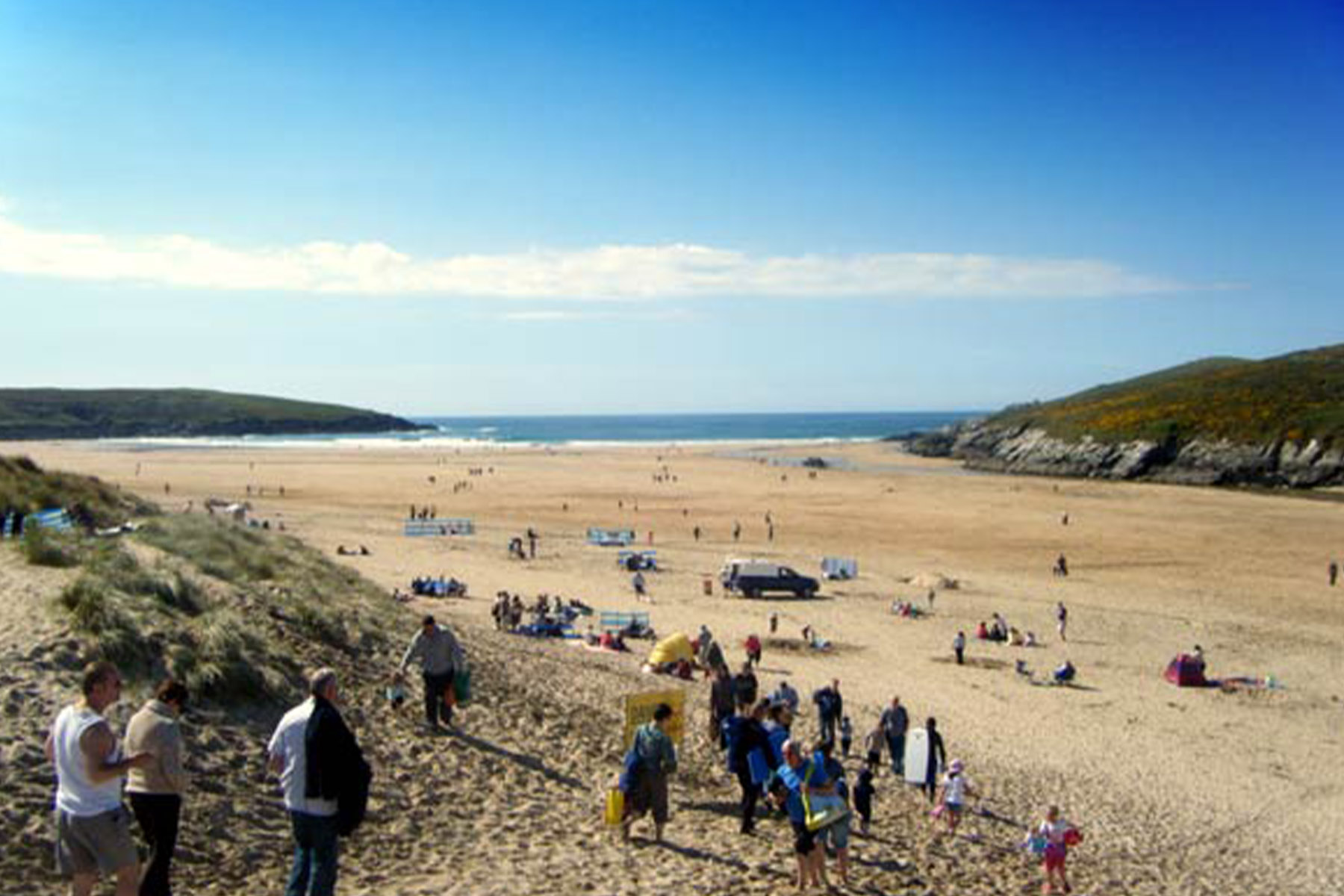
Newquay’s beaches are the reason most people come. Within a few miles of the town centre there are around ten named beaches, each with its own character – big surf beaches open to the Atlantic, sheltered family coves, a harbour beach and wild stretches of sand backed by dunes. At low tide several of the town beaches join together: Towan, Great Western and Tolcarne form almost two miles of continuous sand, though the tide can cut off the way back well before high water, so keep an eye on it.
Most of the main beaches have RNLI lifeguards through the season, usually from Easter or May to the end of September or October, and many have cafés, toilets, deckchairs and surfboard hire close by. Always swim and bodyboard between the red and yellow flags, and remember that the Atlantic can be powerful here even on a sunny day.
Families with young children usually head for Towan, Tolcarne, Porth or the Harbour Beach, where the water is calmer and the facilities are close at hand. Surfers go to Fistral, Watergate Bay and, on the right day, the reefs. For space and scenery, cross the Gannel to Crantock, or walk to Porth Joke.
- Fistral – Newquay’s most famous beach, about 750 metres of sand backed by dunes between Towan Head and Pentire Point East, facing straight into the Atlantic swell. Home of British surfing and the Boardmasters surf contest, with the Fistral Beach Complex, cafés and surf schools. Dogs welcome all year; lifeguards Easter to October.
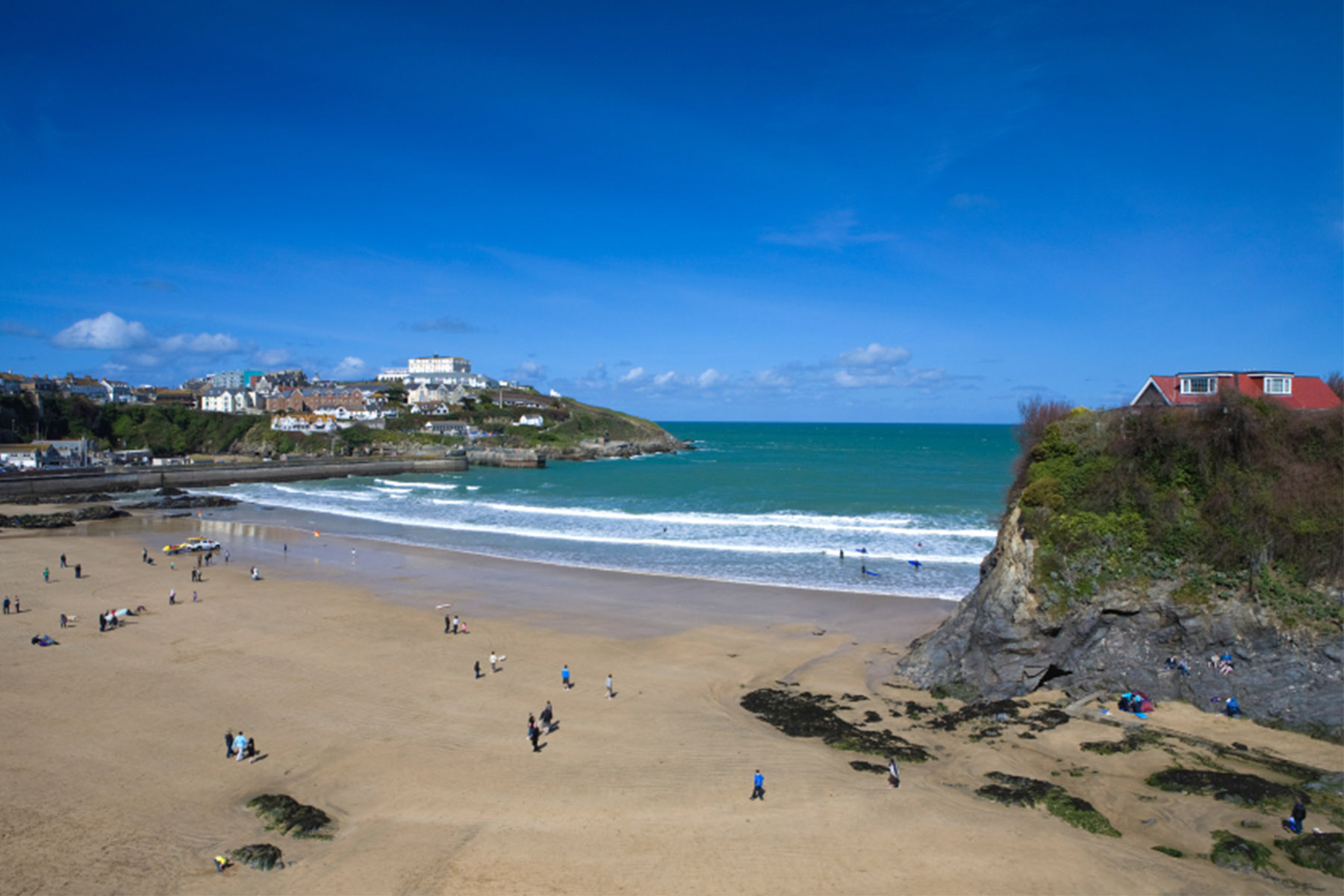
- Towan – the town beach, right below the shops, sheltered by Towan Headland and the harbour arm. Overlooked by Towan Island – “the Island” – with its house reached by a private suspension bridge, said to be the only privately owned suspension bridge in Britain.
- Great Western – a sheltered, west-facing beach below high cliffs and the railway station, named after the Great Western Railway. Popular with families and beginner surfers; covered at high tide. Seaside Award 2026.
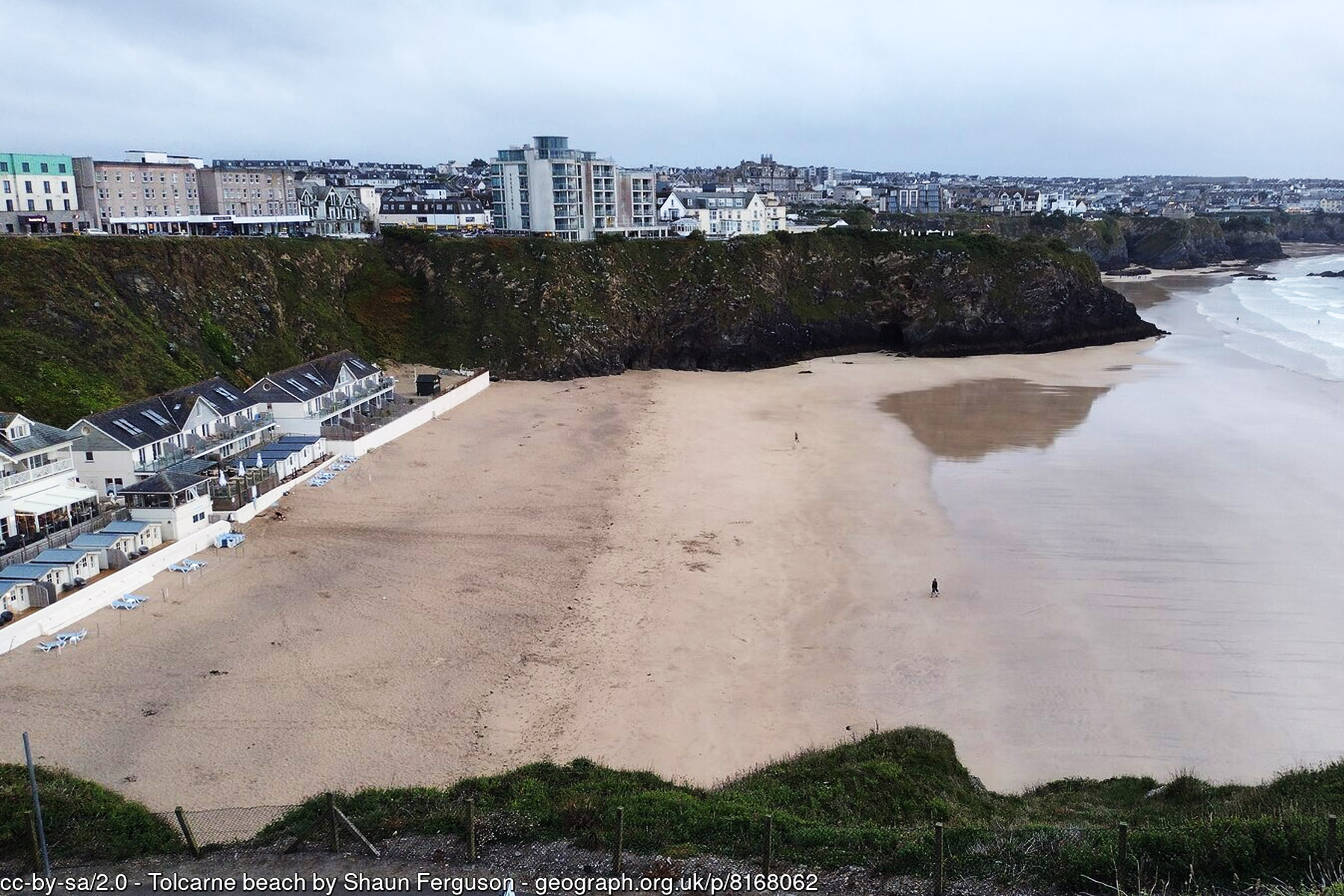
- Tolcarne – a big crescent of sand below Narrowcliff, with a beach shop, café, crazy golf and surf school at the foot of the steps, and RNLI lifeguards in season.
- Lusty Glaze – a privately owned cove reached by 133 steps, enclosed by high cliffs, with the Lusty Glaze Adventure Centre and summer concerts in its natural amphitheatre.
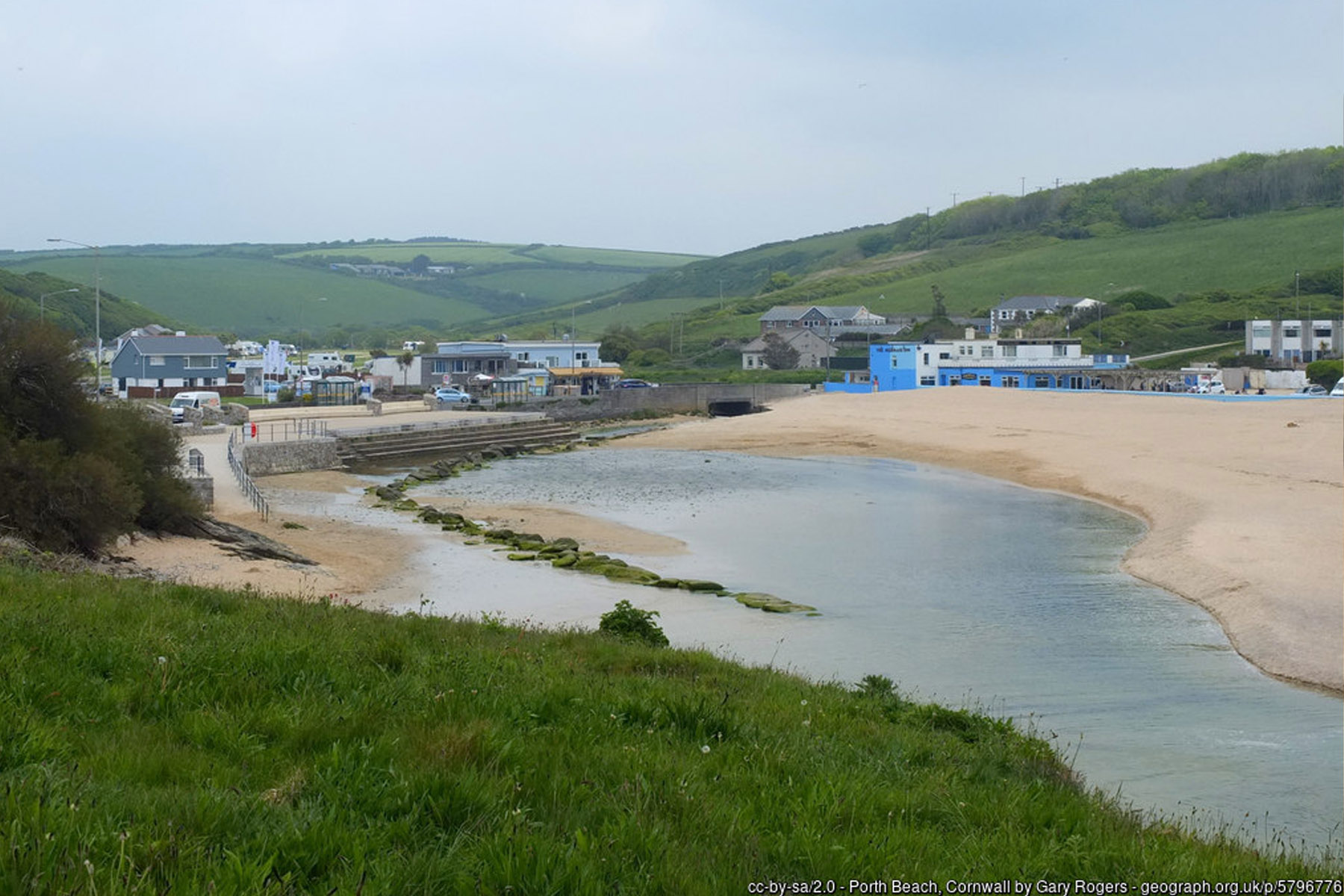
- Porth – a sheltered, lagoon-like family beach with a shallow stream across the sand and Trevelgue Head, with its Iron Age cliff castle, reached by a footbridge. Seaside Award 2026.
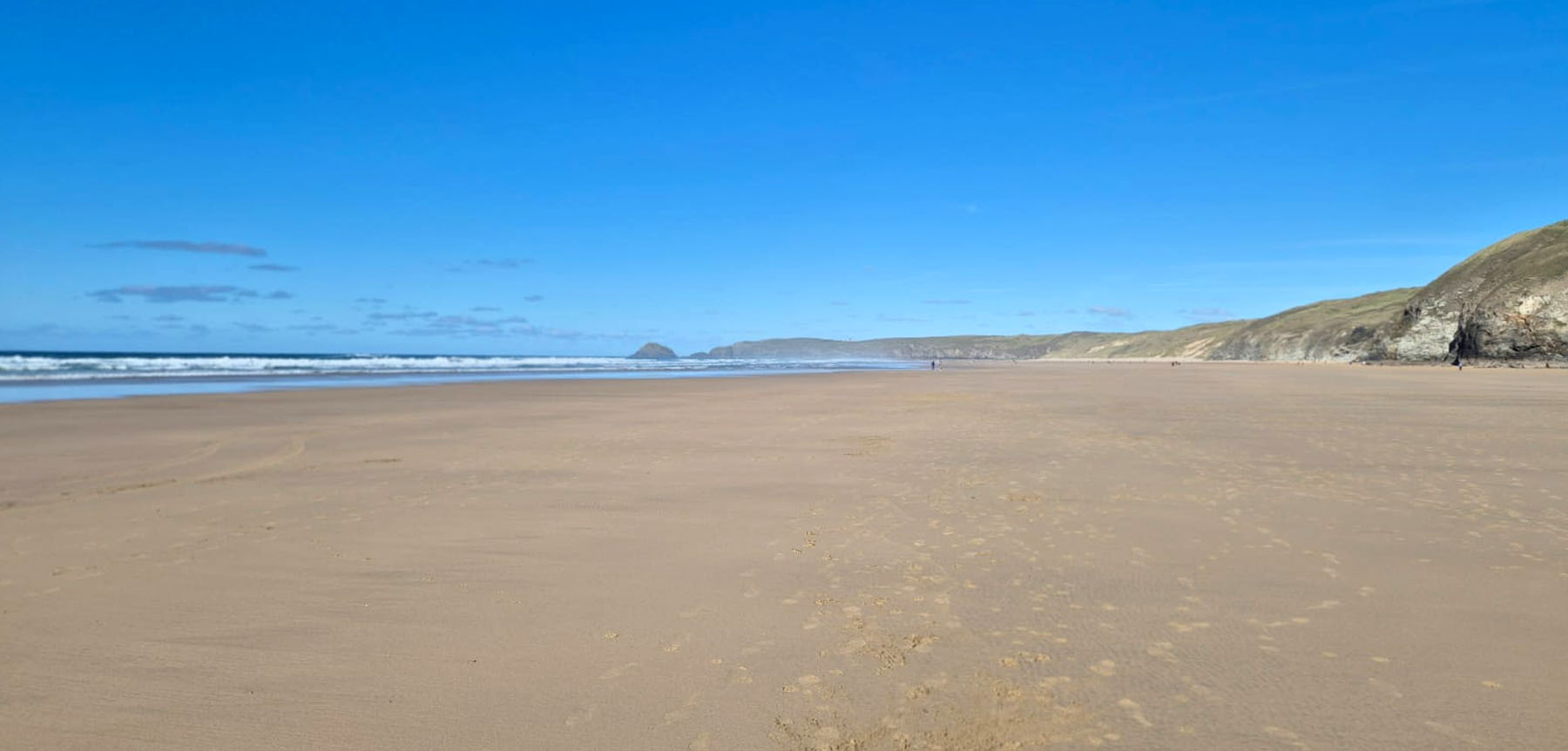
- Watergate Bay – two miles of golden sand about three miles north of the town, famous for surfing, kitesurfing and land yachting, with good wheelchair access and a bookable beach wheelchair.
- Harbour Beach – a small, calm patch of sand inside the working harbour, ideal for paddling and crabbing from the quay.
- Crantock – a National Trust beach across the Gannel estuary, over a mile long and backed by high dunes.
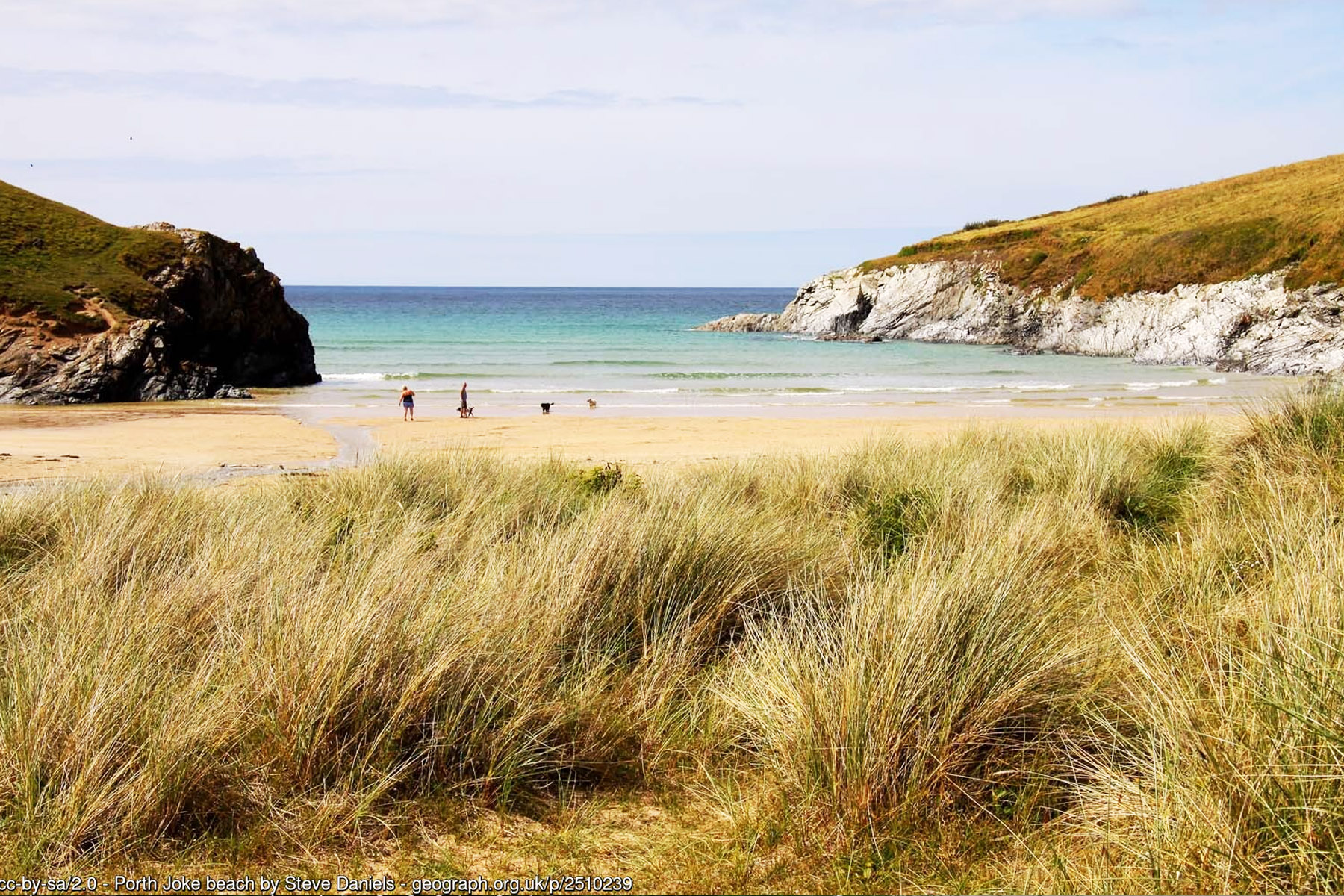
- Porth Joke – a small, unspoilt cove reached on foot from Crantock or West Pentire, much quieter than the town beaches.
Each beach has its own page in our Newquay beach guide, with parking, facilities, Blue Badge and disabled access details, a map and places to stay.
↑ Back to top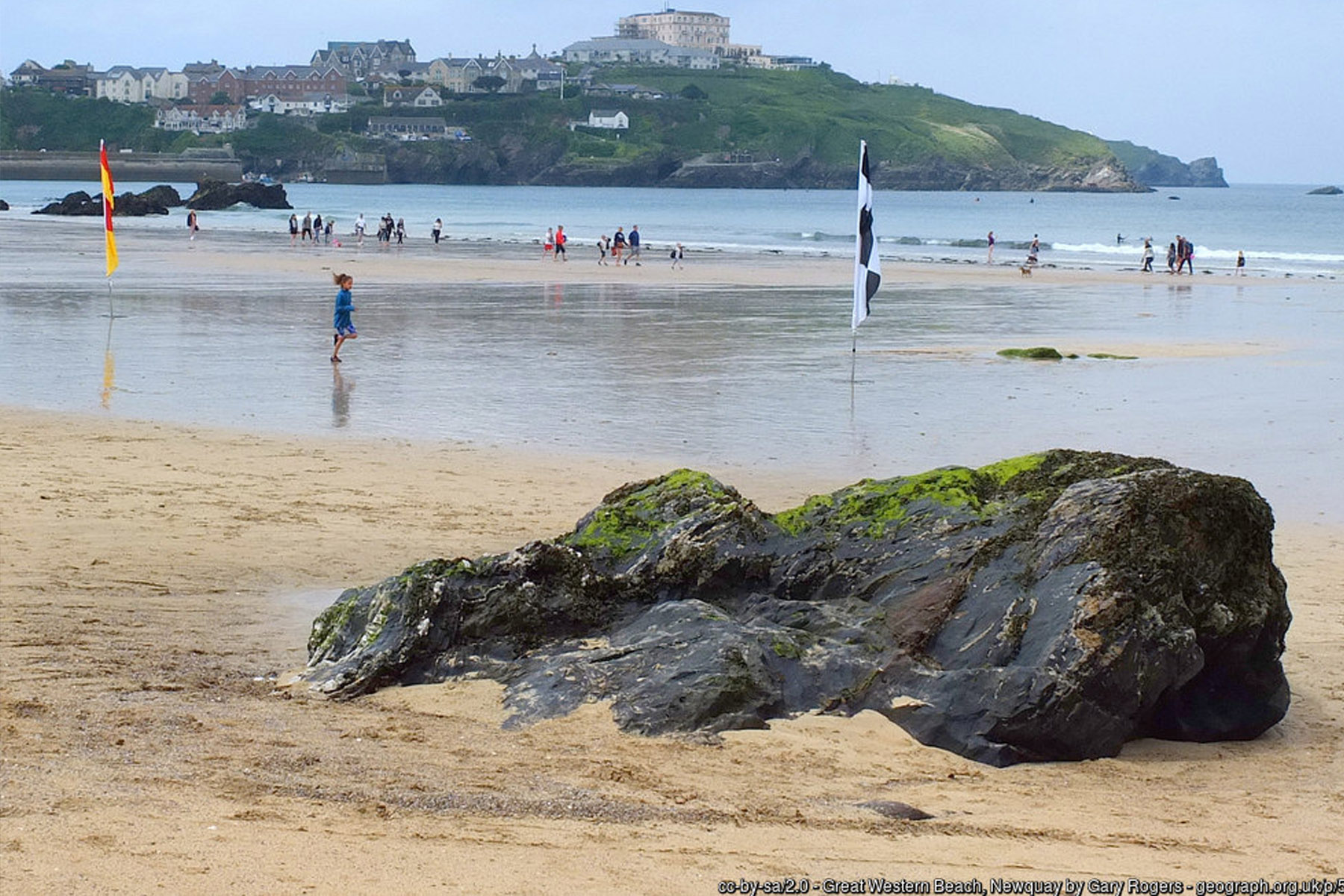
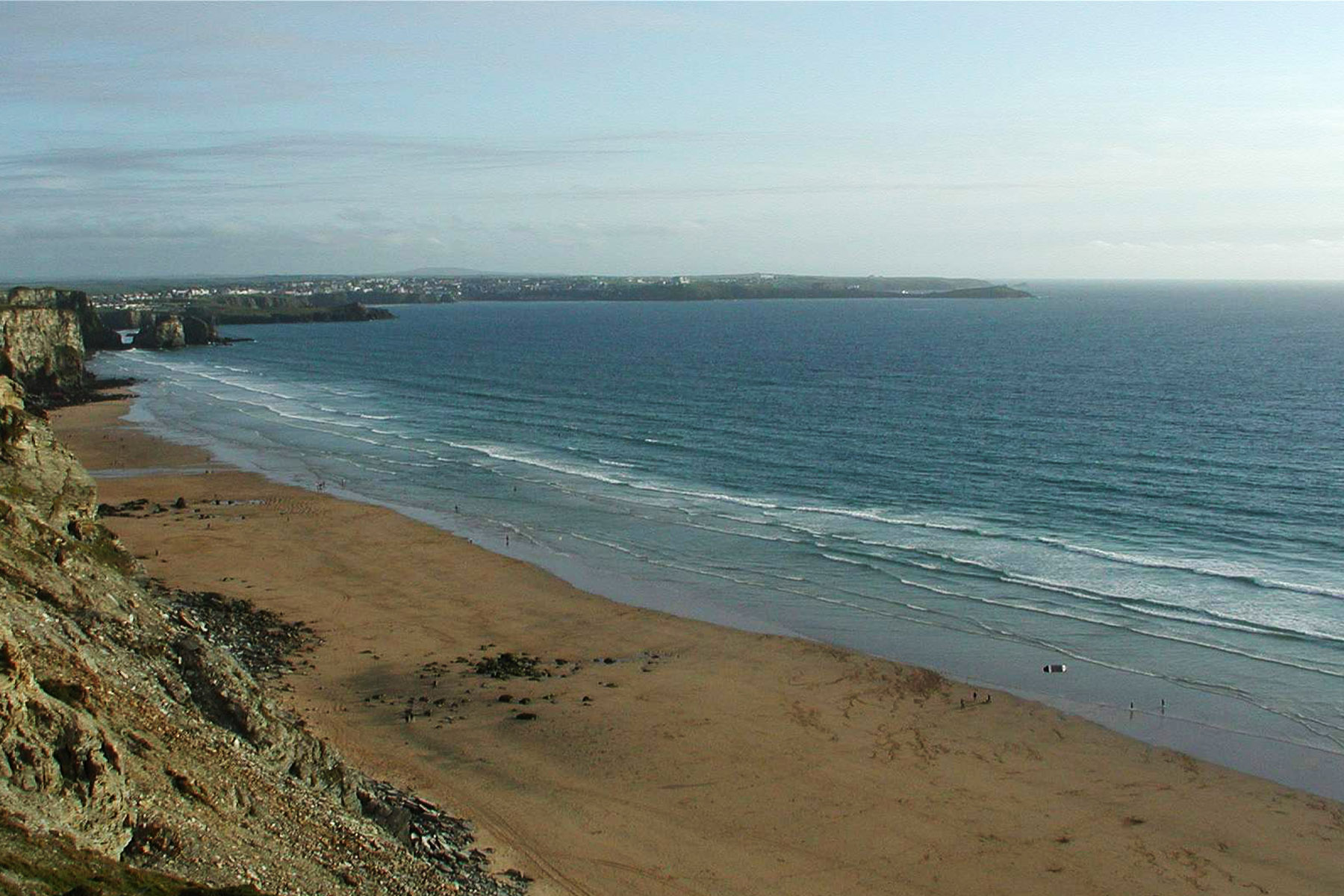
SURFING IN NEWQUAY
Newquay is the birthplace of modern British surfing, and it still calls itself “Surf City”. Surfers first rode the waves at Fistral on heavy wooden boards in the 1930s, but the real revolution came in 1962, when a group of Australian lifeguards arrived with lightweight fibreglass boards. Within a few years Newquay had its own surfboard makers and surf shops, and in 1966 the British Surfing Association was founded.
Fistral is the centre of it all. Facing west into the Atlantic, it picks up swell on more days of the year than almost any other beach in Britain, and it hosts major competitions, including the surf contests at Boardmasters every August. The surf here can be powerful, so it suits intermediate and experienced surfers best; beginners are better off booking a lesson with one of the surf schools, which teach in the gentler parts of the beach.
Off Towan Head lies the Cribbar, Newquay’s famous big-wave reef, which on a handful of days a year can produce waves of 30 feet or more. It was first ridden in September 1965, and a bronze surfboard sculpture now overlooks the break. On calmer days, Great Western, Towan and Tolcarne are ideal for learning, and Watergate Bay, with two miles of open sand, is a favourite for surfing, kitesurfing and land yachting.
Surf schools across Newquay offer lessons for every age and ability, from first-timers and families to improvers, along with stand-up paddleboarding, bodyboarding and coasteering. Surfboards, bodyboards and wetsuits can be hired on most of the main beaches. Always surf where lifeguards are on duty, check the conditions, and if you are new to the sport, take a lesson first.
For more on the breaks, seasons and conditions, see our Newquay surf guide.
↑ Back to top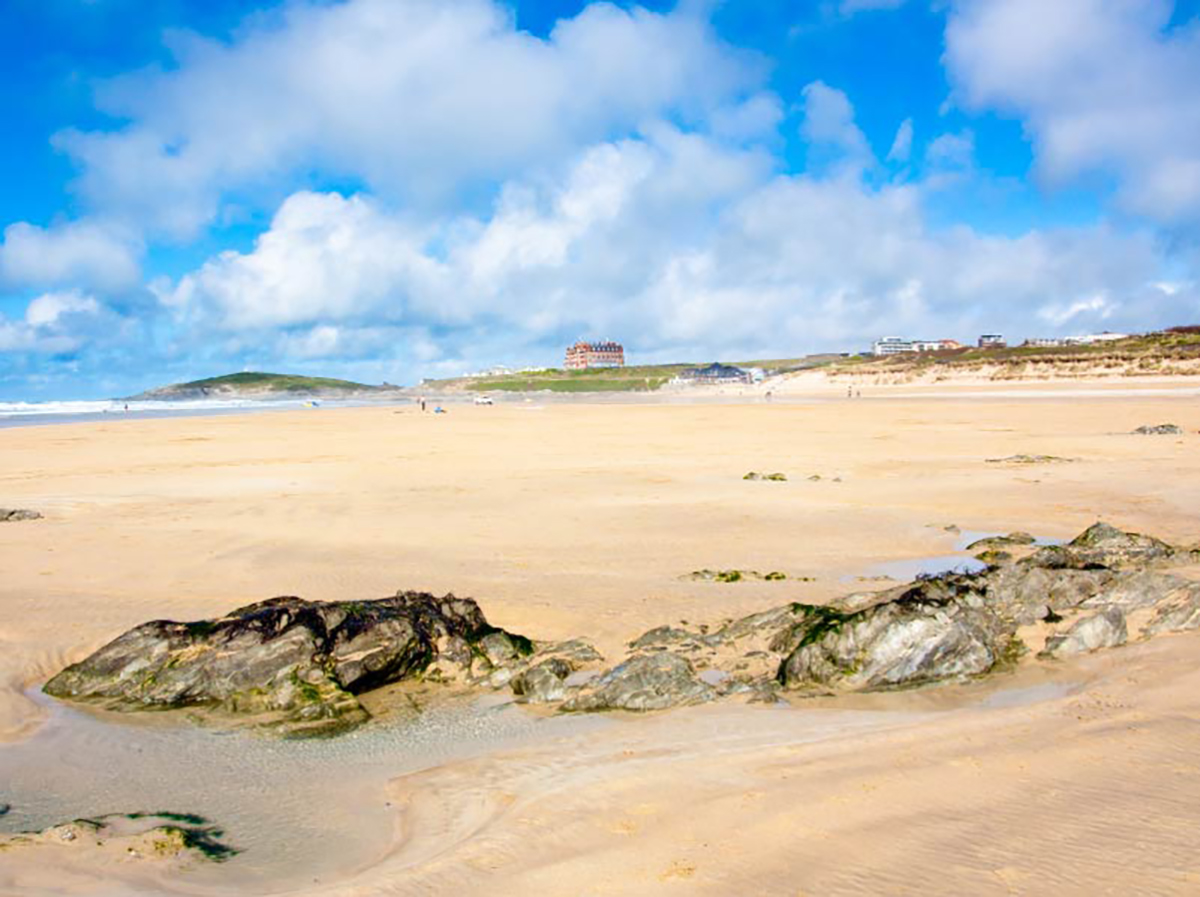
Learn to Surf
Book a lesson with a qualified surf school, wear a wetsuit (the sea is cool even in summer), stay between the black and white chequered flags and never surf alone. Spring and autumn often bring the best waves and quieter beaches.
FAMILY HOLIDAYS & ATTRACTIONS
Newquay has been a family holiday favourite for well over a century, and there is far more to do here than spend every day on the sand – though with beaches like Towan, Porth and Crantock, that is no bad thing. Rock pools, caves and crabbing in the harbour keep young children busy for hours, and older children can try surfing, bodyboarding or coasteering with a qualified instructor.
Newquay Zoo, in the leafy setting of Trenance Gardens, opened in 1969 and is home to animals from around the world, from lions and penguins to tropical species. Next door, the Trenance Leisure Gardens have a boating lake, gardens and the miniature Little Western Railway, which has carried young passengers since 1968.
On Towan Promenade, overlooking the town beach, the Blue Reef Aquarium takes you beneath the waves, with sharks, turtles, octopuses and a walk-through underwater tunnel among the fish of a tropical reef. It is a good choice for a rainy day.
A short drive from the town, the Lappa Valley Steam Railway near St Newlyn East runs narrow gauge trains through a wooded valley to a family park with play areas, boating and an old mine engine house. At Lusty Glaze, the adventure centre runs activities on the beach and cliffs, and the beach hosts concerts and events in summer. The National Trust’s Elizabethan manor of Trerice, a few miles south-east, has gardens and family trails.
Further afield, the Eden Project near St Austell, the clifftop views at Bedruthan Steps, and the harbours of Padstow and Mevagissey all make easy days out. Whatever the weather, Newquay is a resort where families are never short of something to do.
↑ Back to top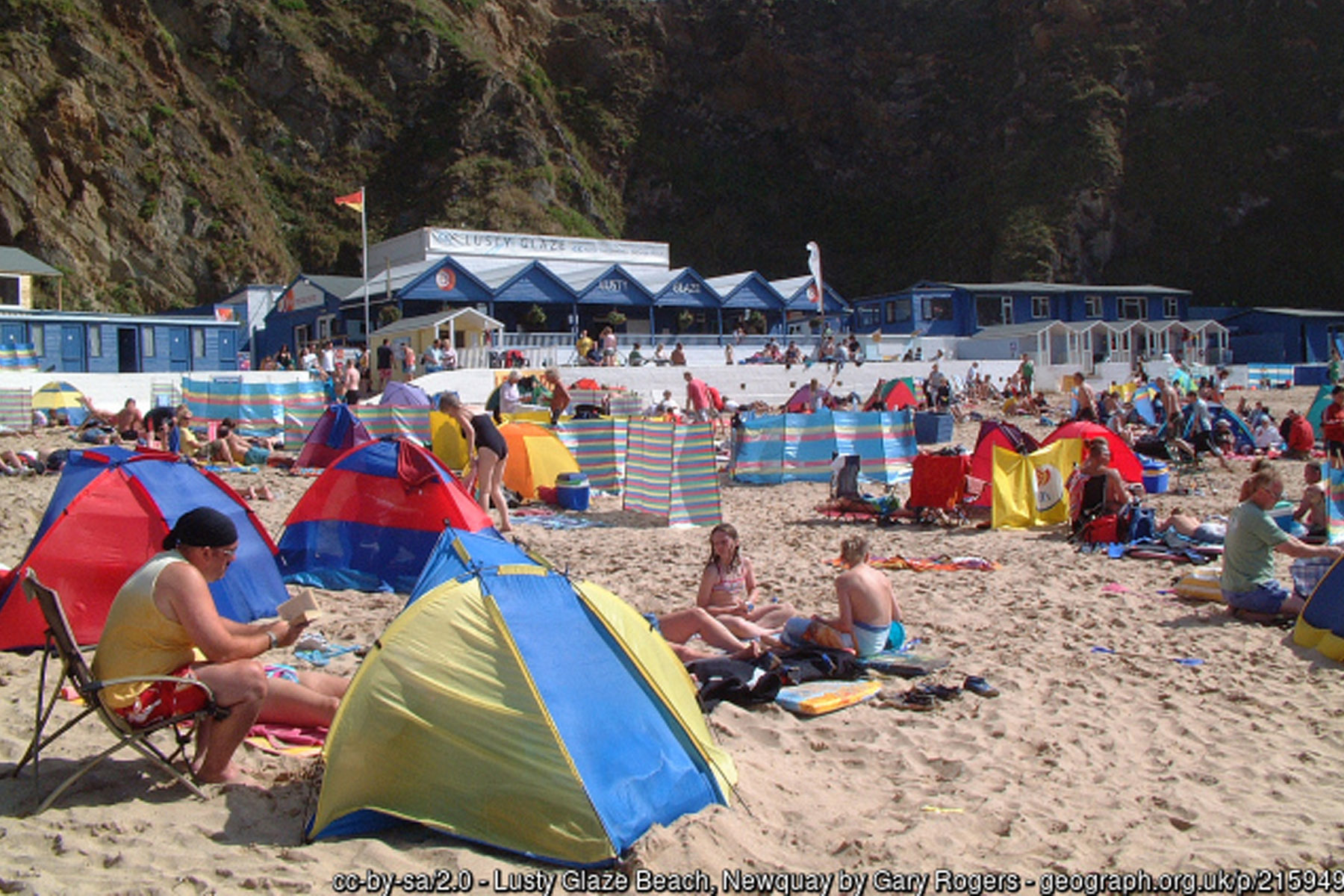
Rainy Day Ideas
The Blue Reef Aquarium on Towan Promenade, the indoor attractions and cafés of the town centre, Trerice (National Trust) and the Eden Project, about 20 miles away, are all good choices when the weather turns.
NIGHTLIFE, FOOD & DRINK
Newquay has the liveliest nightlife in Cornwall. The town centre, around Fore Street, Bank Street and Central Square, is packed with bars, pubs, live music venues and nightclubs, and on summer weekends it buzzes with surfers, holidaymakers and groups of friends celebrating birthdays, stag and hen weekends or the end of exams.
For a more relaxed evening, there are traditional pubs serving Cornish ales, clifftop terraces with sunset views over the bay, and beach bars and restaurants at Fistral, Watergate Bay and Lusty Glaze, some with live music in summer. The harbour is a lovely spot for an early evening stroll, especially with children.
The food scene has grown enormously, from fish and chips on the harbour and pasties in the town to seafood restaurants, surf cafés, gastropubs and fine dining at the bigger hotels around the bay. Book ahead for evening meals in July and August and during Boardmasters week.
Newquay is a busy resort, so plan ahead on a night out: stick together, keep an eye on your drinks and belongings, and use licensed taxis. Families usually find the early evening, before the bars get busy, the best time to enjoy the town centre.
↑ Back to topEvenings Out
Live music in pubs and bars, summer concerts at Lusty Glaze, sunset drinks on the clifftops and the Boardmasters festival in August – plus fish and chips on the harbour wall.
NEWQUAY HARBOUR
Newquay takes its name from its harbour. In 1439 Bishop Lacy of Exeter granted an indulgence to raise money for a “new quay” to shelter the fishing boats on this exposed coast, and in time the name of the quay was taken by the town that grew up around it.
The stone harbour seen today dates mostly from the 19th century. Richard Lomax began the north and south quays in the 1830s, and the harbour was later bought and enlarged by the industrialist Joseph Treffry, who linked it by tunnel and tramway to the mines inland. Ships carried away china clay and minerals and brought in coal, while the pilchard fishery filled the fish cellars around the town.
Today it is a working harbour for small fishing boats and pleasure craft, with a small sandy beach at low tide. Fishing and sightseeing trips run from the harbour in season, and the quay is a favourite spot for crabbing. Look out for the grey seals that sometimes visit the harbour.
On the headland above the harbour stands the whitewashed Huer’s Hut, where a lookout, the huer, watched for shoals of pilchards and raised the alarm for the fishing boats with a cry of “Heva!”, directing the seine boats with signals from the headland. The present building is thought to date from the late 18th or early 19th century, and it is one of Newquay’s best-known landmarks.
↑ Back to top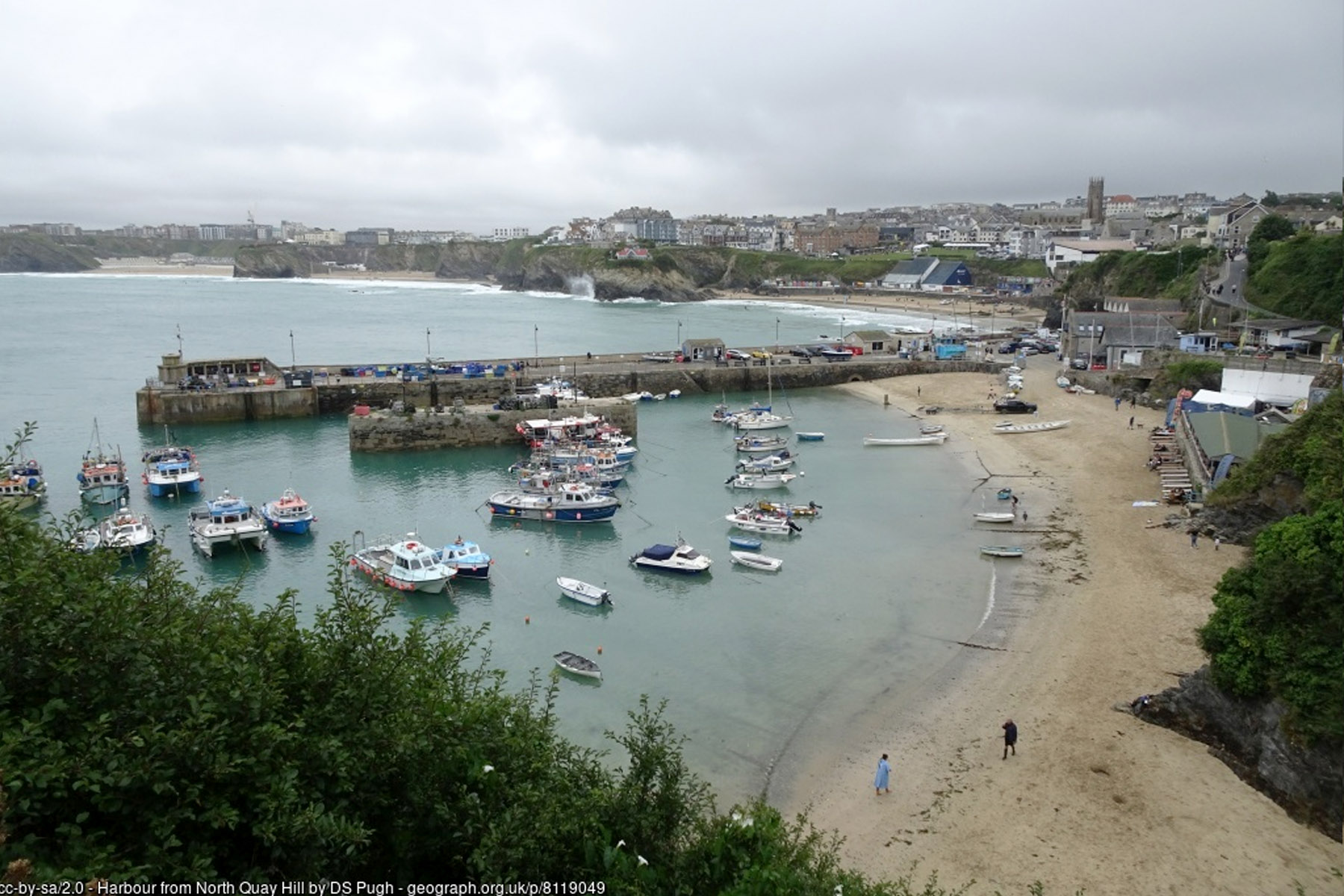
MAP OF NEWQUAY
HISTORY OF NEWQUAY
People have lived around Newquay for thousands of years. Bronze Age burial mounds survive at the Barrowfields, a Bronze Age village was found at Trethellan Farm, and on Trevelgue Head, beside Porth Beach, are the remains of an Iron Age cliff castle that was occupied from around the 3rd century BC into the post-Roman period.
For centuries the settlement was a small fishing village. After the new quay of the 15th century, pilchard fishing became the mainstay of the economy, with huers on the headland, seine boats in the bay and fish cellars where the catch was salted and packed for export.
In the 19th century the harbour was rebuilt and linked to the mines and clay works inland, first by a horse-drawn tramway and then by the Cornwall Minerals Railway. Passenger trains began running on 20 June 1876, and the railway transformed Newquay. Grand hotels rose along the clifftops – the Great Western in 1879, the Atlantic in 1892, the Victoria in 1899 and the Headland in 1900 – and the town became one of Cornwall’s first purpose-built seaside resorts.
In the 20th century Newquay grew into Cornwall’s largest resort. The council developed Trenance Gardens, the boating lake and Newquay Zoo, surfing arrived in the 1960s, and RAF St Mawgan nearby became today’s Cornwall Airport Newquay. The Beatles filmed scenes for Magical Mystery Tour here, and the author William Golding, who wrote Lord of the Flies, was born in the town in 1911.
Today Newquay is a busy, modern town with a growing year-round population and the aerospace business park of Aerohub at the airport, but its beaches, harbour and Victorian heart still make it what it has been for 150 years – one of the great seaside holiday towns of Britain.
↑ Back to top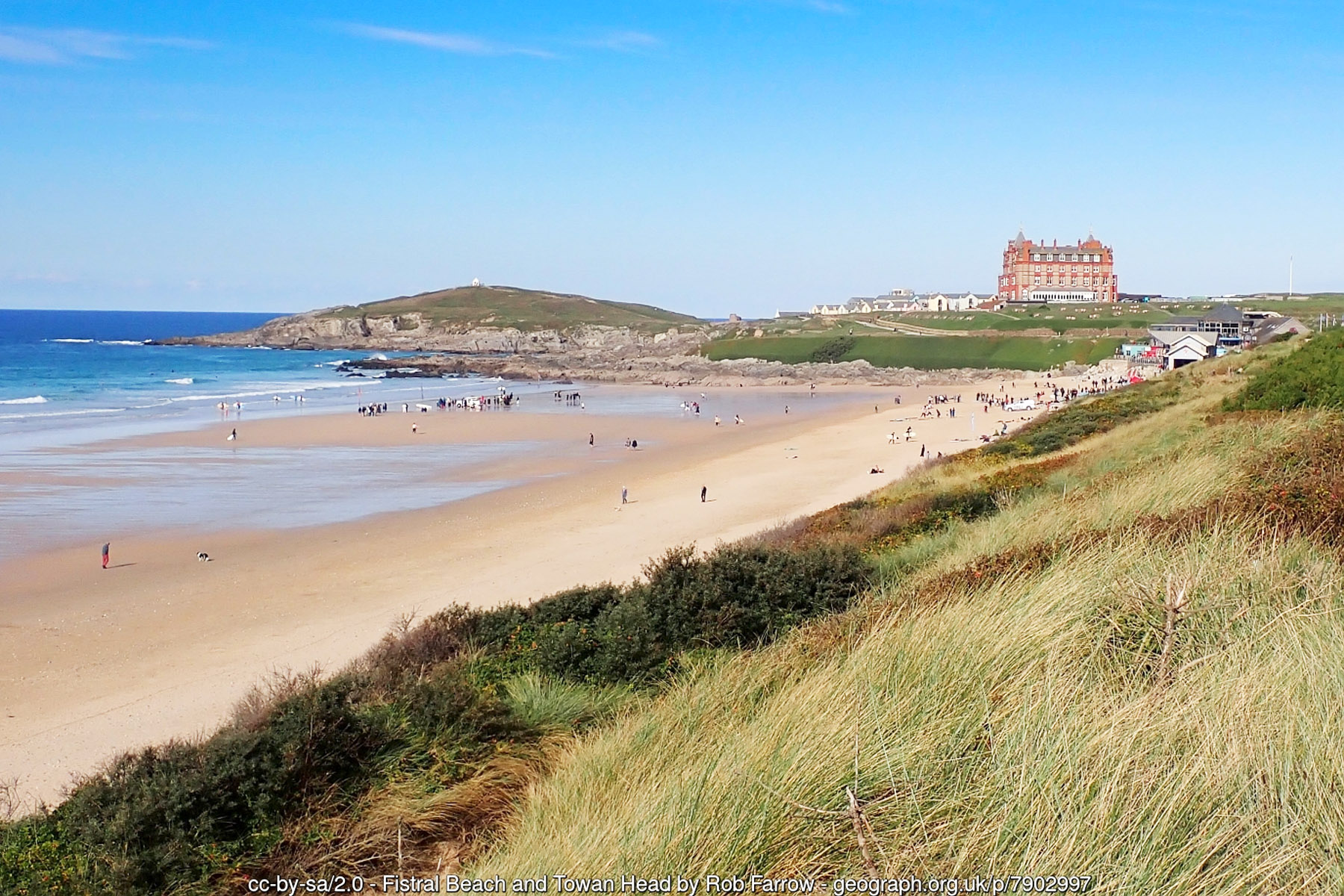
THINGS TO DO IN NEWQUAY
Newquay is packed with things to do, whatever your age and whatever the weather. Spend the mornings on the beach, the afternoons exploring the coast and the evenings at the harbour or in the town.
Families, couples and groups of friends will all find plenty to fill a week here – and the rest of Cornwall is on the doorstep.
Here are some of the best things to do in and around Newquay:
- Learn to surf at Fistral – with one of Newquay’s surf schools, or watch the experts.
- Spend a day on Towan or Porth – sheltered sands with rock pools for children.
- Visit Newquay Zoo – animals from around the world at Trenance Gardens.
- Explore the Blue Reef Aquarium – sharks, turtles and the underwater tunnel.
- Go crabbing in the harbour – and take a boat or fishing trip in season.
- Walk out to the Huer’s Hut – and the views from Towan Head.
- Try coasteering or kitesurfing – at Lusty Glaze and Watergate Bay.
- Ride the Lappa Valley Steam Railway – near St Newlyn East.
- Visit Trerice – the National Trust’s Elizabethan manor house.
- Walk to Crantock across the Gannel – dunes, a huge beach and Porth Joke.
- Play golf – at Newquay Golf Club beside Fistral.
- Enjoy Boardmasters – surf, skate and music every August.
Golf in Newquay
Newquay Golf Club has a links course right beside Fistral Beach, and there are more courses a short drive away. See our Cornwall golf guide.
WALKS AROUND NEWQUAY
The South West Coast Path runs right through Newquay. One of the easiest and most rewarding walks is out to Towan Head, past the Huer’s Hut, with views over Fistral on one side and the town beaches and harbour on the other.
Heading south, the coast path follows Fistral to Pentire and the Gannel estuary, which can be crossed at low tide or, in season, by ferry or footbridge to Crantock. From there the path continues past Porth Joke and Kelsey Head to Holywell Bay – a superb day’s walking.
Heading north, the path leads past Tolcarne, Lusty Glaze and Porth to Trevelgue Head and on along the cliffs to Whipsiderry and Watergate Bay, then onwards to Mawgan Porth and Bedruthan Steps. The 56 bus to Padstow makes it easy to walk one way and ride back.
Wear good shoes, take water, check the tide times if you plan to walk along the beaches, and keep well back from unfenced cliff edges.
↑ Back to topMore Walks
See our walking in Cornwall guide for routes along the north coast, including our Padstow walk.
AROUND NEWQUAY
- Crantock – a village and National Trust beach across the Gannel estuary.
- Holywell Bay – a big sandy beach backed by dunes, about five miles south-west.
- Perranporth – three miles of sand and the Watering Hole beach bar, about eight miles south-west.
- Mawgan Porth and Bedruthan Steps – a sandy cove and one of Cornwall’s most famous clifftop views, to the north.
- Padstow – the harbour town on the Camel Estuary, about 14 miles north-east.
- Truro – Cornwall’s cathedral city, about 12 miles south, and the Eden Project near St Austell.
Mid-Cornwall Towns
Explore more of the area in our guide to Mid-Cornwall towns & villages – Newquay, Truro, Falmouth, from Perranporth and St Agnes to Mevagissey and Fowey.
BOARDMASTERS & EVENTS
Newquay’s biggest event is Boardmasters, held every August. It began in 1981 as a surfing competition on Fistral Beach and has grown into one of the UK’s largest surf and music festivals, attracting more than 50,000 people. The music stages and campsites are at Watergate Bay, while Fistral hosts the surf contests, skate and BMX events and a beach village. The town is extremely busy that week, so book accommodation and travel early.
Through the rest of the year there are food and fish festivals, lifeboat days, surf contests, gig rowing on the bay and the Christmas lights switch-on in the town centre.
- Boardmasters (early August) – one of the UK’s biggest surf and music festivals, with music at Watergate Bay and surfing, skating and a beach village at Fistral. In 2026 it ran from 5 to 9 August.
- Newquay Food Festival (July) – held at Killacourt, overlooking Towan Beach.
- Newquay Fish Festival (usually September) – seafood, cookery and music at the harbour.
- Newquay Lifeboat Day (summer) – at the harbour, supporting the RNLI.
- Christmas lights switch-on (late November) – in the town centre.
- Royal Cornwall Show (June) – three days at the Royal Cornwall Showground near Wadebridge.
Dates change from year to year, so check before you travel.
↑ Back to topCheck Before You Go
See our Cornwall events guide, the official Boardmasters website and the organisers’ own websites for current dates and tickets.
GETTING TO NEWQUAY
By car: Newquay is reached from the A30, the main road into Cornwall. Leave at Indian Queens and follow the A392 into the town, or turn off at Carland Cross and take the A3075 through Rejerrah and past Trevemper. Expect queues on the A30 and around the town on summer Saturdays and during Boardmasters week, and use the signed car parks rather than trying to park close to the beaches.
By train: Newquay station, in the town centre a short walk from Towan and Great Western beaches, is the end of the scenic Atlantic Coast line from Par. Since May 2026 trains run roughly hourly, with connections at Par for Plymouth, Exeter and London Paddington and for Truro and Penzance.
By coach and bus: National Express coaches run to Newquay bus station from London, Birmingham and other cities, and local Go Cornwall Bus services link the town with Truro, St Austell, Padstow, Perranporth and the villages and beaches round about.
By air: Cornwall Airport Newquay, about five miles north-east of the town near St Mawgan, has flights to and from other UK airports and the Isles of Scilly, with extra routes in summer. Buses and taxis connect the airport with the town.
↑ Back to topCar-Free Holidays
Newquay is one of the easiest places in Cornwall to enjoy without a car: the station, bus station and most of the town beaches are within walking distance of each other, and the coast path links them all. See our Cornwall railway stations and bus and coach travel guides.
WHEN TO VISIT NEWQUAY
Summer (July and August) is peak season: the beaches are lively, the lifeguards are out, the attractions are all open and the town is buzzing day and night. It is the classic time for a family beach holiday, but it is also the busiest and the most expensive, so book accommodation early, especially around Boardmasters in early August.
Spring and early summer (Easter to June) bring longer days, fewer crowds and wild flowers along the cliffs. Lifeguards return to the main beaches from Easter and May, and May and June are often among the sunniest months of the year.
Autumn (September and October) is a favourite with surfers, when the Atlantic swells build and the sea is at its warmest after the summer. The beaches are quieter, dogs are welcome again on many of them, and the October half-term is a popular time for a family break.
Winter is the quietest season, when Newquay belongs to the locals and the surfers. It is a good time for bracing coast path walks, watching the Atlantic storms from Towan Head and a cosy weekend away at a clifftop hotel or cottage.
↑ Back to topBeach Safety
Check tide times before you set off, swim between the red and yellow flags, use the black and white chequered zones for surfboards, and keep children close at hand. In an emergency call 999 and ask for the Coastguard.
VISITOR INFORMATION
Parking & EV Charging
Cornwall Council car parks include Fore Street (short stay, TR7 1LP), The Manor, St George’s Road, Mount Wise and Albany Road for the town centre, Great Western and Tolcarne; the Harbour (TR7 1HR); Towan Headland, Belmont and Dane Road for Fistral; and Porth Beach (TR7 3LU) and Watergate Bay (TR8 4AD). Fistral Beach car park is privately run. Spaces fill early in summer.
Electric vehicle charging:
- Texaco Gannel, A392 – ultra-rapid charger (Forward EV), TR7 2HS
- Cornwall College Newquay, Trenance Park – fast charger (GeniePoint), TR7 2LZ
- Summercourt, St Austell Street – 6 ultra-rapid chargers (Fuuse), TR8 5DR, near the A30
Bus, Train & Air
Newquay station is at the end of the Atlantic Coast line from Par, with an hourly local service since May 2026 and connections at Par for Plymouth and London. Go Cornwall Bus routes include the 56 to Watergate Bay and Padstow, the 87 to Perranporth, St Agnes and Truro, the 85, 91 and 93 to Truro and the 21 to St Austell. National Express coaches run from London and Birmingham, and Cornwall Airport Newquay is about five miles away. Check timetables before you travel.
Facilities & Supermarkets
A wide range of shops, surf shops, banks and services in the town centre around Bank Street and Fore Street, with public toilets near the main beaches. Supermarkets in Newquay include: Supermarkets include:
- Sainsbury’s – The Whim, Alma Place, Newquay TR7 1NF
- Asda – Oakleigh Terrace, Newquay TR7 1RN
- Aldi – Cliff Road, Newquay TR7 2NE
- Morrisons – Treloggan Road, Newquay TR7 2GZ
Cafés & Restaurants
Beach cafés and restaurants at Fistral, Watergate Bay, Tolcarne and Lusty Glaze; fish and chips at the harbour; pasty shops, surf cafés and seafood restaurants in the town; and hotel restaurants around the bay. Book ahead in July, August and Boardmasters week.
Health
GP practices: Newquay Health Centre, St Thomas Road TR7 1RU, and Narrowcliff Surgery, Narrowcliff TR7 2QF. The Minor Injury Unit at Newquay Community Hospital, St Thomas Road TR7 1RQ, is closed until 2 November 2026 and will then reopen on reduced hours; the nearest alternatives are at Bodmin, St Austell and Camborne Redruth. Call NHS 111 for urgent advice and 999 in an emergency – ask for the Coastguard at sea or on the cliffs. The nearest A&E is the Royal Cornwall Hospital, Truro.
Disabled Access
Towan Beach has a fairly gentle slope, disabled toilets and a bookable sand chair, and Watergate Bay has good wheelchair access with a bookable beach wheelchair; Fistral also offers beach wheelchairs. Lusty Glaze (133 steps) and Tolcarne (steep steps or roadway) are harder to reach. The town centre is hilly in places. See each beach page for details.
Vets & Dogs
NewquayVet, 21–22 Treloggan Trade Park, Newquay TR7 2QL. Dogs are welcome all year on Fistral, Watergate Bay and Crantock, but seasonal restrictions apply on some town beaches in summer – check Cornwall Council’s list and the beach signs.
National Trust & English Heritage
The National Trust cares for Trerice, the Elizabethan manor near Newquay, Crantock and Holywell Bay, and Bedruthan Steps (Carnewas) to the north. Further afield are Lanhydrock near Bodmin and Restormel Castle (English Heritage) near Lostwithiel.
Beaches
Fistral, Towan, Great Western, Tolcarne, Lusty Glaze, Porth, Watergate Bay, the Harbour Beach, Crantock and Porth Joke – most with RNLI lifeguards in season.
STAY & EXPLORE NEAR NEWQUAY
Official Information
FAMILY HOLIDAYS & SHORT BREAKS IN NEWQUAY
Family beach holidays in Newquay are a Cornish tradition. Children love the sheltered sands of Towan, Porth and Tolcarne, the rock pools and caves at low tide, crabbing in the harbour, first surf lessons, Newquay Zoo and the Blue Reef Aquarium – and parents love that so much is within walking distance, with lifeguarded beaches, cafés and toilets close at hand.
A self-catering holiday in Newquay gives you the freedom to explore at your own pace: apartments with sea views, holiday cottages close to the beaches, family homes in the quieter areas of Pentire, Porth and St Columb Minor, and holiday parks with pools and entertainment on the edge of town. Many holiday properties in and around Newquay welcome dogs too.
Newquay is also perfect for a short break or weekend away – a surf weekend with friends, a festival trip for Boardmasters, a spring or autumn break when the beaches are quieter, or a winter escape to watch the Atlantic storms. Booking direct with the owner means no agency fees.
Browse self-catering holidays in Newquay for holiday cottages and apartments, or holidays and short breaks in Newquay for every type of accommodation – B&Bs, guest houses, hotels, holiday parks, camping and glamping – all listed on Cornwall Online by their owners.
↑ Back to topFREQUENTLY ASKED QUESTIONS ABOUT NEWQUAY
Towan, Porth and Tolcarne are the easiest family beaches. Towan is the town beach, close to the shops, with calmer water inside the shelter of the headland and harbour; Porth is a sheltered cove with a shallow stream across the sand; and Tolcarne has a beach shop, café, crazy golf and surf school at the foot of the steps. Crantock, just across the Gannel, is a big National Trust beach backed by dunes. Always swim between the red and yellow flags when lifeguards are on duty.
Yes – Newquay is often called the surf capital of the UK. Fistral Beach picks up Atlantic swell more reliably than almost anywhere else in Cornwall and hosts major competitions, while Great Western, Towan and Tolcarne are gentler places to learn. There are many surf schools offering lessons for beginners and improvers, with board and wetsuit hire on most beaches.
Boardmasters is held every August. In 2026 it ran from 5 to 9 August, with the music festival at Watergate Bay and surfing, skating and the beach village at Fistral. It began as a surfing contest on Fistral in 1981. Check the official Boardmasters website for next year’s dates and tickets.
Newquay has the liveliest nightlife in Cornwall, with bars, pubs, live music venues and clubs around the town centre, as well as beach bars and clifftop terraces for sunset drinks. It is popular with groups of friends and young people, especially in summer, while families tend to enjoy the earlier evenings at the harbour, the beach restaurants and the promenade.
Newquay Zoo at Trenance Gardens, the Blue Reef Aquarium on Towan Promenade, the boating lake and gardens at Trenance, the Lappa Valley Steam Railway near St Newlyn East and the Lusty Glaze Adventure Centre are all favourites, along with rock pooling, crabbing in the harbour and learning to surf. Check opening times before you visit.
Cornwall Council has more than a dozen car parks in Newquay, including Fore Street (short stay), the Manor, St George’s Road, Mount Wise and Albany Road for the town centre and Tolcarne, the Harbour car park, Towan Headland, Belmont and Dane Road for Fistral, and Porth and Watergate Bay for those beaches. Fistral Beach car park is privately run. Spaces fill quickly on summer days.
Dogs are welcome all year on several Newquay beaches, including Fistral, Watergate Bay and Crantock, but seasonal restrictions apply on others, such as Porth and Tolcarne, during the summer. Check Cornwall Council’s dogs on beaches list and the signs at each beach before you go.
Newquay is at the end of the Atlantic Coast railway line from Par, which since May 2026 has an hourly local service, with connections at Par to trains to Plymouth and London Paddington. Cornwall Airport Newquay has flights to and from other UK airports, and National Express coaches run from London and Birmingham. By road, leave the A30 at Indian Queens or Carland Cross.
July and August are best for a classic family beach holiday, when the lifeguards are on duty and every attraction is open, but they are also the busiest months. May, June and September are quieter, often sunny and good value, and autumn usually brings the best surf. Book well ahead for Boardmasters week in early August.
Newquay has accommodation for every kind of holiday – self-catering cottages and apartments, holiday parks and campsites, B&Bs and guest houses, and hotels from clifftop classics to surf lodges. See our self-catering and holiday accommodation pages for Newquay, where properties are listed by their owners and you can book direct with no booking fees.
St
Ives | Carbis Bay | Hayle | Gwithian
Towans | Godrevy Head | Portreath
| Porthtowan | St
Agnes | Trevaunance Cove
| Perranporth | Holywell
Bay | Crantock Bay | Newquay
| Porth | Mawgan Porth | Harlyn Bay
| Constantine Bay & Trevone | Padstow
& The Camel Estuary
Back to Mid-Cornwall Towns & Villages – Newquay, Truro, Falmouth