Great Western Beach
A Sheltered Bay with a 2026 Seaside Award
Great Western Beach, Newquay, Cornwall, TR7 2NE
Seaside Award 2026
Great Western Beach is a stunning, west-facing stretch of sand sheltered by high cliffs, sitting between Tolcarne and Towan beaches just below Newquay town centre and the railway station. It's fully tidal and completely covered at high water, which shapes the rhythm of a visit here - time it around the tide table and you can walk along the sand to several neighbouring beaches; get the timing wrong and the beach simply isn't there.
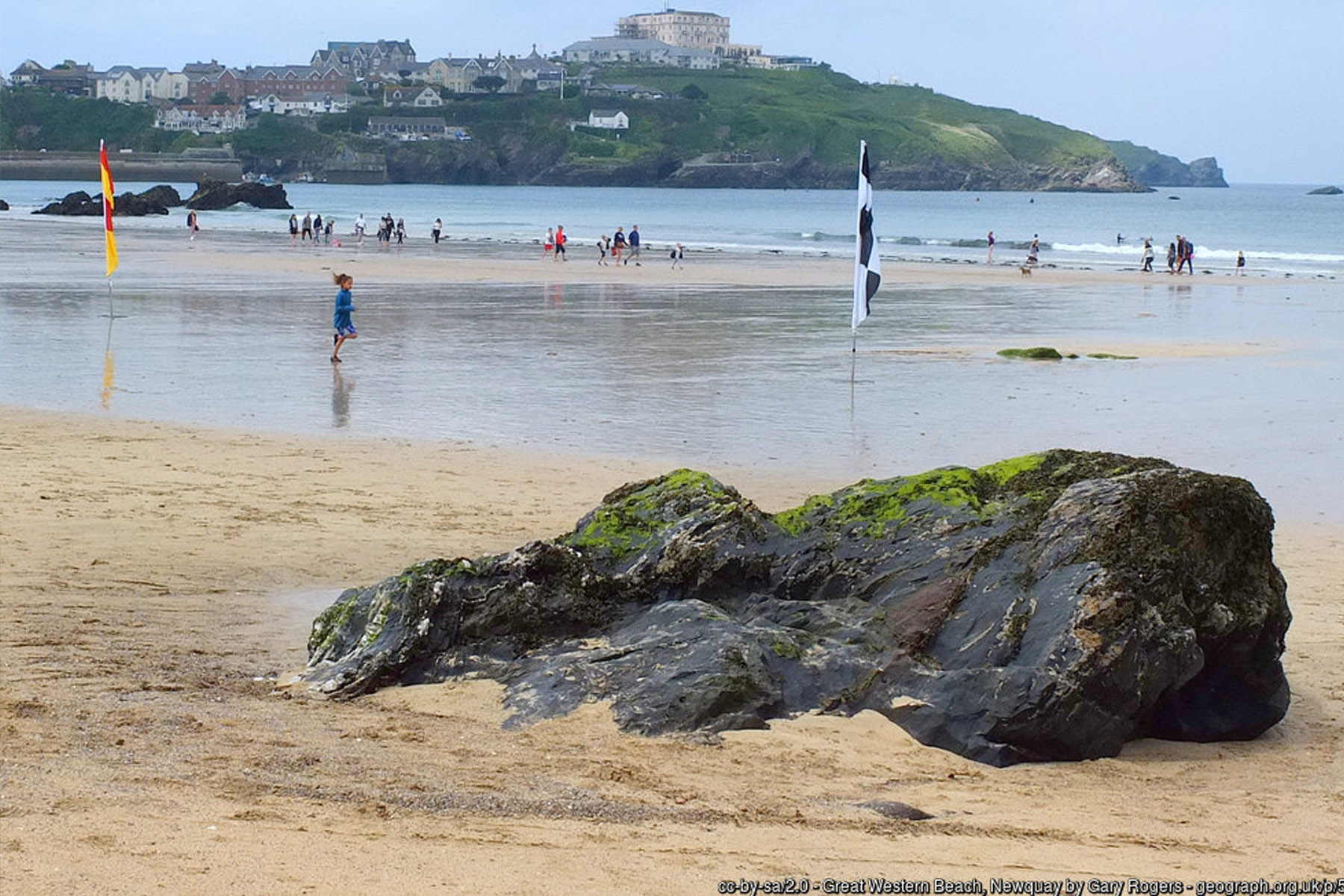
The beach holds a Seaside Award for 2026, reflecting good water quality, and its sheltered position and afternoon shade from the surrounding cliffs make it a popular, slightly cooler alternative on hot days. Toilets, cafes, and deckchair and surfboard hire are all close at hand, and it's popular with families, beginner surfers and more experienced wave-riders alike, since the swell here tends to be a touch more forgiving than at Fistral.
Getting there means using one of two small car parks either side of the railway station, or taking a chance on limited on-street parking along Cliff Road (the A392) - spaces fill quickly in peak season. Access down is via a fairly steep roadway rather than steps, though there's no dedicated wheelchair facility on site. Dogs are generally welcome here throughout the year.
The beach takes its name from the Great Western Railway, whose branch line reached Newquay in 1876 and turned a small port and mining town into one of Cornwall's first purpose-built seaside resorts. Before the railway arrived, and before the beach carried its current name, the sands below these cliffs were known locally as Bothwick Sands, after Bothwick House, a villa that once stood above the beach with its own flight of garden steps down to the shore - a name recorded in an 1881 seascape by the marine painter John Brett. As the Great Western Hotel and the railway that inspired its name came to dominate the resort's identity through the late nineteenth and early twentieth centuries, the beach beneath them was gradually renamed in turn, and Great Western Beach is the name that has stuck ever since.
The railway link isn't only historical. Newquay's branch line is still open today, a century and a half after it was built, and is still run under the Great Western Railway name - now the modern train operating company rather than the Victorian original, but a real continuity all the same. Trains run from Newquay station, a short walk up from the top of the beach, with a local service to the mainline at Par and, in summer, through carriages to London Paddington - a much-reduced echo of the branch line's Victorian and early-twentieth-century heyday, when the GWR extended the station's platforms and laid extra carriage sidings specifically to cope with the holidaymakers the line was bringing in.
The hotel that gave the beach its name still stands directly above it on Cliff Road. The Great Western Hotel was designed by the prolific Cornish architect Silvanus Trevail and opened in April 1879, reputedly the oldest purpose-built hotel in Newquay. The Great Western Railway was itself the hotel's principal shareholder for roughly its first four decades, a telling sign of how closely the resort's early growth and the railway company's commercial interests were tied together. The original, more country-house-like building was remodelled in 1931 into the three-storey Art Deco frontage seen today, with smooth rendered walls and symmetrical sash windows replacing the Victorian gables. It has entertained royal visitors over the years - the Prince of Wales, later Edward VIII, called in for tea in 1926 while meeting Duchy of Cornwall tenants - and today it operates as a 66-room hotel and pub under St Austell Brewery, which began a phased, multi-year refurbishment of the building during 2026.
The steep tarmac path down from Cliff Road beside the hotel - long known simply as The Slope - is more than just the practical way down to the sand; it has a fair claim to being one of the most historically significant stretches of pavement in British surfing. Stand-up surfing on modern boards is generally dated to 1963 on this beach, when a small group of enthusiasts began gathering here between sessions - an informal scene the surf historian Roger Mansfield has described as a "group of colourful characters who loitered on The Slope," regarded with suspicion by some locals at the time but now credited with producing Britain's earliest national and international surf champions and helping to found the country's surf culture more widely. The beach marked sixty years of that history in 2023, and it remains a popular place to learn today - a touch more sheltered, and generally a shade smaller in swell, than Fistral around the headland.
Geologically, the cliffs enclosing the beach are Devonian in age - laid down as marine mudstone, siltstone and fine sandstone roughly 360-385 million years ago, long before Cornwall's granite intrusions, and later folded and faulted during the Variscan mountain-building episode that shaped much of the county's coastline. That folding leaves the rock heavily fractured, and Newquay's town-centre cliffs, Great Western's included, are prone to periodic rockfalls, particularly after heavy rain. A significant rockfall here over Christmas 2025 led Cornwall Council to cordon off part of the beach while the site was assessed, and it's sensible to keep well back from the base of the cliffs and to respect any safety barriers or signage in place, in any season.
The tide governs almost everything about a visit. At high water the beach narrows right down to a thin strip beneath the sea wall, with waves rebounding off the cliffs on either side; by mid to low tide it opens out into a broad, gently shelving expanse of sand that merges into Tolcarne Beach on one side and Towan Beach on the other, forming one long continuous strand through the heart of Newquay Bay. Low tide is also the best time to explore the rock pools and small caves tucked into the surrounding cliffs, and to spot the old door set into the cliff face here - a curiosity that owes more to a long-vanished bathing-machine or storage structure than to any grander history, but a favourite with photographers all the same. A quick check of the tide times before setting off is worth it, since arriving at the top of the tide can mean finding barely any beach at all.
Great Western also sits directly on the South West Coast Path as it threads through the middle of Newquay, linking the clifftop walk above Tolcarne and Lusty Glaze to the east with Towan Beach, the harbour and Towan Head to the west - a rare stretch where the long-distance path runs through the heart of a working town rather than open coastline. It's a level, easy walk in either direction at clifftop level, with good views down over the beach and hotel even when the tide is in and the sand itself is out of reach. Cornwall's north coast is no stranger to erosion, and stretches of coast path elsewhere around Newquay have seen closures in recent years where the cliff edge has given way, so it's worth checking locally before planning a longer walk rather than assuming every section is open.
For all its surfing pedigree, Great Western remains one of Newquay's more family-friendly beaches simply by virtue of where it sits: a short, if steep, walk down from the town centre, shielded from the worst of the Atlantic swell by the headlands on either side, with cafes, toilets and hire facilities close enough at hand that a day here needs very little planning. Its afternoon shade from the surrounding cliffs, unusual among Newquay's beaches, makes it a genuinely useful alternative on the hottest days, and its central position means it's just as easy to combine with a wander round the shops or a trip to the harbour as to treat as a destination beach in its own right.
Visitor Information
Parking
Two small car parks either side of Newquay railway station, plus limited on-street parking on Cliff Road (A392) - space is tight in peak season.
Facilities
Toilets, cafes, and deckchair and surfboard hire close to the beach.
Disabled Access
Access is via a fairly steep roadway rather than steps, but there's no dedicated beach wheelchair or accessible facility on site. Not confirmed - parking is limited generally, so check with Cornwall Council for current Blue Badge provision before you travel.
Things to Do Nearby
- Blue Reef Aquarium, Towan Promenade, Newquay
- Newquay Zoo, Trenance Gardens, Newquay
- Trerice (National Trust), Kestle Mill, near Newquay
- Newquay Surf Beaches Map & Complete Surf Guide - other surf spots, schools and hire near Great Western
- Towan Beach, reachable along the sand at low tide
Places to Stay
Frequently Asked Questions
Page last updated: 8 September 2026.