Crantock Beach
National Trust Dunes Where the Gannel Meets the Sea
Crantock Beach, Crantock, near Newquay, Cornwall, TR8 5RN
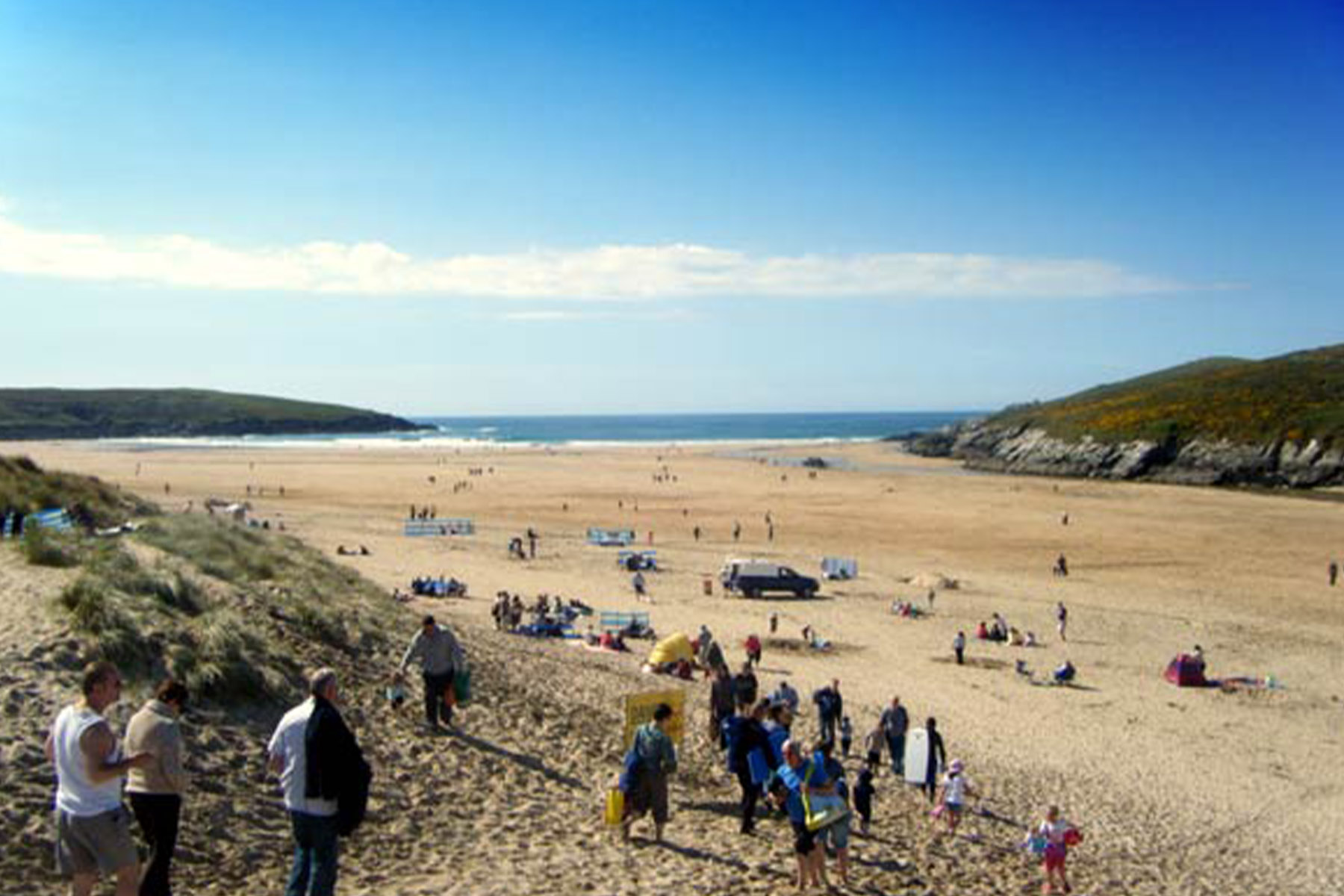
Crantock Beach is a broad, north-facing sweep of golden sand over a mile long, backed by some of the highest dunes on this stretch of coast, a few miles south-west of central Newquay across the Gannel estuary. Owned and managed by the National Trust, it has a wilder, more open feel than the town beaches, popular with families, dog walkers and surfers who don't mind the walk in from the car park.
Crantock's dunes are among the largest and most dynamic on this stretch of coast, rising in tall, wind-sculpted ridges behind the sand and running back into an open, undulating grassy plateau known as Rushy Green, crossed by sandy paths and dropping away in places to sheer, crumbling edges that the National Trust asks visitors to stay well back from. Geologically the two ends of the beach tell different stories: the low cliffs towards the southern end are cut from the same Devonian-age slates and sandstones, laid down roughly 400 million years ago and later folded during the Variscan mountain-building period, that form much of Cornwall's north coast, while the dunes themselves are a far younger, still-shifting deposit of wind-blown sand. The whole dune system has changed markedly over the past decade or so: nineteenth-century photographs of the site show no dune at all where the main car park now stands, and a retaining wall built in the 1890s to hold the river's course has itself been overtaken by the shifting sand. Rising sea levels and increased storminess are speeding the changes further, and the National Trust is now working with Cornwall Council on a "Making Space for Sand" project, gathering data on the beach and dune system, commissioning forecasting models and carrying out ecological surveys to work out how best to manage the dunes as the coast continues to move.
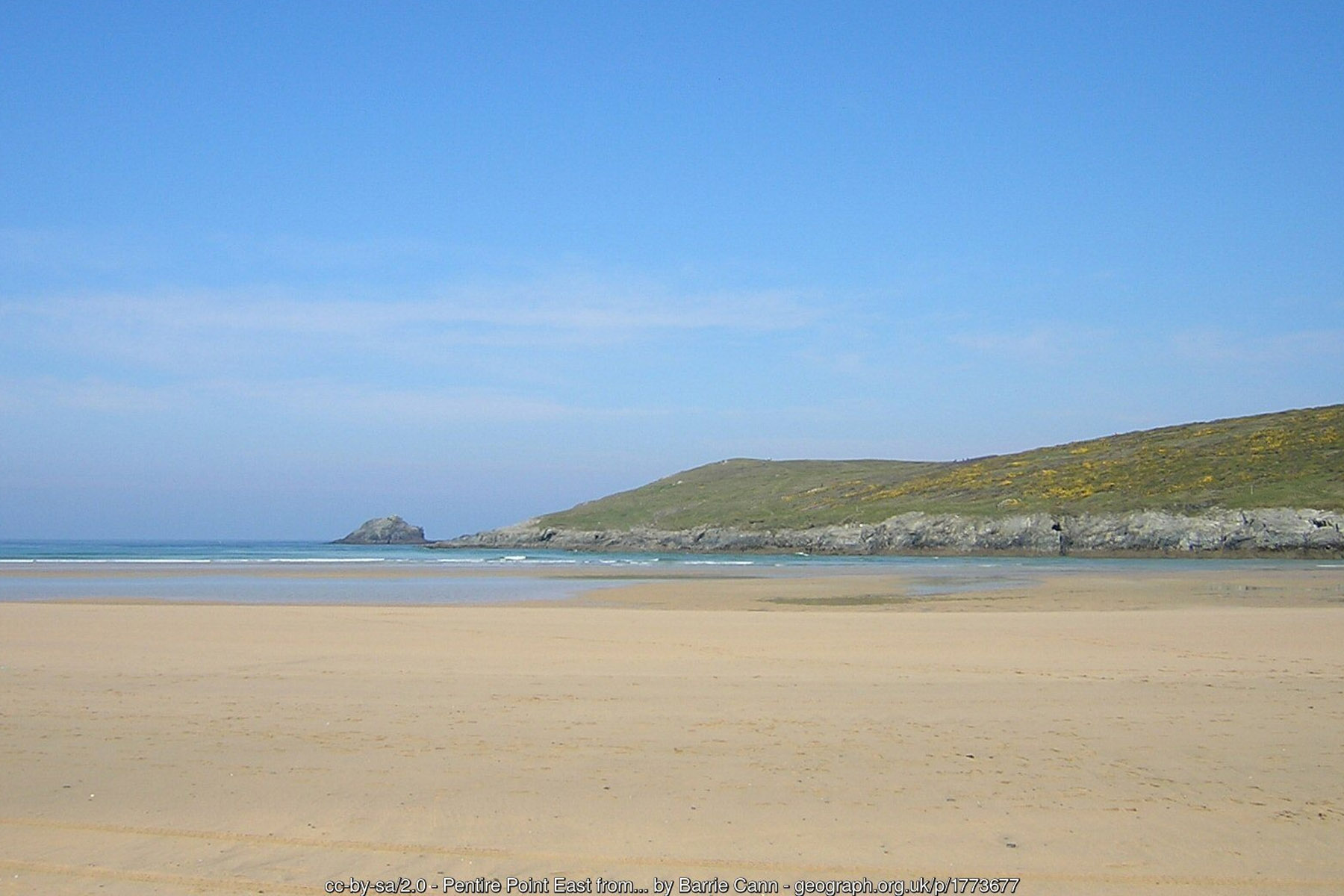
The view above, north across the water to Pentire Head, hints at how much of a barrier the Gannel has traditionally been. For centuries the only way from Crantock to Newquay on foot was to time a crossing to the tide - fording the estuary near where Fern Pit and the old Trenance boating lake sit today, in the couple of hours either side of low water, or waiting for a ferryman. A seasonal foot ferry still runs in summer, from around late May to early September, operated on demand from the Fern Pit side when the tide covers the low footbridge there; at low tide, walkers can simply cross on the sandbanks instead. The Gannel was once a proper working waterway rather than just a scenic detour: through the nineteenth century it was dredged so that small schooners and barges could carry tin, pilchards, coal, timber and sand upriver, and between 1858 and 1881 the Clemens brothers built ten schooners at a yard at Tregunnel on the estuary's banks, before the channel silted up too much for the trade to continue. Today the river is a haven for paddleboarders, kayakers and wildlife rather than cargo boats, but the crossing still calls for some planning around tide times, whichever way you're heading.
The River Gannel reaches the sea at the beach's northern end, and it's a genuine hazard rather than just scenery - currents around the river mouth can be strong, and people have got stuck in soft sand in the riverbed nearby, so it's best appreciated from a distance rather than as a swimming spot. The main National Trust car park sits above the beach (with a 2.1 metre height restriction from Easter to October), and while it's fairly pricey for non-members, it comes with toilets, baby-changing facilities and a seasonal kiosk, plus the Beachcomber cafe near the entrance.
Crantock itself, the small village a short walk inland from the beach, is one of the older settlements in this part of Cornwall. Its early name was Langurroc, Cornish for "the dwelling of the monks," and local tradition holds that a sixth-century Celtic saint, Carantoc, was blown into the Gannel estuary and founded a religious community here soon afterwards, on the site where St Carantoc's Church now stands. The present building is substantially Norman, though a college of secular canons was established here in the early thirteenth century under Bishop Bruerne, with the choir rebuilt in 1224 and a tower added not long after; the belfry collapsed onto the nave in 1412, and restoration dragged on for several years afterwards. The college was dissolved under Henry VIII, but the parish church survived and was heavily restored in the 1890s, when it gained a reputation for some of the finest wood carving in the West Country, including a rood screen carved in 1905 by Mary Rashleigh Pinwell - unusual for the period, being a woman's work - a Norman font dated to 1474, and a silver chalice from 1576. Some local accounts also suggest the original monastic settlement itself now lies buried somewhere beneath the dunes, swallowed by the same shifting sand that has reshaped the beach in more recent times.
The churchyard and village hold a few more curiosities: a set of stocks last recorded in use in 1817 - local tradition has it that the man locked in them escaped by climbing out through the bell tower - and, along the coast path towards Pentire, a carved head and inscribed poem tucked into a small cave known as Piper's Hole, cut in the early twentieth century by the artist Joseph Prater, reputedly in memory of a friend who drowned nearby. Older tales speak of a ghost said to haunt the Gannel crossing, the spirit of a man who drowned attempting to ford the river. Whatever the truth in any of it, the combination of ancient church, working river and restless dunes gives Crantock a layered sense of history that's unusual for a Cornish beach car park.
Dogs are welcome on Crantock all year round - it holds the National Trust's "Pawprint" rating for being especially dog-friendly, though leads are asked for near livestock grazing the dunes. RNLI lifeguards patrol through the main season, on a similar pattern to neighbouring beaches. Access from the car park is fairly steep, and there's no dedicated wheelchair provision, so it isn't the easiest beach in the area for limited mobility.
Beyond the sand, the wider Crantock area is good for wildlife. The Gannel estuary is an important feeding ground for wading birds, with curlew and oystercatcher regularly seen picking over the mudflats and margins at low tide, and the dune grassland of Rushy Green supports its own community of plants and invertebrates adapted to the loose, mobile sand. West Pentire, the headland just south of the beach towards Porth Joke, is managed partly as a nature reserve and is well known for its arable "poppy fields" - a vivid seasonal display of corn poppies and other wildflowers grown among the crops in early summer, a legacy of low-intensity farming maintained for conservation. Seals are sometimes spotted off the rockier coastline around Pentire Point and Polly Joke a little further south, and the whole stretch forms part of the South West Coast Path, with good clifftop walking in both directions from Crantock. Rock pools appear among the rocks towards the southern end of the beach at low tide, adding another reason to time a visit around the tide table rather than just the weather forecast.
Surf-wise, Crantock has a decent reputation of its own, generally a little more sheltered than the fully exposed Atlantic beaches closer to Newquay town, which makes it a popular choice for those still building confidence. The beach picks up west and north-westerly swell and works across most states of the tide, though like most of this coast it can turn choppy in onshore wind. Waves here tend to be manageable rather than heavy, which suits improving surfers and families with older children, while the sandbanks shift with the dune system itself, so the best peaks vary from year to year. Surf schools based in Newquay run lessons at Crantock at quieter times, and it's worth checking conditions locally before paddling out, especially near the river mouth where currents are strongest.
Visitor Information
Parking
National Trust car park above the beach (around 150 spaces), fairly pricey for non-members; 2.1m height restriction Easter to October, with overflow field parking at busy times.
Facilities
Toilets with baby-changing at the main car park, a seasonal kiosk on the beach, and the Beachcomber cafe near the entrance.
Disabled Access
Poor - a steep path leads from the car park down to the sand, with no dedicated wheelchair access or beach wheelchair hire. Not specifically confirmed - check with the National Trust car park team for current Blue Badge provision before you travel.
Things to Do Nearby
- Trerice (National Trust), Kestle Mill, near Newquay
- Newquay Surf Beaches Map & Complete Surf Guide - other surf spots, schools and hire near Crantock
- Porth Joke (Polly Joke), a coastal walk south along the National Trust coast path
- Fistral Beach, across the Gannel estuary in Newquay
Places to Stay
Frequently Asked Questions
Page last updated: 8 September 2026.