Harbour Beach
Sheltered Sand in a Working Harbour
Harbour Beach, Newquay Harbour, Newquay, Cornwall, TR7 1HR
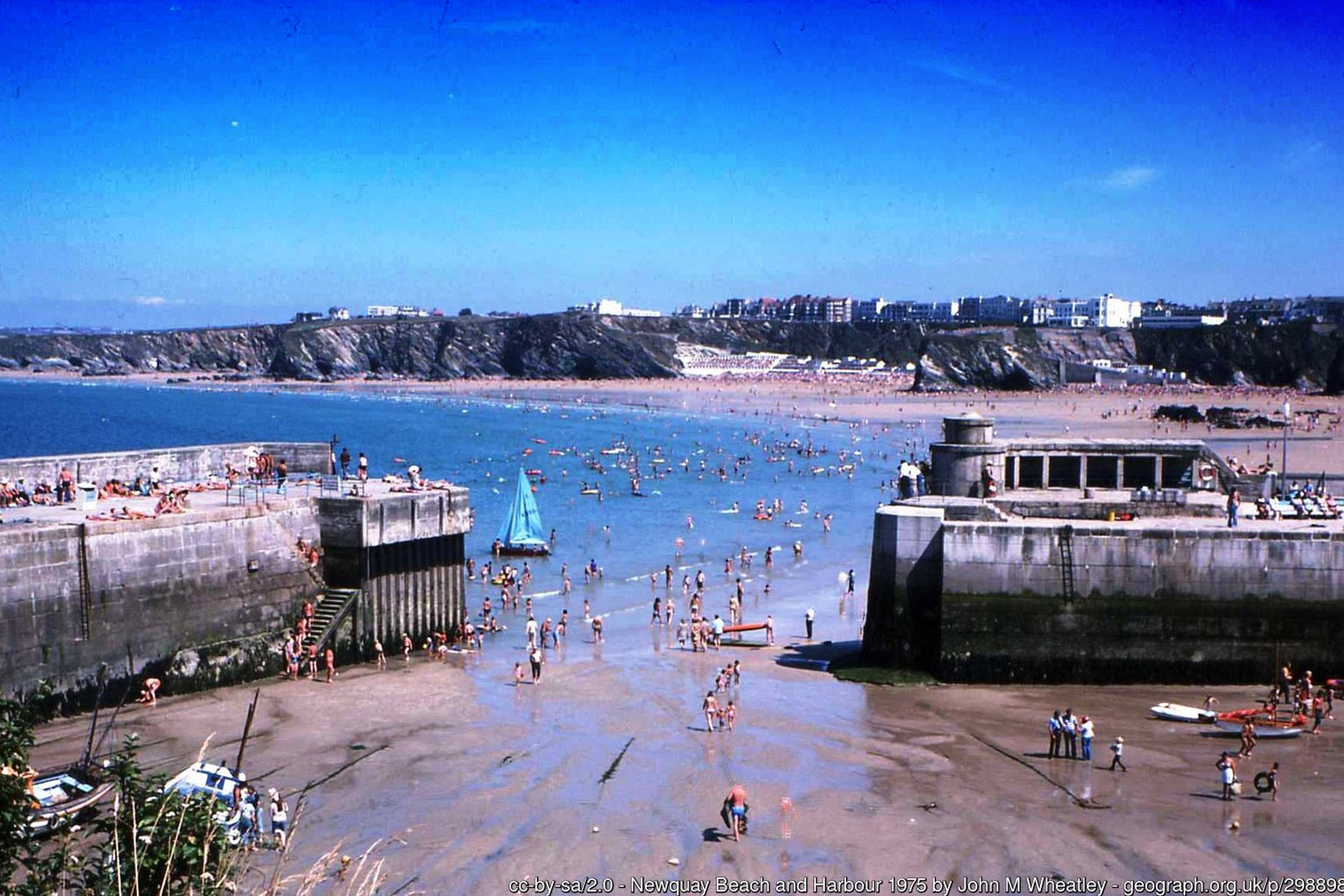
Harbour Beach is a small, north-facing patch of sand that appears within Newquay's working harbour as the tide drops, tucked between the harbour walls a short walk from Towan Beach. It's easy to overlook among Newquay's bigger-name beaches, but it has its own quiet appeal: the harbour is still a working fishing port, home to a resident seal known locally as "Sammy," and the sheltered water makes it one of the calmest, safest places to swim or paddle in the resort.
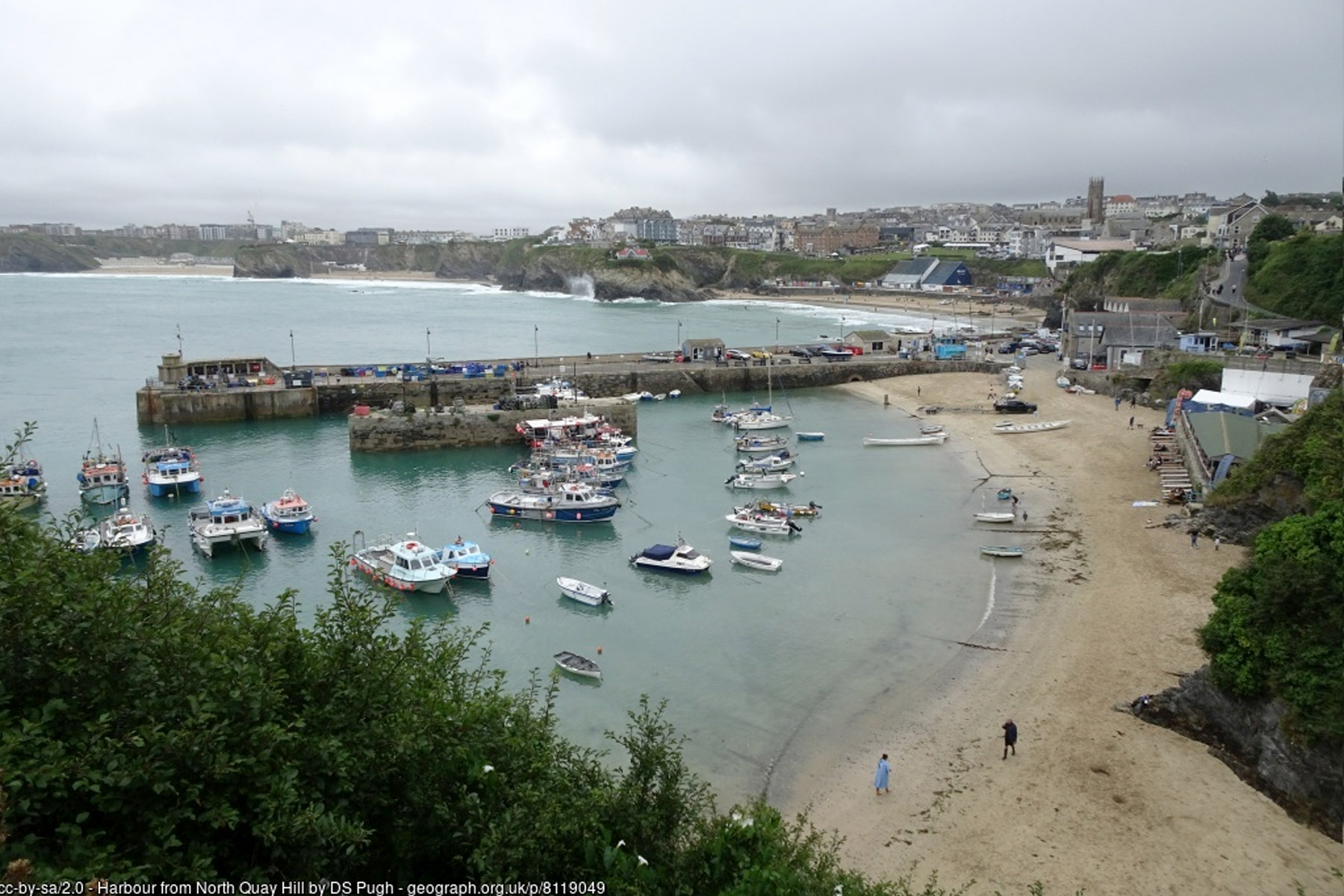
Newquay itself takes its name directly from this harbour. Before a quay existed here, the settlement was known by its Cornish name, Towan Blystra; in 1439 Edmund Lacy, Bishop of Exeter, granted an indulgence to help fund the building of a "new kay," or quay, to give fishing boats safer shelter on this exposed stretch of coast. Over time the name of the quay was adopted for the town that grew up around it, and Newquay stuck. Harbour-building remained a slow, piecemeal business for a long time afterwards, with successive wooden and part-stone structures repaired and re-built as Atlantic storms damaged them, long before the harbour visitors see today took its current shape.
The stone harbour familiar now dates mostly from the 19th century. Richard Lomax, who bought the manor in the early 1830s, began building the present north and south piers in 1833 but died in 1836 with the work unfinished. The Fowey-based mining and shipping entrepreneur Joseph Treffry bought the harbour in 1838 and completed and enlarged it, driving a tunnel through the headland behind the quay and linking it to a tramway so that wagon-loads of minerals could be lowered straight down to the waiting ships rather than carted by road. Ships leaving Newquay in this period carried out china clay, iron ore and grain, and brought back coal, manure and limestone; a further jetty was added around 1870 as trade grew with the newly arrived Cornwall Minerals Railway. Treffry died in 1850, by which point Newquay's harbour had become one of the busiest small ports on Cornwall's north coast.
Newquay's fortunes as a mineral port didn't last much beyond the turn of the century. A passenger railway reached the town in 1876, and as visitors increasingly discovered Newquay's beaches and mild climate, tourism gradually overtook shipping as the mainstay of the local economy; china clay traffic shifted increasingly to bigger, deeper harbours such as Fowey and Par, better suited to the larger vessels coming into use.
At low tide a large expanse of sand forms, stretching from the harbour entrance all the way towards Lusty Glaze, popular with families for its safe, sheltered bathing away from the Atlantic swell that draws surfers to the town's west-facing beaches. At high tide, the beach is entirely covered and the harbourside becomes more of a place to eat, watch the boats, and enjoy the working-harbour atmosphere instead.
Fishing has an even longer history here than the mineral trade. Newquay had its own fish market by at least the late 16th century, and for hundreds of years afterwards its economy leaned heavily on pilchards, caught in vast seine nets when huge shoals moved close inshore each summer and autumn. Spotting them was a specialist job: a lookout, or "huer," stood watch from a small whitewashed building on Towan Head, above Fistral, known today as the Huer's House (or Huer's Hut). A plaque on the building claims origins as far back as the 14th century, possibly first used as a hermitage or beacon, though the surviving structure - a Grade II* listed building since 1951 - is thought to date mainly from the late 18th or early 19th century, and it was restored in 1836 and again, after a public fundraising campaign, in 2014. When the huer saw the tell-tale reddish-brown stain of a shoal in the water and the gulls diving to feed on it, the cry went up - "Heva! Heva!" - and he used a trumpet and waved branches to direct the seine boats below to encircle the fish.
Once landed, pilchards were carried to fish cellars nearby for processing - salted in bulk and pressed before being packed into casks. Several such cellars once stood just north of the harbour; two of them, known as the Fly Cellars and the Active Cellars, survive today as a physical link to an industry that had all but disappeared by the early 20th century as shoals grew scarcer and tastes changed.
Newquay Harbour remains a working harbour rather than a museum piece. A small fleet still puts out to pot for crab and lobster, alongside pleasure boat trips and wildlife-watching cruises that head out along this stretch of coast in search of seals, dolphins and seabirds. Newquay's RNLI lifeboat station sits above the harbour, and Newquay Rowing Club, one of Cornwall's traditional pilot gig clubs, keeps its six-oared gigs close by - the old Treffry Tunnel, whose upper entrance was rediscovered and made safe in the late 1980s after decades hidden beneath the town, is used by the club today.
The RNLI has kept a lifeboat here since 1860, one of the longer-serving stations on this coast, though the service closed between 1934 and 1940 and was not permanently re-established until 1965. Its early 20th-century home stood high above the harbour on Towan Head, reached by a slipway pitched at around 1-in-2.5, before the station moved back down to its present position at the harbour head in 1994, alongside a relocated Seamen's Mission chapel - reportedly making it the only RNLI lifeboat station in the country with a church attached.
At low tide the exposed sand and the harbour walls themselves are worth a closer look: shallow pools among the rocks and along the base of the piers hold shore crabs, blennies, limpets and anemones, while oystercatchers, turnstones and gulls pick over the wet sand and slipways as the water drops. It's a much gentler introduction to Cornish rockpooling than the more exposed reefs further round the coast, thanks to the shelter the harbour walls provide.
The rock the harbour is cut into belongs to the Meadfoot Group, a Devonian-age sequence of mudstone, siltstone and sandstone laid down some 400 million years ago, with occasional thin bands of limestone - the same tough, folded rock that forms Towan Head and the cliffs around Fistral and Watergate Bay. It's this resistant headland, rather than any softer, more easily eroded coastline, that gives Newquay's harbour its naturally sheltered curve and made it worth the centuries of effort to build a stone quay here against the full force of the Atlantic.
Getting down involves a steep sloping road into the harbour, and parking right at the water's edge is limited to a very small car park with two disabled bays; most visitors park in a Newquay town centre car park and walk down instead. Dogs are allowed in the harbour all year round, along with neighbouring Towan and Great Western beaches, and toilets are available on site.
For a longer look at this stretch of coast, the South West Coast Path climbs out of the harbour and over Towan Head past the Huer's House and on towards Fistral Beach, with views back over the harbour walls, the working boats and, at low tide, the ribbon of sand that links Harbour Beach towards Lusty Glaze. Early morning, or the couple of hours either side of low tide when the sand is at its widest and the boats are out, tend to be the most rewarding times to visit.
Visitor Information
Parking
A very small car park down at the harbour, reached via a steep sloping road; Newquay town centre car parks are a more reliable alternative.
Facilities
Toilets in the harbour, plus cafes and restaurants along the quay.
Disabled Access
Fair to poor - a steep slope or a number of steps lead down into the harbour, more challenging than most other Newquay beaches. Two designated disabled parking spaces are available in the small harbour car park.
Things to Do Nearby
- Blue Reef Aquarium, Towan Promenade, Newquay
- Newquay Zoo, Trenance Gardens, Newquay
- Trerice (National Trust), Kestle Mill, near Newquay
- Newquay Surf Beaches Map & Complete Surf Guide - other surf spots, schools and hire near the harbour
- Towan Beach, a short walk around the headland
Places to Stay
Frequently Asked Questions
Page last updated: 8 September 2026.