Holidays in Rock, North Cornwall – Beach, Daymer Bay & the Camel Estuary

Rock in North Cornwall
North Cornwall Towns and Villages | Padstow | Wadebridge | The Camel Estuary | Rock | Daymer Bay | Polzeath | Port Isaac | Trebarwith Strand | Tintagel | Bossiney Cove | Rocky Valley | Boscastle | Crackington Haven | Bude | Launceston | Camelford | Altarnum | Bodmin |
On This Page
- Holidays in Rock & Daymer Bay
- Best Time to Visit
- Rock Beach & the Padstow Ferry
- Daymer Bay & Trebetherick
- St Enodoc Church & John Betjeman
- Sailing & Watersports
- Things to Do
- Walks around Rock & the Camel Estuary
- History of Rock
- Wildlife, Dunes & the Estuary
- Notable People
- Local Events
- Polzeath, Padstow & Wadebridge
- Where to Stay & Practical Tips
- Visitor Information
- Stay & Explore near Rock
- Family Holidays & Short Breaks
- Frequently Asked Questions
HOLIDAYS IN ROCK & DAYMER BAY
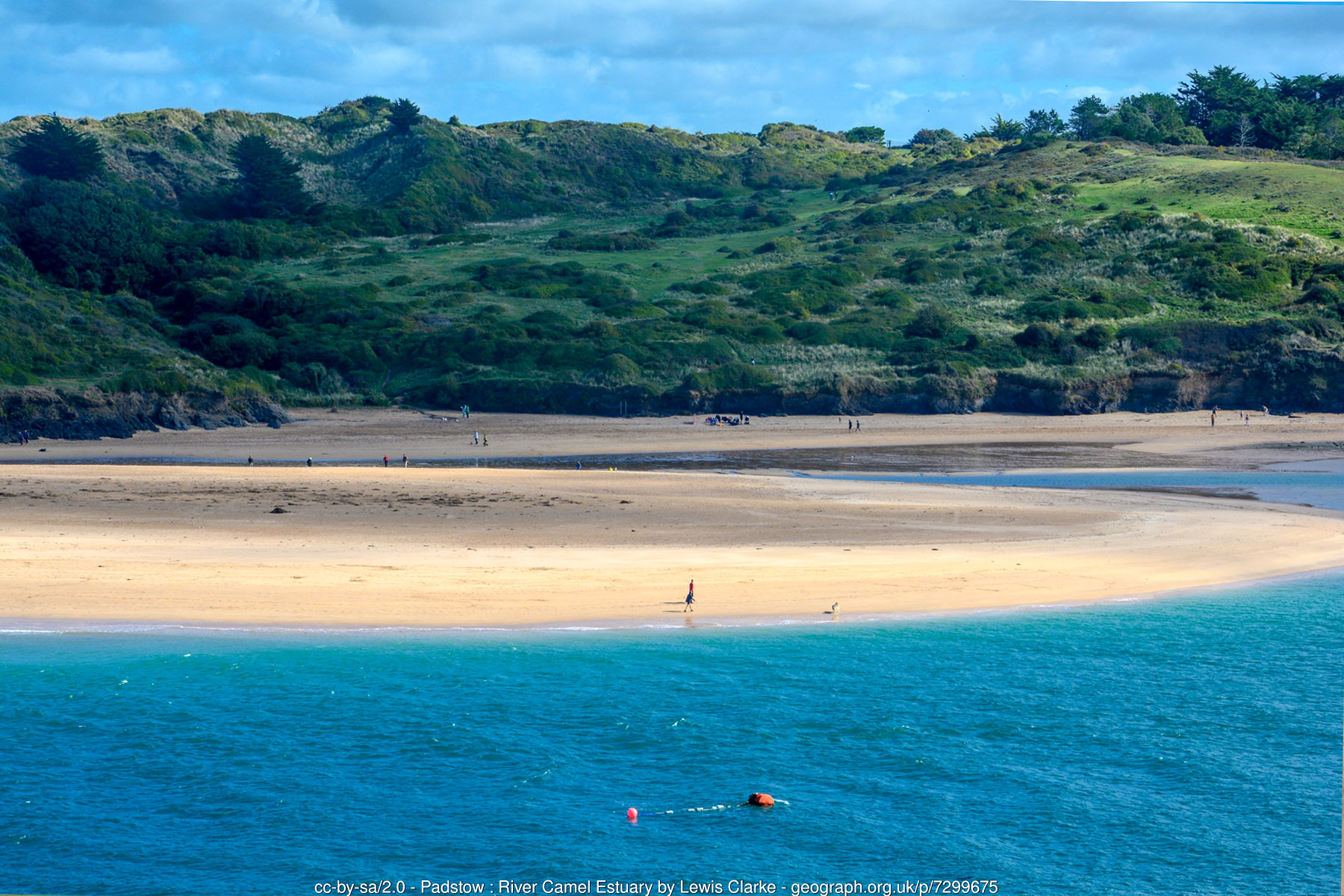
Rock is a small village on the eastern shore of the Camel estuary in North Cornwall, looking straight across the water to Padstow. Its name is misleading: what draws visitors here is not rock but sand – long, pale beaches backed by high dunes that run north from the village past Brea Hill to Daymer Bay and Trebetherick, exposed for the best part of two miles at low tide.
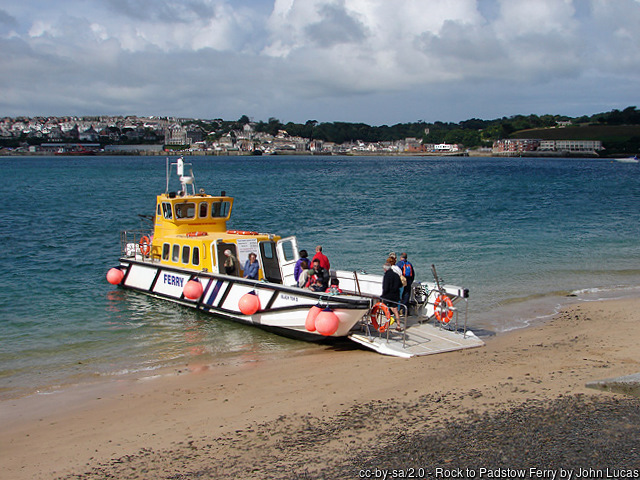
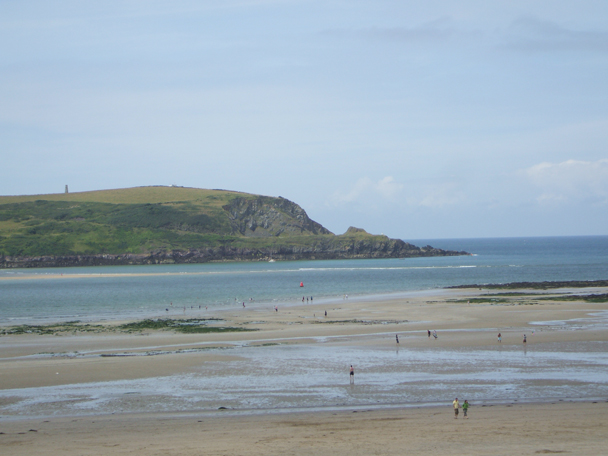
Sheltered from the open Atlantic by Pentire Point and Stepper Point, the estuary off Rock has calmer water than the surf beaches nearby, and for well over a century it has been one of Cornwall’s great centres for sailing and watersports. Dinghies race off the beach on summer evenings, water-skiers and paddleboarders cross the bay, and the little Black Tor Ferry shuttles foot passengers to and from Padstow, as a ferry has done at this crossing since at least 1337.
Rock has a reputation as one of the most fashionable seaside villages in Britain – newspapers have called it “Chelsea-on-Sea” and the “Saint-Tropez of Cornwall”, and it has the highest proportion of second homes in the county. Yet its beaches remain thoroughly public and family-friendly, and away from the busiest summer weeks it is a peaceful place of dunes, birds and wide estuary views.
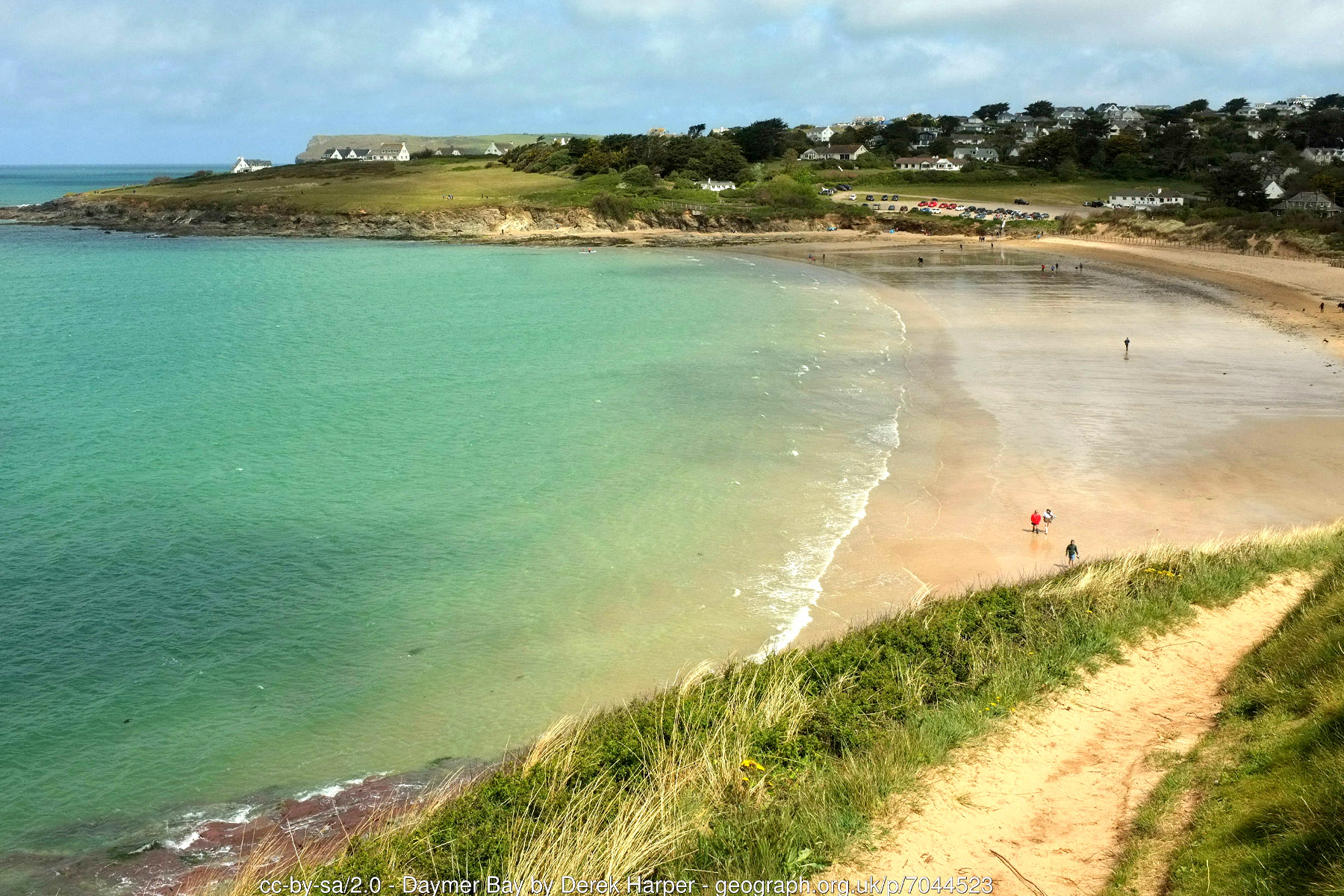
Just to the north, Daymer Bay is one of the best family beaches in the area, with gently shelving sand and rock pools. Hidden among the dunes behind it is the tiny church of St Enodoc, once almost swallowed by the sand and now the resting place of the poet Sir John Betjeman, who spent his childhood holidays at Trebetherick and wrote lovingly of this coast. Beyond Trebetherick Point lie Greenaway beach and the surf of Polzeath.
Rock is a superb base for exploring North Cornwall. Padstow is ten minutes away by ferry, the market town of Wadebridge and the Camel Trail are about 6 miles inland, and Port Isaac, Pentire Point and Tintagel are all within easy reach. The famous links of St Enodoc Golf Club run through the dunes between the village and Daymer Bay.
Holiday accommodation in Rock and the surrounding villages of Trebetherick, Pityme and St Minver ranges from estuary-view houses and cottages to B&Bs, holiday parks and campsites – see self-catering in Rock and all holiday accommodation in Rock.
Best Time to Visit Rock
July and August are Rock’s busiest months, when the village is alive with sailing, watersports and summer visitors, the ferry runs daily and the beaches are at their liveliest – but accommodation and parking are in great demand, so book early. Late July brings the Rock Oyster Festival, one of the highlights of the local summer.
Spring and early autumn are ideal for walking the dunes and the coast path, birdwatching on the estuary and enjoying the beaches in peace, with mild weather and wonderful light. In winter Rock is quiet and many second homes are empty, but the estuary is full of wading birds, the ferry still runs from Monday to Saturday and a bracing walk to Daymer Bay and St Enodoc is a joy on a clear day. Whatever the season, check the tide times – they shape every day here.
↑ Back to top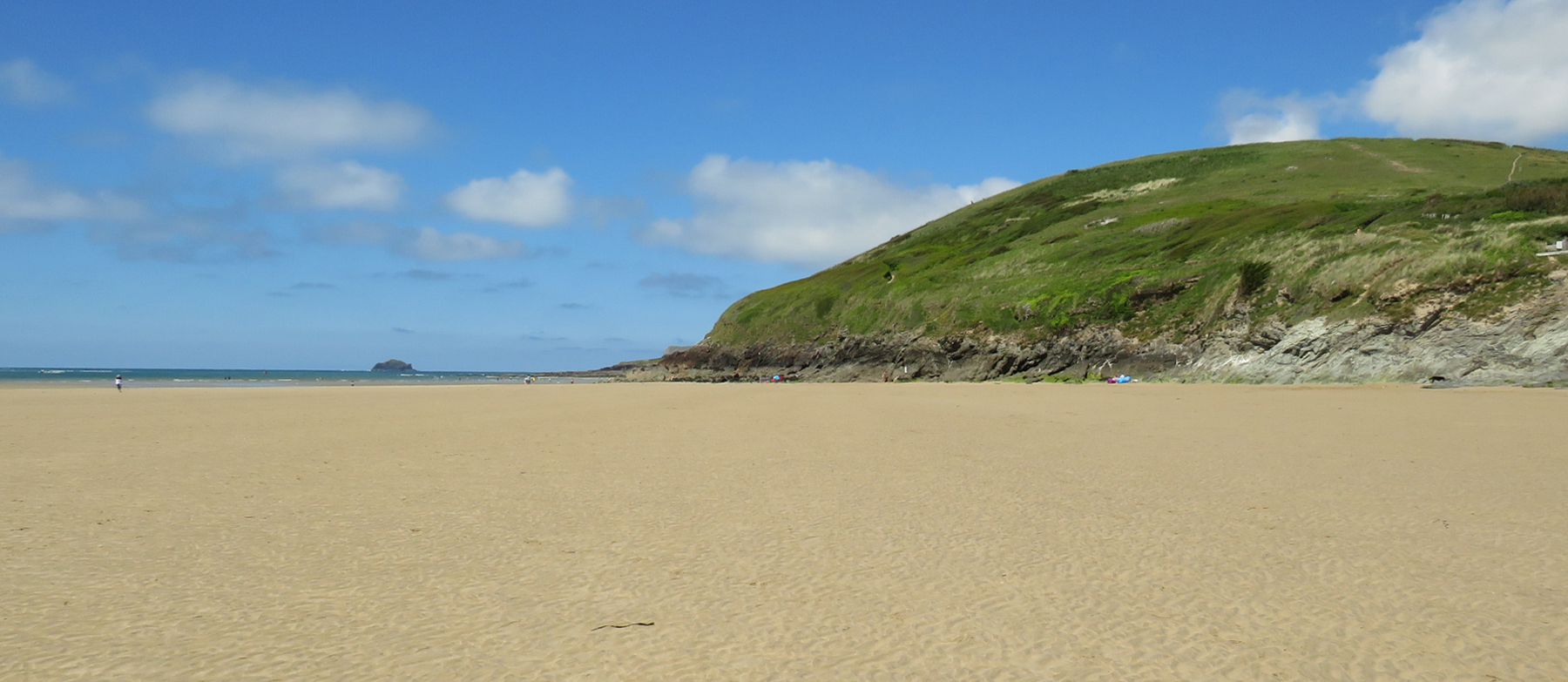
ROCK BEACH & THE PADSTOW FERRY
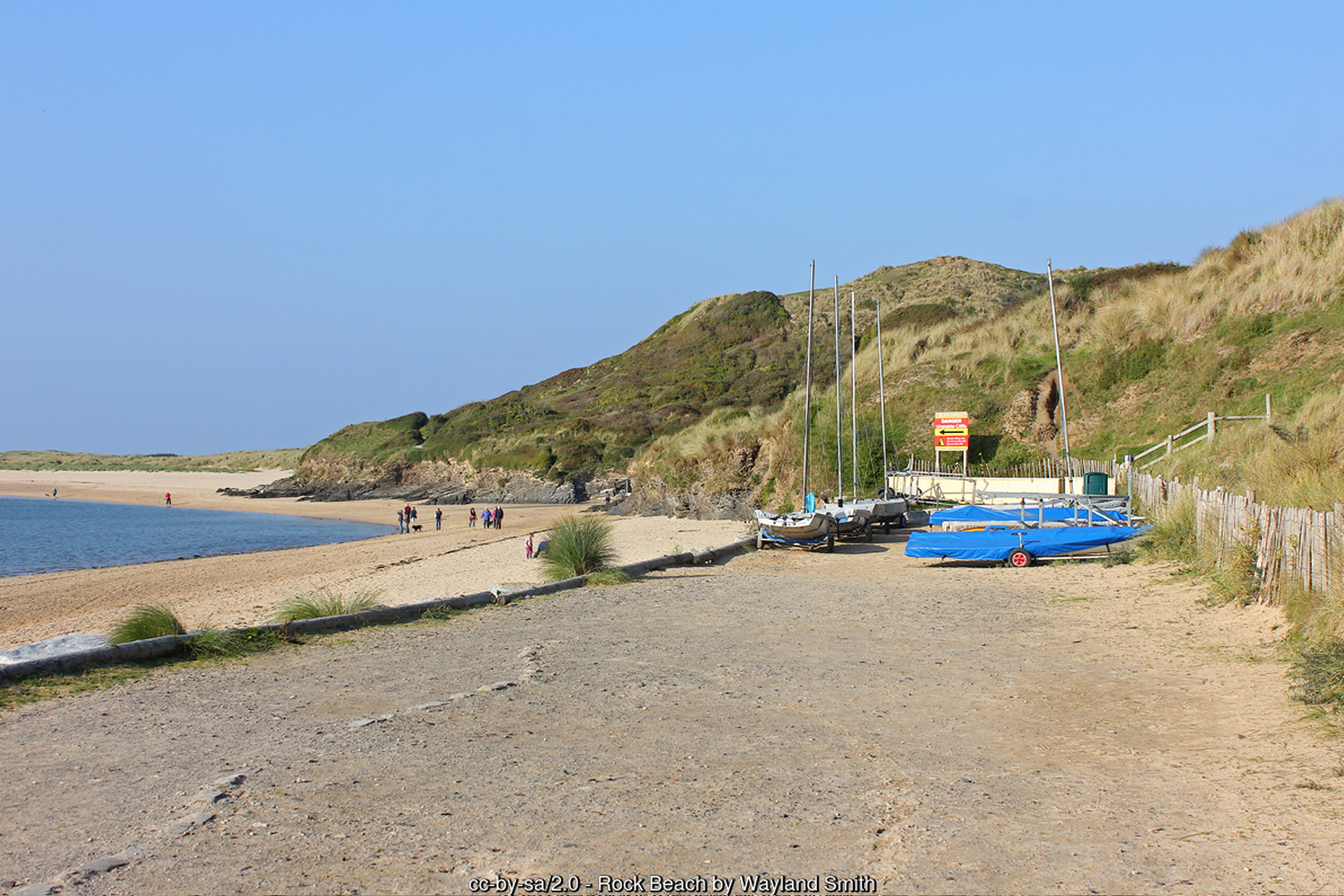
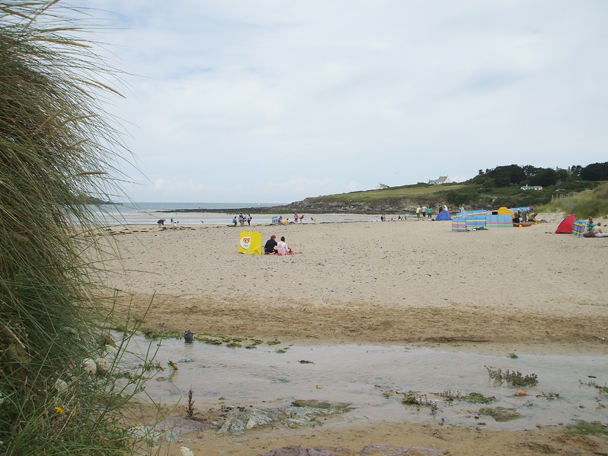
Rock’s beach is really the southern end of a long sweep of sand that runs north past Brea Hill to Daymer Bay. West-facing across the estuary to Padstow and Stepper Point, it shelves gently and is sheltered from the Atlantic swell, and at low tide it becomes a vast playground of sand and shallow pools. Behind it rise Rock Dunes, a Site of Special Scientific Interest for their dune grassland and wild flowers. Easy, level access from the main car park makes it one of the most convenient beaches in the area, and dogs are welcome all year round.
The Black Tor Ferry is one of the oldest passenger crossings in Cornwall, recorded here since at least 1337 – the name Black Tor survives from the medieval name for Rock. Today it is run by Padstow Harbour Commissioners as a foot-passenger and cycle ferry, taking about ten minutes to cross. It runs daily in summer and Monday to Saturday in winter, landing at different points on both shores depending on the tide, so look for the signs and check the timetable. The ferry is also part of the South West Coast Path, saving walkers a long detour inland via Wadebridge.
The estuary is a busy, working waterway. The Rock RNLI inshore lifeboat station, established in 1994, operates a D-class lifeboat from Ferry Point, covering the estuary and the beaches nearby. There are no lifeguards on Rock beach: the tide runs fast in the main channel, so stay in your depth close to the shore and keep well clear of the ferry landing and moored boats.
A day on Rock beach changes with the tide. At high water the sand narrows to a strip below the dunes and the estuary fills with boats, making it a lively place to sit and watch the sailing, the ferry and the water-skiers. As the tide drops, a huge expanse of firm, gently sloping sand appears, perfect for ball games, kite flying, sandcastles and long barefoot walks, and shallow pools warm up in the sunshine for paddling toddlers. Facilities are close at hand, with public toilets at the beach car park and cafés, delis and shops in the village a short walk away.
Crossing to Padstow is one of the great pleasures of a stay at Rock. In a few minutes you can swap the quiet dunes for the bustle of Padstow’s harbour, with its fishing boats, seafood restaurants, shops and galleries, and return in the evening as the light softens over the estuary. Families often cross for the day, crabbing on the harbour wall or visiting the National Lobster Hatchery, while walkers use the ferry to explore the coast path towards Stepper Point. In the busiest weeks there can be queues at peak times, so allow a little extra time, and check the time of the last crossing before you set off.
↑ Back to top
DAYMER BAY & TREBETHERICK
Daymer Bay is a wide, west-facing beach of fine golden sand about half a mile long, tucked inside the mouth of the Camel estuary between Trebetherick Point and the grassy dome of Brea Hill. Because it lies within the shelter of the estuary, its water is usually calmer and more gently shelving than the surf beaches on the open coast, which has made it one of the most popular family beaches in North Cornwall. Low tide reveals rock pools along the northern edge and, on the very lowest tides, the stumps of an ancient submerged forest.
At low water the sands link up with the beach at Rock, tempting many visitors into a long walk round Brea Hill – but the route floods well before high tide, so keep an eye on the time and turn back in good time. Daymer Bay has no RNLI lifeguards, and the currents in the estuary channel are strong, so keep to the shallows, especially with children. The bay is also a favourite with windsurfers and kitesurfers when the wind is right.
The pay-and-display Daymer Bay car park lies at the end of Daymer Lane from Trebetherick, about five minutes’ walk from the sand, with public toilets and a seasonal beach shop and café nearby. Access from the car park to the beach includes steps and soft sand, so it is not easy for wheelchairs. Above the bay, the village of Trebetherick is a quiet cluster of holiday homes among the lanes, made famous by Betjeman’s poetry. See our Daymer Bay beach guide for more.
Daymer Bay is at its best on a sunny morning at low tide, when the sand stretches far out towards the estuary channel and there is room for everyone. Children can spend hours exploring the rock pools beneath Trebetherick Point, hunting for crabs, shrimps, anemones and seaweeds, while the soft sand higher up the beach is perfect for sandcastles and picnics. Because the water warms quickly over the shallow sand, paddling and gentle swimming close to the shore are popular on calm days – but always watch the tide and never go out of your depth.
The views from Daymer Bay are among the finest on the Camel estuary. Across the water lies Padstow, with the daymark on Stepper Point at the estuary mouth and the long sandbanks of the Doom Bar beyond, while behind the beach the dunes rise towards Brea Hill and St Enodoc. A climb to the top of Brea Hill is well worth the effort, giving a superb panorama over Daymer Bay, Rock, the estuary and the open sea. Evenings are lovely too, when the sun sets over the estuary mouth and the beach empties of day visitors.
Daymer Bay and Trebetherick are also an excellent starting point for exploring the wider area. The coast path leads north from the beach over Trebetherick Point to Greenaway beach and on to Polzeath and Pentire Point, while at low tide you can walk south along the sands to Rock and the ferry to Padstow. St Enodoc Church is a short walk inland across the golf course, and the lanes of Trebetherick lead up towards St Minver. With so much on the doorstep, many visitors find they hardly need their car once they arrive.
↑ Back to top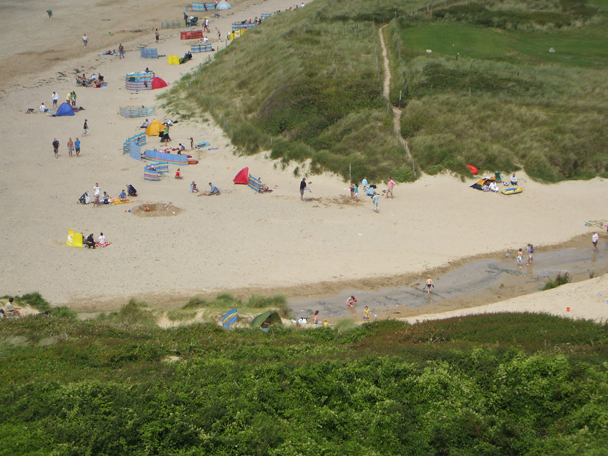

ST ENODOC CHURCH & JOHN BETJEMAN
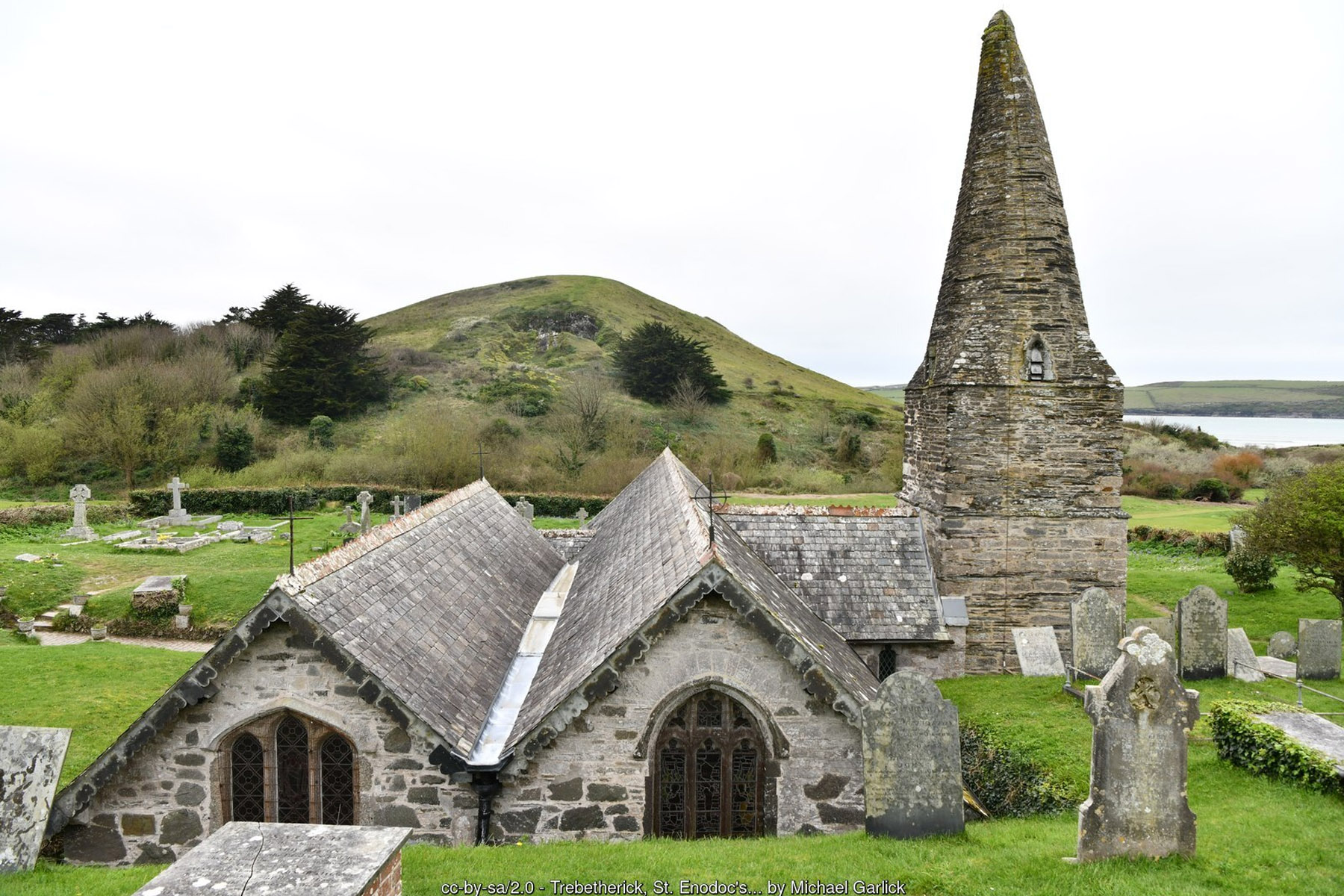
Half hidden in the dunes behind Daymer Bay, beside the fairways of St Enodoc golf course, stands the little church of St Enodoc. Its origins lie in a hermitage of the 6th-century saint Enodoc, and the present building dates back at least to the 12th century, with later additions and a distinctive crooked broach spire. For centuries the church fought a losing battle with the shifting dunes: locals nicknamed it “Sinking Neddy”, and by the 18th century it was so deeply buried that the vicar is said to have entered through a hole in the roof to hold the one service a year needed to keep it consecrated.
The sand was finally dug away and the church restored in 1863–64, and the dunes around it were planted and stabilised. Today it is one of the most atmospheric places in Cornwall, reached by footpaths across the golf course from Daymer Bay and Rock – please keep to the marked paths and watch out for golfers.
Sir John Betjeman (1906–1984), Poet Laureate from 1972, spent his childhood holidays at Trebetherick and returned throughout his life. St Enodoc, Daymer Bay and the surrounding dunes appear again and again in his poems and broadcasts, and he asked to be buried here. His grave, with its decorated slate headstone, lies just inside the lychgate and is visited by admirers from all over the world.
↑ Back to top
SAILING & WATERSPORTS
Rock is one of Cornwall’s leading watersports centres. The sheltered, relatively flat water of the estuary and the steady breezes make it ideal for dinghy sailing, and Rock Sailing & Waterski Club, based in a converted warehouse on the wharf, runs racing and youth sailing through the season. On summer evenings the estuary fills with white sails.
Waterskiing, wakeboarding, paddleboarding and kayaking are all popular, with schools and hire on the beach in season, and Daymer Bay attracts windsurfers and kitesurfers when the wind blows from the right direction. Boat trips and fishing trips run from Rock and Padstow into Padstow Bay, where seals, seabirds and sometimes dolphins can be seen.
Whatever you do on the water, wear a buoyancy aid, check the tide and forecast, and take local advice: the estuary channel has strong currents, the Doom Bar sandbank at its mouth has wrecked many ships, and the ferry and moored boats need plenty of room. Book lessons and hire with established, qualified providers.
Rock is a particularly good place to learn. The calm, sheltered water inside the estuary, away from the Atlantic surf, gives beginners the confidence to try sailing, waterskiing, paddleboarding or kayaking for the first time, and many families return year after year as children progress from taster sessions to racing. Taster lessons, courses and equipment hire are available through the summer from local schools and clubs, and booking ahead is wise in July and August, when sessions fill quickly.
Paddleboarding and kayaking are an especially peaceful way to explore. On a calm day you can paddle along the shoreline past the dunes towards Brea Hill and Daymer Bay, watching wading birds on the sandbanks, or explore the quieter creeks and inlets further up the estuary towards Wadebridge. Plan your trip around the tide, as the flow in the main channel can be strong, keep clear of the ferry route and moored boats, and let someone ashore know where you are going and when you expect to return.
↑ Back to top
Sailing at Rock
Rock Sailing & Waterski Club, on the wharf, runs dinghy racing and youth sailing in season. Watersports schools on the beach offer waterskiing, wakeboarding, paddleboarding and kayaking – book ahead in summer.


THINGS TO DO IN ROCK & DAYMER BAY
A holiday at Rock is about the beach and the water, but there is plenty more to fill the days. Walk the dunes to St Enodoc, take the ferry for lunch in Padstow, play a round on one of the most famous links courses in Britain, or simply watch the boats and the changing light on the estuary from the beach.
For families, Daymer Bay’s rock pools and shallow water, the long sands at low tide and a ferry ride to Padstow for crabbing on the harbour wall make easy, memorable days. For food lovers, Rock has some well-regarded restaurants, delis and pubs, and the area’s seafood is superb; Sharp’s Brewery, founded in Rock in the 1990s and best known for Doom Bar ale, is based just outside the village.
On rainy days, head across the estuary to Padstow’s shops and the National Lobster Hatchery, or inland to Wadebridge, Bodmin Jail and the Bodmin & Wenford Railway. Here are some of the best things to do in and around Rock.
- Cross to Padstow on the Black Tor Ferry – see our Padstow guide.
- Spend a day at Daymer Bay – rock pools, shallow water and soft sand. Daymer Bay beach guide.
- Visit St Enodoc Church and John Betjeman’s grave in the dunes.
- Try sailing, waterskiing or paddleboarding on the sheltered estuary.
- Play golf at St Enodoc – see our Cornwall golf guide.
- Walk round Brea Hill at low tide from Rock to Daymer Bay, keeping an eye on the tide.
- Learn to surf at nearby Polzeath – see our Polzeath surf guide.
- Walk the coast path to Polzeath, Pentire Point and The Rumps – Pentire Point & The Rumps walk.
- Cycle the Camel Trail from Wadebridge or Padstow – Camel Trail guide.
- Go birdwatching on the estuary and at the Walmsley Sanctuary near Chapel Amble.

St Enodoc Golf Club
Two links courses, the Church Course and the Holywell Course, run through the dunes between Rock and Daymer Bay. The Church Course is ranked among the finest links in Britain. Book tee times directly with the club.
WALKS AROUND ROCK & THE CAMEL ESTUARY
Walking is one of the best ways to enjoy Rock. At low tide you can walk the sands from the village round Brea Hill to Daymer Bay, returning over the dunes or along the lanes, or follow the waymarked path across St Enodoc golf course to the church. The South West Coast Path links Rock with Daymer Bay, Trebetherick Point, Greenaway beach and Polzeath, then continues round Pentire Point and The Rumps towards Port Quin and Port Isaac.
The Black Tor Ferry carries the coast path across the estuary, so walkers can continue from Padstow along the far shore to St George’s Cove, Hawker’s Cove and Stepper Point. Inland, quiet lanes lead to the villages of St Minver and Pityme, and the little church of St Michael at Porthilly stands right on the shore of Porthilly Cove, just south of Rock.
Some routes are sandy, uneven or exposed, so wear proper footwear, take water and check the weather. If you plan a one-way walk, check the bus or ferry timetable for your return – services are limited and may finish earlier than you expect. Keep dogs under control near grazing animals and nesting birds, and stay on marked paths across the golf course and through the fragile dunes.
One of the most popular circular walks starts in Rock and follows the beach north past Brea Hill to Daymer Bay at low tide, before returning through the dunes past St Enodoc Church and across the golf course on the public footpath. The route is only a few miles long but packs in some of the finest scenery on the estuary, from wide sandy beaches and turquoise water to the hidden church and Betjeman’s grave, with superb views across to Padstow. Allow time to linger, and check the tide before setting out along the shore.
For a longer day out, continue along the coast path from Daymer Bay over Trebetherick Point to Greenaway and Polzeath, then round Pentire Point to The Rumps, an Iron Age cliff fort with sweeping views along the North Cornwall coast. Spring and early summer bring thrift, sea campion and other wild flowers to the clifftops, while autumn and winter are the best seasons for watching wildfowl and waders on the estuary. Our Pentire Point, The Rumps & Lundy Bay walk has full route details.
↑ Back to top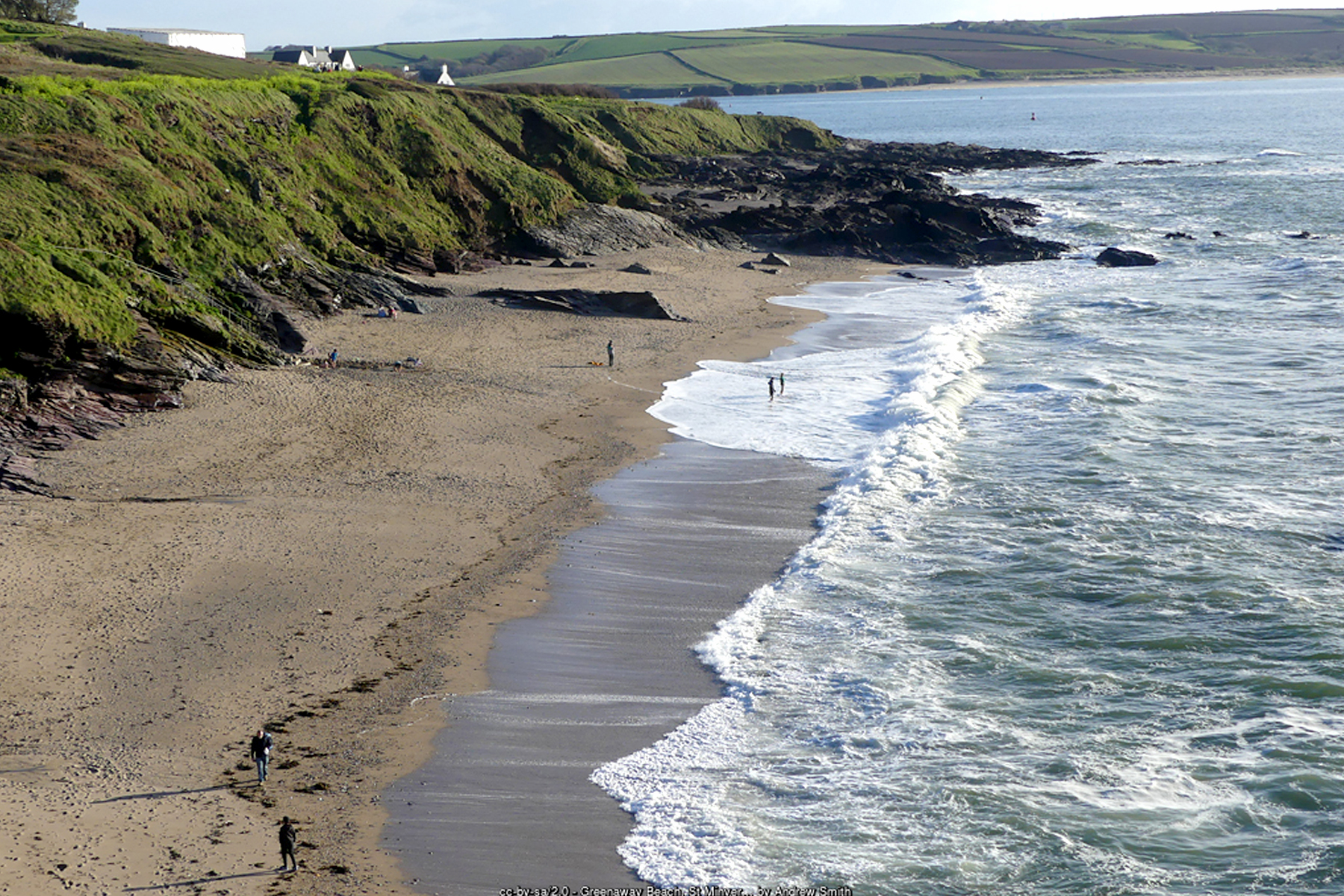
HISTORY OF ROCK
Rock’s name has changed several times over the centuries. It was recorded as Penmayn, Cornish for “headland of stones”, in 1303, and as Blaketorre – Black Tor – in 1337, the year the ferry across the estuary is first recorded. By the 18th century the village was known as Black Rock, later shortened simply to Rock. For most of its history it was a scattering of fishing and ferry cottages in the parish of St Minver, looking across to the much larger port of Padstow.
The estuary was the area’s highway, carrying goods, people and sand for the fields, but its mouth was guarded by the treacherous Doom Bar, which wrecked many ships over the centuries. Rock began to develop as a holiday village in the late 19th century: in 1881 the hotel on the shore was enlarged, a sea wall built and a bathing house erected, and the coming of the railway to Wadebridge and Padstow brought more visitors.
In the 20th century Rock became famous for sailing and, increasingly, for holiday homes, and today it has the highest proportion of second homes in Cornwall. The founding of Sharp’s Brewery in the village in the 1990s gave the name of the Doom Bar to one of Britain’s best-selling ales, and in 1994 the RNLI opened its inshore lifeboat station at Ferry Point.
↑ Back to top
WILDLIFE, DUNES & THE ESTUARY
The dunes and estuary around Rock and Daymer Bay are rich in wildlife. Marram grass binds the sand of Rock Dunes, a Site of Special Scientific Interest, and the dune grassland is bright with wild flowers in spring and summer. The sands and mudflats of the Camel estuary are an important feeding ground for wading birds, especially in autumn and winter, when curlew, oystercatcher, shelduck and little egret can be seen working the tideline.
Out in Padstow Bay and along the coast towards The Rumps, look out for gannets, cormorants and other seabirds, grey seals and occasionally dolphins. Inland, the Walmsley Sanctuary near Chapel Amble is a long-established reserve for wintering wildfowl and waders. To protect this special landscape, keep to established paths through the dunes, keep dogs under control near birds, take all litter home and never leave disposable barbecues on the sand.
↑ Back to top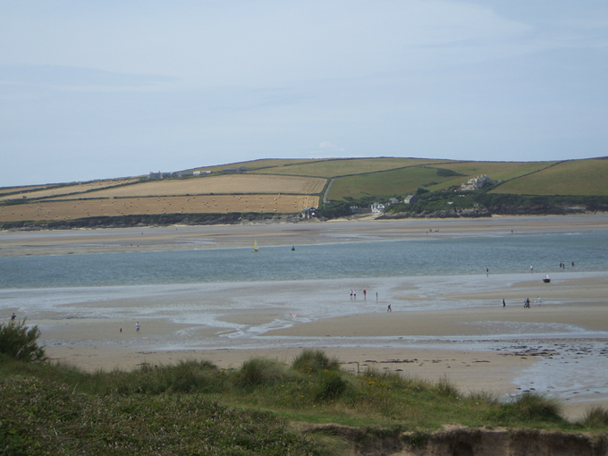
NOTABLE PEOPLE CONNECTED WITH ROCK & DAYMER BAY
- St Enodoc (6th century) – the saint whose hermitage gave rise to the church in the dunes that bears his name.
- Sir John Betjeman (1906–1984) – the Poet Laureate who spent his childhood holidays at Trebetherick, wrote often about St Enodoc and Daymer Bay, and is buried in St Enodoc churchyard.
- J. P. St Aubyn (1815–1895) – the Victorian architect who restored St Enodoc Church in 1863–64 after it had been dug out of the sand.
LOCAL EVENTS
Summer at Rock revolves around the water, with regular dinghy racing, regattas and sailing events organised by Rock Sailing & Waterski Club. The Rock Oyster Festival, held in late July, celebrates local food and music, and across the estuary Padstow’s famous May Day ’Obby ’Oss and its December Christmas Festival are just a ferry ride away.
- Padstow May Day (1 May) – the ’Obby ’Oss, across the estuary.
- Royal Cornwall Show (June) – near Wadebridge.
- Rock Oyster Festival (late July) – food, music and family fun.
- Sailing regattas and racing (summer) – on the estuary off Rock.
- Cornwall Folk Festival (August bank holiday) – in Wadebridge.
Dates change from year to year – check our Cornwall events guide for current dates.
↑ Back to top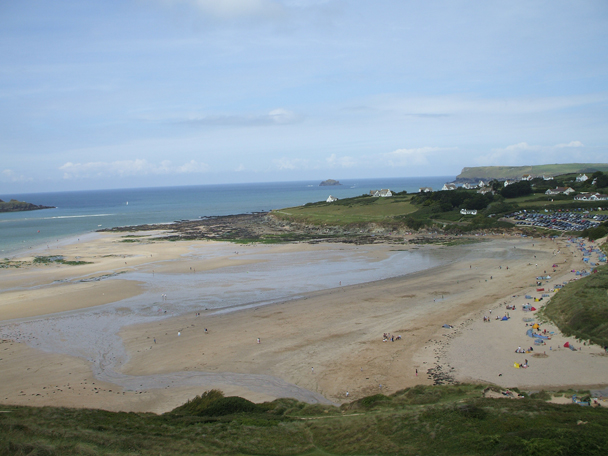
POLZEATH, PADSTOW & WADEBRIDGE
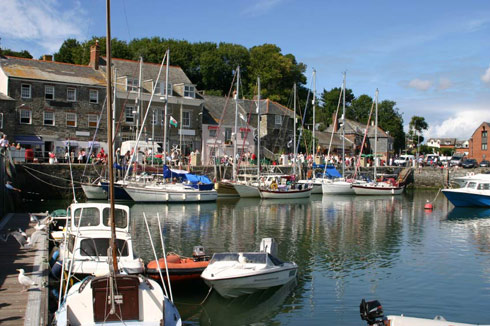
- Padstow – the famous harbour town, ten minutes across the estuary by ferry or about 14 miles by road via Wadebridge.
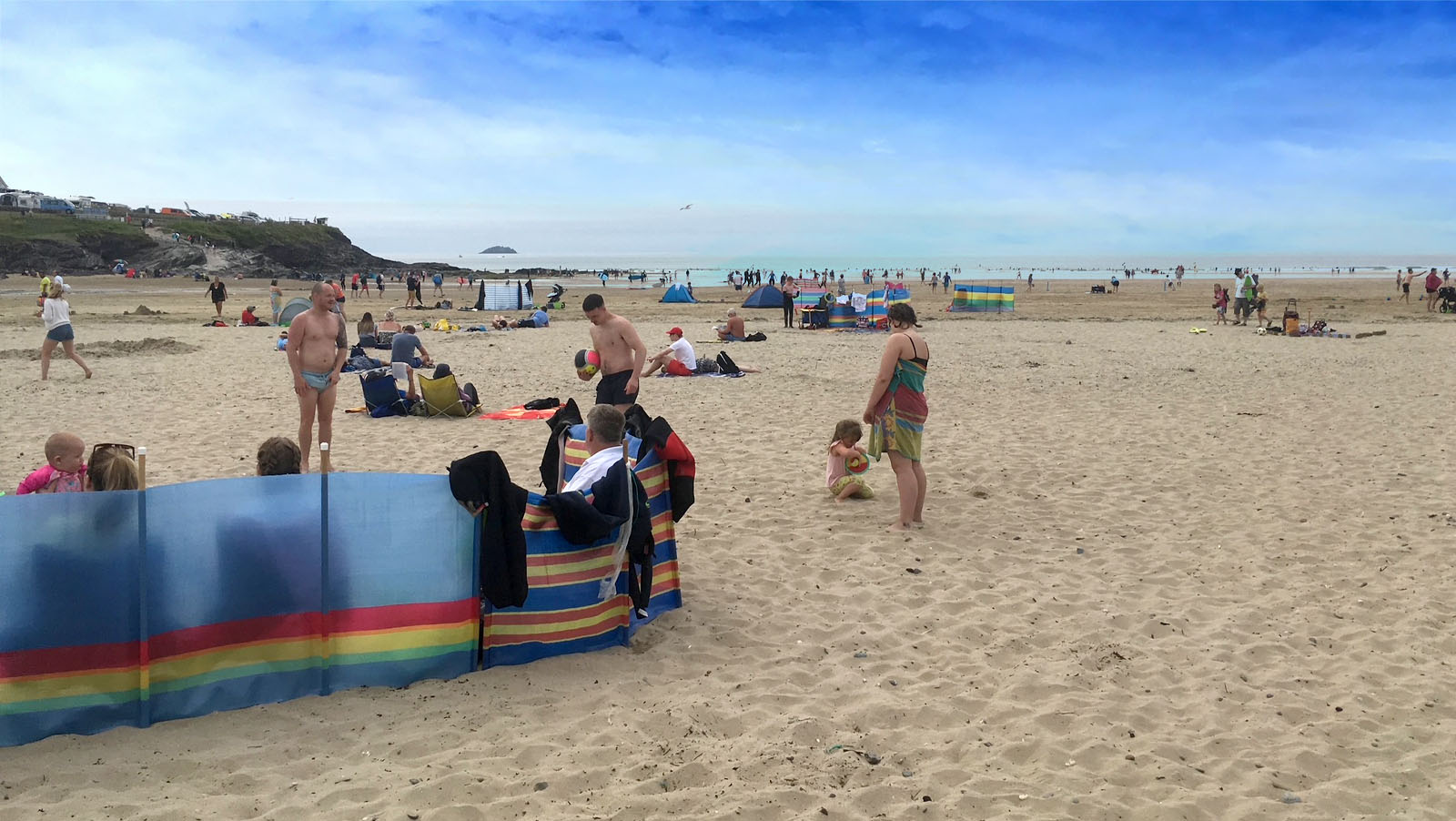
- Polzeath – about 2 miles north, one of Cornwall’s best family surf beaches, with RNLI lifeguards in season.
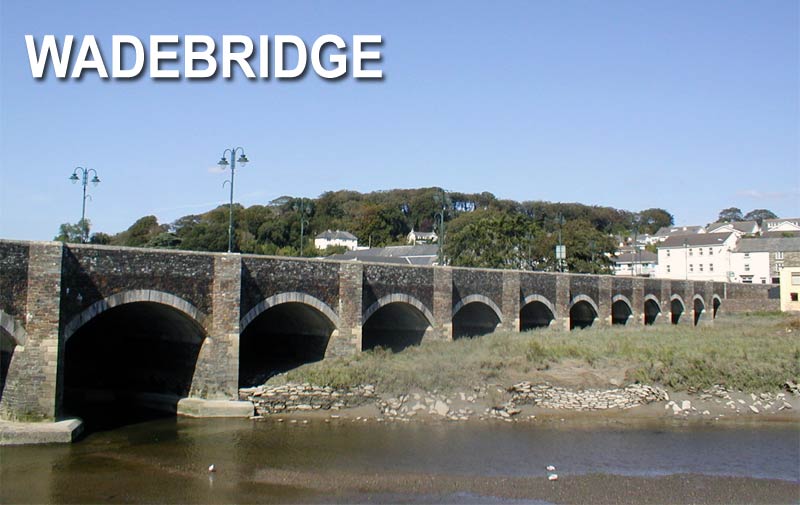
- Wadebridge – the market town about 6 miles inland, with supermarkets, the medieval bridge and the Camel Trail.
- Port Isaac – the fishing village famous as Portwenn in Doc Martin, about 8 miles away.
- Tintagel – the legendary castle and its dramatic coastline, a half-hour drive north.
- Bodmin – the old county town, with Bodmin Jail and the steam railway.
WHERE TO STAY & PRACTICAL TIPS
Choosing where to stay. A property described as “near Daymer Bay” may be in Rock, Trebetherick, Pityme or St Minver, so check the map carefully and ask how far it is to the beach, whether parking is included and whether the route is suitable for children or anyone with limited mobility – some paths are sandy, stepped or steep. For a beach holiday, choose somewhere you can reach the sand on foot; for touring, a base with easy access to the main road may suit better.
Planning your days. Check the tide times before every beach day or walk, carry water, sun protection and a warm layer, and remember that the estuary can feel cool and breezy even in summer. Parking is in high demand in July and August: arrive early, use the official car parks and never park on verges, block lanes or use private spaces.
Looking after Rock. Rock and Daymer Bay are home to a year-round community as well as visitors. Respect the dunes and the golf course, take your litter home, give wildlife plenty of space and support local shops, cafés and businesses, especially out of season. Follow any dog restrictions and local safety notices, and give way to the ferry and to boats launching from the slipway.
↑ Back to topVISITOR INFORMATION
Parking & EV Charging
The main car park is the pay-and-display Rock Quarry car park beside the beach (about 126 spaces), which fills early in summer; an overflow car park opens in high season about a quarter of a mile up Rock Road, opposite the Institute. Daymer Bay car park (pay and display, camera-controlled) is at the end of Daymer Lane from Trebetherick. Sat-nav: Rock PL27 6LB, Daymer Bay PL27 6SA.
Electric vehicle charging:
- Rock Village Institute, Rock Road – fast charger (7kW), PL27 6LQ
- Wadebridge – rapid chargers at the Jubilee Road old railway site, Piggy Lane car park and West Hill, about 6 miles away
- Padstow (by road) – InstaVolt rapid chargers at the petrol station on Trecerus Industrial Estate, PL28 8RW
Bus, Ferry & Train
Go Cornwall Bus route 96 links Rock with Wadebridge, Trebetherick, Polzeath, Port Isaac and Camelford, with connections at Wadebridge to Bodmin Parkway station on the main line. The Black Tor Ferry carries foot passengers and bikes to Padstow – daily in summer, Monday to Saturday in winter. Check timetables before you travel.
Facilities & Supermarkets
Public toilets at the Rock beach car park and at Daymer Bay, delis, cafés and small shops in the village, and seasonal beach shops. The nearest supermarkets are in Wadebridge, about 6 miles away, and Padstow:
- Aldi – 8 Dunveth Business Park, West Hill, Wadebridge PL27 7FE
- Co-op – Jubilee Road, Wadebridge PL27 7DA
- Lidl – Eddystone Road, Wadebridge PL27 7AL
- Tesco Superstore – West Hill, Wadebridge PL27 7HW
- Tesco Superstore – Sarah’s Lane, Padstow PL28 8EL (by ferry)
Cafés & Restaurants
Restaurants, delis, cafés and pubs in Rock and the surrounding villages, a seasonal café and beach shop at Daymer Bay, and many more across the water in Padstow. Booking ahead is essential for evening meals in July and August.
Health
There is no hospital in Rock; the nearest GP practices are in Wadebridge and Port Isaac. The nearest Minor Injury Unit is at Bodmin Community Hospital. Call NHS 111 for urgent advice and 999 in an emergency – ask for the Coastguard for incidents on the water or cliffs. The nearest major A&E is the Royal Cornwall Hospital, Truro.
Disabled Access
Rock beach has easy, level access from the Rock Quarry car park. Access to Daymer Bay from its car park involves steps and soft sand, and the paths to St Enodoc Church cross uneven dunes and the golf course. Ask the ferry crew about boarding, which depends on the tide. Check Blue Badge rules on car park signs.
Vets
There is no vet in Rock. The nearest veterinary practices are in Wadebridge, about 6 miles away, with others in Padstow and Bodmin. Use the RCVS directory to find the nearest practice and out-of-hours care.
National Trust & English Heritage
The National Trust cares for Pentire Point, The Rumps, Lundy Bay and Port Quin, a short drive or walk north. Tintagel Castle (English Heritage) is a half-hour drive away, and the St Breock Downs Monolith (English Heritage) stands near Wadebridge.
Beaches
Rock and Daymer Bay on the estuary; Greenaway, Polzeath and New Polzeath on the open coast; and Padstow’s beaches across the water.
STAY & EXPLORE NEAR ROCK
FAMILY HOLIDAYS & SHORT BREAKS IN ROCK
Family holidays in Rock are all about sand, sea and boats. Children love the gently shelving water and rock pools at Daymer Bay, building sandcastles on the long low-tide sands, watching the dinghies race on the estuary and taking the little ferry across to Padstow for crabbing and an ice cream on the harbour. Older children can try sailing, paddleboarding or a surf lesson at nearby Polzeath, with RNLI lifeguards in season.
A self-catering holiday in Rock lets you live by the tides, with beach days, barbecues and walks on your doorstep. Holiday cottages around Rock range from estuary-view houses and apartments in the village to family homes in Trebetherick and dog-friendly cottages and barn conversions in the countryside around St Minver and Pityme, many with parking and gardens.
Rock is also a wonderful place for a short break or weekend away, especially in spring and autumn, when the beaches are quiet, the estuary is full of birds and you can walk to St Enodoc and Daymer Bay in peace before dinner across the water in Padstow. B&Bs, inns, hotels, holiday parks and campsites in the area offer shorter stays, and booking direct with the owner means no agency fees.
Browse self-catering holidays in Rock for holiday cottages and apartments, or holidays and short breaks in Rock for every type of accommodation – B&Bs, hotels, holiday parks, camping and glamping – all listed on Cornwall Online by their owners.
↑ Back to topFREQUENTLY ASKED QUESTIONS ABOUT ROCK
The Black Tor Ferry, run by Padstow Harbour Commissioners, carries foot passengers and bicycles across the Camel estuary between Rock and Padstow in about ten minutes. It runs daily in summer and Monday to Saturday in winter, and the landing points change with the tide, so check the current timetable before you travel.
The main car park is the pay-and-display Rock Quarry car park beside the beach, which fills quickly in summer. In high season an overflow car park opens about a quarter of a mile up Rock Road, opposite the Institute. Roadside parking is limited, and the lanes are narrow, so please don’t block driveways or passing places.
Yes. Daymer Bay is sheltered inside the Camel estuary, with fine sand, gently shelving water and rock pools at its northern end, which makes it a favourite family beach. There are no RNLI lifeguards, so keep to the shallows, watch children closely and check tide times, as the currents in the estuary channel are strong.
Sir John Betjeman, Poet Laureate from 1972, is buried in the churchyard of St Enodoc Church, which lies in the dunes beside St Enodoc golf course between Daymer Bay and Rock. He spent childhood holidays at Trebetherick and wrote about this stretch of coast in several of his poems. The church is reached by a footpath across the golf course.
Dogs are welcome on Rock beach all year round. Daymer Bay can have seasonal restrictions, so check the signs at the car park and beach entrance before letting your dog off the lead. Polzeath beach, just round the headland, has a summer daytime dog ban.
The water off Rock beach is sheltered, but the Camel estuary has strong tidal currents, and the channel is busy with ferries, sailing dinghies and other boats. There are no lifeguards at Rock or Daymer Bay, so stay in your depth close to the shore, keep away from the ferry landing and the main channel, and never swim on a falling tide in the channel.
Go Cornwall Bus route 96 runs from Wadebridge to Rock, Trebetherick and Polzeath, continuing to Port Isaac and Camelford, and Wadebridge has buses to Bodmin Parkway station on the main line. Services are limited, so check the timetable before you travel. You can also arrive on foot from Padstow on the Black Tor Ferry.
Yes. St Enodoc Golf Club has two courses, the Church Course and the Holywell Course, laid out over the wild dunes between Rock and Daymer Bay. The Church Course is regarded as one of the finest links courses in Britain. Visitors should book tee times directly with the club.
North Cornwall Towns and Villages | Padstow | Wadebridge | The Camel Estuary | Rock | Daymer Bay | Polzeath | Port Isaac | Trebarwith Strand | Tintagel | Bossiney Cove | Rocky Valley | Boscastle | Crackington Haven | Bude | Launceston | Camelford | Altarnum | Bodmin |