Portloe
An Unspoilt Working Fishing Village on the Roseland Peninsula
Portloe, Roseland Peninsula, Cornwall, TR2
Portloe is one of the most genuinely unspoilt fishing villages anywhere on the Roseland Peninsula, a small cluster of whitewashed cottages and stone fish cellars wrapped tightly around a narrow tidal inlet between two high, steep cliffs. Unlike many of Cornwall's better-known harbours, Portloe has never really given itself over to tourism: a working fishing fleet still lands crab and lobster here alongside the handful of visiting boats, and the village retains a lived-in, unpolished character that has made it a favourite of writers, film crews and anyone seeking a Cornish harbour that has not been remade for the camera - even though, as it happens, it has been used for the camera on several occasions, precisely because of how convincingly real it looks.
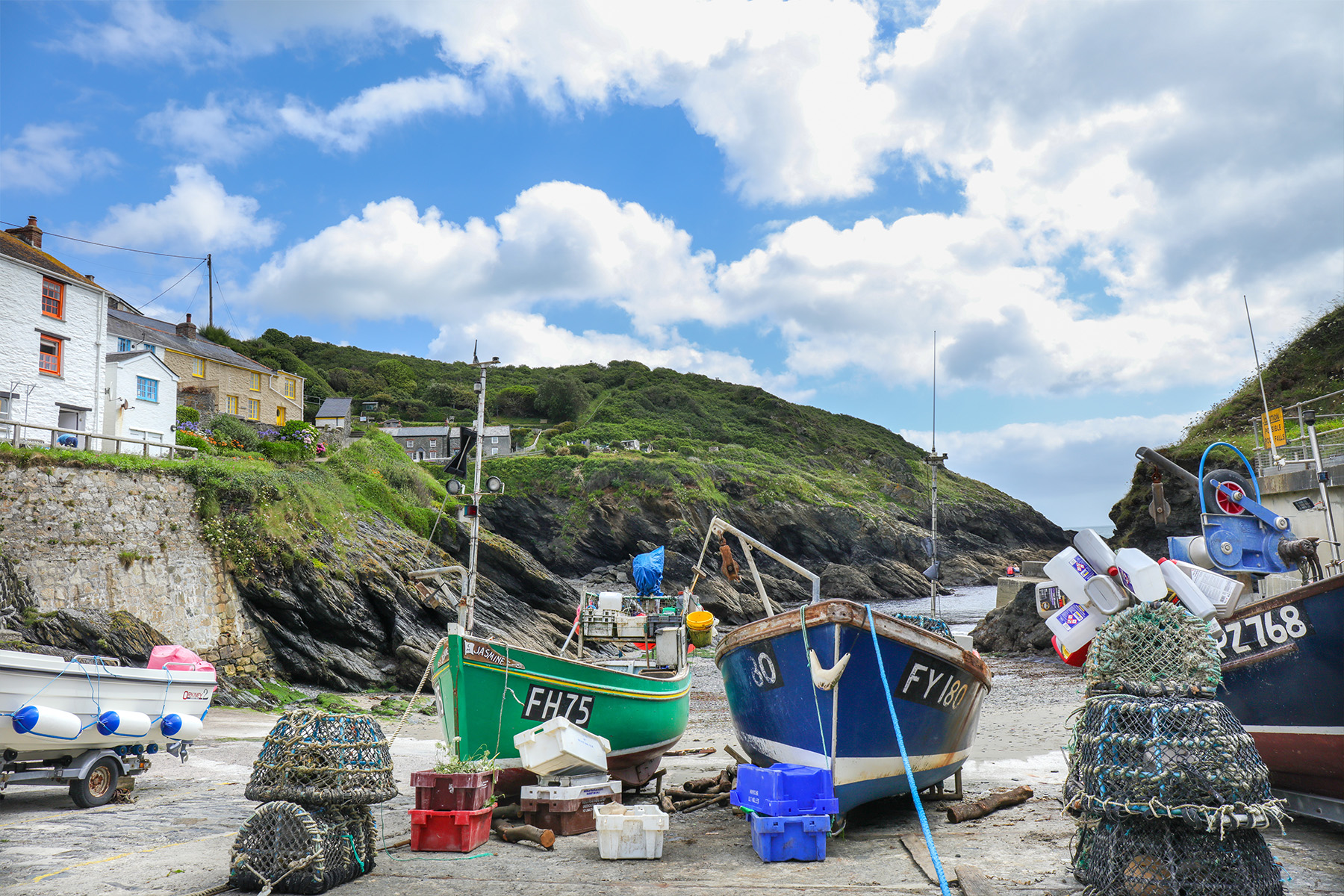
The village's name is Cornish in origin, combining "porth", meaning cove or harbour, with "logh", meaning lake or inlet - an apt, literal description of the sheltered, almost landlocked stretch of water around which Portloe is built. That narrow inlet, hemmed in on both sides by steep cliffs, is what has always defined the place: it gave fishermen a naturally protected mooring in a stretch of coast with few such shelters, and it has since given the village its distinctive, huddled layout, with cottages stacked up the slopes above the water rather than spread out along a promenade in the way of larger resort towns.
Fishing remains a genuine, ongoing part of life in Portloe rather than a preserved memory of one. A small fleet of working boats still operates from the harbour, potting for crab and lobster along this stretch of the Roseland coast much as boats from the village have done for generations, and it is common to see gear stacked along the quay and boats coming and going with the tide. That working presence, more than anything else, is what sets Portloe apart from villages that have moved entirely over to holiday trade - visitors here are sharing the harbour with people actually making a living from it.
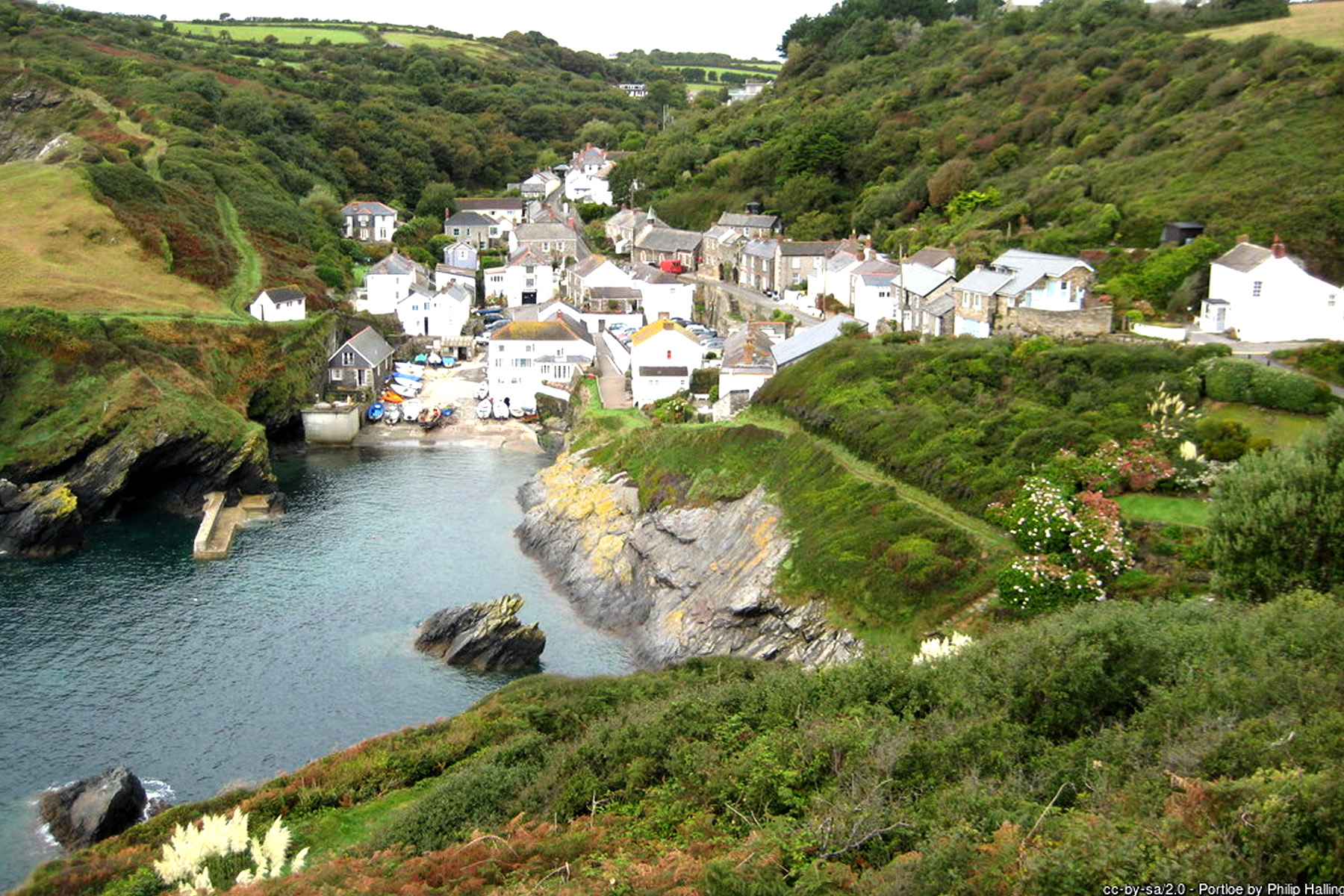
Portloe's connection to the sea has not always been a gentle one, and the village has its own chapter in Cornwall's long history of lifeboat rescue, even if that chapter ended rather differently from most. The RNLI established a lifeboat station at Portloe in 1870, funded by a bequest from a benefactor named Jacob Gorfenkle, and the station and its boat became known locally simply as the "Gorfenkle". The original boathouse, however, proved awkward in practice: the beach conditions at its site made launching difficult, and in 1877 a replacement boathouse was built closer to the water to solve the problem. Despite that investment, the station was withdrawn altogether in 1887, after seventeen years in which, by most accounts, it was never called upon to carry out an actual rescue - a quiet postscript compared with the dramatic rescue histories of stations like Coverack or Cadgwith further round the coast, but a genuine and locally remembered part of the village's story all the same. The two former boathouses both went on to second lives of their own: the original 1870 building was converted into a church, All Saints, from 1896, while the 1877 replacement later served as the village school before eventually becoming a private residence - both still standing in the village today as physical reminders of Portloe's lifeboat years.
That same unspoilt, faintly time-suspended character has made Portloe a recurring choice for film and television location work over the decades. It appeared in the 1964 British film "Crooks in Cloisters", used the harbour and cottages as a backdrop for the BBC comedy series "Wild West", starring Dawn French and Catherine Tate, and featured again in Richard Curtis's 2012 romantic comedy "About Time". Each production has, in its own way, been drawn to the same thing that draws walkers and holidaymakers here on foot: a working Cornish harbour village that has kept its genuine, lived-in shape rather than being smoothed into something more generic.
The beach itself sits at the foot of the village, a small strip of sand giving way to shingle beside the harbour, sheltered by the same high cliffs that protect the inlet from the open sea. It is a modest beach by the standards of Cornwall's larger resorts, but a genuinely pleasant one for a quiet swim, particularly outside the busiest weeks of summer, when the harbour and the cove below it are calm enough to make for easy, sheltered bathing. There is no lifeguard here, in keeping with a village that has never been run as a managed tourist beach, so visitors should treat a swim at Portloe with the same self-reliance as anywhere else on this quieter stretch of the Roseland.
Overlooking the harbour stands The Lugger, a former smugglers' inn built into a row of old pilchard cellars, now one of the best-known places in the village to eat, drink or stay, its position giving direct views over the boats and the inlet below. Together with a handful of other small businesses along the quay, it gives Portloe a modest but genuine range of everyday facilities for a village of its size - enough for a proper day out, without ever tipping over into the kind of tourist infrastructure that would change the village's character. That balance, more than any single attraction, is what regular visitors to Portloe tend to value most.
Crab and lobster potting has been the mainstay of Portloe's working fleet for generations, and the methods used today are broadly the same low-impact, pot-and-line fishing that has sustained small Cornish harbours like this one for centuries, in contrast to the larger trawling fleets based at ports such as Newlyn further along the coast. Stacks of pots along the quayside and the comings and goings of the boats with the tide are as much a part of a visit to Portloe as the beach itself, and it is this working rhythm, rather than any single sight, that gives the village its particular, unhurried atmosphere.
Portloe sits within the parish of Veryan, a little inland, itself well known for its distinctive thatched round houses - a small cluster of circular cottages built in the early 19th century, according to local tradition partly so that the devil would have no corners in which to hide. The parish and the surrounding coastline, including Nare Head and the two remote coves either side of it, fall within the Cornwall National Landscape designation covering much of the Roseland Peninsula, and a significant amount of the coastal land around Portloe is looked after by the National Trust as part of its wider Roseland holdings, helping to keep this stretch of coast as undeveloped as it remains today.
Getting to Portloe by car means navigating narrow, high-hedged Cornish lanes that were never built with modern traffic in mind, and parking within the village itself is very limited as a result - most of what space exists is taken up by residents and the working boats' own gear. A small car park is available a short walk from the harbour, and this is by far the easiest option for most visitors, particularly in summer, rather than trying to find space on the lanes themselves. From there it is a short, gently sloping walk down into the village and on to the harbourside and beach.
Portloe also sits directly on the South West Coast Path, midway along one of the quieter and more dramatic sections of the Roseland's southern shore. To the west, the path climbs over Nare Head towards the remote coves of Paradoe and Kiberick and on towards Carne and Pendower; to the east, it continues towards Portholland and the coast beyond. For walkers tackling this stretch, Portloe makes a natural stopping point - a proper working harbour with somewhere to eat and rest, set between two much quieter, undeveloped sections of coastline on either side. Seabirds and, at the right time and tide, seals are regularly spotted from the coast path above the harbour, a reminder that Portloe's appeal owes as much to the wider, largely untouched coastline around it as to the village itself.
Visitor Information
Parking
Parking within the village itself is very limited, since the lanes are narrow. A small car park is available a short walk from the harbour and is the easiest option for most visitors.
Facilities
Portloe has a small range of everyday facilities for a village of its size, including places to eat close to the harbour. There is no RNLI lifeguard patrol on the beach.
Disabled Access
The walk down from the car park into the village and to the harbourside is on a sloping lane, and the beach surface itself is sand and shingle, which limits wheelchair or pushchair access. No dedicated Blue Badge bays are confirmed at the small car park - check current signage on arrival.
Things to Do Nearby
- Paradoe Cove & Kiberick Cove, two remote, walk-in coves either side of Nare Head, reached via the coast path to the west
- Portholland, a quiet twin-cove beach a short coast path walk to the east
- The South West Coast Path, which runs directly through Portloe, linking it to Nare Head and Portholland in both directions
Places to Stay
Portloe has its own range of holiday accommodation close to the harbour and village:
Frequently Asked Questions
Page last updated: 17 September 2026