Portholland
A Quiet Twin Beach Hamlet on the Roseland's South Coast
Portholland, Roseland Peninsula, Cornwall, PL26
Portholland is one of the Roseland Peninsula's quietest and least altered coastal settlements, a loose scatter of cottages strung along a single shore road above a beach that is, in truth, two beaches in one. East Portholland and West Portholland sit either side of a low rocky outcrop that juts down onto the sand, and for much of the tidal cycle the two behave as entirely separate coves, each with its own short run of beach and its own little cluster of houses looking straight out over the water. Drop below half tide, though, and the outcrop is uncovered only at its base - the sand on either side joins into one continuous strip, and it becomes possible to walk the full length of the beach from one hamlet to the other without ever leaving the shore. As the tide comes back in, the two halves quietly separate again, and Portholland reverts to being two small, self-contained beaches rather than one long one. It is a genuinely unusual bit of local geography, and one that rewards a visit timed around the tide table rather than a fixed hour of the day.
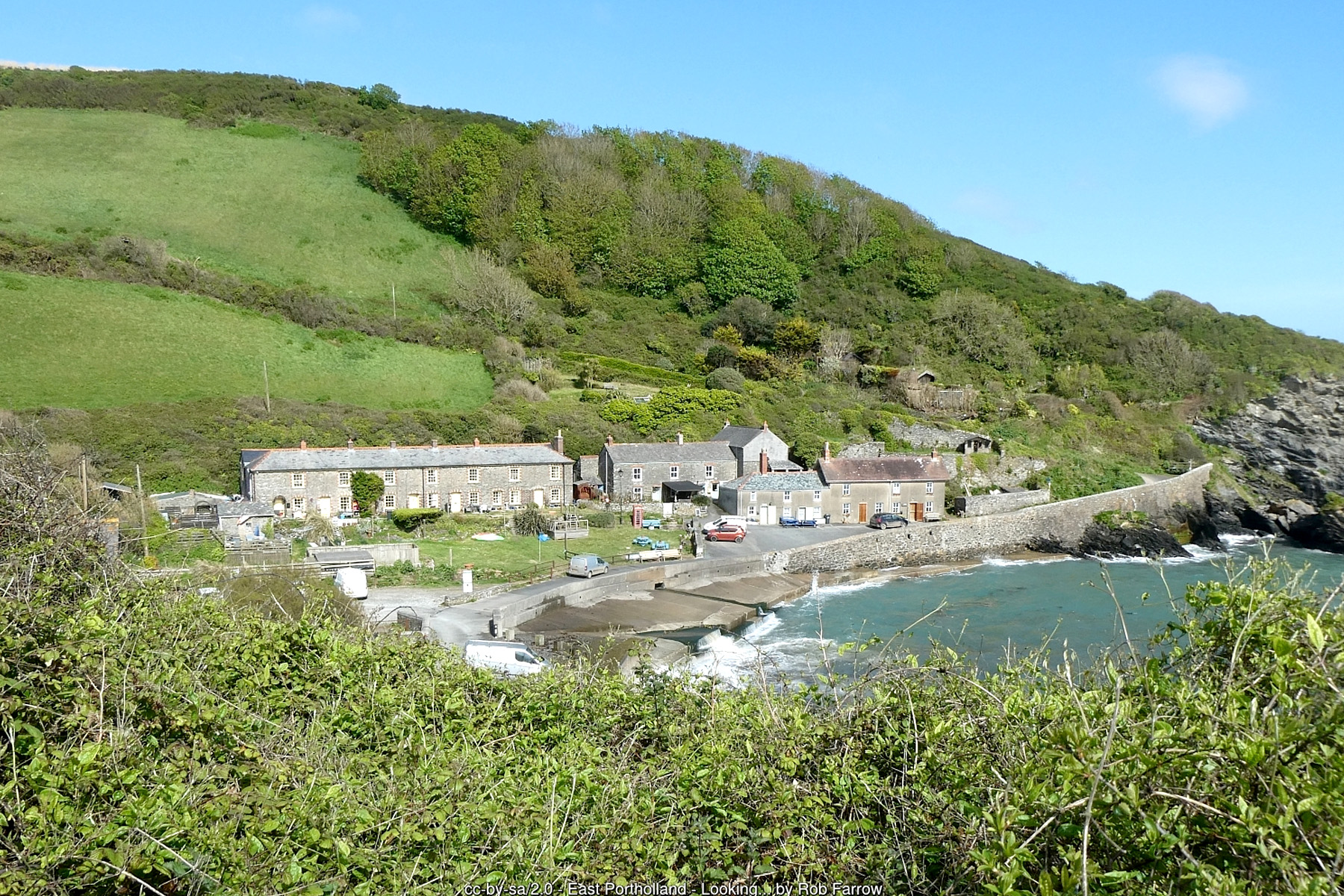
East Portholland is the slightly larger and busier of the two halves, home to a small huddle of cottages built close along the water's edge and, in season, a couple of modest cafes serving the walkers and holidaymakers who pass through. It has traditionally been the more sheltered and more visited of the pair, with a shallower gradient of sand that suits families happy to paddle and build sandcastles without venturing far from the shore road. West Portholland, a short walk or a five-minute drive around the headland, is smaller again and noticeably quieter still, with fewer buildings and none of East Portholland's cafes - just a run of sand backed by low cliffs and a scatter of cottages set back from the water. Both beaches share the same generally safe, gently sloping character that makes them well suited to families, though as with any unpatrolled Cornish beach, sensible caution around tides and rocks is always worth taking, particularly around the central outcrop as the tide turns.
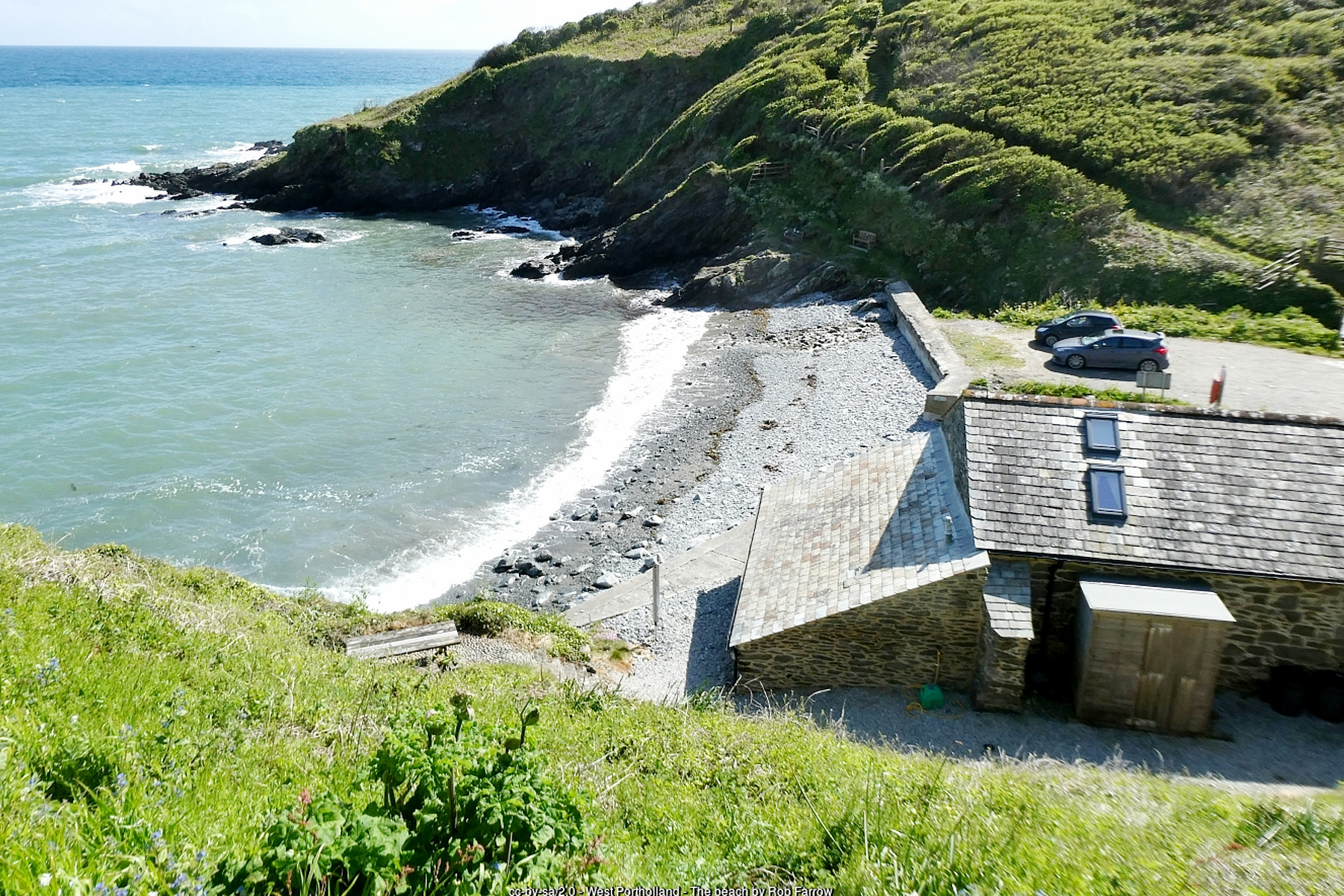
What Portholland notably lacks, and what gives it much of its unhurried, unspoilt character, is any kind of large-scale visitor infrastructure. There is no dedicated beach car park of the kind found at Cornwall's bigger resort beaches - parking is limited to roadside spaces in the hamlet itself and along the narrow lane leading down to it, and these fill quickly on a fine summer day. This is not an oversight so much as a reflection of what Portholland has always been: a working coastal hamlet rather than a purpose-built resort, its handful of cottages originally home to fishing and farming families rather than holiday lets, and its shore road never designed with modern visitor numbers in mind. Anyone planning a visit in peak season does well to arrive early, walk in from a little further afield, or simply accept that a slower, more patient approach to parking is part of what keeps Portholland the way it is.
The beach itself is sandy underfoot and relatively even, without the extensive boulder fields or steep rock ledges that make some of the Roseland's smaller coves harder going for young children or anyone with limited mobility. That said, access down to the sand still generally involves a short walk from the road rather than a step straight off a car park, and the surface becomes rockier at the beach's margins and around the central outcrop, so sturdy footwear is worth having even on an otherwise easy visit. Dogs are welcome on Portholland's beaches all year round, with no seasonal restriction of the kind that applies at many of Cornwall's larger, more heavily managed beaches - a detail that makes Portholland a popular out-of-season stop for dog walkers exploring this stretch of coast.
Geologically, this coastline sits within the Roseland's distinctive stretch of Devonian-age slates and volcanic rocks, and the low outcrop dividing East from West Portholland is a visible fragment of the same harder rock that forms many of the headlands and reefs running along this part of south Cornwall. The cliffs either side of the beach are unspectacular by the dramatic standards of North Cornwall's granite coast, but they carry their own quieter interest for anyone curious about how this softer, more folded geology has shaped a run of small bays and hamlets quite different in character from the peninsula's more exposed western shore.
Portholland sits directly on the South West Coast Path, which threads along the low cliffs in both directions - southwest towards Portloe, one of the most photographed fishing villages on the entire Roseland, and northeast towards Porthluney Cove, with Caerhays Castle rising dramatically above its own beach beyond. The walk to Portloe is a genuinely rewarding stretch of coast path, taking in a handful of smaller coves and viewpoints along the way, while the route to Porthluney passes through open farmland with the castle gradually coming into view as the path descends towards the cove. Both make natural half-day or full-day walks from Portholland, and the coast path's presence here means the hamlet sees a fair number of walkers passing through even outside the main beach season, adding a gentle, steady footfall that the small cafes at East Portholland rely on.
As a settlement, Portholland has always been small - never more than a scatter of cottages, a scattering of fishing boats once drawn up on the sand, and a shore road rather than a proper village street. It has no shop, no pub and no church of its own, relying instead on nearby villages such as Portloe and Gorran Haven for everyday amenities, and this lack of a conventional village centre is precisely what has kept it from developing into anything resembling a resort. For visitors who prefer their Cornish beaches quiet, a little off the beaten track, and largely free of the ice-cream-van bustle of the county's bigger seaside towns, Portholland offers exactly that: two small sandy beaches, a scatter of cottages, open coast path in both directions, and a tide table that quietly decides, hour by hour, whether you are visiting one beach or two.
Visitors based further afield on the Roseland Peninsula will find Portholland an easy addition to a day spent exploring this stretch of coast, whether combined with a coast path walk from Portloe, a visit to Caerhays Castle at Porthluney Cove, or simply as a quiet stop in its own right away from the peninsula's slightly busier villages such as St Mawes and Portscatho. The hamlet's genuine lack of crowds, even in high summer, remains one of its strongest draws for anyone who has already discovered the Roseland's quieter corners.
Timing a visit around the tide table pays off at Portholland more than it does at most beaches. On a falling or low tide, the sand between East and West Portholland is at its widest and firmest, ideal for a proper walk right along the shore and a good look at the rock pools that gather along the base of the dividing outcrop, where small fish, anemones and crabs are commonly found by patient children and adults alike. As the tide rises, the beach shrinks back into its two separate coves, and by high water the sand at each end can disappear almost entirely against the low cliffs, so anyone settling in for a full day is best placed either well back from the waterline or prepared to move as the sea comes in. This tidal rhythm, more pronounced here than at many open, uniformly shaped Cornish beaches, is part of what gives Portholland its slightly unpredictable, ever-changing character from one visit to the next.
The exposed, south-facing position of this stretch of coast means Portholland can feel noticeably different depending on wind direction. In settled, offshore conditions the bay is calm and sheltered, the water often clear enough for good snorkelling around the rockier margins, while a stronger onshore blow can whip up a livelier sea that suits confident swimmers and dog walkers far better than sunbathers. Seabirds are a regular sight along this coast, with gulls, oystercatchers and the occasional fast-moving flock of turnstones working the tideline, and seals are sometimes spotted offshore by walkers on the coast path above, particularly out of the busiest summer months when the water is left largely undisturbed. For anyone happy to embrace a little unpredictability in exchange for genuine quiet, Portholland rewards a visit at almost any time of year, not just in the height of summer.
Visitor Information
Parking
No large dedicated car park - parking is limited to roadside spaces in the hamlet and along the approach lane, which fill quickly in peak season. Arrive early or expect to walk in from a little further afield in summer.
Facilities
A couple of small, seasonal cafes at East Portholland; West Portholland has no facilities of its own. There is no RNLI lifeguard patrol at either beach.
Disabled Access
The beach is sandy and relatively even underfoot, but reaching it involves a short walk from the road rather than direct car park access, and the surface becomes rockier near the central outcrop. No dedicated Blue Badge bays are confirmed at Portholland - check current signage on arrival.
Things to Do Nearby
- Portloe, one of the Roseland's most photographed fishing villages, a scenic coast path walk or short drive southwest
- Porthluney Cove & Caerhays Castle, a broad sandy beach beneath a dramatic castle backdrop, a coast path walk or short drive northeast
- The South West Coast Path, which runs directly through Portholland linking it to Portloe and Porthluney Cove
Places to Stay
Portholland has no dedicated accommodation listings of its own - the nearest general hub covering this part of the Roseland Peninsula is:
Frequently Asked Questions
Page last updated: 17 September 2026