Carne Beach
Gently Shelving Sand and Rock Pools Beneath Nare Head
Carne Beach, Roseland Peninsula, Cornwall, TR2 5PF
Carne Beach sits on the eastern shore of Gerrans Bay on the Roseland Peninsula, a gently shelving sweep of sand (OS Grid Reference SW 9070 3818) that ranks among the most consistently family-friendly beaches on this stretch of the Cornish coast. Unlike many of the Roseland's more remote, walk-in coves, Carne combines genuine peace and quiet with a reasonable set of practical facilities - a National Trust car park close by, a small seasonal refreshment van on the beach itself, and the well-regarded restaurant at the Nare Hotel immediately above it, open to non-residents as well as guests. Above it all rises Nare Head, whose clifftop carries two very different chapters of twentieth-century history in the form of a wartime coastal control bunker and a Cold War nuclear-monitoring post, a genuinely unusual pairing for what is, at beach level, simply a good, gently sloping stretch of sand for a family day out.
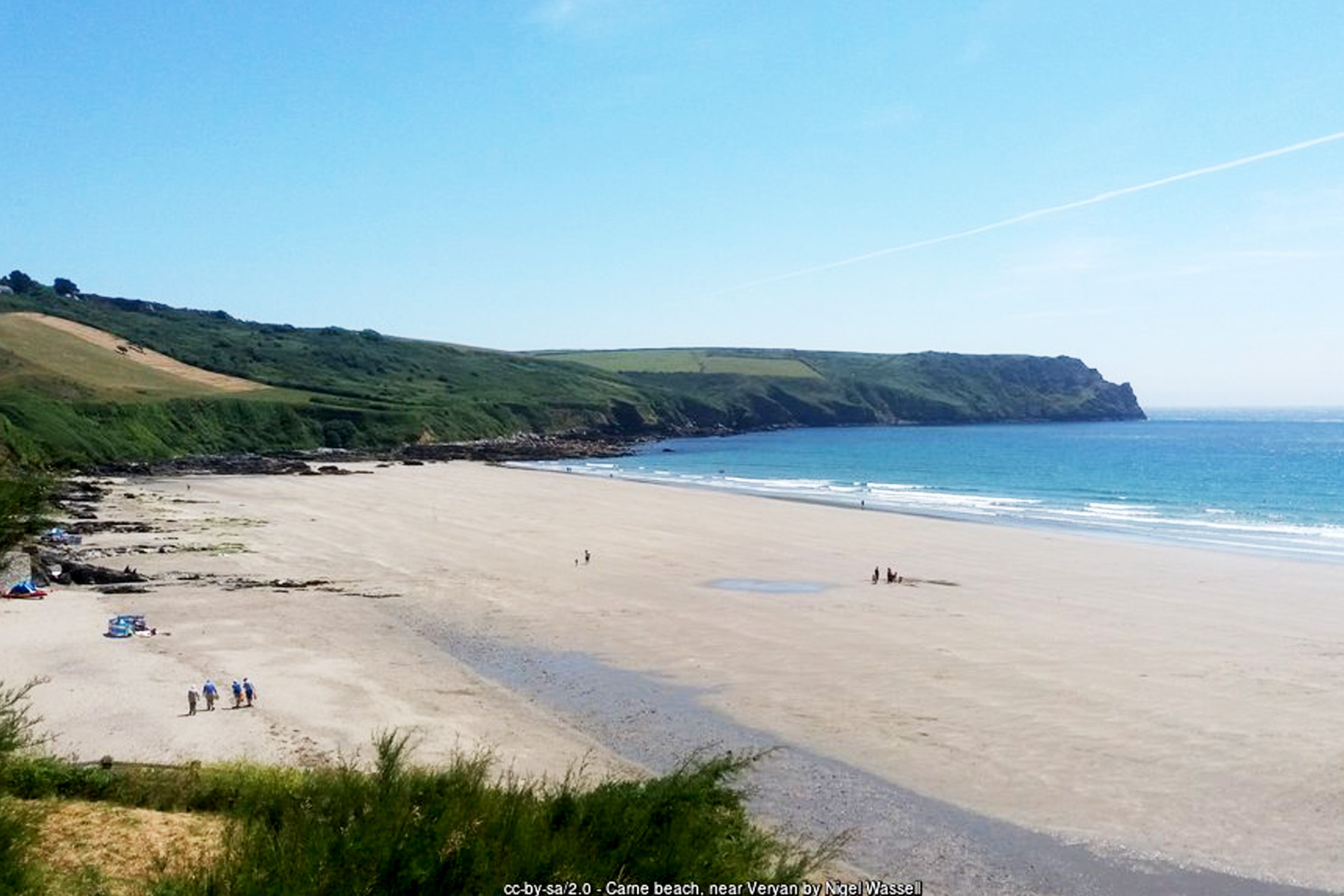
The beach itself shelves gently from the dunes down to the water, which, combined with its extensive rock pools at low tide, makes it a natural draw for families with younger children - there is space to spread out, sand firm enough for building, and enough rock pooling at the beach's margins to fill an afternoon without needing to go anywhere else. At low tide, Carne joins its western neighbour Pendower to form one continuous stretch of sand running for well over a mile across the whole of Gerrans Bay, and walking the connecting sandbar between the two beaches - tide permitting - is one of the more popular ways to spend a settled day here. Both beaches are managed together by the National Trust as part of its Carne and Pendower property, which has kept the wider dune and farmland setting behind Carne free of the denser holiday development found elsewhere on the Cornish coast.
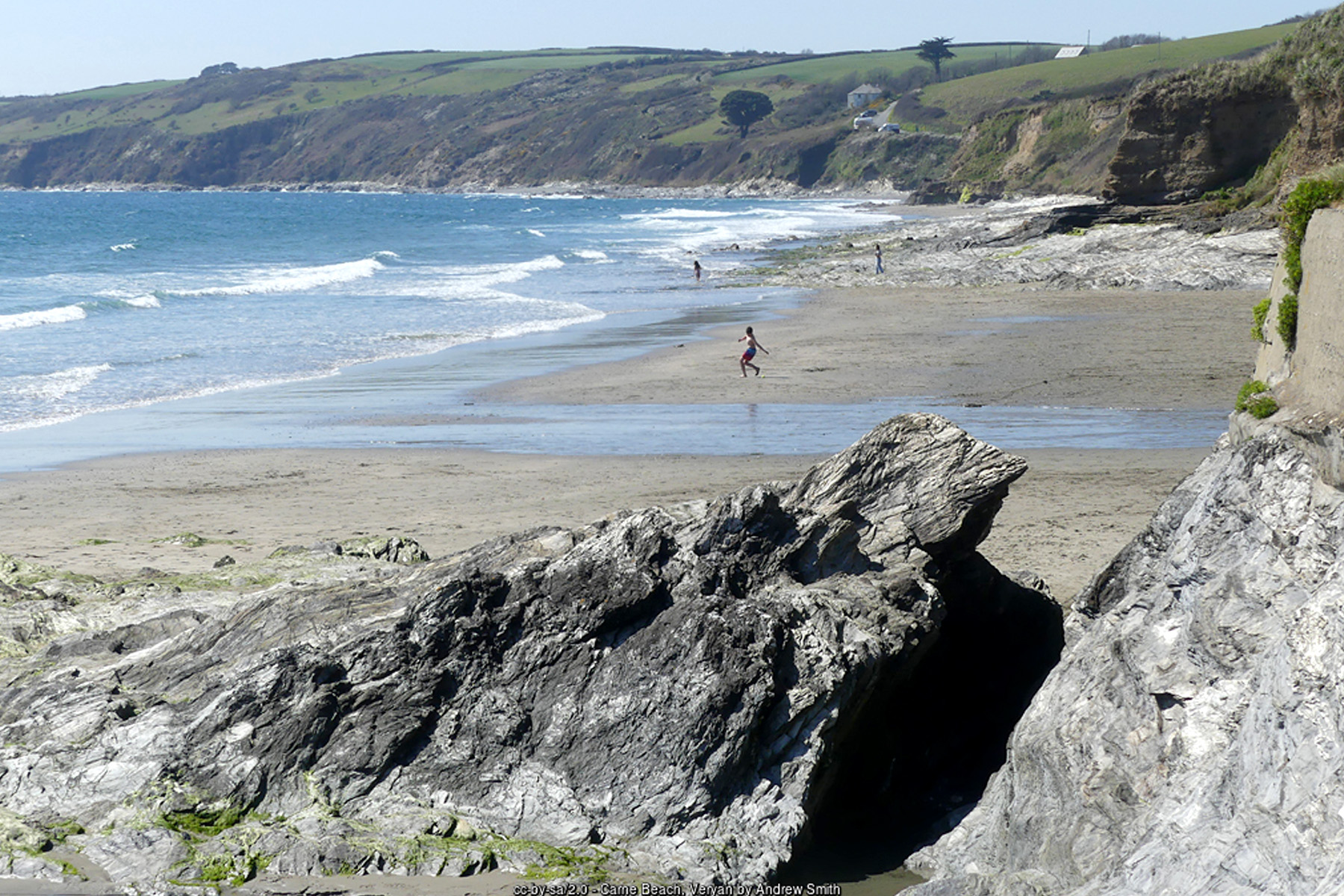
Parking is one of the beach's genuine strengths relative to its Roseland neighbours. A limited number of spaces are available right at the beach itself for those who arrive early enough, while a National Trust car park close by offers considerably more capacity, charged at a £4 half-day rate and open until dusk. Combined with the seasonal refreshment van that operates on the beach through the summer months, Carne has noticeably better day-to-day facilities than most of the Roseland's other beaches, which tend to be smaller, harder to reach, or entirely without services of their own - a fair trade for a beach that still, by the standards of Cornwall's larger resort beaches, remains genuinely uncrowded and relatively remote.
The Nare Hotel, a well-known luxury hotel that sits directly above the beach, is as much a part of Carne's identity as the sand itself. Its restaurant is open to non-residents, giving visitors the option of a proper sit-down meal with sea views without needing to book a room, a genuine rarity among Cornwall's more low-key beaches. For anything beyond what the hotel and the beach's own refreshment van can offer, further shops, pubs and services can be found in the surrounding villages - Portscatho and Gerrans to the west, Veryan a short distance inland, and St Mawes, the largest town on the peninsula, a little further round the coast - all within easy reach by car for a fuller day's supplies or an evening out.
Nare Head, the headland rising immediately to the east of the beach to a height of around 300 feet (91 metres), is worth a visit in its own right for anyone who has made the trip to Carne. Owned by the National Trust and reached along the South West Coast Path, the headland carries two distinct and genuinely unusual pieces of twentieth-century military history: the remains of a Second World War coastal control bunker, built as part of the wider wartime defence of this stretch of coast, and a separate, restored Cold War-era monitoring post built for the Royal Observer Corps, the volunteer organisation tasked with tracking nuclear fallout and reporting on a potential attack as part of the UK's civil defence network during the Cold War decades. The two structures sit within the same clifftop landscape but belong to very different eras of anxiety about the sea and sky beyond Gerrans Bay, and the walk up to see them rewards visitors with some of the best coastal views on this side of the Roseland, taking in the full curve of the bay back towards Pendower and the open sea beyond.
The wider setting here follows the same pattern as the rest of Gerrans Bay: a Roseland Peninsula landscape that takes its name from the Cornish "ros," meaning heath or high ground, rather than from roses, sitting within the Cornwall National Landscape designation that protects much of this coastline from further development. On the high ground between Carne and Pendower stands Carne Beacon, a large Bronze Age round barrow and one of Cornwall's biggest surviving prehistoric burial mounds, traditionally - if unverifiably - said in local legend to be the resting place of Gerennius (Geraint), the semi-legendary early Cornish king who is said to have given his name to nearby Gerrans, supposedly buried standing upright in a golden boat with silver oars. Whether or not the legend holds any truth, the barrow's genuine scale and its position directly above Carne Beach make it a quietly ancient landmark visible from much of the beach itself.
Carne's own name is thought to come from the Cornish word "karn," meaning a pile or heap of rocks - an apt description of the outcrops framing the beach's rock pools at either end of the sand, and a naming pattern repeated across Cornwall wherever rocky ground gives a place its identity, from Carn Brea near Redruth to the granite tors of Bodmin Moor, even though this particular stretch of coast is built on softer Devonian slate rather than granite. That slate has weathered over millions of years into the low cliffs and rocky ledges either side of Carne's sandy centre, and the same geology underlies the whole sweep of Gerrans Bay from here round to Pendower. Choughs and other coastal birds are occasionally seen along the cliffs towards Nare Head, and grey seals are sometimes spotted off this stretch of coast, hauled out on rocks or fishing the margins of the bay - always worth watching from a respectful distance rather than approaching.
Walkers based at Carne have good options in both directions along the South West Coast Path: west across the sand towards Pendower and on to Porthcurnick and Portscatho, or east past Nare Head towards the quieter coves of Paradoe and Kiberick and on to Portloe, one of the most unspoilt working harbour villages anywhere on the Roseland coast. Gerrans Bay's sheltered, south-facing aspect also means Carne sees noticeably calmer water than Cornwall's more exposed north-coast beaches, a microclimate that keeps the beach usable in a wider range of conditions and makes it a popular choice for a swim even when a stiffer wind has picked up further round the coast.
Carne's sand and shallow, gently shelving water make it a naturally good spot for family swimming in calm conditions, and the extensive rock pools at its margins - richest towards the rockier ground at the beach's edges - offer the kind of low-tide exploring that keeps children entertained for hours: shore crabs, anemones and the occasional small fish typical of this sheltered part of Gerrans Bay. There is no RNLI lifeguard patrol here, as at most beaches along this stretch of the Roseland, so as with any unpatrolled Cornish beach, visitors should keep a sensible eye on the tide, particularly around the rockier ground where pools can cut off quickly as the water returns.
Taken together - gentle sand, genuine rock pooling, a National Trust car park with real capacity, a seasonal refreshment van, and a proper restaurant on the doorstep at the Nare Hotel - Carne offers a rare combination on the Roseland Peninsula: the relative peace of a beach well off the main tourist trail, with enough practical facilities close at hand to make a full day here easy rather than an exercise in self-sufficiency. Its low-tide link to Pendower next door only adds to the appeal, giving energetic visitors well over a mile of sand to explore between the two beaches on a single falling tide.
Visitor Information
Parking
Limited parking is available right at the beach for early arrivals. A National Trust car park nearby offers good capacity, charged at a £4 half-day rate and open until dusk.
Facilities
A small seasonal refreshment van operates at the beach, and the restaurant at the Nare Hotel just above the beach is open to non-residents. Further shops and services are in Portscatho, Gerrans, Veryan and St Mawes.
Disabled Access
Access is easier than at many Roseland beaches thanks to the National Trust car park right next to the beach. No dedicated Blue Badge bays are confirmed - check current signage on arrival.
Things to Do Nearby
- Pendower Beach, joined to Carne at low tide by over a mile of continuous sand
- Paradoe & Kiberick Coves, two quieter coves further along the coast towards Portloe
- Nare Head, immediately above the beach, with its WWII control bunker and restored Cold War-era Royal Observer Corps monitoring post, reached along the South West Coast Path
Places to Stay
Carne sits within Veryan parish, the closest genuine accommodation hub to the beach:
Frequently Asked Questions
Page last updated: 17 September 2026