Paradoe Cove & Kiberick Cove
Remote, Walk-In Coves Either Side of Nare Head
Paradoe Cove & Kiberick Cove, near Nare Head, Roseland Peninsula, Cornwall, TR2
Paradoe Cove and Kiberick Cove are two small, quiet coves tucked either side of Nare Head, the distinctive headland that separates Gerrans Bay from the Portloe and Veryan Bay stretch of the Roseland Peninsula's coastline. Neither cove has a road leading to it, and neither has a car park - there is no way to drive to either beach at all. Both are reached only on foot, along the South West Coast Path as it climbs and drops over Nare Head between Carne and Pendower to the west and Portloe to the east. Because of that, Paradoe and Kiberick remain two of the least-visited and least-developed stretches of shoreline anywhere on the Roseland, the preserve of walkers rather than the typical Cornish beach-day crowd - a genuine reward for anyone prepared to make the walk.
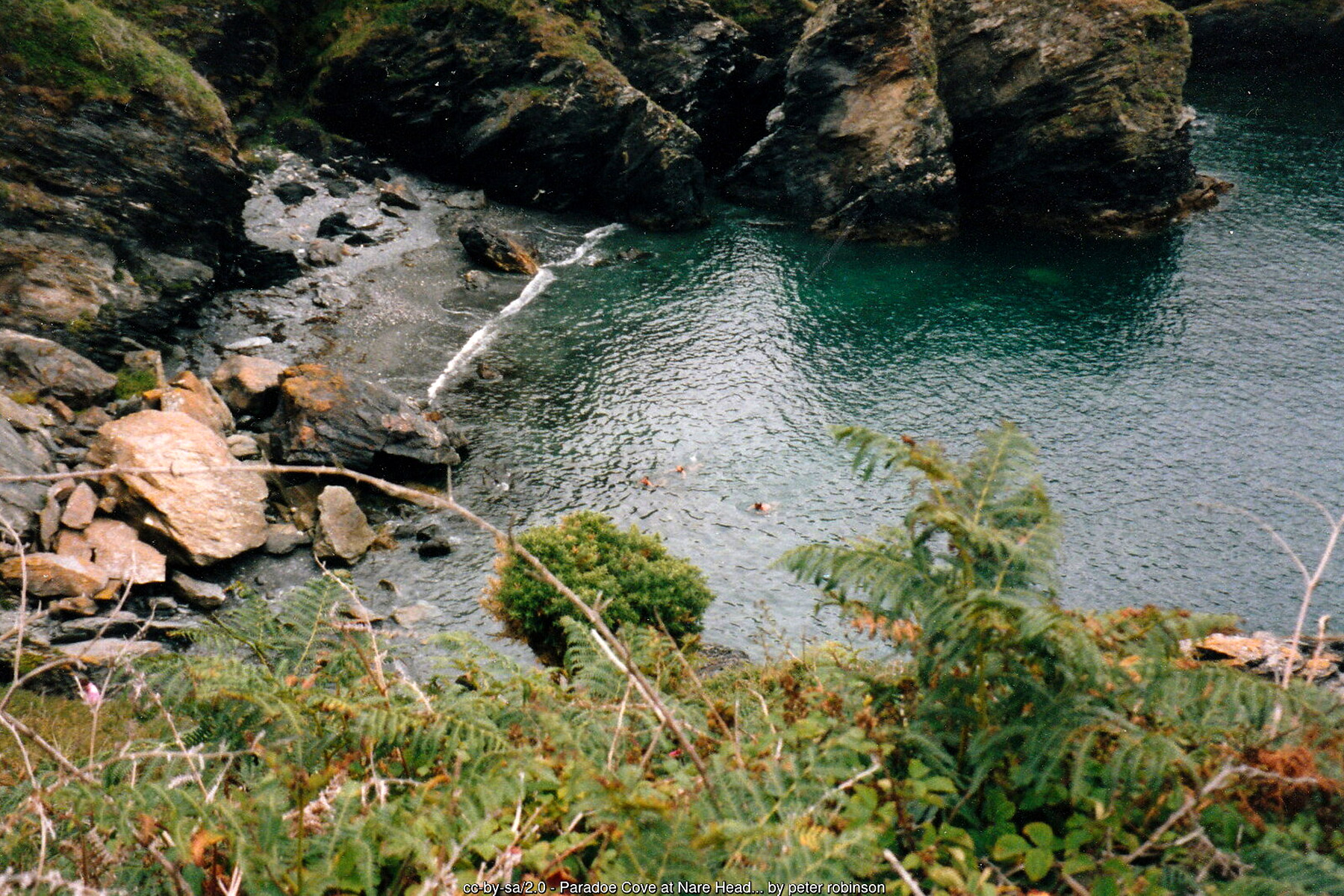
Paradoe Cove sits on the western side of Nare Head, facing out across the southern end of Gerrans Bay towards Carne and Pendower. Locally it is also known as Tregagle's Hole, after a cave in this stretch of cliff said to be haunted by the spirit of Jan Tregeagle - one of Cornwall's best-known folklore figures. Tregeagle was, by most accounts, a real seventeenth-century Bodmin magistrate and steward who acquired his wealth by dishonest means, including defrauding an orphan of an inheritance; as death approached, he tried to buy his way to redemption with gifts to the church and the poor. It did him no good. After he died, his restless spirit was condemned to a series of impossible, never-ending tasks to keep the demons pursuing him at bay - emptying Dozmary Pool on Bodmin Moor with a leaking limpet shell, weaving ropes of sand at Gwenver Cove near Sennen, and carrying sand across the Loe Bar estuary at Porthleven, a task the tides undo as fast as he can complete it. The Nare Head version of the tale - a howling, damned soul said to haunt the cave now known as Tregagle's Hole - is one of several coastal footnotes to the same wider legend, which turns up in different forms at sites right across Cornwall. Above the cove itself stand the ruined remains of Mallet's Cottage, an altogether more solid piece of local history: a nineteenth-century fisherman's cottage built with cob walls, now roofless and weathered but with its walls still standing, visible from the coast path as it passes above the cove - a quiet reminder that this now-empty stretch of coast once supported a working fishing life, however modest.
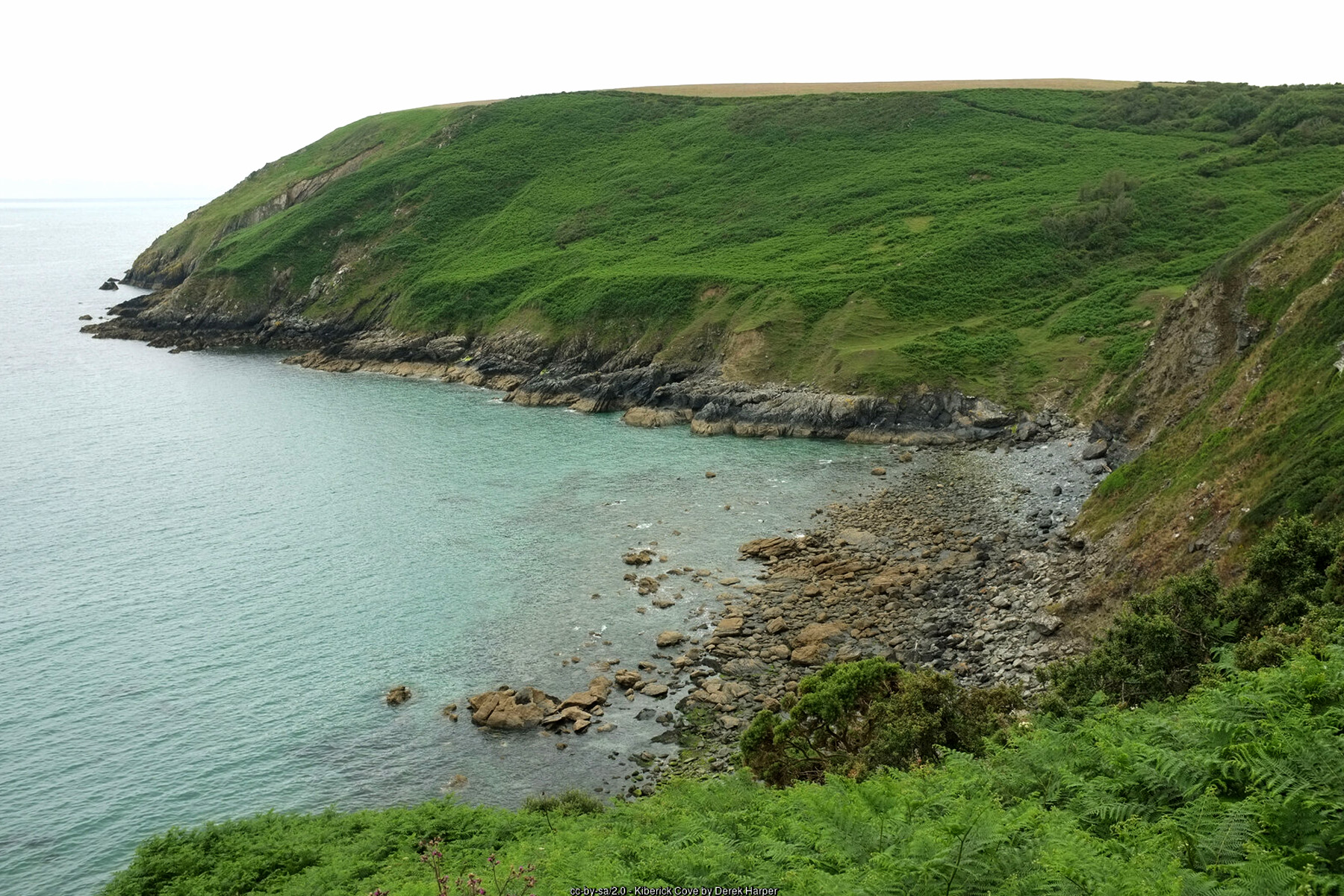
Kiberick Cove lies on the eastern side of the headland, closer to Portloe, and shares the same undeveloped, walk-in-only character as its neighbour. Like Paradoe, it is a shingle-and-rock cove rather than a broad sandy beach, small and enclosed by the cliffs that rise steeply on either side. The two coves are best thought of as a pair for walkers exploring this section of the South West Coast Path: anyone crossing Nare Head between Carne/Pendower and Portloe passes directly above both, with a way down to each for those willing to leave the main path and make the descent.
Nare Head itself, the headland that separates the two coves, rises to over 300 feet and is one of the more prominent landmarks on this stretch of the Roseland coast - its Cornish name, Penare Point, simply means "prominent headland". The National Trust has owned Nare Head since 1931, one of its earliest coastal acquisitions on the Roseland, and the headland still carries the remains of coastal observation posts dating from the Second World War, along with further installations from the Cold War era, when Nare Head - like a number of other exposed Cornish headlands - formed part of Britain's coastal and nuclear-monitoring watch network. Little remains today beyond concrete foundations and fragments of structure, but they add a layer of twentieth-century history to a headland otherwise left largely to gorse, heather and the coast path itself.
Offshore, a cluster of rocky islets known as Gull Rock and the Whelps forms a striking landmark visible from both coves and from the top of Nare Head. Gull Rock, the largest of the group, has long been an important seabird colony - a 1967 survey recorded around 150 shag nests and 35 cormorant nests there, alongside razorbills, guillemots and gulls, and it remains a good spot for seawatching today. The rock has its own small footnotes in local history: it was sold at auction in 1909 for the modest sum of £21, advertised at the time as holding "valuable deposits of guano", and in 1950 it served as a filming location for Walt Disney's live-action version of Treasure Island. The surrounding waters have not always been kind to shipping - the steamship SS Hera struck the nearby Whelps reef in 1914, and her crew are buried together at Veryan churchyard, in what is said to be the longest single grave in the country. A "raised beach" - a fossil shoreline left stranded above current sea level by long-term changes in relative land and sea height - was documented near Nare Head as far back as 1873, and fossil material collected from the area in the 1840s was kept at the Royal Cornwall Museum in Truro, part of a long history of geological interest in this stretch of coast.
Geologically, this stretch of the Roseland coast is part of the same folded slate and mixed sedimentary rock that runs along much of south Cornwall's shoreline, with distinctive white quartzite outcrops around the point itself, giving the cliffs around Nare Head their layered, weathered character and the coves below their mix of shingle and broken rock rather than open sand. The coast path itself is a proper walk here rather than a level stroll - steep in places as it climbs to the top of the headland and drops again towards each cove - and should be treated with the same respect as any exposed clifftop section of the Roseland, particularly in wet or windy weather.
Much of Nare Head and the coastline either side of it is looked after by the National Trust as part of its wider holdings along the Roseland Peninsula, which has helped keep this stretch as undeveloped as it remains today - no new access roads, no visitor infrastructure, just the coast path and the headland itself. Seabirds are a regular sight along the cliffs here, and seals are occasionally spotted in the water off both coves at the right state of tide, part of the same quiet, largely untouched character that makes this section of coast worth the walk for anyone with an interest in wildlife as much as the coves themselves. A popular circular walk links Nare Head to Portloe, usually started from the car park at Carne Beach, taking in both this headland and a stretch of the coast beyond. A calm day with a settled forecast and a falling or low tide gives the easiest access to both coves and the most beach to explore once there.
Practically speaking, Paradoe Cove and Kiberick Cove offer nothing beyond the coves themselves. There is no shop, no toilet block, no cafe and no lifeguard cover of any kind at either beach, and given the lack of road access none is likely to appear. Visitors should come properly prepared, with water, appropriate footwear and a clear sense of how far they are from the nearest facilities - back at Carne or Pendower to the west, or on into Portloe to the east. This is not a spot for a family day out with beach gear in tow; it suits walkers and confident, self-sufficient swimmers, and that is exactly its appeal for those who make the journey.
Visitor Information
Parking
There is no car park or road access at either Paradoe Cove or Kiberick Cove. Both are reached only on foot, via the South West Coast Path from Carne and Pendower to the west or Portloe to the east.
Facilities
No facilities of any kind at either cove - no shop, no toilets and no refreshments. There is no RNLI lifeguard patrol. Visitors should come fully prepared for a self-sufficient walk-and-swim visit.
Disabled Access
Access is on foot only, over Nare Head via the coast path, and is not suitable for wheelchairs, pushchairs or limited mobility. There is no parking of any kind, so no Blue Badge provision applies here.
Things to Do Nearby
- Carne, the nearest beach to the west, with car parking, facilities and a natural starting point for the walk over Nare Head
- Portloe, the unspoilt fishing village a short coast path walk to the east, with its own small beach, harbour and facilities
- The South West Coast Path, which climbs directly over Nare Head between the two coves, linking them to Carne, Pendower and Portloe
Places to Stay
Neither Paradoe Cove nor Kiberick Cove has any dedicated accommodation listings of its own - this is a walk-in pair of coves with no village or resort attached. Nare Head sits within the parish of Veryan, whose own accommodation hub is the nearest genuine match:
Frequently Asked Questions
Page last updated: 17 September 2026