Cot Valley & Priest's Cove
Boulders and a Tidal Pool Either Side of Cape Cornwall
Cot Valley & Priest's Cove, near Cape Cornwall, St Just, Land's End Area, Cornwall, TR19 7NN
Cot Valley and Priest's Cove are two small, close-lying coves either side of Cape Cornwall, one of the most dramatic and recognisable headlands anywhere on the Land's End peninsula, a short distance south of the mining town of St Just. Cot Valley, also known by the older name Porth Nanven, lies to the south of the headland, a wild, boulder-strewn cove nicknamed "Dinosaur Egg Beach" for its extraordinary rounded granite boulders. Priest's Cove sits just round Cape Cornwall to the north, a smaller, more sheltered cove with a genuine tidal swimming pool and its own long-standing swimming tradition. The two coves are close enough together - and different enough in character - that they are best thought of and visited as a pair, with the striking bulk of Cape Cornwall itself standing between them.
Cot Valley is a genuinely wild cove, about a mile southwest of St Just, sitting at the foot of the valley from which it takes its name - a former tin-mining valley that runs down from the town to the sea, its lower reaches now a quiet, overgrown route to the coast rather than a working industrial landscape. The beach itself is dominated by large, rounded granite boulders rather than open sand, smoothed and shaped over millennia by the sea into forms distinctive enough to have earned the cove its popular nickname, "Dinosaur Egg Beach." It is one of the most photographed small coves on this stretch of coast for exactly that reason, and the boulders make for a striking, slightly otherworldly scene at any state of tide.
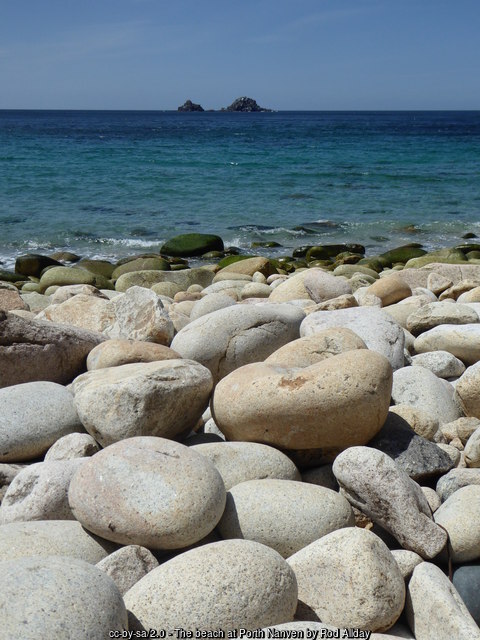
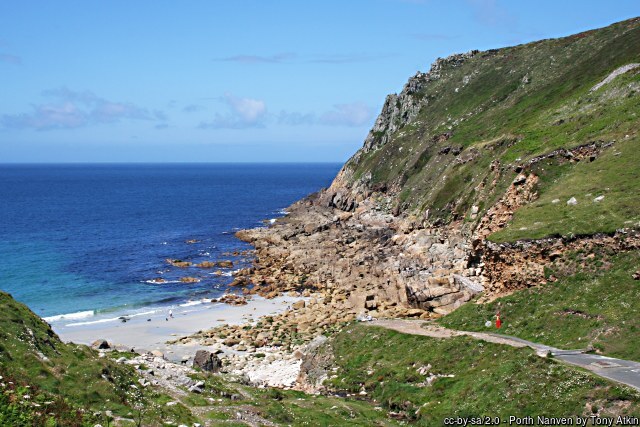
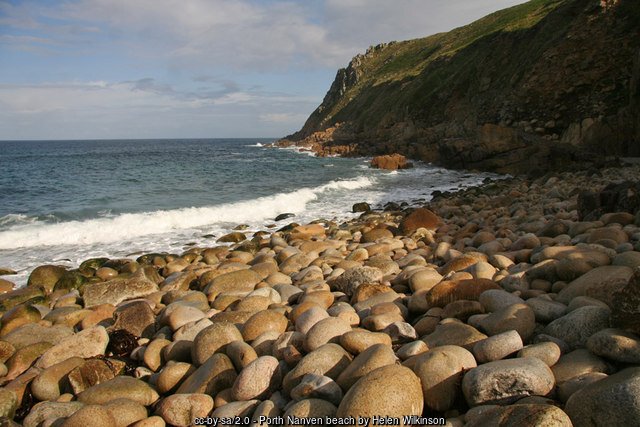
Beyond its visual appeal, Cot Valley has genuine geological significance. The cove is home to a raised beach deposit - an ancient shoreline left stranded above current sea level by long-term changes in relative land and sea height, preserving old beach material, including rounded boulders and shingle, well above where the modern tide now reaches. This deposit has been of interest to geologists since the eighteenth century, making Cot Valley one of the longer-studied sites of its kind on the Cornish coast, and a genuine point of scientific as well as scenic interest for anyone visiting with an eye for the landscape's history rather than just its present-day appearance.
Access to Cot Valley is part of its appeal and its challenge in equal measure. A small clifftop car park serves the cove directly, but it is genuinely small - holding only around fifteen to twenty cars - and fills quickly, particularly on a fine day in season. The alternative is to park in St Just itself or at Cape Cornwall and walk down through the valley, a walk of about a mile that follows the old tin-mining route down to the sea. There are no facilities at all at Cot Valley - no shop, no toilets, no cafe - just sand, sea and boulders, in keeping with its genuinely undeveloped character. Offshore, the dark twin peaks of the Brisons rocks are clearly visible from the cove, a striking landmark shared with Priest's Cove round the headland and a recurring feature of views along this whole stretch of coast.
Cot Valley is not a beach for casual or inexperienced swimmers. There is no lifeguard cover, and the cove is known for strong currents, a hazard compounded by its boulder-strewn shoreline, which makes entering and leaving the water more difficult than at a conventional sandy beach. Visitors should treat it with real caution, particularly outside calm, settled conditions, and it is generally better suited to confident swimmers, rockpoolers and photographers than to a typical family beach day.
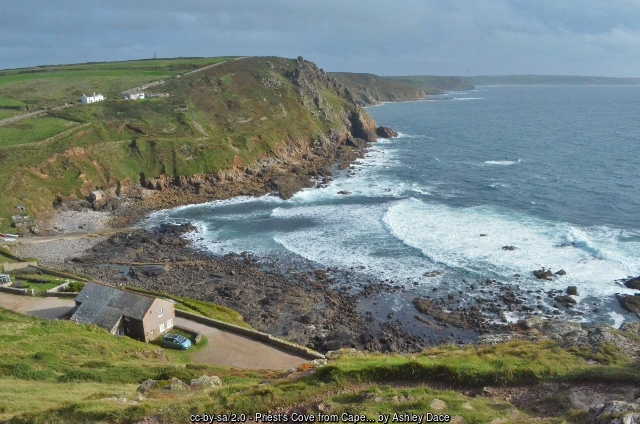
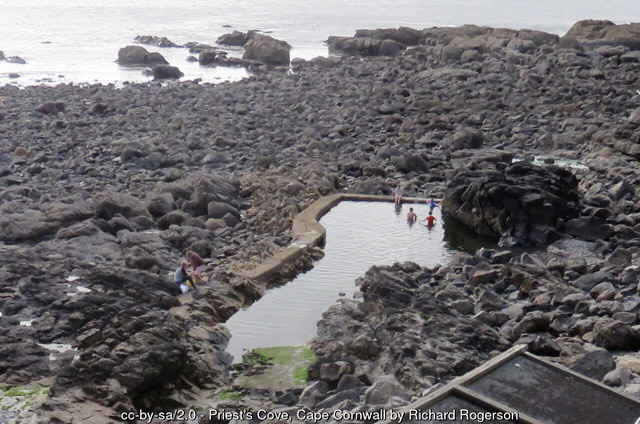
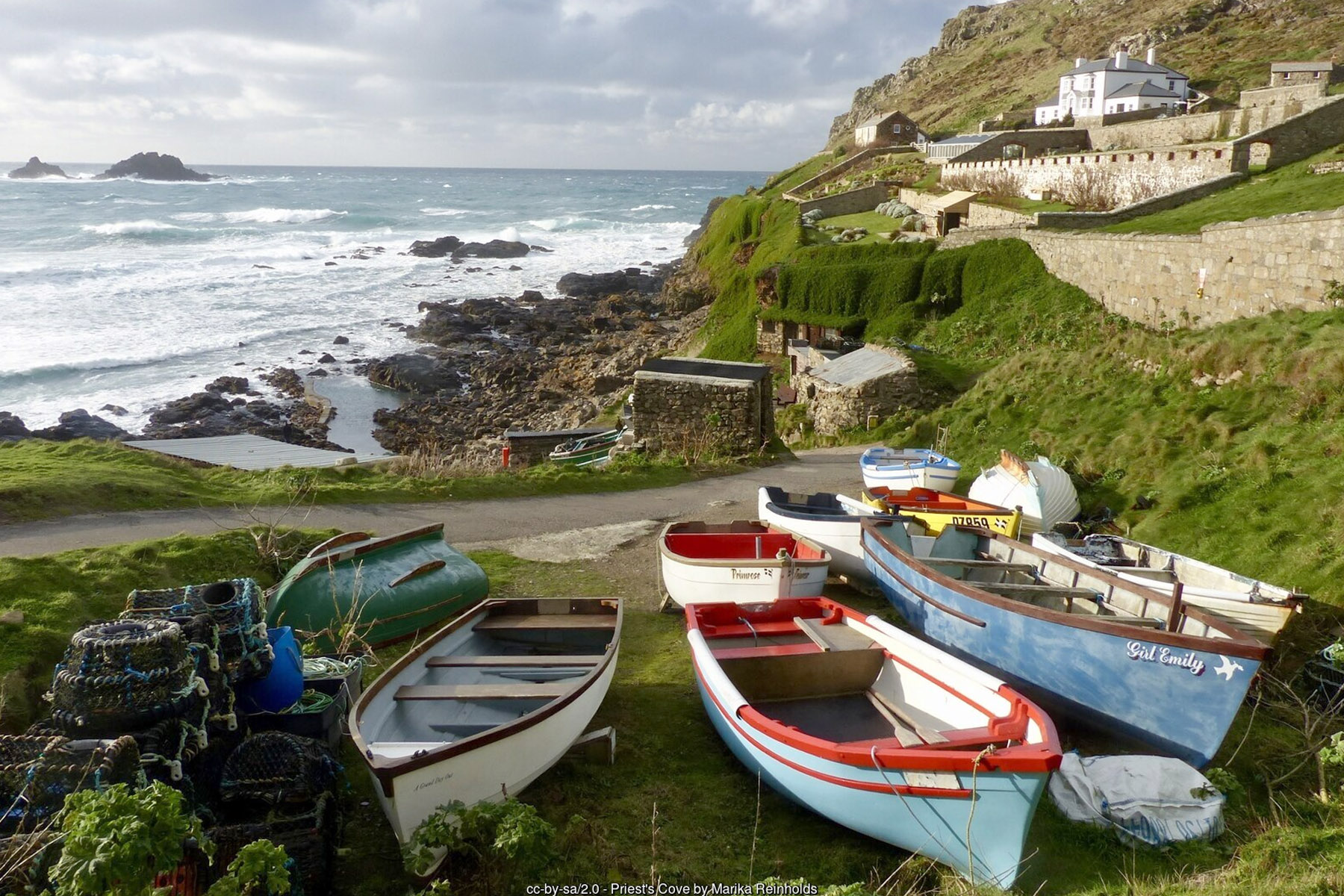
Priest's Cove, just round Cape Cornwall to the north of Cot Valley, has a markedly different character. Reached via the Cape Cornwall road from St Just, it is a smaller, more sheltered cove best known for its tidal swimming pool - a half-natural, half-man-made feature that becomes usable for swimming around low tide, when the pool fills with clear seawater largely protected from the swell breaking further out. The cove has long been a popular local swimming spot for exactly this reason, offering calmer water than the open coast either side of it. Priest's Cove is also the starting point for an annual swimming race out to the Brisons rocks offshore, a genuinely well-known local event and a reflection of how central swimming has long been to the cove's identity, rather than a beach day built around sand and sunbathing.
Facilities at Priest's Cove are better than at Cot Valley, thanks to its proximity to the Cape Cornwall car park just above it, which has toilets and a cafe - a welcome, practical contrast to Cot Valley's complete lack of amenities, and one reason many visitors combine a stop at both coves in a single visit, using Priest's Cove for facilities and Cot Valley for its wilder scenery. That said, Priest's Cove itself has no lifeguard cover, and conditions here can turn rough with strong currents, so the same general caution that applies at Cot Valley applies here too, tidal pool aside.
Cape Cornwall, the headland separating the two coves, is a landmark in its own right and worth describing as part of any visit here. Along with Land's End itself, it is one of only two headlands in Cornwall - and indeed in England - formally recognised as a "cape," a genuinely distinctive piece of geography that has made it one of the most photographed and well-known spots on the whole Penwith peninsula. The headland was donated to the National Trust by the Heinz food company in the 1980s, a notably generous piece of corporate philanthropy that secured public access to the site for good, and it remains one of the Trust's more unusual acquisitions in Cornwall as a result. A short, distinctive chimney stack stands near the summit of the headland, the surviving remnant of the old mine workings that once operated here, tying Cape Cornwall into the same wider mining history that shaped Cot Valley and much of the surrounding St Just landscape. From the top, views take in both coves below, the Brisons rocks offshore, and on a clear day a long stretch of the Land's End coastline in both directions.
Dogs are prohibited at Priest's Cove from Easter to the end of September, a restriction worth noting for anyone planning a visit with a pet during the main season; no equivalent seasonal restriction is signposted at Cot Valley, though as at any unpatrolled beach, dogs should be kept under close control, particularly given the boulders underfoot. Both coves sit within the parish of St Just in Penwith, Cornwall's westernmost town, whose own mining heritage - much of it, like Cot Valley's own valley route, now reclaimed by nature - runs directly through this stretch of coast and links naturally to the wider Tin Coast landscape further north towards Pendeen.
Taken together, Cot Valley and Priest's Cove offer a genuinely varied pairing within a very short distance of one another: wild boulders, a raised beach deposit of real geological interest, and complete solitude at Cot Valley; a tidal swimming pool, better facilities and a long-standing local swimming tradition at Priest's Cove; and, standing between the two, one of Cornwall's most distinctive headlands in Cape Cornwall itself. A calm day with a settled forecast and a low or falling tide gives the best access to both the swimming pool at Priest's Cove and the fullest stretch of boulders at Cot Valley, and the short walk over Cape Cornwall between the two is one of the more rewarding short coastal walks anywhere on this part of the Land's End peninsula.
Visitor Information
Parking
Cot Valley has a small clifftop car park (around 15-20 cars, fills quickly) or is reached on foot from St Just/Cape Cornwall, about a mile. Priest's Cove is reached via the Cape Cornwall road, with parking at the Cape Cornwall car park just above it.
Facilities
No facilities at Cot Valley. Toilets and a cafe are available at the Cape Cornwall car park, near Priest's Cove. Neither cove has an RNLI lifeguard patrol.
Disabled Access
Access to both coves involves uneven, unsurfaced ground and is not suitable for wheelchairs or pushchairs. No dedicated Blue Badge bays are confirmed at either car park - check current signage on arrival.
Things to Do Nearby
- Portheras Cove, a scenic South West Coast Path walk to the north near Pendeen
- Cape Cornwall itself, the distinctive headland between the two coves, owned by the National Trust and topped by an old mine chimney stack
- Gwynver Beach, further south along the coast towards Sennen
Places to Stay
Both coves sit within the parish of St Just in Penwith, the closest genuine accommodation hub:
Frequently Asked Questions
Page last updated: 17 September 2026