Treen Cove & Porthglaze Cove
Two Remote, Little-Known Coves on the Coast Path Between Zennor and Gurnard's Head
Treen Cove & Porthglaze Cove, near Zennor, Cornwall, TR26 3BY
Treen Cove and Porthglaze Cove are two of the most remote and least-visited coves anywhere on the St Ives stretch of coast, and it is worth saying straight away what they are not. They are not sandy family beaches, they have no car park, no facilities, and no direct road access of any kind - both are reached only on foot, along a wild and beautiful section of the South West Coast Path on the north side of the Penwith peninsula, between Zennor Head and Gurnard's Head, roughly a mile or so west of Zennor village. It is also worth clearing up a common point of confusion before going any further: this Treen is not the well-known village of Treen near Porthcurno and Logan Rock, close to the Minack Theatre at the western tip of Cornwall. This is a much smaller, little-known hamlet in the parish of Zennor, on the north coast, named after the Cornish words for a farm or settlement referencing the Iron Age fort on the adjacent headland. The two places share a name purely by coincidence of Cornish place-naming, and anyone researching "Treen, Cornwall" should take care to check which one a given fact actually refers to.
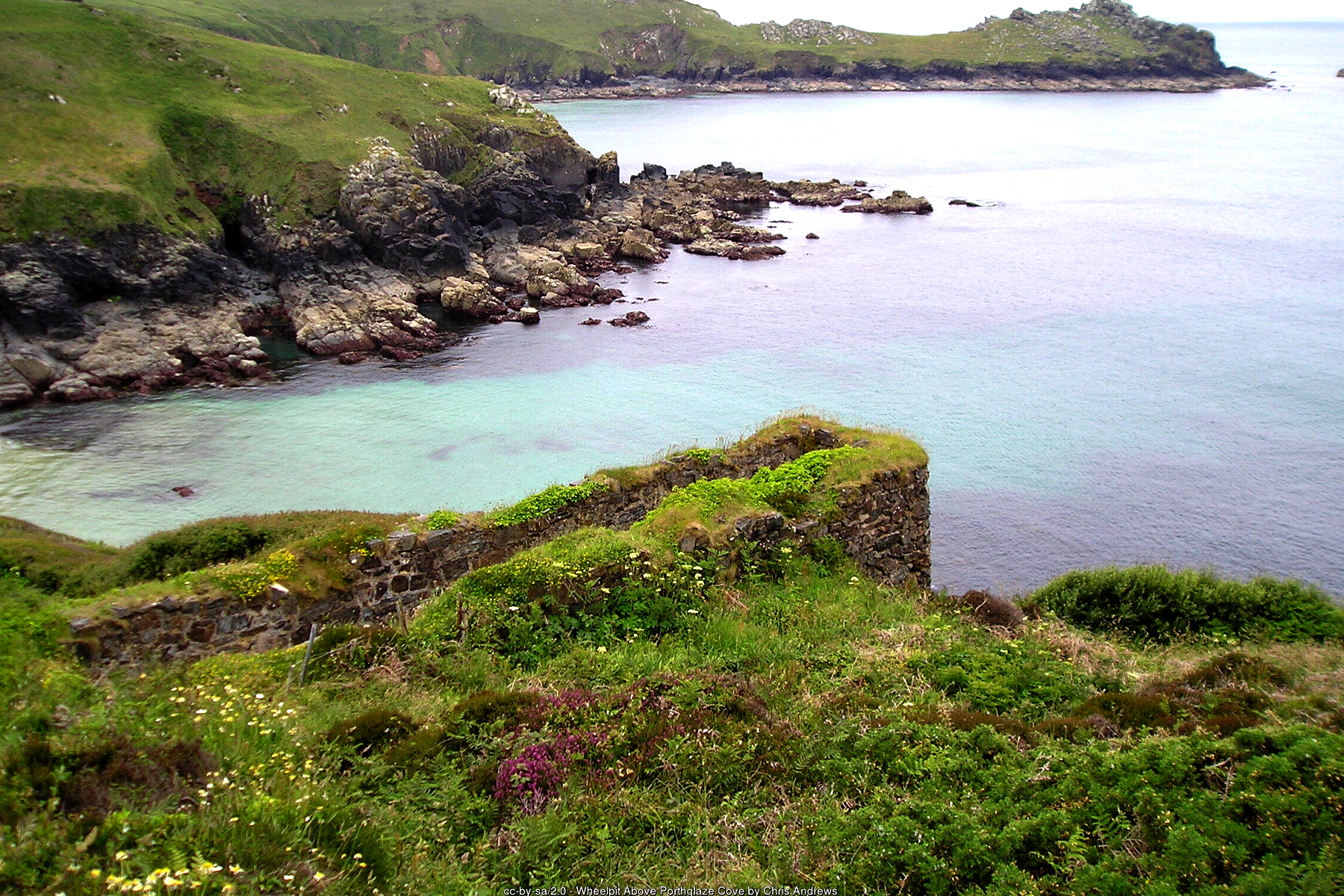
Treen Cove itself sits directly below the hamlet of Treen, sheltered at its mouth by what the Victorian clergyman and diarist Francis Kilvert, writing in his Cornish journal on 29 July 1870, described as a "large guardian-rock" - a substantial rock formation that broke the force of the Atlantic swell enough for small fishing boats to lay up safely inside the cove during stormy weather. Kilvert's account, one of the more evocative pieces of first-hand nineteenth-century travel writing about this coast, captures a working cove rather than a leisure beach: local seine fishing was a serious business along this shore in the 1870s, with historical records showing the fishery here employing two dozen or so workers and around ten boats in a good season. The cove's name reflects the same history in a different way - "Treen" derives from the Cornish "tre" (a farm or settlement) combined with an element referencing "din", a fort, pointing directly at Trereen Dinas, the Iron Age promontory fort that crowns Gurnard's Head immediately to the west. Today the cove is quiet and little-visited, reached by a final scramble down over rocks that can be slippery underfoot, with no sand at high tide and a shoreline that is entirely rock and shingle rather than a conventional beach.
On the cliff edge directly above Treen Cove stand the scant remains of Chapel Jane, a small fisherman's chapel whose surviving pottery has been dated to around 1100-1150 AD, though local tradition and its association with a nearby holy well suggest the site may have been in religious use considerably earlier, perhaps as far back as the eighth century. The chapel is thought to have remained in occasional use until the sixteenth century before falling into ruin, and its position - a lonely, weather-beaten platform looking straight out over the cove and the open Atlantic - says a great deal about how exposed and self-contained this small fishing community once was. Further along the coast path towards Gurnard's Head, the eye is drawn inland to the broken engine house walls of the old Gurnard's Head Mine (originally Treen Copper Mine) and the wider scattered remains of Zennor Consols, a reminder that this quiet, grassy clifftop was once a working industrial landscape of shafts, engine houses and mine buildings alongside the fishing that used Treen Cove itself.
A short distance further along the coast path towards Gurnard's Head lies Porthglaze Cove, a similarly small, pebble-and-rock cove tucked into the same rugged shoreline. Like Treen Cove, it has no path down for anything other than careful walking over rough ground, no facilities, and no direct road access - it is reached exclusively via the coast path linking Zennor Head and Gurnard's Head. The two coves are close enough together, and similar enough in character, that they are best treated as a linked pair for anyone planning a walk along this stretch: a single there-and-back or circular route from Zennor can readily take in both, along with the wider run of small, half-hidden coves - Pendour Cove, Veor Cove and others - that punctuate this section of the Penwith Heritage Coast between the two headlands.
The standout feature of the whole area, and the reason many walkers make the journey out here at all, is Gurnard's Head itself - a dramatic, blunt-nosed headland whose Cornish name, Ynyal, means "desolate one," and whose rocky profile is said to resemble the head of a gurnard fish. Almost the entire headland is owned and managed by the National Trust, and its seaward tip carries the remains of Trereen Dinas, an Iron Age cliff castle and one of fewer than a hundred surveyed promontory forts nationally. Partial excavation in 1939 uncovered Iron Age pottery, spindle whorls and rubbing stones pointing to occupation from around the second century BC, alongside at least sixteen shallow hut platform depressions scattered across the fort's steep eastern slopes - some built around natural boulders - and, more unexpectedly, a medieval horseshoe found within one of the excavated huts, hinting at much later use of the site. On the landward side, two earthen defensive banks with outer ditches, still clearly visible today, once sealed off the promontory from the rest of the headland; a small twentieth-century concrete lookout platform occupies the northern tip, a relic of coastal watch duties long after the fort itself fell out of use. It is a genuinely evocative place to stand, with sheer cliffs falling away on three sides and Treen Cove visible curling away to the east below.
The coast path walk itself is the main point of a visit, and should be approached as a proper, moderately demanding coastal walk rather than a stroll to the beach. From Zennor, the path climbs and dips along the clifftop heading west, passing above Pendour Cove - associated in local legend with the Mermaid of Zennor, whose carved image survives as a medieval bench-end, the "Mermaid Chair," in the village's parish church of St Senara - before reaching the turning down towards Treen Cove and continuing on to Porthglaze Cove and the approach to Gurnard's Head. The ground underfoot is uneven and rocky in places, with some sustained climbing, exposed sections close to unfenced cliff edges, and no shelter from Atlantic wind or rain; sturdy footwear is essential, and the walk is unsuitable for pushchairs or anyone unsteady on rough terrain. Many walkers use the Gurnard's Head Hotel, an old coaching inn on the B3306, or Zennor's Tinners Arms - one of Cornwall's oldest pubs, and a short walk from where the novelist D. H. Lawrence lived for a time during the First World War while writing part of Women in Love - as a start or end point, with the option of a longer loop back inland along quiet lanes rather than retracing the clifftop route.
This is also a good stretch of coast for wildlife: grey seals are regularly seen hauled out on the rocks below both coves or bobbing offshore, seabirds including fulmars, guillemots and razorbills nest on the cliffs in season, and the exposed granite and greenstone geology of Gurnard's Head itself - part of the same ancient, heavily folded rock sequence that runs the length of the Penwith coast - rewards anyone with an interest in coastal geology. Because both coves are entirely undeveloped, with no lifeguard cover, no signage and a shoreline that disappears almost completely at high tide, this is not a destination for a casual family beach day; it suits confident coast path walkers who want a wilder, quieter alternative to St Ives' main beaches, prepared to check tide times and weather before setting out and to treat the final rocky descent to either cove with real care.
Visitor Information
Parking
No parking at either cove. Nearest parking is in Zennor village or near the Gurnard's Head hamlet off the B3306, both reached only by minor roads - both coves are then reached on foot via the coast path.
Facilities
No facilities of any kind at either cove - no toilets, cafe or lifeguard. Nearest facilities, including the Tinners Arms pub, are in Zennor village.
Disabled Access
Not accessible - a narrow, uneven coast path with steep sections and unfenced cliff edges, followed by a rocky scramble down to either cove. No Blue Badge provision at Treen Cove or Porthglaze Cove.
Things to Do Nearby
- Zennor Cove, back towards Zennor and St Ives along the same coast path
- Gurnard's Head & Trereen Dinas Iron Age fort - a dramatic cliff castle on the headland immediately west of Treen Cove, managed by the National Trust
- South West Coast Path Guide - walking routes along this stretch of coast
Places to Stay
Frequently Asked Questions
Page last updated: 9 September 2026.