Porthminster Beach
St Ives' Blue Flag Beach by the Railway, Looking Out to Godrevy
Porthminster Beach, St Ives, Cornwall, TR26 2BN Blue Flag 2026
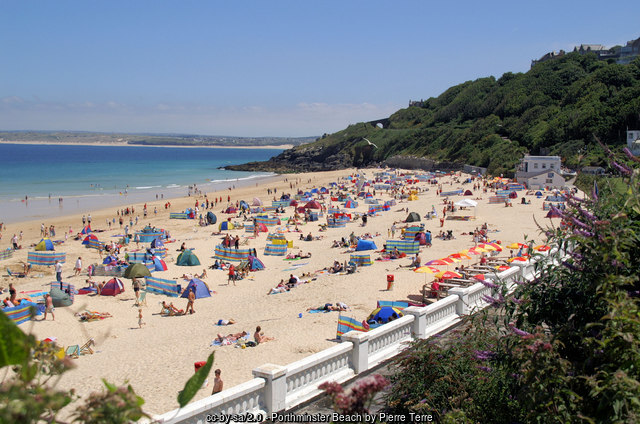
Porthminster is the large, popular beach on the eastern side of St Ives, a broad crescent of soft golden sand that curves away beneath the town towards Carbis Bay. From the sand, the view opens right out across St Ives Bay to Godrevy Lighthouse in the distance, the same stretch of water that has drawn painters to this stretch of coast for well over a century. Sheltered and north-east facing, Porthminster catches a gentler swell than the Atlantic-facing beaches on the far side of the peninsula, and it has long been regarded as St Ives' safest and most reliably family-friendly stretch of sand - a firm favourite for a full day's stay rather than just a quick look at the sea.
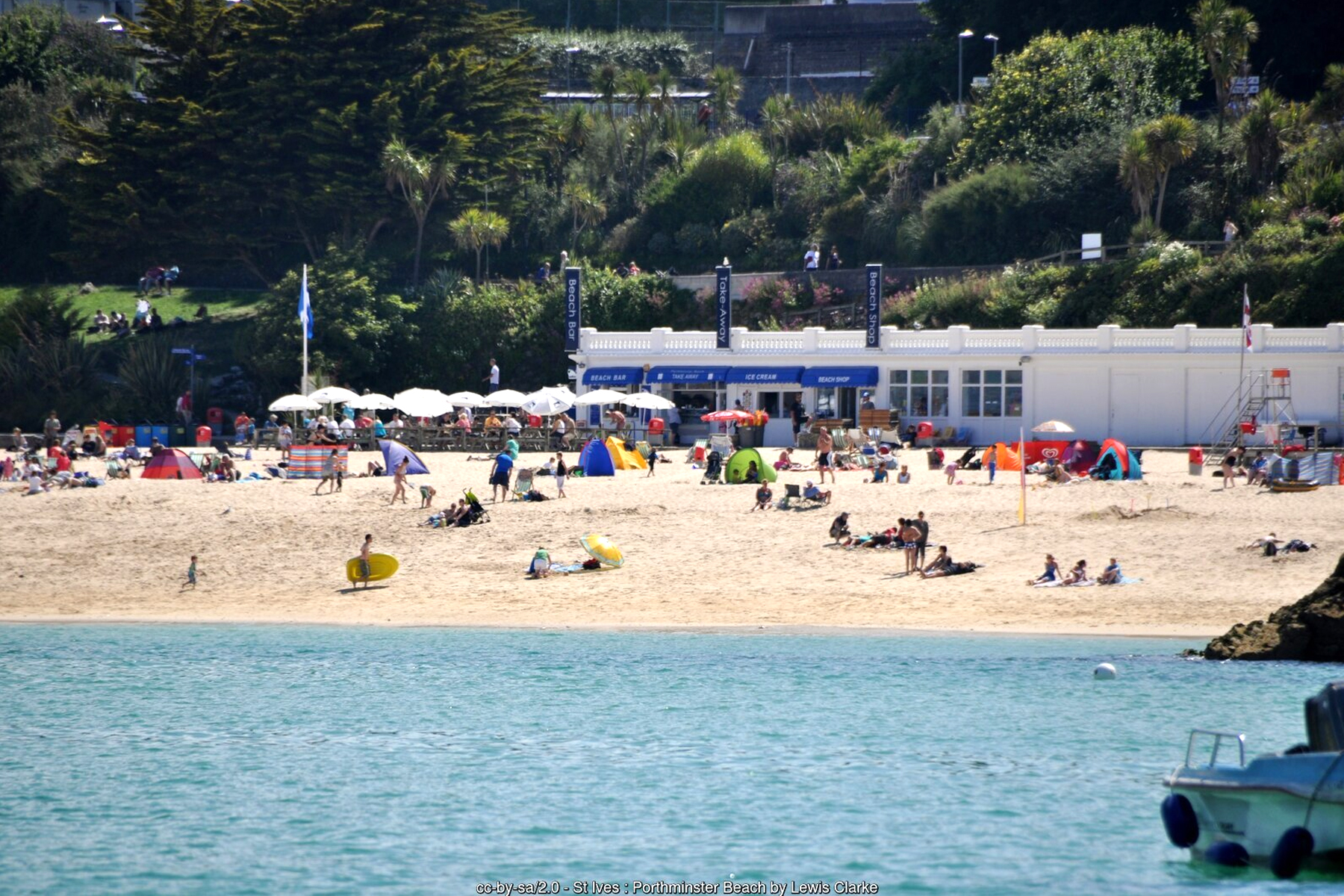
What makes Porthminster genuinely unusual among Cornwall's beaches is how it meets the railway. St Ives station, the terminus of the St Ives Bay Line branch from St Erth, sits directly above the sand, and a short flight of steps leads straight down from the platform onto the beach itself. It is one of the most celebrated station-to-beach walks in Britain - step off the train, and within a minute or two you can have your feet in the sand - and the branch line itself, which climbs along the cliffs above Carbis Bay and Porthkidney Sands before dropping to the coast at St Ives, is regularly ranked among the country's most scenic short rail journeys. For visitors staying without a car, or simply keen to avoid St Ives' notoriously stretched summer parking, arriving by train from the Park & Ride at St Erth and walking straight onto Porthminster is one of the easiest ways into the town.
The branch line itself opened in 1877, built primarily to carry St Ives' once-huge pilchard catch out to the main line rather than for holidaymakers, and its single track still hugs the cliffs above Carbis Bay and the wide tidal sands of the Hayle estuary before dropping down to the terminus above Porthminster. It's regularly ranked among the most scenic short branch lines in Britain, and a popular way to see it without adding to St Ives' parking pressure is to leave the car at the St Erth Park & Ride and take the eleven-minute train ride in instead, watching Porthkidney Sands, Carbis Bay and finally Porthminster itself appear around the final headland.
The beach's name is older than the railway by many centuries. "Porthminster" combines the Cornish porth, meaning a cove or landing place, with the English minster, an endowed church - a name first recorded as far back as 1301. Local tradition and some documentary evidence point to a medieval chapel once standing near the beach, close to where a small stream still reaches the sand: an eighteenth-century manuscript account describes a settlement here being burned during a French raid in the fifteenth century and never rebuilt. In the 1870s, shifting sand at Porthminster is recorded as having exposed old foundations along with stone coffins containing lead chalices, consistent with a medieval burial ground - though the site has never been formally excavated, so much of its early history remains a matter of record and tradition rather than certainty. It is a quietly remarkable thing to consider while crossing what is now simply a well-loved family beach.
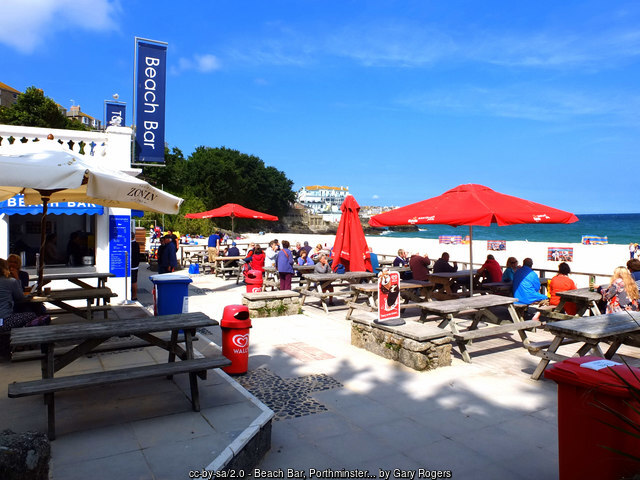
Porthminster is also home to one of the best-known beachside restaurants in Cornwall. Overlooking the sand from its own whitewashed building, the beach cafe has built a genuine reputation over three decades for seafood-led menus blending Mediterranean and Asian influences, alongside vegetarian dishes using produce grown in its own coastal garden, and has picked up recognition for its sustainable approach to sourcing fish. Its glass-enclosed terrace keeps the same view across the bay to Godrevy in reach whatever the weather, and it is as much a destination in its own right for many visitors as the beach it sits on.
The bay itself is well suited to a slow, low-effort day out. The sand shelves gently and the water is generally calm enough for confident swimming, paddleboarding and kayaking, particularly from mid to low tide when conditions are usually at their most settled and morning winds lightest; more adventurous paddlers sometimes explore towards Carbis Bay, keeping clear of the rocky ledges at each end of the beach. A crazy golf course sits on the beach itself, deck chairs can be hired for the day, and there is enough width and depth of sand at low tide for games, sandcastles and simply spreading out - it rarely feels as packed as St Ives' smaller town beaches even in peak season, thanks to its size.
At low tide, the rocky ledges bookending Porthminster's sand are worth a slow explore for anyone travelling with children, with the shore crabs, blennies and anemones typical of this coast sheltering under the weed. Further out, Godrevy Lighthouse marks a notorious reef known as The Stones, and the grey seals that regularly haul out near Godrevy Point are occasionally visible as distant shapes on the rocks from Porthminster on a clear day, though a boat trip or a walk out to Godrevy itself gives a far better view of the colony. The lighthouse, built in 1859, is widely believed to have partly inspired Virginia Woolf's novel To the Lighthouse, drawing on her own childhood summers spent looking out over this same bay from Talland House above St Ives - even though the finished novel relocated its setting to the Hebrides.
St Ives' quality of light has drawn artists to this town for well over a hundred years, from the fishing-harbour scenes of the nineteenth century through to the post-war abstract painters and sculptors - Barbara Hepworth and Ben Nicholson among them - who made St Ives internationally famous and whose legacy is now held at Tate St Ives and the Hepworth Museum on the other side of the town. Porthminster, with its wide open aspect across the bay towards Godrevy, is as good a place as any to understand why: the combination of reflected light off sand and sea and the long uninterrupted sightline to the lighthouse gives the bay a particular clarity that changes through the day, especially in the softer light of early morning or evening.
The South West Coast Path runs along the top of the beach and continues around the low headland towards Carbis Bay, a gentle and well-used stretch that makes it easy to combine Porthminster with its neighbouring beach on a longer walk, while the path in the other direction climbs up into St Ives itself towards the harbour and Porthgwidden. RNLI lifeguards patrol Porthminster through the main season, and the beach's currents and tidal range are generally considered manageable, though as with any Cornish beach it's worth checking tide times and flags before swimming, particularly as the tide narrows the beach considerably by high water.
Facilities are well established for a beach of this size: public toilets, including an accessible Changing Places facility nearby, showers, and the beachside cafe and shop are all on site, with St Ives' full range of other shops, galleries and eateries only a short walk into town. There is no dedicated beach car park - visitors park in one of St Ives' town car parks, most conveniently the long-stay car park by the railway station, and walk down - so allow extra time in the height of summer, or consider the train.
Dogs are restricted from Porthminster between 15 May and 30 September, 10am to 6pm, in line with most of Cornwall's main family beaches, though they are welcome under close control outside those dates and times. For anyone planning a visit around the shoulder seasons, Porthminster's shelter and gentle gradient make it a pleasant option well outside the main summer months too, when the crowds thin and the walk down from the station feels even more like a small piece of theatre before the beach opens out in front of you.
Visitor Information
Parking
No dedicated beach car park. The nearest option is Cornwall Council's long-stay car park by St Ives railway station (TR26 2BH), which overlooks the beach; St Ives' other town car parks are also within walking distance. Parking is busy in summer, so arrive early or use the St Erth Park & Ride train.
Facilities
Toilets (including a Changing Places facility nearby), showers, and the well-known Porthminster Beach Cafe and shop on site. Deck chairs for hire and a crazy golf course on the beach.
Disabled Access
A level path and ramp link the Station car park to the beach promenade, and beach wheelchairs can be borrowed on a first-come, first-served basis (photo ID required) from the beachside cafe. No dedicated Blue Badge bays are confirmed at the beach itself - worth checking current provision with Cornwall Council before you travel.
Things to Do Nearby
- Carbis Bay, the next beach south along the coast towards Lelant
- Harbour Beach, a short walk into St Ives town
- Tate St Ives, Porthmeor Beach, St Ives
- Barbara Hepworth Museum & Sculpture Garden, Barnoon Hill, St Ives
- Barnoon Workshops, Barnoon Hill, St Ives
Places to Stay
Frequently Asked Questions
Page last updated: 9 September 2026.