Harbour Beach
St Ives' Own Town Beach - Sand at Low Tide, Sea at High
Harbour Beach, The Wharf, St Ives, Cornwall, TR26 1LH
Harbour Beach is St Ives at its most immediate: a stretch of clean, south-east-facing sand that appears inside the working harbour itself as the tide falls, with the town's shops, galleries, pubs and restaurants standing almost close enough to touch along the old harbour wall. There is no walk from a car park through dunes to reach this beach - it simply forms, tide by tide, in the middle of everything, which is exactly what makes it St Ives' true town beach rather than a resort beach on the outskirts. Continuing round the harbour wall towards Porthgwidden, a separate and much smaller tidal cove called Bamaluz Beach is tucked below Wheal Dream and St Ives Museum - easily missed, reached only down a steep flight of steps, and, unlike Harbour Beach, open to dogs all year round with no seasonal restriction.
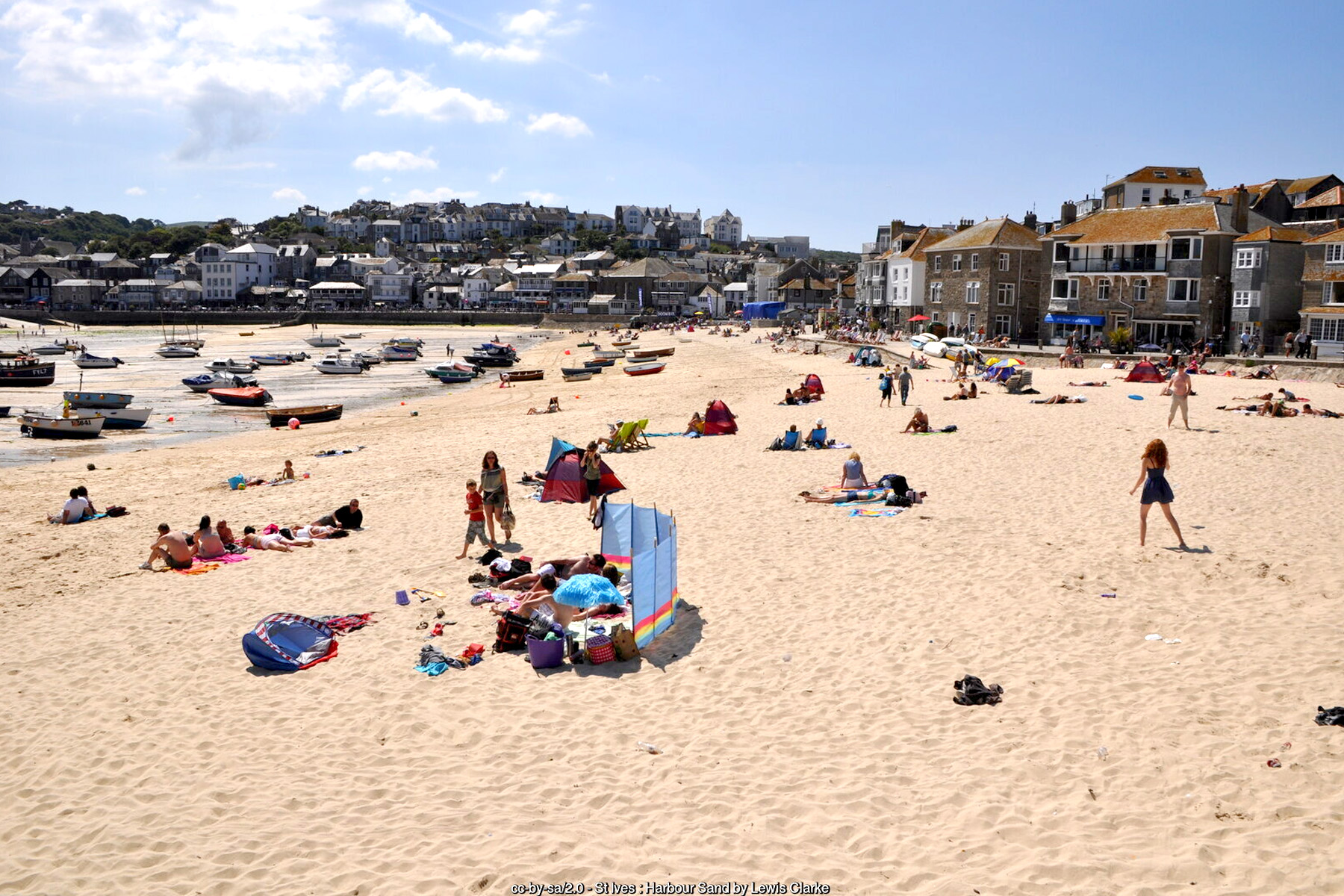
The defining fact about this beach is tidal, and it is worth understanding before planning a visit around it: at low tide, a broad, firm area of golden sand opens up across most of the harbour floor, sheltered on both sides by the stone arms of the piers and popular with families for paddling, sandcastle-building and gentle swimming away from any Atlantic swell. As the tide rises, that sand narrows and eventually vanishes altogether - at high water the sea comes right up against the harbourfront buildings and slipways, and the "beach" simply isn't there. Boats that sit stranded on the sand at low tide float freely again within a few hours, which is part of the harbour's everyday charm, but it also means towels, bags and beach toys left too low down can be caught out by the returning water faster than newcomers expect.
That rhythm is tied directly to the harbour's working history. St Ives was, for the best part of two centuries, one of the great pilchard ports of Cornwall - by some accounts, in peak years its catches rivalled or exceeded the combined landings of every other Cornish pilchard fishery put together. The trade depended on spotting the huge shoals that moved close inshore each summer and autumn, and that job fell to a lookout known as a huer, stationed on the high ground above the harbour with a clear view out across the bay. When the water darkened with a shoal and gulls began diving to feed on it, the huer raised the cry of "Hevva! Hevva!" and signalled with a trumpet and branches held above his head, directing the seine boats below into position to encircle the fish before they could scatter. It was a dramatic, all-hands moment for the whole town: seine nets several hundred metres long and weighing tons had to be rowed out and closed around the shoal in a coordinated rush, with everyone from boat crews to net-menders to cellar workers drawn into the effort once the alarm went up.
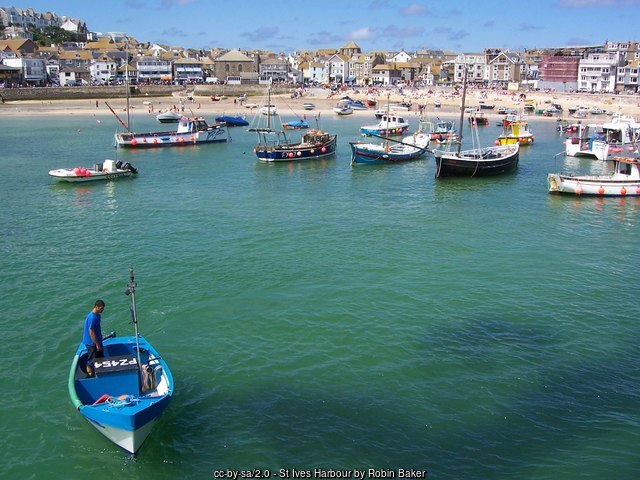
The scale of the fishery at its height is hard to picture now. In one especially productive stretch during the 1847 season, St Ives boats are recorded as having landed in the region of fifty million pilchards in a single day - an almost unimaginable haul that speaks to just how central this harbour once was to the town's entire economy. Once landed, the fish were carried to cellars around the harbour for "bulking": layered with salt and left to cure for around a month, then washed, packed tightly into barrels, and pressed to extract the oil before being shipped out, historically in vast quantities to Italy and other Catholic countries where salted pilchards were valued for fasting days.
The trade gradually declined through the late 19th and 20th centuries as shoals grew less predictable and markets changed, and the last significant seine catch at St Ives is generally dated to 1908, though salting continued in a reduced form for much longer still - the final traditional salt pilchard works in the town did not close until 2005. In recent years the same fish, rebranded as the Cornish sardine and landed by smaller day boats using ring nets rather than the old shore-based seines, has found a genuine revival, now marketed under Protected Geographical Indication status as a distinctly Cornish product.
The scale of the fishery at its height is hard to picture now. In one especially productive stretch during the 1847 season, St Ives boats are recorded as having landed in the region of fifty million pilchards in a single day - an almost unimaginable haul that speaks to just how central this harbour once was to the town's entire economy. Once landed, the fish were carried to cellars around the harbour for "bulking": layered with salt and left to cure for around a month, then washed, packed tightly into barrels, and pressed to extract the oil before being shipped out, historically in vast quantities to Italy and other Catholic countries where salted pilchards were valued for fasting days.
The trade gradually declined through the late 19th and 20th centuries as shoals grew less predictable and markets changed, and the last significant seine catch at St Ives is generally dated to 1908, though salting continued in a reduced form for much longer still - the final traditional salt pilchard works in the town did not close until 2005. In recent years the same fish, rebranded as the Cornish sardine and landed by smaller day boats using ring nets rather than the old shore-based seines, has found a genuine revival, now marketed under Protected Geographical Indication status as a distinctly Cornish product.
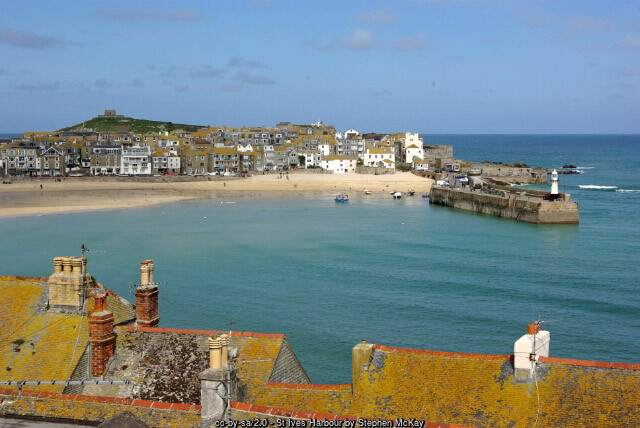
None of that history is hidden away in a museum case - though St Ives Museum, a short walk from the harbour, does tell much of it in detail, alongside the town's parallel history in tin and copper mining, shipwrecks and the RNLI. Look at the harbour today and the working past is still visibly present: day boats land crab, lobster and a modest catch of fish most mornings, nets and pots are stacked along the quay, and the harbour remains registered and active rather than preserved purely for visitors. Smeaton's Pier, the long stone arm that shelters the harbour's eastern side, was built in the 1770s to a design associated with the engineer John Smeaton (best known for the Eddystone Lighthouse), then substantially lengthened towards the end of the 19th century when a small lighthouse was added at its tip - a structure so integral to views of the town that it appears in countless paintings and photographs of St Ives. Seals are occasionally seen fishing around the harbour mouth and along the pier, usually singly, taking advantage of fish stirred up by the boats or sheltering from rougher water outside.
What sets Harbour Beach apart from St Ives' other beaches, more than the sand itself, is everything wrapped around it. This is the social and commercial heart of the town: narrow streets of granite cottages lead straight down to the Wharf, lined with independent galleries and studios (St Ives has drawn artists in serious numbers since the late 19th century, a legacy now anchored by Tate St Ives and the Barbara Hepworth Museum a short walk away), alongside pubs, seafood restaurants, ice cream shops and the kind of small harbourside businesses that make the town one of Cornwall's most visited in any season. In summer especially, the harbourfront is genuinely lively from morning until late evening - watching the boats come and go, or simply sitting on the harbour wall with the tide out and the sand full of children and dogs below, is as much a part of a St Ives visit as any of its beaches further round the headland.
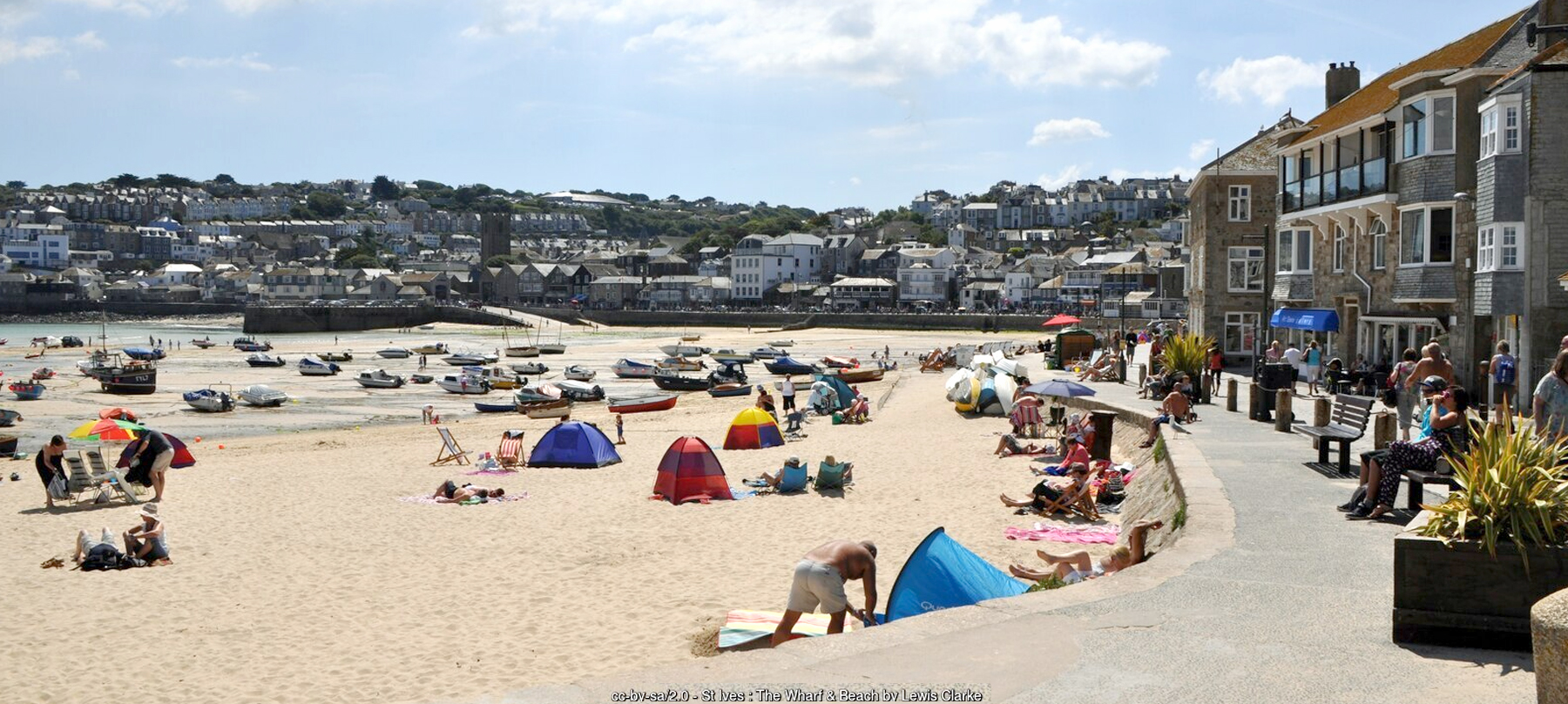
Facilities reflect that town-centre setting rather than a typical beach car park set-up. There is no dedicated car park for Harbour Beach itself; visitors use one of St Ives' town car parks - the Island, Sloop and Trenwith among them - and walk down, or, given how stretched parking can get in peak season, arrive instead on the branch line train from St Erth, one of the most scenic short rail journeys in the country and a genuinely practical way to avoid the town's traffic altogether. Public toilets are available nearby, and there is no shortage of refreshments literally on the doorstep. There is no lifeguard service at Harbour Beach - the water inside the harbour arms is generally calm and well sheltered compared with St Ives' more exposed, open beaches, but swimmers should still take sensible precautions, and, as above, keep a close eye on the state of the tide rather than assuming the sand will stay put. Dogs are welcome on Harbour Beach for most of the year; the only restriction, set by St Ives Town Council alongside the same rule for neighbouring Porthgwidden, is a seasonal daytime ban of 10am to 6pm from 1 July to 31 August, lighter than the longer Easter-to-October restriction applied on several other Cornish beaches.
Harbour Beach holds neither Blue Flag nor Seaside Award status, and realistically never will under the current schemes - both are aimed at open, exposed beaches assessed for water quality and safety management in a way that doesn't map neatly onto a beach that exists only at low tide inside a working harbour. That's a point of difference from several of St Ives' other beaches, including Porthminster and Carbis Bay, both current Blue Flag holders, and Porthmeor, also on the current Blue Flag list. What Harbour Beach offers instead is something those beaches can't: a genuine working harbour, several centuries of continuous fishing history, and a beach you can walk to in flip-flops from a café table rather than drive to.
For a longer look at the area, the South West Coast Path picks up right from the harbourfront and climbs around St Ives Head - known locally simply as "The Island" - a short, dramatic headland walk past the small chapel of St Nicholas and the town's war memorial, with views back down over the harbour, Smeaton's Pier and, at low tide, the full sweep of sand below. It's an easy, popular stretch of path rather than a serious hike, and it links Harbour Beach directly on towards Porthgwidden on the Island's far side and, beyond that, around to Porthmeor. Early morning, when the boats are getting ready to head out and the harbour is at its quietest, or the couple of hours either side of low tide when the sand is at its widest, tend to be the most rewarding times to be down on the Wharf.
Visitor Information
Parking
No dedicated car park at the beach itself - use one of St Ives' town car parks (the Island, Sloop or Trenwith) and walk down, or take the branch line train from St Erth to avoid summer town-centre traffic altogether.
Facilities
Public toilets nearby, with shops, galleries, cafes, pubs and restaurants lining the harbourfront on every side. No lifeguard service.
Disabled Access
Level, paved harbourfront gives easy views and access to the top of the sand, though reaching the beach itself involves slipways and steps typical of a working harbour. Blue Badge holders may find dedicated bays in the nearest town car parks.
Things to Do Nearby
- Tate St Ives, Porthmeor Beach - modern and contemporary art in a building overlooking the sea
- Barbara Hepworth Museum and Sculpture Garden, Barnoon Hill - the sculptor's former studio and garden
- Barnoon Workshops, Back Road West - working artists' studios a short walk from the harbour
- Porthminster Beach, a short walk over the headland to the south
- Bamaluz Beach, a small hidden cove tucked below Wheal Dream, just around the harbour wall
- Porthgwidden Beach, around St Ives Head to the north
Places to Stay
Frequently Asked Questions
Page last updated: 9 September 2026.