Zennor Cove
A Remote Cove Below Zennor Village, Reached Only on Foot on Cornwall's Wild North Coast
Zennor Cove (Porthzennor Cove), near Zennor, St Ives, Cornwall, TR26 3BZ
Zennor Cove is one of the most remote and least developed coves anywhere on the St Ives stretch of coastline, a small pocket of rock, shingle and sand tucked directly beneath the clifftop village of Zennor on the wild north coast of the Penwith peninsula. Its proper Cornish and Ordnance Survey name is Porthzennor Cove, and both names are in genuine everyday use - Porthzennor on maps and official listings, Zennor Cove the name most visitors and locals reach for. Either way, there is no road down to it and nowhere to park at the shore itself: the only way in is on foot, via a steep, narrow path that drops from the South West Coast Path to the beach below. That single fact defines the place. There are no facilities, no lifeguard, and none of the infrastructure of St Ives' town beaches a few miles east - in exchange, a genuinely wild, quiet corner of coast that has changed very little in character for generations.
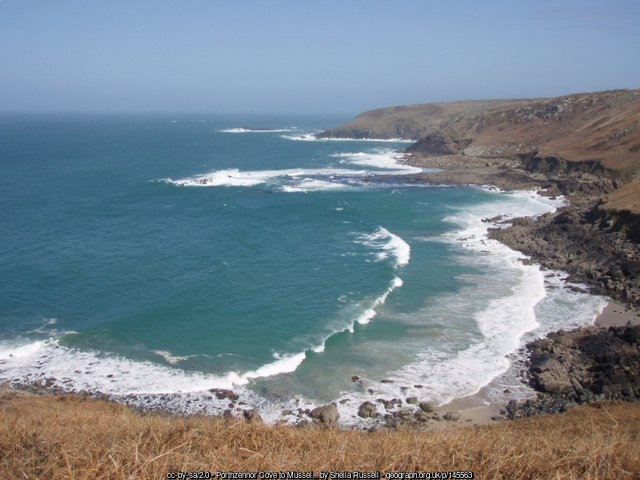
Reaching the cove takes a short but committing walk. Most visitors park in Zennor village itself, in the small car park just off the B3306 coast road between St Ives and St Just, close by the Tinners Arms. From there a footpath leads uphill past the pub before joining the South West Coast Path, then descends steeply toward the sea - a walk of around 20 minutes each way, on a path that turns narrow, uneven and often slippery underfoot for its final stretch down to the rocks. It is not a route for anyone unsteady on their feet, for pushchairs, or for a casual stroll in poor footwear, but for a reasonably fit walker it is entirely achievable, and very much part of what makes the cove feel earned rather than simply arrived at.
The cove itself is small and mixed in character - rock and shingle for the most part, with a sandy patch that shows itself best around low tide, set beneath low cliffs and facing open water across the Atlantic. It sits flanked by two dramatic headlands. To the east rises Zennor Head, a granite promontory that has belonged to the National Trust since it was donated to the Trust in 1953 and now forms part of the protected Penwith Heritage Coast. Its cliffs rise more than 200 feet sheer from the sea, and the South West Coast Path loops right around the point, giving walkers a short, self-contained circuit with some of the best coastal views in this part of Cornwall - out along the cliffs toward Gurnard's Head to the west and back toward St Ives Bay to the east. Just beyond Zennor Head to the west lies Pendour Cove, a further, even more secluded inlet bound up in the same local legend that gives Zennor its best-known story.
That story is the Mermaid of Zennor, one of the most famous pieces of folklore anywhere in Cornwall, and it centres on Zennor village's own church, St Senara's, which stands barely a few minutes' walk from the coast path above the cove. According to the tale, recorded by the Cornish folklorist William Bottrell in 1873, a beautiful, strangely ageless woman took to attending services at St Senara's, drawn - so the story goes - by the singing of a young parishioner named Mathey Trewella, reckoned the finest voice in the village. In time Trewella followed her away from the church and was never seen again; years later, sailors anchored off Pendour Cove reported a mermaid calling up to them, asking them to move their anchor since it was blocking the entrance to her home beneath the sea. Villagers took her to be the same woman who had once sat in the church, and concluded she had lured Trewella to live with her in the water. The legend is tied physically to a carved wooden bench-end inside St Senara's known as the Mermaid Chair, believed to be at least 600 years old and one of only two surviving bench-ends of its kind in the church, showing a mermaid admiring herself in a hand mirror. Most scholars now think the carving predates the story that grew up around it rather than the other way about, but the two have become inseparable in the telling, and the chair remains one of the most visited curiosities in rural Cornwall. St Senara's itself is worth a look regardless of the legend - a Grade I listed building on a site dedicated to the saint for something like 1,400 years, with a mostly Norman, 13th- and 15th-century fabric and a peal of six bells restored in 2019.
Zennor's other well-known claim on literary history sits alongside the mermaid tale rather than competing with it. The novelist D.H. Lawrence lived in the village with his German-born wife Frieda from 1916 to 1917, in a cottage close to the coast path, and it was here that he worked on Women in Love, one of his major novels. Wartime Cornwall was a poor place for a couple in their position to settle unnoticed - Lawrence's pacifism and Frieda's nationality drew official suspicion, and the two were accused, however implausibly, of signalling to German submarines from the cliffs near their home. Under the wartime Defence of the Realm Act, Lawrence was ordered to leave Cornwall at three days' notice in October 1917, an episode he later wrote about, thinly disguised, in his 1923 novel Kangaroo. It remains one of the odder footnotes to English literary history that this quiet stretch of coast, a short walk from Zennor Cove itself, briefly played host to a war-time spy scare involving one of the twentieth century's most significant novelists.
One further point worth stating plainly, since it is often asked about and best answered without fuss: Zennor Cove has traditionally been used informally by naturists, a use that has grown up over many years simply because of how remote and unsupervised the beach is, rather than through any official designation or management. It carries no naturist status in any formal sense, and visitors of every kind use the cove - but anyone planning to visit should be aware of this established local custom in advance.
Practically, there is nothing at Zennor Cove beyond the cove itself - no toilets, no cafe, no shop, no lifeguard cover at any time of year, and no signal to rely on in an emergency. The shore is predominantly rock rather than sand, the water here is open to the full run of the Atlantic, and this coast has no equivalent of the seasonal RNLI patrols found at busier St Ives beaches like Porthmeor. Anyone swimming should be a confident, experienced sea swimmer, should check tide times before setting out, and should treat the sea with real respect rather than as an incidental extra to the walk down. The reward for the effort is solitude and scenery rather than a conventional swim.
The surrounding cliffs are part of the appeal in their own right. Zennor Head sits close to the geological boundary between the Land's End granite and the older Devonian killas (slate and shale) into which it intruded some 275 million years ago, a contact zone that produces the jagged, layered cliff faces typical of this stretch of coast. The headland's maritime grassland and heath support Cornish choughs - the county's emblematic red-billed crow, once extinct here and only naturally returned since the early 2000s - along with fulmars, kestrels and, in the water below, grey seals that are regularly seen hauled out on the rocks or watching walkers from just offshore. Thrift, sea campion, heather and western gorse colour the clifftop through spring and summer, making the short coast path walk around Zennor Head as much a wildlife and wildflower outing as a route to the beach.
Zennor Cove is not a beach for a conventional family day out - there is nowhere to set up for the day in comfort, nothing to buy, and a genuine walk in both directions - but for anyone drawn to wild swimming, coastal walking, or simply wanting to see one of the more untouched corners of the Cornish coast, it rewards the effort handsomely. It sits best as part of a longer walk taking in Zennor Head, Zennor village and St Senara's Church, rather than as a destination on its own, and it is precisely because it demands this level of commitment that it has kept its character while beaches with easier access have not.
Visitor Information
Parking
No parking at the cove. The nearest parking is a small car park in Zennor village itself, just off the B3306, close to the Tinners Arms - from there a footpath leads to the coast path and down to the cove.
Facilities
None at the cove - no toilets, cafe or shop at the beach or on the path down. Nearest facilities (pub, small shop) are in Zennor village. No lifeguard cover at any time of year.
Disabled Access
Not accessible. A steep, narrow, uneven coast path descent with no protective barriers - unsuitable for wheelchairs, pushchairs or anyone with limited mobility. No accessible route or dedicated Blue Badge parking is available at Zennor Cove.
Things to Do Nearby
- Porthmeor Beach, St Ives' surf beach, reached via the coast path east back towards the town
- Treen & Porthglaze Cove, further along the coast path west towards Gurnard's Head
- Zennor Head, the National Trust-owned granite headland immediately east of the cove, with a short circular coast path walk and views along the Penwith Heritage Coast
- St Senara's Church, Zennor - home of the famous Mermaid Chair and a short walk from the coast path above the cove
Places to Stay
Frequently Asked Questions
Page last updated: 9 September 2026.