Polurrian Cove
A Quiet Sandy Cove Below the Cliffs on The Lizard
Polurrian Road, Mullion, Helston, Cornwall, TR12 7EN
Polurrian Cove is one of the smaller, quieter secrets of The Lizard peninsula's west coast: a modest, sheltered stretch of sand tucked beneath the cliffs directly below the Polurrian Hotel, a short walk south of the village of Mullion and its own, considerably busier, harbour beach. There is no road down to Polurrian, no car park at the water's edge and no shop, café or toilets on the beach itself - only a path and a flight of steps cut into the cliff, leading down from the clifftop to a cove that, for all its modest size, has a genuinely interesting story attached to it: it was from the clifftop hotel directly above that Guglielmo Marconi worked during his pioneering wireless telegraphy experiments on this coast in 1901. For visitors happy to trade facilities for a bit of peace and quiet, Polurrian rewards the short walk down with a beach that rarely feels crowded, even in the height of summer.
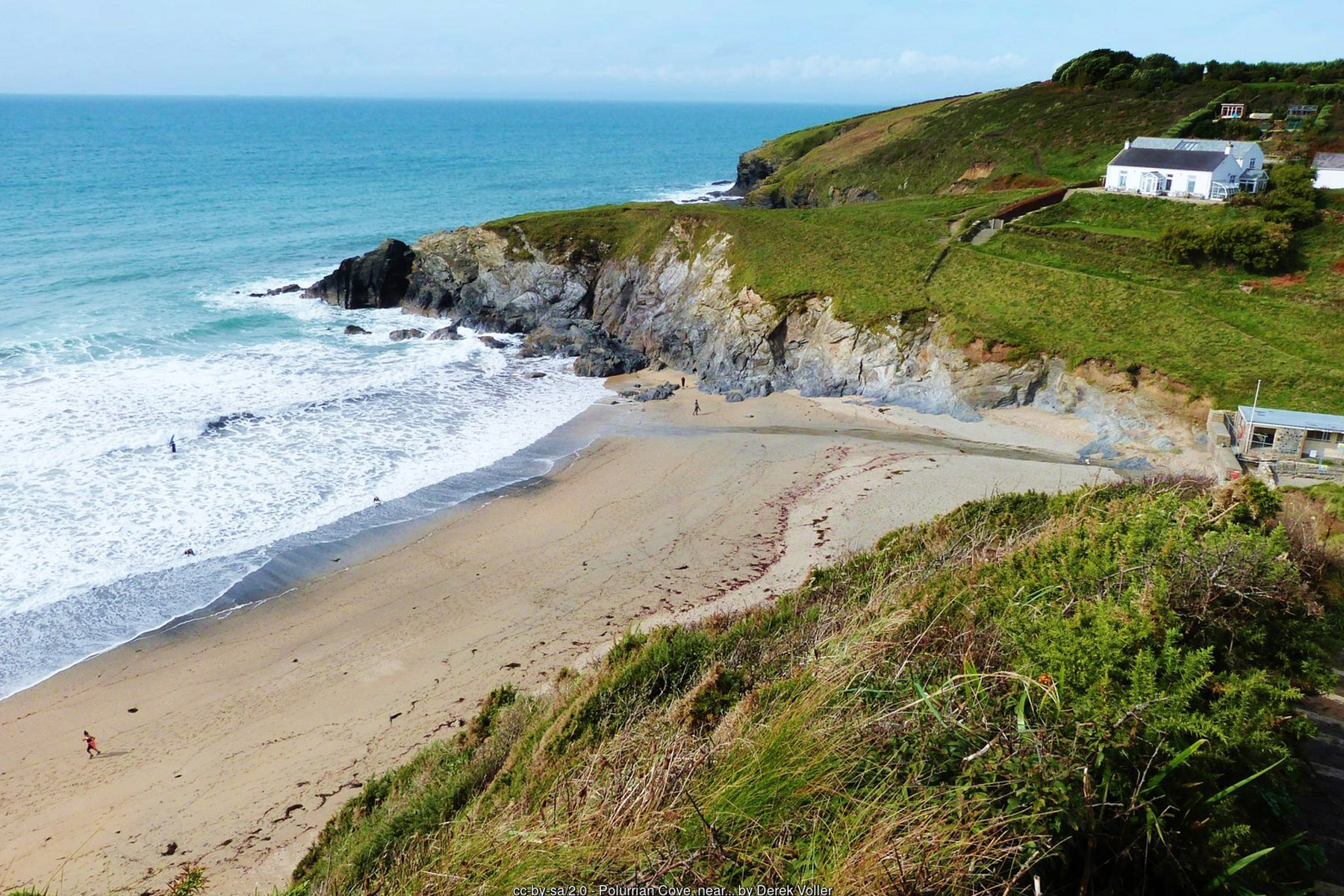
Geographically, Polurrian sits within a landscape shaped by two river valleys that run southwest from Mullion village down to the sea, one reaching the coast here at Polurrian and the other, close by, at Mullion Cove itself. That shared drainage pattern is part of why the two coves feel like close neighbours rather than separate destinations - a walker setting off from one can be at the other inside fifteen to twenty minutes along the South West Coast Path, with Mullion's harbour, shops and car parks making a natural base for a visit to both. Polurrian itself, by contrast, has been left largely undeveloped: a small sandy beach, backed by cliffs, with no buildings at sea level and nothing beyond the hotel and a scatter of clifftop houses to mark the presence of a village so close by.
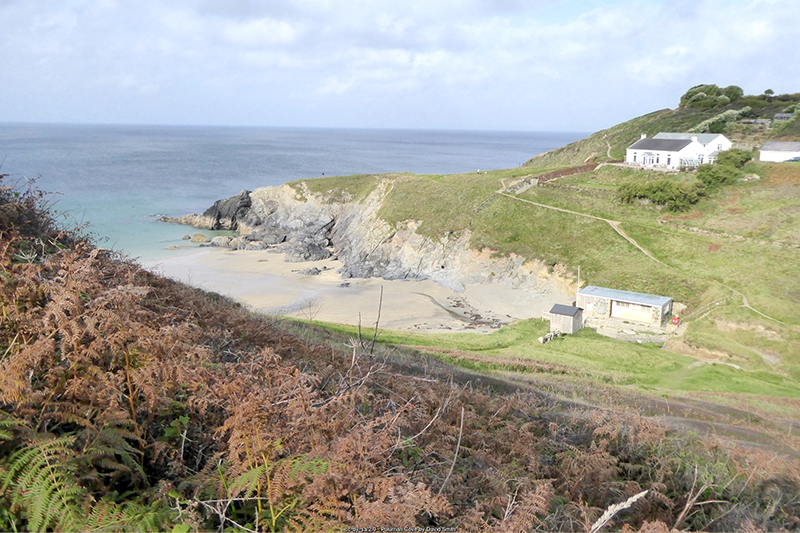
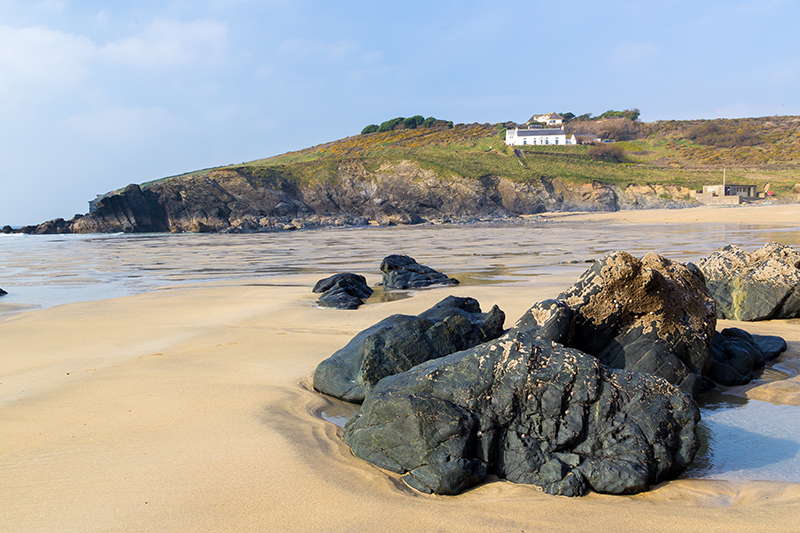
The beach's low profile has not stopped it becoming genuinely well known in one respect. The Polurrian Hotel, perched on the cliff directly above the cove and now trading as Polurrian on the Lizard, has for well over a century promoted its connection to Guglielmo Marconi, the Italian inventor whose pioneering work on wireless telegraphy transformed long-distance communication in the early twentieth century. Marconi stayed at the hotel in 1901 while conducting experiments on The Lizard peninsula, part of a wider programme of work that would culminate, later that year, in the first transatlantic wireless signal, transmitted from a station Marconi built a short distance away at Poldhu. It's worth being precise about what actually happened where: the wireless masts and transmitting apparatus itself were built at Poldhu, not at Polurrian, and a separate, simpler telegraph station was later established at Bass Point, near Lizard Point further south. Polurrian's role in the story is really that of Marconi's temporary base and lodging rather than a transmission site in its own right - but it is a genuine, well-documented connection nonetheless, and one that gives an otherwise unassuming little cove a small footnote in the history of global communications.
The cove has an older, quieter story too, in the shape of Wheal Fenwick, a mid-nineteenth-century copper mine that once worked the ground to the south-east of Polurrian. Detailed production records for Wheal Fenwick are thin, and it should be understood as a relatively minor part of the wider pattern of small-scale mining that once dotted this stretch of the Lizard coast, rather than one of Cornwall's great industrial concerns - but its former workings are a reminder that this now-tranquil clifftop was, a century and a half ago, a working industrial landscape as much as a scenic one, part of the same broad mining heritage found in pockets all along this coastline.
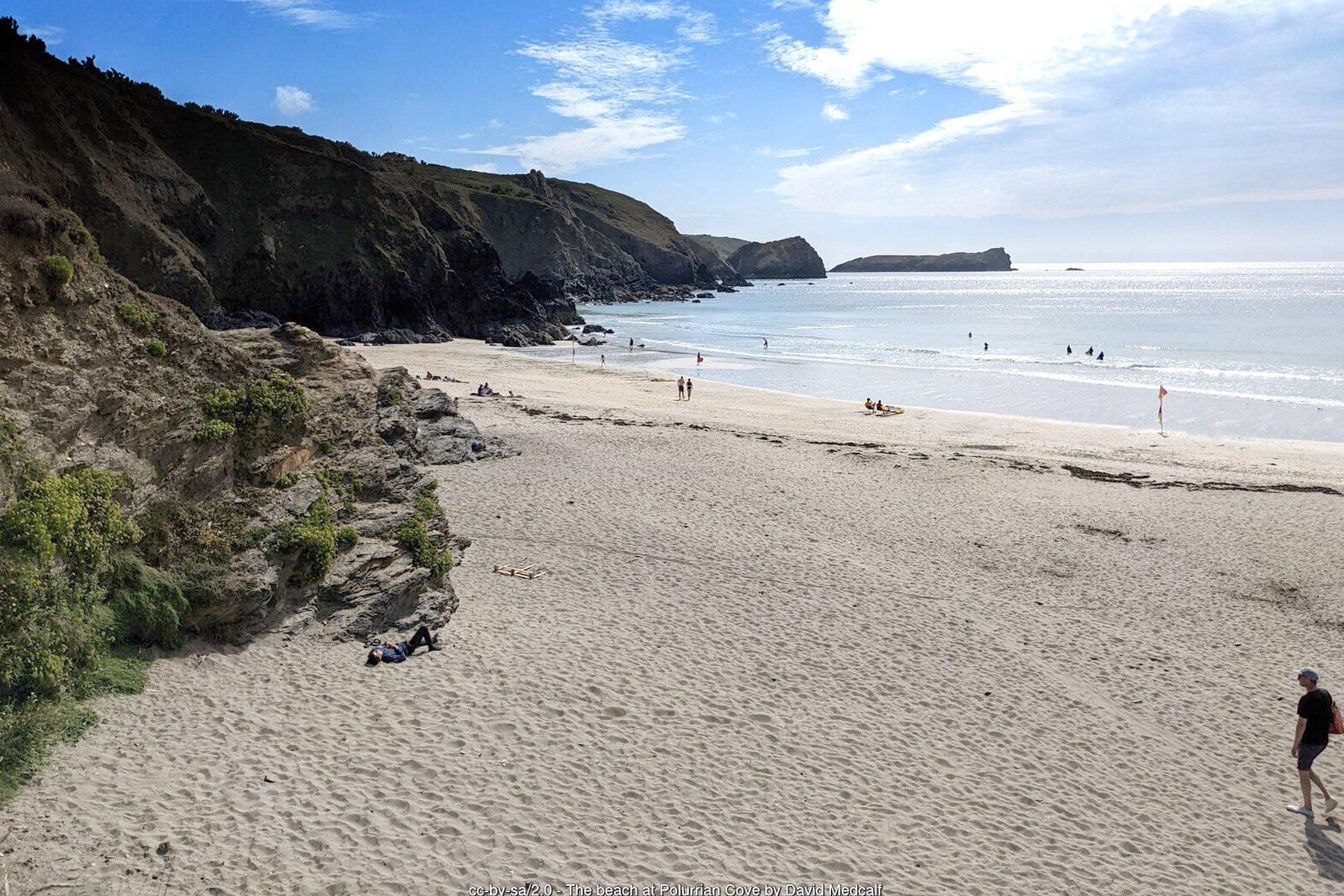
As a beach to actually visit, Polurrian's appeal lies mostly in what it lacks. There are no beach huts, no ice cream kiosk, no lifeguard station and no crowds to speak of - just sand, rock and sea, framed by cliffs on either side. At low tide there's a reasonable stretch of sand to explore, along with rockpools worth a closer look for the usual Cornish cast of anemones, small crabs and blennies; swimming is possible and popular with those in the know, though it comes with the same caveats as any unpatrolled Cornish cove. There is no RNLI lifeguard cover here, so anyone swimming should treat it with the same caution they would any unsupervised beach, and it's worth checking the state of the tide before heading down: the cove narrows as the tide rises and can become effectively cut off from easy access at high water, so a lingering visit is best planned around the tide table rather than the clock.
Compared with Mullion Cove, its far more visited neighbour a short walk to the north, Polurrian offers a genuinely different experience of the same stretch of coast. Where Mullion draws visitors to its picturesque National Trust harbour, working boats and seasonal café, Polurrian offers something closer to a private beach feel - useful for anyone who has already ticked off Mullion's harbour and fancies a quieter spot to actually spend an afternoon on the sand. The two coves make a natural pairing for a single visit: walk, or drive, into Mullion village first for parking, facilities and a look at the harbour, then either drop straight down to Polurrian via the clifftop path beside the hotel, or extend the visit into a proper coastal walk linking both coves along the South West Coast Path.
Because Polurrian has no facilities of its own, a visit here works best as part of a wider trip built around Mullion village, which sits about ten minutes' walk from the top of the cove's access path and holds everything the beach itself lacks: shops, places to eat, public toilets and the nearest car parking. It's also worth noting, for anyone timing a visit around the hotel above, that Polurrian on the Lizard has recently been undergoing a substantial multi-million-pound renovation programme, so facilities and access at the clifftop immediately around the hotel itself may be subject to change while that work continues - the cove and its public footpath access remain unaffected, but it's worth allowing for some building activity on the approach.
It's worth putting Marconi's 1901 work on this coast into a slightly wider context, since it's easy to treat it as a historical curiosity rather than the genuinely significant breakthrough it was. Ship-to-shore wireless telegraphy, developed and proven along exactly this stretch of the Lizard coast, went on within little more than a decade to save hundreds of lives at sea - most famously in the 1912 Titanic disaster, where the ship's wireless distress call brought rescue vessels to the scene - and it remained the backbone of maritime safety communication for most of the twentieth century. Standing on the quiet sand at Polurrian, looking up at the clifftop hotel where Marconi once stayed while conducting the groundwork for that technology, it's a reasonable claim that few small Cornish coves can make: a direct, documented connection to a piece of engineering history with a genuinely global impact.
Visitor Information
Parking
There is no car park at Polurrian Cove itself. The nearest parking is in Mullion village, about a 10-minute walk from the top of the clifftop path down to the beach.
Facilities
No shop, café or toilets at the cove itself. The full range of Mullion village's facilities is about 10 minutes' walk away. There is no RNLI lifeguard patrol at Polurrian.
Disabled Access
Access is via a clifftop path and a flight of steps, which is fairly steep in places and unsuitable for pushchairs or wheelchairs. No dedicated Blue Badge bays are confirmed near the cove - check current signage in Mullion village on arrival.
Things to Do Nearby
- Mullion Cove, a picturesque National Trust harbour and beach a short walk or drive north
- Poldhu Cove, another short distance up the coast, close to the site of Marconi's actual transmitting station
- Marconi Centre, Poldhu, a small museum on the site of Marconi's wireless station, telling the fuller story of his work on this coast
Places to Stay
Polurrian Cove has no accommodation hub of its own; the nearest is Mullion village, about 10 minutes' walk away, which offers a good range of places to stay:
Frequently Asked Questions
Page last updated: 16 September 2026