Kynance Cove
Serpentine Rock Stacks and Turquoise Water on The Lizard
Kynance Cove, near The Lizard, Cornwall, TR12 7PJ
Kynance Cove is, by common consent, one of the most beautiful beaches in Britain - a bowl of pale sand and turquoise water hemmed in by a cluster of dramatic serpentine-rock stacks and islands, on the wild west coast of The Lizard peninsula a couple of miles north of Lizard Point itself. Owned and managed by the National Trust, it is one of the most photographed stretches of coast in Cornwall, and one of the most rewarding to visit properly - though it demands more planning than most, since this is a strongly tidal beach where the sand, the caves and the famous rock features are only fully accessible for a few hours around low water.
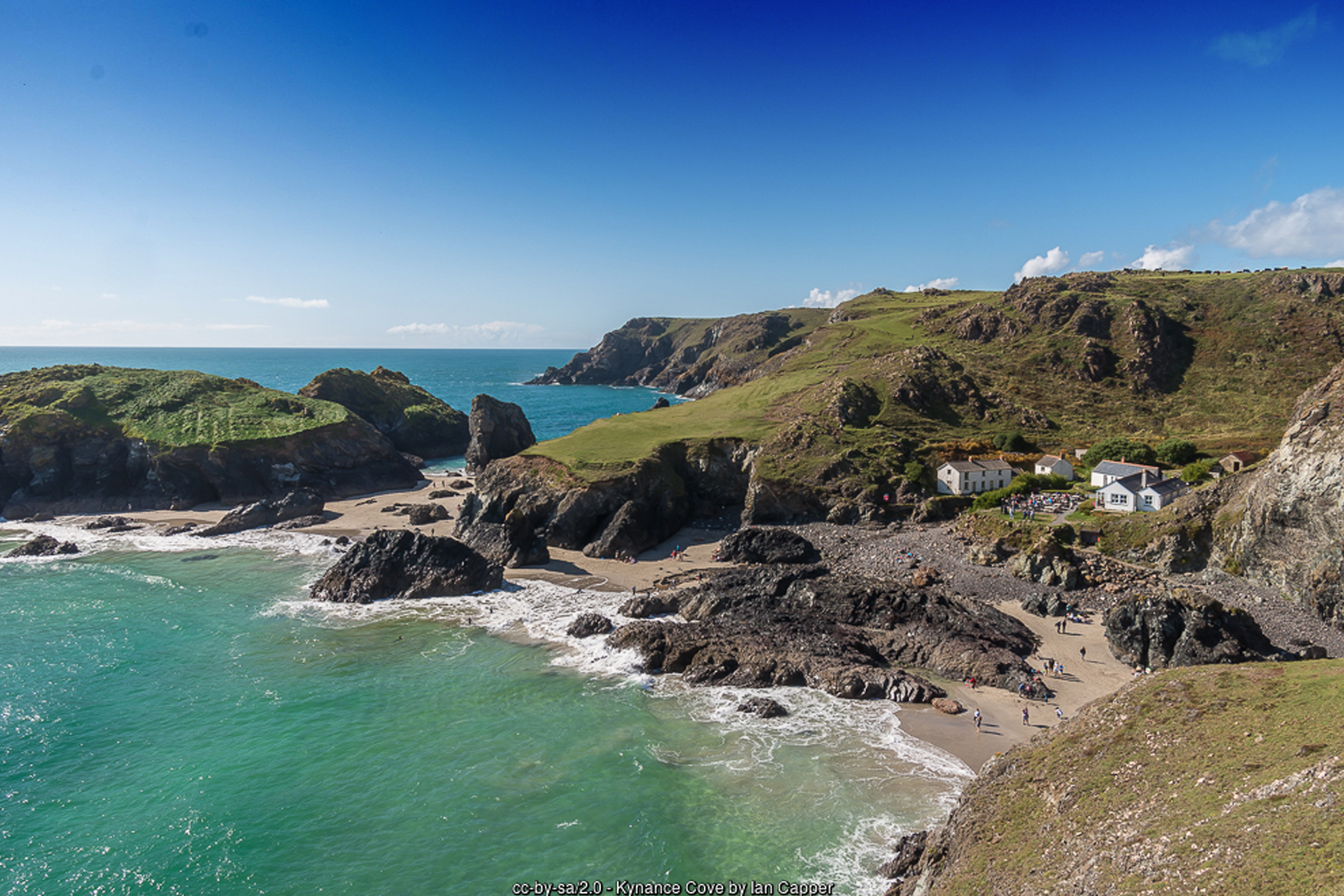
What sets Kynance apart from almost anywhere else on the Cornish coast is its geology. The cove sits within the Lizard's unique serpentine landscape, a rare and strikingly colourful rock formed from ancient oceanic crust, mottled in greens, reds and near-black, quite unlike the granite and slate found across most of the rest of the county. Rising from the water and the sand are a series of named stacks and islets - the Bishop, the Steeple, Asparagus Island and Gull Rock among them - along with caves, arches and blowholes cut into the cliffs by the sea over millennia. Several of these openings are popularly known locally as the Devil's Letterbox and the Devil's Bellows, though exactly which cave carries which name, and how dramatically they perform, varies a little depending on who you ask and how the tide and swell happen to be running on the day - at their best, with the right combination of tide and sea state, they can produce a genuinely startling rush and roar of water and spray.
Kynance's beauty has been drawing visitors for a very long time. The distinctive green-and-red serpentine rock found here and elsewhere on The Lizard has been quarried and hand-carved into ornaments, vases and other souvenirs since the Victorian era, a local craft industry that grew up directly around the cove's fame, and examples of serpentine turning can still occasionally be found in shops on the peninsula today. Kynance itself became a fashionable destination for Victorian tourists once the railway and improved roads made Cornwall more accessible, and by some accounts it was visited by notable figures of the age, including the poet Alfred, Lord Tennyson and Prince Albert - claims repeated often enough in local history to be worth mentioning, even if the historical record behind some of the specific visits is not always watertight. The cove's dramatic, almost theatrical scenery has also seen it used as a filming location for various British film and television productions over the years, drawn by the same rock stacks and turquoise water that make it such a popular subject for photographs today.
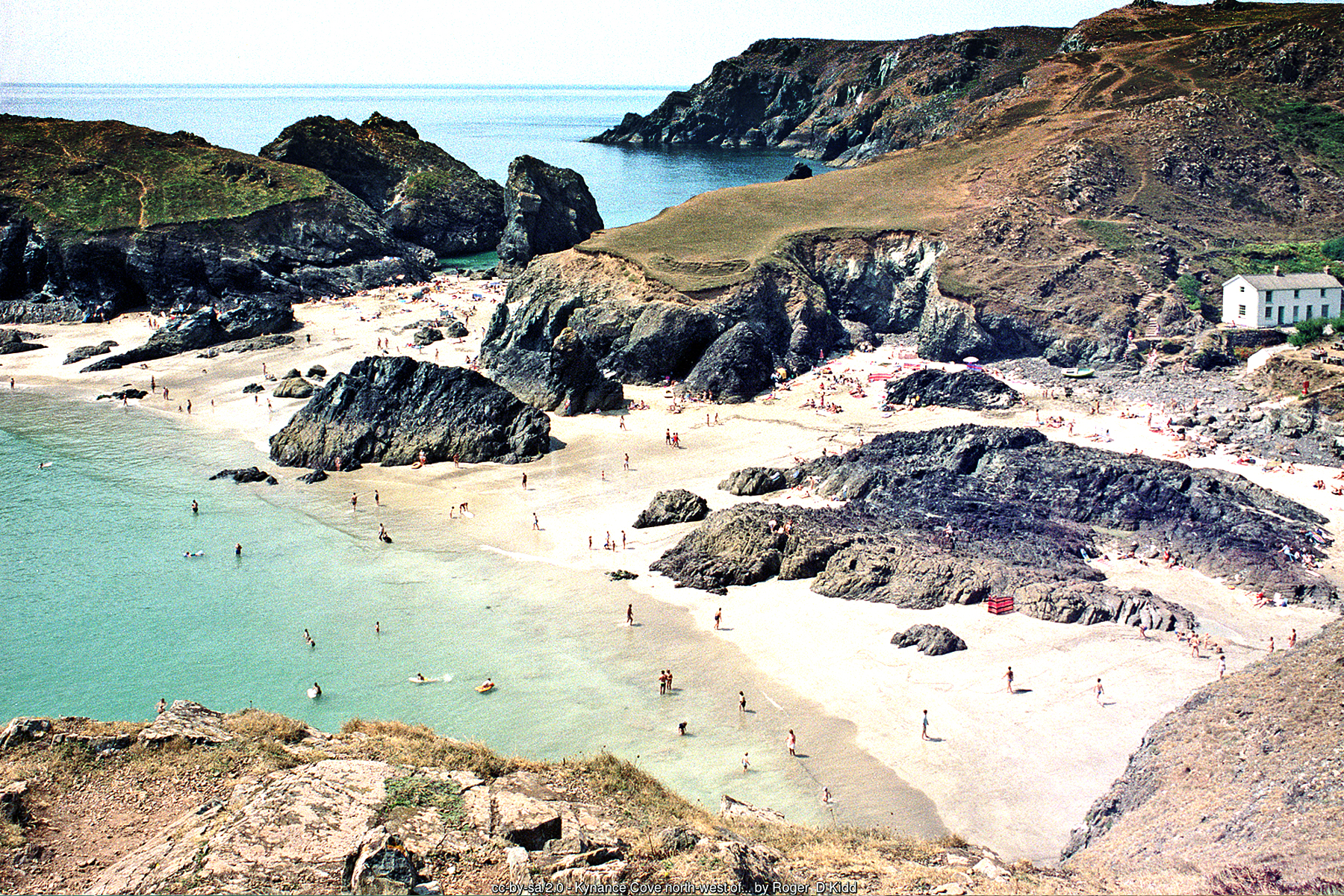
The single most important thing to know before visiting Kynance Cove is that it is a strongly tidal beach. Much of the sand, along with the closer approaches to the rock stacks, caves and Asparagus Island, is only accessible for roughly two and a half to three hours either side of low tide; as the tide rises, the beach narrows quickly and the sea reclaims almost the entire cove, cutting off routes around the rocks and, on the highest tides, submerging the beach completely. This is not a theoretical hazard - visitors have been caught out by the incoming tide and needed rescuing after misjudging how quickly the water returns, so checking tide times carefully before setting out, and keeping a close eye on the sea while at the beach, is essential rather than optional. The safest and most rewarding approach is to time a visit for a falling tide, arriving an hour or two before low water so there is a comfortable window to explore before the sea starts to close back in.
Getting to Kynance also takes a little more effort than at many Cornish beaches, which is part of what has kept its wilder character intact. There is no parking at the cove itself: a National Trust pay-and-display car park sits on the clifftop around 800 metres away, and the walk down to the beach follows a fairly steep footpath - manageable for most reasonably fit visitors, but not an easy route for pushchairs or wheelchairs, and one that is worth taking slowly, particularly on the climb back up. A seasonal National Trust café, Kynance Café, sits on the cliff above the cove close to the car park, serving refreshments with a genuinely spectacular view out over the stacks and the sea, and is a popular stop whether or not visitors make the full walk down to the sand.
There is no RNLI lifeguard cover at Kynance Cove, and the currents around the rocks and stacks can be strong, particularly on a rising tide or when there is any significant swell running, so swimming and snorkelling are best kept to calm, settled conditions and confident swimmers. When the weather cooperates, though, Kynance is a wonderful spot for a swim among the rocks, for snorkelling in the clear water, and for rockpooling in the many pools left among the serpentine at low tide, which support a good range of typical Cornish rockpool life - anemones, crabs, blennies and the occasional starfish among them. The wider Lizard coastline is also known for its clifftop wildlife, including breeding choughs, the red-billed crow that has become something of a symbol of Cornwall's coast, and the coast path above Kynance offers some of the finest walking on the peninsula, linking north towards Mullion Cove and south towards Lizard Point, the most southerly tip of mainland Britain.
The chough itself is worth a mention beyond the cliff-top glimpse, since its story is tied closely to this stretch of coast. Once a familiar sight across Cornwall - and long a symbol on the county's own coat of arms - the chough disappeared as a breeding bird here by the late nineteenth century, and it was not until 2001 that a small wild group re-established itself on The Lizard, the first successful natural breeding in Cornwall in decades. The population has grown slowly since, nesting in cavities and old mine shafts along exactly this kind of dramatic, undisturbed serpentine cliff, and Kynance's coastline remains one of the more reliable places on the peninsula to spot one, distinguishable from the more common jackdaw by its curved red bill and legs and its acrobatic, tumbling flight along the cliff face.
Kynance also rewards a little seasonal planning beyond the tide table. Its westerly, exposed position means it can be genuinely rough and unwelcoming in winter storms, when the National Trust car park and café may close and the walk down is best avoided altogether in poor weather; the classic Kynance experience of turquoise, clear water over pale sand is really a settled-weather, spring-to-autumn phenomenon, at its most vivid on a calm, sunny day with the tide well out. Visiting early in the morning or later in the afternoon, particularly outside the school summer holidays, is the best way to see the cove at its most photogenic without the crowds that its fame inevitably draws in high season - and the short but steep climb back up to the car park is far more pleasant tackled without a midday crowd for company.
Visitor Information
Parking
A National Trust pay-and-display car park sits on the clifftop about 800m from the beach along a footpath - there is no parking at the cove itself. The car park is fairly small and fills early on fine days, especially in summer.
Facilities
The seasonal National Trust Kynance Café sits on the clifftop near the car park. There are no facilities down at the beach itself, and no RNLI lifeguard patrol - come prepared.
Disabled Access
The footpath down to the cove is steep and around 800m long, making it unsuitable for wheelchairs and difficult for pushchairs. No dedicated Blue Badge bays are confirmed at the clifftop car park - check current signage on arrival.
Things to Do Nearby
- Mullion Cove, the nearest built beach along the coast to the north, with its own small working harbour
- Lizard Point, the most southerly tip of mainland Britain, a short drive or a fine coast path walk south
- Lizard Lighthouse Heritage Centre, at Lizard village, with tours of the working lighthouse
- The South West Coast Path, linking Kynance north towards Mullion and south towards Lizard Point and the Lizard's serpentine-carving workshops
Places to Stay
Kynance Cove has no dedicated holiday accommodation listings of its own on this site. The wider Lizard Peninsula, within easy reach by car, offers the closest range of places to stay:
Frequently Asked Questions
Page last updated: 16 September 2026