Coverack
An Unspoilt Working Harbour Village on the Lizard's East Coast
Coverack Harbour, Coverack, near Helston, The Lizard, Cornwall, TR12 6TF
Coverack is one of the most genuinely unspoilt fishing villages anywhere on the Lizard peninsula, a huddle of whitewashed and stone cottages wrapped around a small, still-working stone harbour on Cornwall's south-east-facing coast. Unlike many of Cornwall's prettiest harbours, Coverack has never entirely given itself over to tourism: working fishing boats still land their catch here alongside the visiting yachts and kayaks, and the village retains a lived-in, unpolished character that makes it feel like a genuine Cornish fishing settlement rather than a period piece kept for visitors. The beach itself, a modest strip of sand and shingle right beside the harbour wall, is almost secondary to the setting - sheltered, easy to reach, and about as picturesque a spot for a swim as the Lizard has to offer.
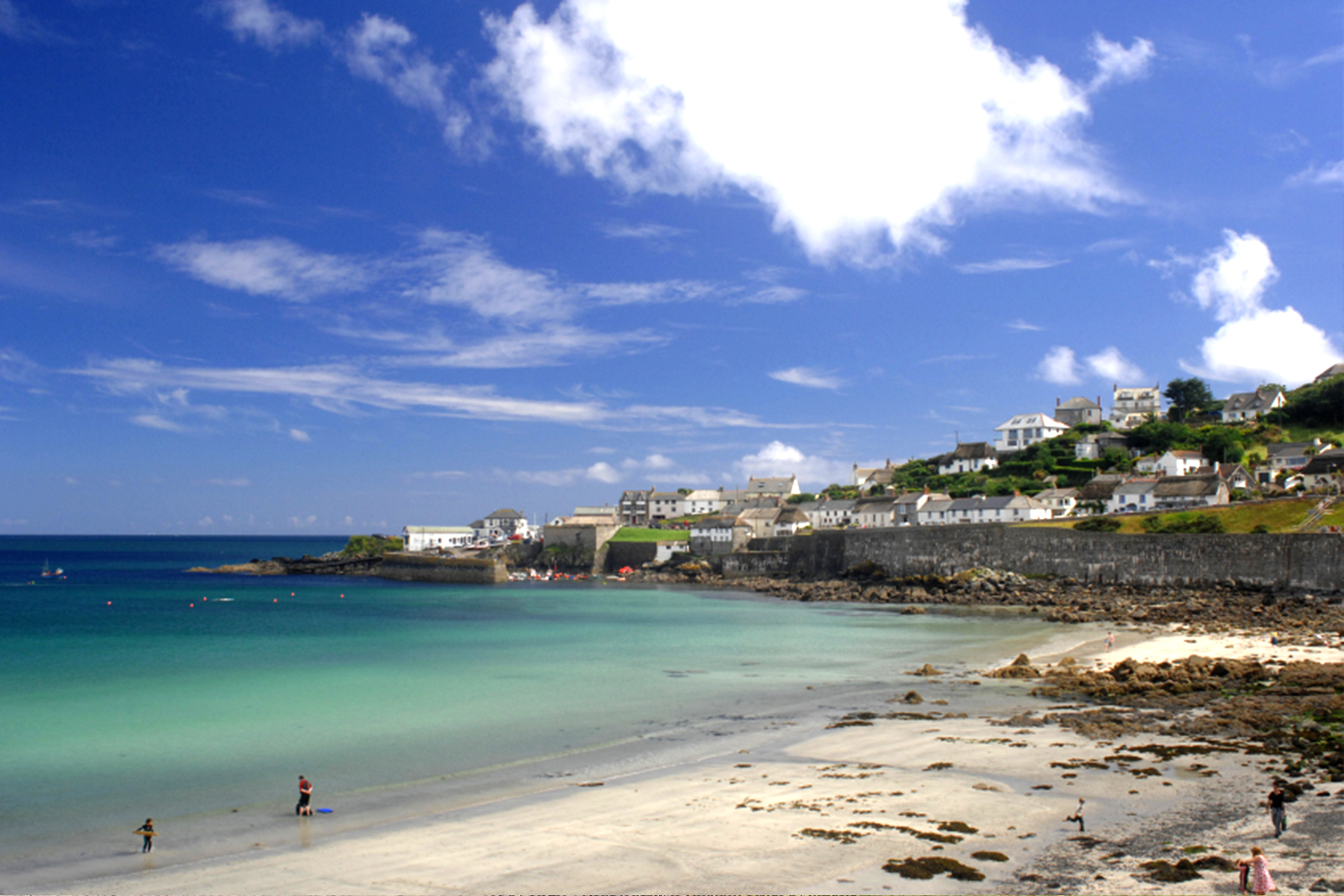
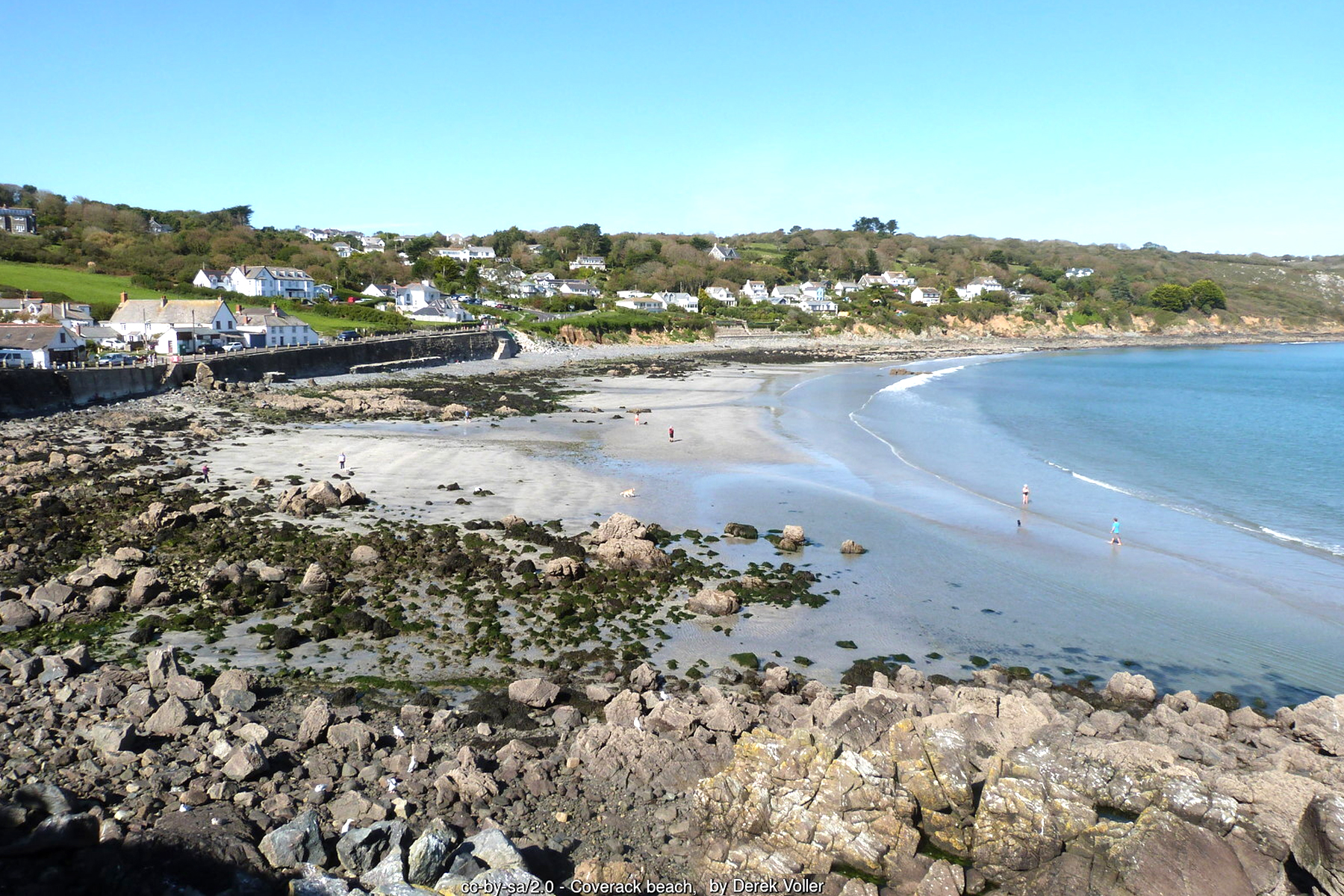
The beach is small and sheltered by the curve of the harbour and the headland beyond, sand giving way to shingle and rock as the tide drops, with rock pools worth exploring around the harbour margins at low water. It is generally a safe, calm spot for families to swim close in, protected as it is from the worst of the swell by the harbour wall and the shape of the bay, though the water beyond the immediate shelter of the harbour is more exposed and should be treated with the same caution as any open stretch of Cornish coast. There is no permanent RNLI lifeguard at Coverack, so swimmers, especially those heading out past the harbour mouth, should keep a sensible eye on conditions and tide.
Coverack's connection to the sea runs deeper than its beach and harbour alone. The village had its own RNLI lifeboat station from 1901 until 1980, when a wider review of lifeboat cover along this stretch of coast led to its closure in favour of stations elsewhere on the Lizard. The old lifeboat house, built to launch boats straight down the slipway into the harbour, still stands near the water's edge today, a solid and easily spotted reminder of the 79 years in which Coverack's own lifeboat crews put out into some of the most treacherous waters in Cornwall.
That treacherous water is no exaggeration, and nowhere is it better illustrated than by Coverack's connection to one of Cornwall's worst maritime disasters. On the evening of 14 October 1898, the Atlantic Transport Line steamship SS Mohegan, only a few days into her maiden voyage from London to New York, struck the Manacles reef - a scatter of rocks lying just offshore between Coverack and neighbouring Porthoustock - after a catastrophic navigational error saw her steered badly off her intended course in clear, calm weather. She sank within minutes. Of the 157 passengers and crew aboard, 106 lost their lives, most of the ship's own officers among them, which left the exact cause of the fatal course error unresolved to this day. Coverack's coastguard had tried to warn the stricken vessel with distress rockets as she approached the danger, and once she went down, Coverack's own lifeboat crew and villagers, working alongside those of Porthoustock, were heavily involved in the desperate rescue effort and the grim work of recovery that followed in the days after. It remains one of the defining events in the village's history, and the Manacles reef, visible from the coast path above the harbour, is a permanent, sobering presence on an otherwise gentle stretch of coastline.
That same stretch of water, so dangerous to shipping in the age of sail and early steam, is today one of the most highly regarded wreck-diving locations in Britain, and Coverack itself is a well-known launch point for divers and sea kayakers heading out to explore the Manacles and the wider reef system offshore. Diving trips and charter boats regularly operate from the harbour, and the sheltered water close in makes Coverack a popular, easy put-in point for kayakers exploring this stretch of coast even without heading as far as the reef itself. Combined with the village's own maritime history, it gives Coverack a genuine, ongoing relationship with the sea well beyond its role as a pretty place to spend an afternoon.
Coverack's own name reflects that watery setting: the village's Cornish name is Porthkovrek, meaning roughly "cove of the stream", a reference to the small stream that runs down through the village to the harbour. It lies within the ancient parish of St Keverne, a few miles inland, and sits around nine miles south of Falmouth by road, on the more sheltered, east-facing side of the Lizard peninsula - a position that spares it some of the harder Atlantic weather that batters the peninsula's western coves, though, as the village's own history of occasional flash flooding shows, it is far from immune to extreme weather altogether.
Coverack has a real claim to geological significance as well as historical interest. The cliffs and foreshore around Coverack Cove and nearby Dolor Point are recognised as one of the most important geological localities on the Lizard, exposing an almost continuous section through the boundary between the Earth's mantle and crust - part of the same remarkable Lizard Complex, a slice of ancient ocean floor thrust up onto the land, that gives the whole peninsula its unusual geology. It is a detail that draws geology students and researchers to Coverack's shoreline alongside the more usual run of holidaymakers, divers and walkers.
Coverack sits within the Lizard section of the Cornwall National Landscape - the area of outstanding natural beauty designation covering much of this coastline, recently rebranded from AONB - and directly on the South West Coast Path, which runs along the clifftop above the village in both directions, linking Coverack to Kennack Sands to the south and Porthoustock to the north. The coast path here gives some of the finest views on the Lizard's eastern side, taking in the Manacles, the open sweep of the bay, and the gorse- and heather-covered cliffs that are typical of this part of the peninsula in late summer. A small beach shop and a handful of cafés and restaurants serve the village, alongside a Post Office, giving Coverack a fuller range of everyday facilities than many of the smaller coves elsewhere on the Lizard, despite its modest size.
Seals and a variety of coastal seabirds are regularly spotted from the harbour wall and the coast path above the village, and the sheltered water close to the harbour is often calm enough for a good, unhurried look at whatever the tide has brought in, in keeping with a village that has always kept one foot in the working sea rather than turning entirely towards tourism.
Parking in Coverack itself is limited, reflecting the village's narrow lanes and its long history as a working settlement rather than a purpose-built resort. Three honesty-box car parks serve the village, including North Corner car park right beside the beach and harbour, with further limited spaces available on-street; arriving early in peak season, or being prepared to use the car parks a short walk back from the water, makes for a much less stressful visit in the height of summer. For anyone happy to walk a little, though, the reward is one of the most genuinely characterful harbour villages on the whole of the Lizard peninsula.
Visitor Information
Parking
Three honesty-box car parks serve the village, including North Corner car park right beside the beach and harbour, plus some limited on-street parking. Spaces are at a premium in peak season - arrive early or expect a short walk from an overflow spot.
Facilities
A beach shop, several cafés and restaurants and a Post Office serve the village, with toilets near the harbour. There is no permanent RNLI lifeguard at Coverack.
Disabled Access
The North Corner car park sits close to the beach and harbour on largely level ground, though the beach surface itself is sand, shingle and rock, which limits onward wheelchair or pushchair access. No dedicated Blue Badge bays are confirmed at the village's car parks - check current signage on arrival.
Things to Do Nearby
- Kennack Sands, one of the Lizard's largest sandy beaches, a short coast path walk or drive south
- Porthoustock, the neighbouring beach on the far side of the Manacles reef, a short coast path walk or drive north
- The Manacles reef itself, visible offshore from the coast path above the harbour and a renowned wreck-diving site
- The Cornwall National Landscape (the Lizard's AONB), which covers the coastline around the village
Places to Stay
Coverack has its own range of holiday accommodation close to the harbour and beach:
Frequently Asked Questions
Page last updated: 16 September 2026