Kennack Sands
A Broad, Family-Friendly Lizard Beach Split into East & West by the Tide
Kennack Sands, near Ruan Minor, The Lizard, Cornwall, TR12 7LT
Kennack Sands is one of the broadest and most welcoming sandy beaches anywhere on the Lizard peninsula, a genuine change of pace from the tight, cliff-bound coves that dominate so much of this stretch of coast. Reached by a short lane down from Kuggar, on the Helston to Lizard road, it opens out into a wide crescent of pale sand backed by low dunes and gorse-covered slopes, with a beach shop, café and toilets right at the water's edge and a car park a short, level walk from the sand. Where many Lizard beaches demand a steep climb down (and a steeper one back up), Kennack Sands is refreshingly easy going, which is a large part of why it has long been one of the peninsula's most popular family beaches.
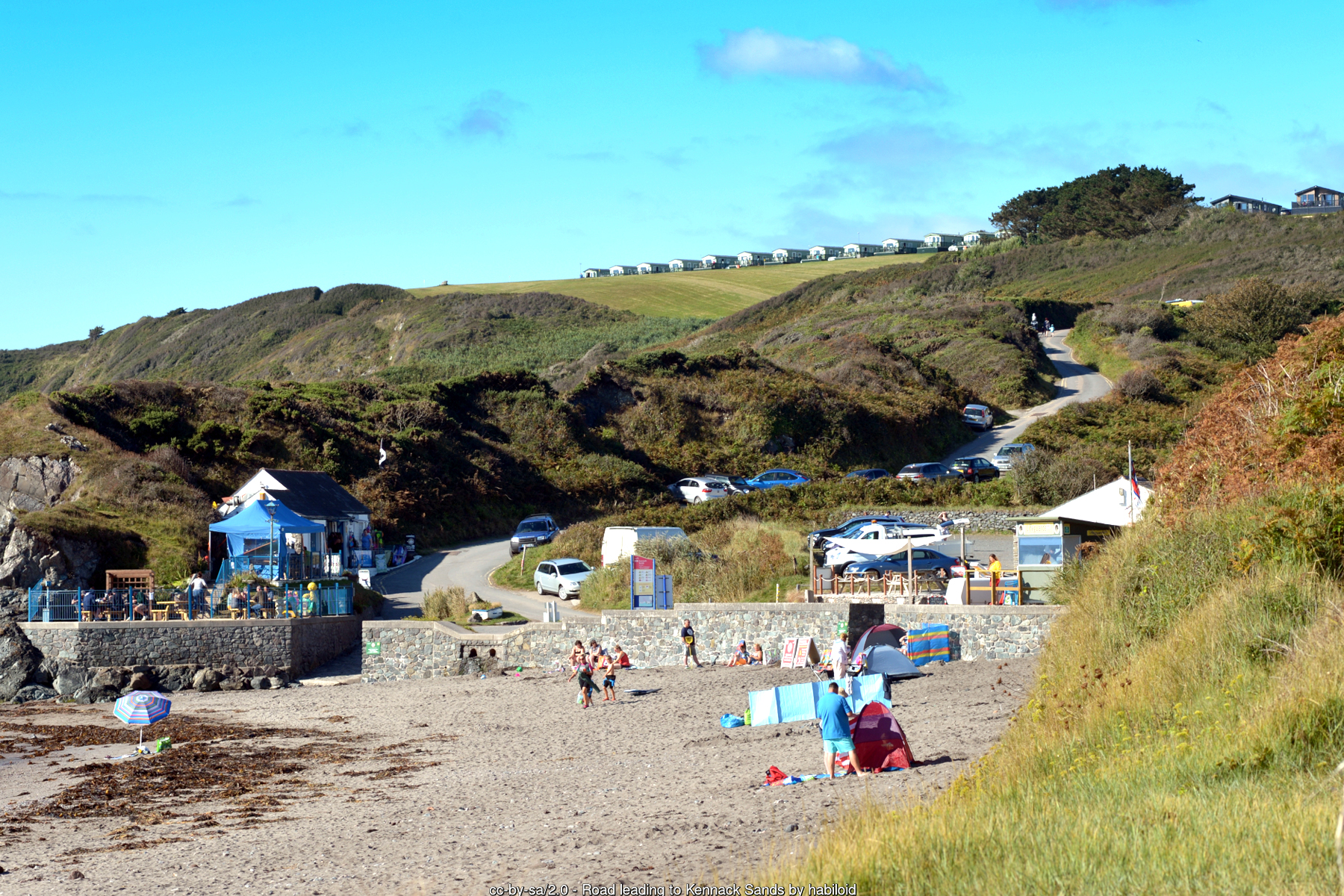
What makes Kennack Sands distinctive is the way the beach behaves with the tide. A rocky outcrop known locally as the Caerverracks sits roughly at the centre of the bay, and at low water it is largely buried beneath the sand, allowing East Kennack and West Kennack to read as one long, uninterrupted beach well over half a mile from end to end. As the tide rises, the rocks re-emerge and the beach splits into two more clearly separate halves, each with its own character and, as it happens, its own rules: West Kennack, the busier central section nearest the car park and beach shop, carries a summer dog restriction, while East Kennack remains dog-friendly all year round. The rocks themselves are worth a visit in their own right at low tide, holding some of the better rock pools on this part of the coast, with the usual crabs, anemones and small fish for children to find.
The beach's south-east-facing orientation gives it a degree of shelter that many of the Lizard's more exposed west-facing coves lack, and this, combined with the gently shelving sand, has made Kennack Sands a well-established spot for learning to surf and bodyboard. When the swell is running in the right direction, local surf schools regularly bring beginners here, and on days when the more open Atlantic-facing beaches further round the peninsula are being battered by wind and swell, Kennack Sands often stays calm enough for a first lesson or a gentler paddle. It is not a serious surf destination in the way Kynance or the north coast beaches are, but for a first go on a board, or for families wanting a more forgiving stretch of water, it is one of the better choices on the Lizard.
Above the eastern end of the beach, on the gorse-covered hillside behind the dunes, a scattering of low concrete structures survives from the Second World War, when this stretch of coast, like much of the Lizard, formed part of Britain's coastal defences against the threat of invasion. Pillboxes and a section of anti-tank wall can still be picked out among the vegetation, a quiet reminder that a beach now given over entirely to sandcastles and bodyboards was once considered a plausible landing point for an enemy force. The remains are informal and unsignposted rather than presented as a managed heritage site, but they add a genuine, low-key layer of history to a walk along the coast path above the beach for anyone who knows to look for them.
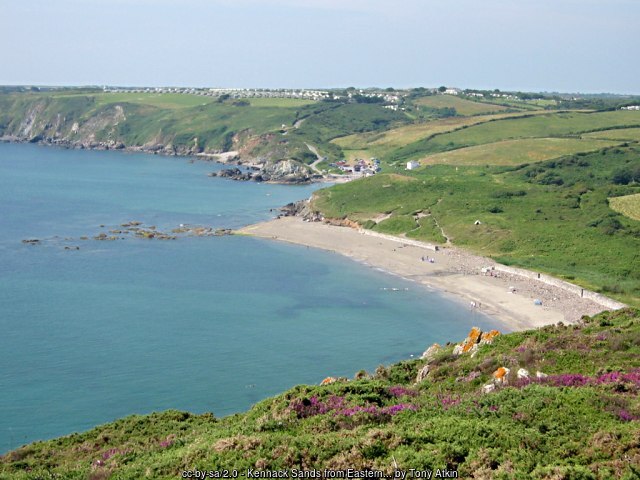
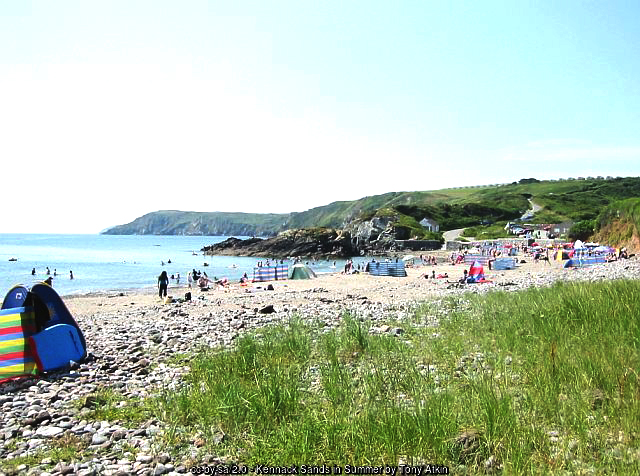
Kennack Sands runs for around 500 metres end to end, backed by a dune system known locally as Kennack Towans, which rises behind the beach towards the hill of Carn Kennack. The nearest settlement, the small hamlet of Kuggar, sits about a kilometre inland along the lane that leads down to the beach, while the more substantial village of Ruan Minor lies a little further inland again. East Kennack, the quieter, dog-friendly half of the beach beyond the Caerverracks, has itself been recognised as a small nature reserve, reached along a path that climbs over the shoulder of Carn Kennack rather than directly along the sand - a worthwhile detour at low tide for anyone interested in the beach's wilder, less-visited end.
Kennack Sands is also a genuinely popular spot with the local diving community. It is a well-used launch point for inflatable dive boats heading out along this stretch of the Lizard's east coast, and the diving here is more than a passing curiosity: water depths exceeding 16 metres are reached only around 400 metres offshore, giving divers relatively easy access to proper depth without a long boat journey, in a part of Cornwall with a long history of shipping casualties along its reefs and rocks. This is not a beach built around a single famous, named wreck in the way some Cornish dive sites are marketed - the interest here is spread across a run of reef and rock features along the coast rather than one headline attraction - but it is a real and lasting part of Kennack Sands' character for those who know the area, alongside its more obvious appeal as a family beach.
Geologically, Kennack Sands sits within the wider Lizard Complex, the unusual assemblage of serpentine, gabbro and other igneous and metamorphic rocks that gives this peninsula a geology unlike almost anywhere else in mainland Britain, having originated as a slice of ancient oceanic crust and upper mantle thrust up onto the land hundreds of millions of years ago. The low cliffs and rocky outcrops around the bay, including the Caerverracks themselves, are part of this same geological story, and the contrast between the pale sand, the dark serpentine-influenced rock and the gorse-covered slopes above gives Kennack Sands a distinctive look even among the Lizard's many varied beaches.
The beach and the lanes leading down to Kuggar are also home to a handful of long-established holiday and caravan parks, making Kennack Sands as much a base for a week's family holiday as a destination for a single day trip - a pattern common on this stretch of the Lizard, where good, accessible sand is at something of a premium compared with the peninsula's many steeper, harder-to-reach coves.
The clifftops and gorse above Kennack Sands are part of the wider Lizard landscape that has become one of the best places in England to see the chough, the red-billed, red-legged crow that returned to breed on the peninsula in 2001 after an absence of decades and has since become something of a symbol of the Lizard's conservation story. A sighting from the coast path above the beach is a matter of luck rather than certainty, but the wider peninsula's gorse-and-heather clifftops, of which Kennack's own hillside is a small part, remain central to the bird's continuing recovery in Cornwall.
Practically, Kennack Sands makes a good base for exploring the wider Lizard, sitting roughly equidistant between Cadgwith to the south and Coverack to the north along the South West Coast Path, both an easy coastal walk or a short drive away. Ruan Minor, a short distance inland, has a pub and a shop for anything the beach itself doesn't provide, and the beach's own shop, café and toilets cover most needs for a straightforward day at the seaside. As with any Lizard beach, checking the tide before setting out pays off - a rising tide will eventually cover the connecting sand around the Caerverracks and split the beach in two, and swimmers should be aware of currents around the rocks, particularly outside the RNLI's patrolled hours in peak season.
Visitor Information
Parking
A pay car park sits directly behind the beach, reached via the turning for Kuggar and Ruan Major off the Helston to Lizard road. It is one of the larger car parks on this stretch of coast but still fills on the busiest summer days.
Facilities
A beach shop, café and toilets sit right beside the sand. Seasonal RNLI lifeguard cover typically runs at weekends from late May and daily through the height of summer into early September - check current dates with the RNLI before relying on it.
Disabled Access
The car park is close to the beach with a mostly level, short approach to the sand itself, making Kennack Sands more accessible than most Lizard coves, though the beach surface is soft sand beyond the top. No dedicated Blue Badge bays are confirmed at the car park - check current signage on arrival.
Things to Do Nearby
- Cadgwith Cove, the Lizard's picturesque thatched fishing cove, a short coast path walk or drive south
- Coverack, a working harbour village a short coast path walk or drive north
- Ruan Minor village, a short distance inland, with a pub and shop
- The South West Coast Path, which runs directly above the beach, linking Kennack Sands to Cadgwith and Coverack
Places to Stay
Kennack Sands has its own range of holiday accommodation close to the beach:
Frequently Asked Questions
Page last updated: 16 September 2026