![]() |
|||||
|
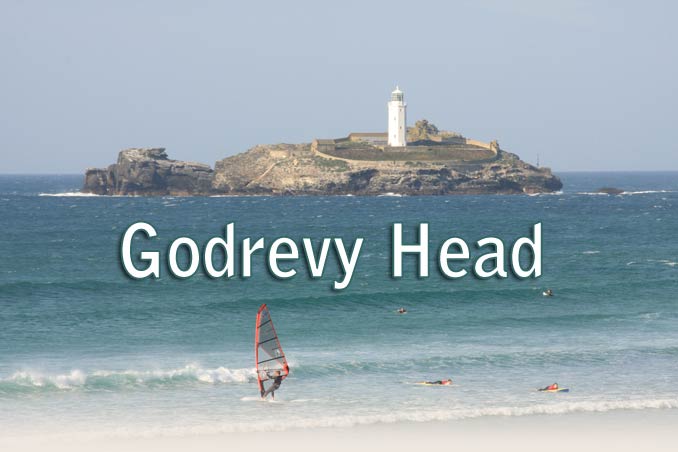
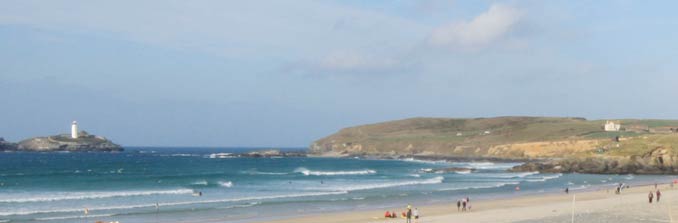
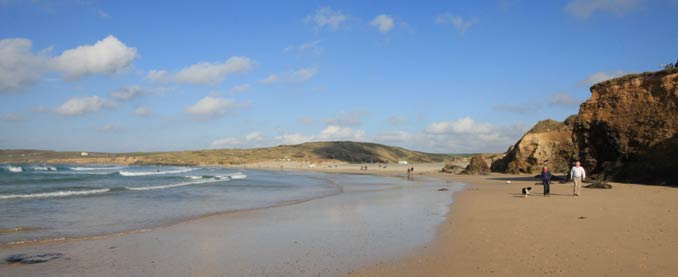
Godrevy The National Trust managed headland is located at the northern-most tip of Hayle's '3 miles of golden sand'. Godrevy is one of the most exposed beaches of the North coast which often takes the fierce Atlantic Swells – making it one of the best surfing beaches in Cornwall. This is a truly awe inspiring coastal headland and expanse of beach that has an abundance of wildlife and archaeological sites. The nearest refreshments can be found at The Godrevy Café (on the approach road to Godrevy Head), adjacent to the Gwithian Towans car park on the main approach road. Across from the headland is a small island and lighthouse. Godrevy lighthouse was built in 1859 to warn shipping about the dangerous “Stones” reef, which extends westward from the headland out across the bay towards St Ives. Godrevy lighthouse is believed to have been the influence for Virginia Woolf's novel To the Lighthouse - although in the novel, the setting was changed to the coast of Scotland. Virginia Woolf was a regular visitor to the St Ives area during her childhood, staying at the family holiday home in St Ives. The rocky headland at the northern edge of the bay is an ideal place to take the family for a day t the beach. At low tide you can explore the many rock pools that are exposed along the coast line, or picnic in the many sheltered bays – note beware of cliff edges, unstable cliffs and incoming tides. The vast sandy beach stretches for three miles along the coast, past Gwithian sands to Riviera Towans and Hayle. The beach is interspersed with sand dune systems and low cliffs. The large flat expanse of sand and the exposed nature of the bay make this area very popular with extreme sports enthusiasts: Surfers, kite surfers and land sailing. The beach is an excellent location for both ”family friendly” and “activity based” holidays. It is always popular, but the shear scale of the vast expanse of sand means that it is never crowded. The sands are almost completely covered at high tide so care needs to be taken when exploring the bottom of he cliffs - so don't get caught out. |
|||||
![]() |
|||||
|
Parking at Godrevy head Gwithian Towans Car Park Godrevy Head Car Park- Walking Godrevy is a great location for walking. The easy circular walk around the headland is very popular or you can simply choose to stroll along the vast expanse of sand that stretches all the way down to Hayle. Which ever option you choose, this is an area that is abundant in wildlife – so there is always plenty see including dolphins, seals and sea birds. Godrevy to Gwithian Sands From the Gwithian Towans car park at Godrevy, make your way down to the beach and follow the sands southwest across the bay towards Hayle. Follow the beach and sand dunes until you reach the RNLI lookout station on the cliffs at the south western end of Gwithian Sands. Leave the beach follow the gently rising path along the cliff tops to the car park. On the far side of the car park you will see the “Sunset Surf” beachside café and licensed bar, which is open all year round, serving high quality food and drink. From the café, you can walk back towards Godrevy, along the sands, or explore the adjacent Sand Dune system and Nature Reserve - a unique Area of Outstanding Natural. Circular walk Around Godrevy Head From the Godrevy Head Car Park There is an “Easy” circular walk that encompasses stunning views past the lighthouse across St Ives Bay to the town of St Ives and the Lands End Peninsula. From the car park, simply follow the Coastal path towards the headland – keeping the sea to your left. Follow the footpath around to the north side of the headland, where the coastal path begins descend gradually. You follow the path until you reach Mutton Cove (there is no access down the cliff to the cove), where you will see a small footpath that branches off to the right – which will take you back across the headland to the car park. The walk can be extended by remaining on the main coastal path at Mutton Cove – to Navax Point, the next headland, and the Knavocks. The grass and heath on this section of coast are actively managed using “Shetland ponies” maintaining the habitat for nesting birds such as stonechats, and butterflies. |
|||||
![]() |
|||||
|
|
|||||
|
|||||
|
|
|||||