Barn Pool
A Sheltered Shingle Cove at Mount Edgcumbe Where Vikings Anchored and Darwin's Beagle Set Sail
Mount Edgcumbe Country Park, Cremyll, near Torpoint, Cornwall, PL10 1HZ
Barn Pool is a small, quiet cove of shingle and stone tucked into the shoreline of Mount Edgcumbe Country Park, on the Cornish side of the water directly opposite Plymouth Hoe. It is not a beach many visitors stumble upon by accident: there is no seafront road, no beach shop, and the nearest facilities are a walk away within the wider country park. What Barn Pool does have, in place of the usual resort trappings, is a genuinely remarkable back-story - a natural deep-water anchorage that has drawn ships ashore here for over a thousand years, from Viking longships to the survey brig that carried a young Charles Darwin toward the discoveries that would reshape science. Framed by the wooded slopes of the Mount Edgcumbe estate and looking straight out across Plymouth Sound to the Hoe, Fort William and Drake's Island, it is a beach best appreciated slowly, on foot, as part of a wider visit to one of Cornwall's most historic parklands.
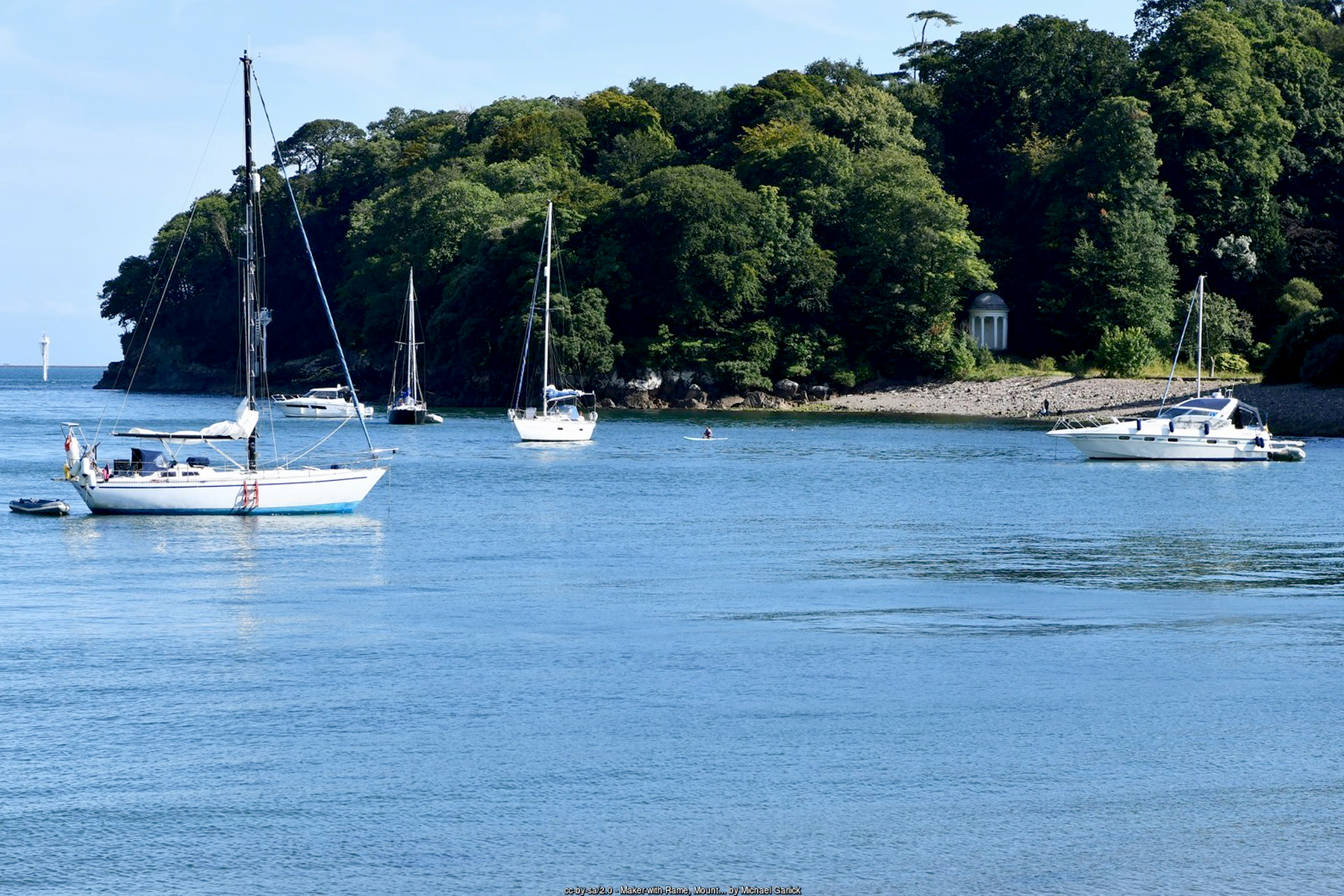
Geographically, Barn Pool sits on the northern shore of the Rame Peninsula, a short stretch of coast north of the Cremyll ferry landing, within the grounds of Mount Edgcumbe House and Country Park. The "pool" of the name refers to the sheltered pocket of deep water immediately offshore, protected from the worst of the weather by the shape of the coastline and by Plymouth Sound itself, which has made it a favoured anchorage since long before Mount Edgcumbe House was built. The shore itself is shingle and stone rather than sand, with some coarser sand and exposed rock showing at low tide, and a flat grassy shelf above the high-tide line where the estate has set out picnic tables. It is a modest beach in size, but its setting - wooded parkland behind, open water and the Plymouth skyline in front - gives it a character quite unlike anywhere else on this stretch of coast.
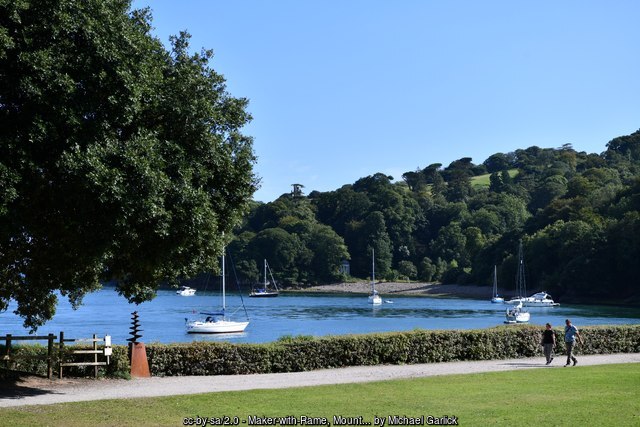
Barn Pool's history begins long before the Edgcumbe family arrived. Its deep, sheltered anchorage is recorded as having been used by Viking raiders as early as 997, part of a wider pattern of Norse incursions into the West Country around the end of the tenth century, when Devon and Cornwall's exposed river mouths and sheltered pools were regularly probed by longships operating along the south coast. Little physical evidence of that episode survives at the site today, but the anchorage's usefulness to shipping never really went away: the same qualities that made it attractive to Viking crews a thousand years ago - deep water close inshore, shelter from the prevailing weather, and easy access to the wider expanse of Plymouth Sound - kept Barn Pool in use as a working anchorage for the best part of a millennium afterwards.
Its best-known moment came on 27 December 1831, when HMS Beagle finally weighed anchor at Barn Pool and put to sea, beginning the voyage that would change the course of science. Under the command of Captain Robert FitzRoy, the Beagle carried a twenty-two-year-old naturalist named Charles Darwin, invited aboard largely as a gentleman companion for the captain but destined to spend the next five years gathering the observations - on the geology, flora and fauna of South America, the Galapagos Islands and beyond - that would eventually form the basis of On the Origin of Species. The Beagle's departure had already been delayed twice by poor weather after leaving Devonport, and it was from the calmer shelter of Barn Pool that the ship at last got safely away down Plymouth Sound and out into the English Channel. For anyone interested in the history of science, standing at Barn Pool today and looking out across the same stretch of water is a small but genuine pilgrimage.
The waters off Barn Pool also hold a less celebrated but historically significant wreck. Records place the remains of the Danish brigantine known as Die Frau Metta Catharina von Flensburg, lost in Plymouth Sound in a storm in 1786 while carrying a cargo of Russian hemp bound from Riga to Genoa, in the waters near the cove. The wreck has since become one of the most studied historic sites in Plymouth Sound, examined by maritime archaeologists for what it reveals about eighteenth-century Baltic trade and shipbuilding, and it is a reminder that this sheltered stretch of water, for all its calm appearance, has claimed vessels as well as sheltered them.
Mount Edgcumbe's own historical accounts also place a more recent chapter of history at Barn Pool: in June 1944, American troops of the 29th Infantry Division are recorded as having embarked from Barn Pool beach bound for Omaha Beach as part of the D-Day landings, and the park has since held commemorative events at the site each 6th June, with military re-enactors and serving personnel from the Royal Marines taking part. Plymouth Sound as a whole was one of the principal embarkation areas for the Normandy invasion, its shoreline dotted with concrete "hards" built specially for the purpose, and Barn Pool's own sheltered anchorage made it a natural place from which landing craft could be loaded and launched.
More recently still, Barn Pool has quietly proved itself to marine biologists as well as historians. In October 2022, volunteers from the Rock Pool Project and Plymouth's Blue Recovery Rangers carried out a citizen-science survey of the cove's rock pools as part of a wider push to record marine biodiversity around Plymouth Sound - territory the project had not previously explored, since Barn Pool has never had a reputation locally as a rock-pooling destination. The results surprised even the surveyors: among the species logged and submitted to the National Biodiversity Network were mason worms, porcelain crabs, blue-rayed limpets and bearded rocklings, a genuinely substantial list for a beach better known for its history than its wildlife. It is a useful reminder that some of Cornwall's most interesting rock pools are found not at famous beauty spots but in overlooked corners like this one.
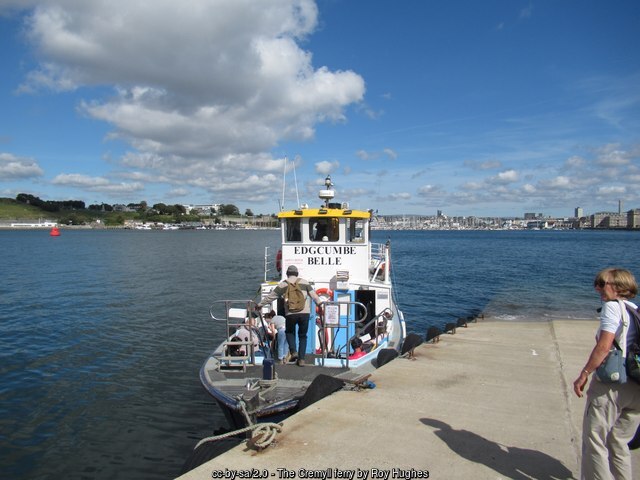
Access to Barn Pool is part of its charm and part of its challenge. On foot or by bike, it sits within the wider grounds of Mount Edgcumbe Country Park, reached from the Cremyll entrance and a walk of a few hundred metres north along the waterside path, or on the network of paths that wind down through the park's woodland and formal gardens from the House itself. By road, the park is approached via Cremyll, on the western side of the Rame Peninsula near Torpoint, itself reached from the Cornish side via Torpoint and the Torpoint chain ferry across the Tamar, or via the roads through the Rame Peninsula from further into Cornwall. Many visitors, however, arrive the more memorable way: aboard the Cremyll Ferry, a passenger service crossing Plymouth Sound from Admiral's Hard in Stonehouse, Plymouth, that is reputed to be the oldest continuously operating passenger ferry route in the United Kingdom, with a documented history stretching back to at least the thirteenth century and quite possibly to the Saxon period. Stepping off the ferry at Cremyll and walking the short distance to Barn Pool along the shore is, in its own way, a fitting approach to a beach whose whole history is bound up with the sea crossing on its doorstep.
Practically, Barn Pool rewards a little planning, since it has few facilities of its own. The nearest parking is the pay-and-display car park at Cremyll, right by the ferry landing and the entrance to the country park, from where it is an easy, level walk to the beach; further car parks serve other parts of the park at Dry Walk, the Barrow Centre and Rame Head. Car park machines at Mount Edgcumbe are cash-only or take payment via the RingGo app, and no change is given, so it is worth arriving prepared. There are no toilets or cafes directly at Barn Pool itself, but free toilets and several seasonal cafes, including the Orangery Garden Cafe, are available elsewhere in the park at Cremyll, Dry Walk and the Barrow Centre. The cove's sheltered water is popular for swimming, paddleboarding and simply skimming stones, though there is no RNLI lifeguard patrol here and the pool remains in occasional use by small boats crossing the Sound, so swimmers should keep a lookout for watercraft. Dogs are welcome throughout Mount Edgcumbe Country Park, including at Barn Pool, provided they are kept under control, not least because the park is also home to a long-established herd of fallow and red deer roaming its wider grounds.
Visitor Information
Parking
The nearest parking is the pay-and-display Cremyll car park at the entrance to Mount Edgcumbe Country Park, a short, level walk from Barn Pool. Machines are cash-only or take the RingGo app, with no change given. Further car parks serve other parts of the park at Dry Walk, the Barrow Centre and Rame Head.
Facilities
There are no toilets or cafes directly at Barn Pool, but the cove has free picnic tables and a flat grassy area above the shore. Free toilets and seasonal cafes are available a short walk away within the country park at Cremyll, Dry Walk and the Barrow Centre. There is no RNLI lifeguard patrol at Barn Pool.
Disabled Access
The walk from Cremyll to Barn Pool follows a fairly level waterside path, though the shore itself is shingle and stone with no purpose-built ramp onto the beach. Mount Edgcumbe Country Park offers disabled parking on the House driveway and mobility scooter hire via the Countryside Mobility scheme for the wider grounds.
Things to Do Nearby
- Mount Edgcumbe House & Country Park, the Tudor mansion and historic landscaped grounds surrounding Barn Pool, with formal gardens, woodland walks, a deer park and the Orangery cafes
- The historic Cremyll Ferry to Plymouth, reputed to be the oldest continuously operating passenger ferry route in the UK, landing a short walk from Barn Pool
- Kingsand & Cawsand, the twin fishing villages and sandy beaches further round the Rame Peninsula coast
- The wreck site of the Catharina von Flensburg, a Danish brigantine lost in Plymouth Sound in 1786, close offshore and studied by maritime archaeologists
Places to Stay
Barn Pool and Mount Edgcumbe Country Park have no dedicated holiday accommodation listings of their own - this is parkland and coastline rather than a resort. The nearest range of places to stay is across the wider Rame Peninsula:
Frequently Asked Questions
Page last updated: 15 September 2026.