Outdoor Landscape
Terraced Gardens of Plants That Changed the World
Bodelva, St Austell, Cornwall, PL24 2SG | Tel: 01726 811911
The south-facing slopes of the Eden Project's old clay pit have been transformed into a series of terraces, planted with species that have changed the world. Here you'll find plants we eat, drink, wear and use every day - crops that have travelled the globe, like the potato and the tomato, alongside plants grown for health, such as tea bushes brought in from India and wheat varieties gathered from across the world.
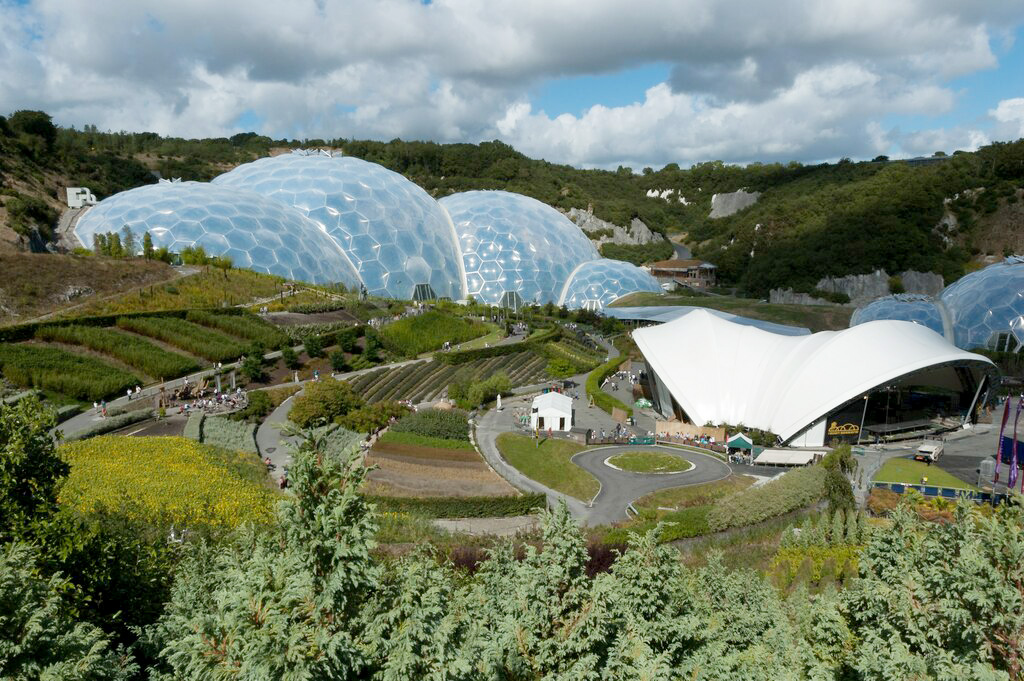
Cornwall itself has a strong presence in this outdoor landscape too. The terraces represent the county's own Atlantic Woodlands and Cornish Heathland, along with farmland habitats and the traditional Cornish hedge. Look closely and you'll also find examples of the county's endangered species, including the rare English Gentian and the lichen Heterodermia isidiosphora, now found in only one secret Cornish location.
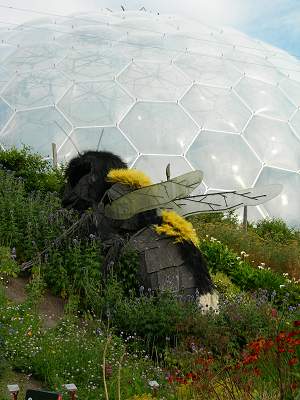
The terraces are punctuated by contemporary sculpture, including Robert Bradford's large bee sculpture "Pollination." Throughout the year, yurts are sometimes set up across the landscape as seasonal educational and information points, with displays covering topics from the many uses of rubber to the wider fascinating world of plants - a changing programme that rewards repeat visits at different times of year.
Key Features of the Outdoor Landscape
- Terraces of plants that changed the world - tea, wheat, potatoes and tomatoes among them
- Cornwall's Atlantic Woodlands and Cornish Heathland habitats
- Farmland habitats and traditional Cornish hedge planting
- Rare and endangered Cornish species, including the English Gentian
- Robert Bradford's "Pollination" bee sculpture
- Seasonal yurts used as educational and information points