Humid Tropics Biome
The World's Largest Conservatory
Bodelva, St Austell, Cornwall, PL24 2SG | Tel: 01726 811911
The Humid Tropics Biome has been created inside the world's largest conservatory - 240m long, 55m high and 110m wide. Within it, over 2000 carefully selected species of tropical plant grow in conditions that let them reach their full potential. The soil bed is a metre deep and covers more than 15,500 square metres, with air temperatures ranging from roughly 18°C to 35°C across different zones. A misting system and a dramatic waterfall keep humidity at the high levels these species need to thrive.
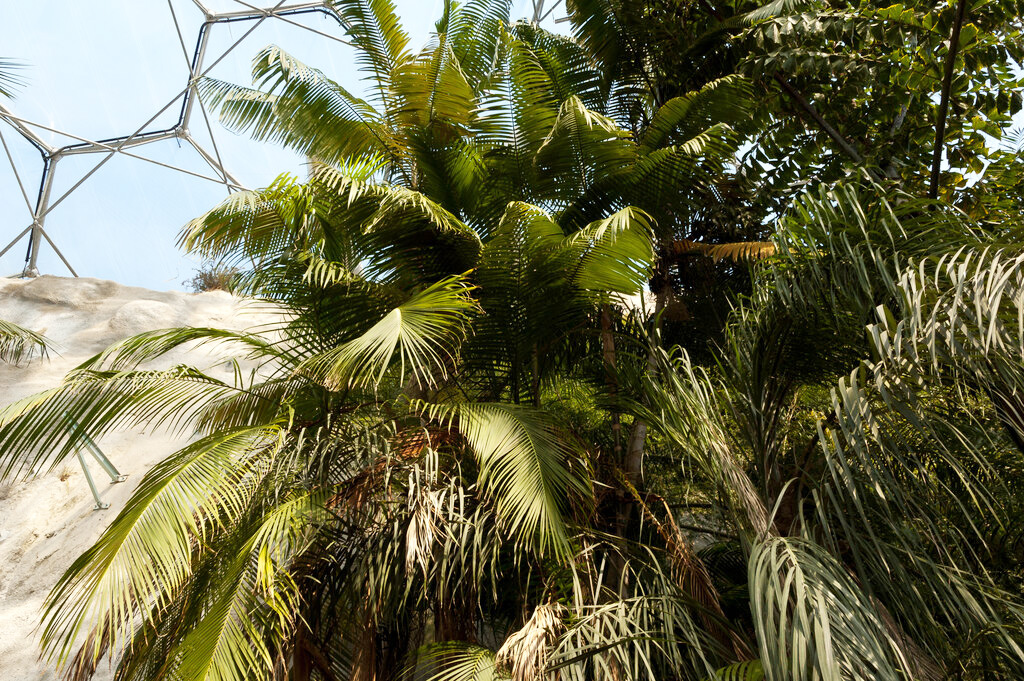
Inside, you can explore environments drawn from the Oceanic Islands, West Africa, Tropical South America and South East Asia, experiencing the sights and smells of these distant regions and discovering how their people manage the land - meeting present-day needs while conserving it for the future. Step through the entrance and the sudden rise in both heat and humidity is immediate; glasses and camera lenses fog up, and jackets start coming off within moments.
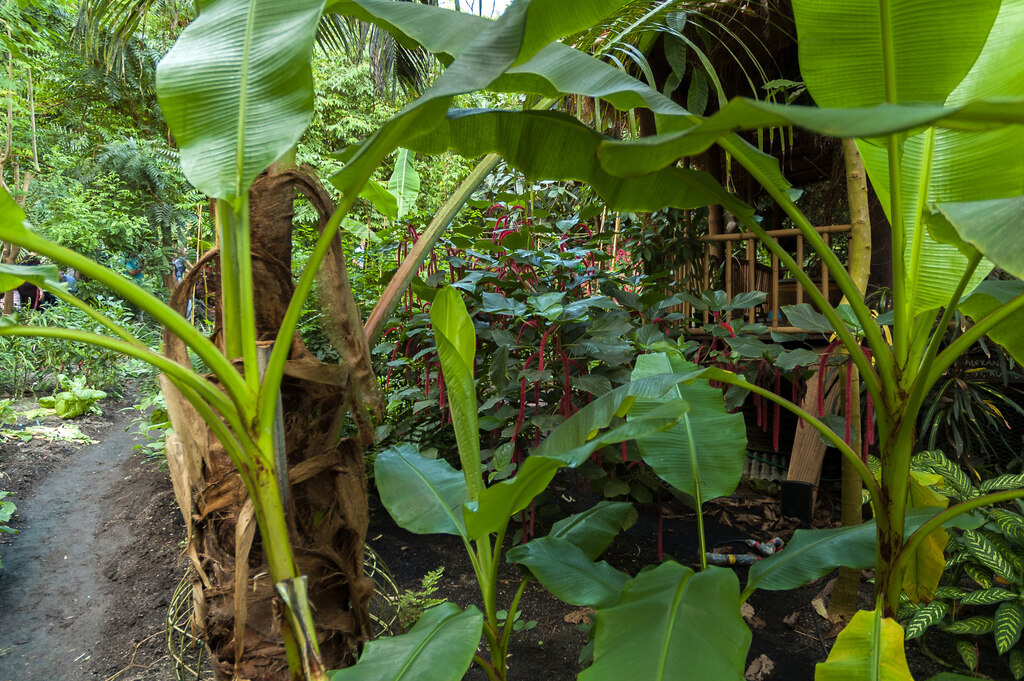
The path winds clockwise past a mangrove display, an Asian house built from rattan and bamboo, West African agroforestry plots, and a steep climb up past a thundering waterfall, before opening into a section dedicated to economically important crops - rubber, cocoa, rice, sugar cane, bananas, coffee and spices among them. It's a route that rewards a slow pace: there's always something new to notice on each visit.
The Oceanic Islands
The first region on the clockwise route through the biome is the Oceanic Islands, where the path passes the "Tropical Trader" - a sculpture of a ship's bows by local artist David Kemp, built by ship repairers at Penzance Dry Docks. Oceania has suffered badly from colonisation and the introduction of inappropriate species; on display here are the coconut, the Coco-de-mer from the Seychelles (the world's largest seed), and the St Helena Ebony, once thought extinct for over a century. A mangrove section shows how remarkable plants have adapted to survive where forest meets sea.
Malaysia
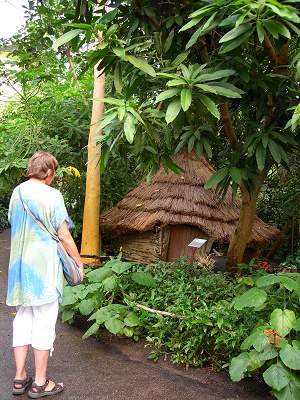
The path curves gently around the mangrove and tranquil pools into the Malaysian rainforest display, centred on an Asian house built from rattan and bamboo, sitting in its own kitchen garden. It's based on real smallholdings in the Borneo village of Kampong Tampinau, where gardens provide food, building materials, medicines and market crops - species selected by local people over generations to create a year-round larder, growing guavas, mangoes, sweet potatoes and the horseradish tree.
West Africa
Next comes the West African section, showcasing agroforestry techniques practised by the people of Ndoumdjom in Cameroon - a method that lets farmers grow food crops, cash crops and improve soil health at the same time. Maize, coffee and sorghum grow beneath a tree canopy, alongside leguminous trees that protect crops, prevent erosion and fix nitrogen to improve fertility.
Tropical South America
The path curves back and the gentle incline suddenly steepens through the Tropical South American section, based on the shifting jungle cultivation practised in Guyana, where gardens move on a 14-year cycle to work with the region's poor jungle soils. From here the path divides - climb to the top of the waterfall for sweeping views across the biome's treetops, cooled by a strong downdraft from the falling water, or take the easier route to its base.
Crops and Cultivation
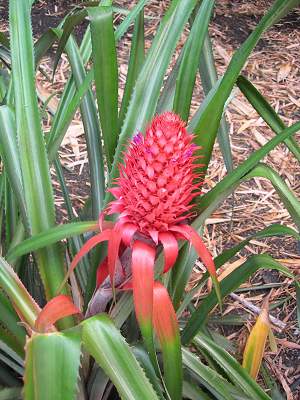
Marked by a leopard sculpture, the second half of the walk is dedicated to economically important tropical crops - species that have shaped human history. Look out for the cola tree, pineapples, peanuts and chewing gum on the way to the rubber section, followed by cocoa (native to the Andes and used by the Maya and Aztecs to make the "drink of the gods," now grown mainly across West African smallholdings). The remaining stretch takes in rubber trees, rice, sugar cane, bamboo, palms, coffee, bananas and spices.