Warm Temperate Biome
Mediterranean, Californian & South African Planting
Bodelva, St Austell, Cornwall, PL24 2SG | Tel: 01726 811911
The Eden Project's Warm Temperate Biome lets you experience the diversity of plant species that have evolved to survive semi-drought conditions across the Mediterranean Basin, California and South Africa - lands that are hot and dry in summer, with poor, infertile soil and only sporadic rain through the winter months.
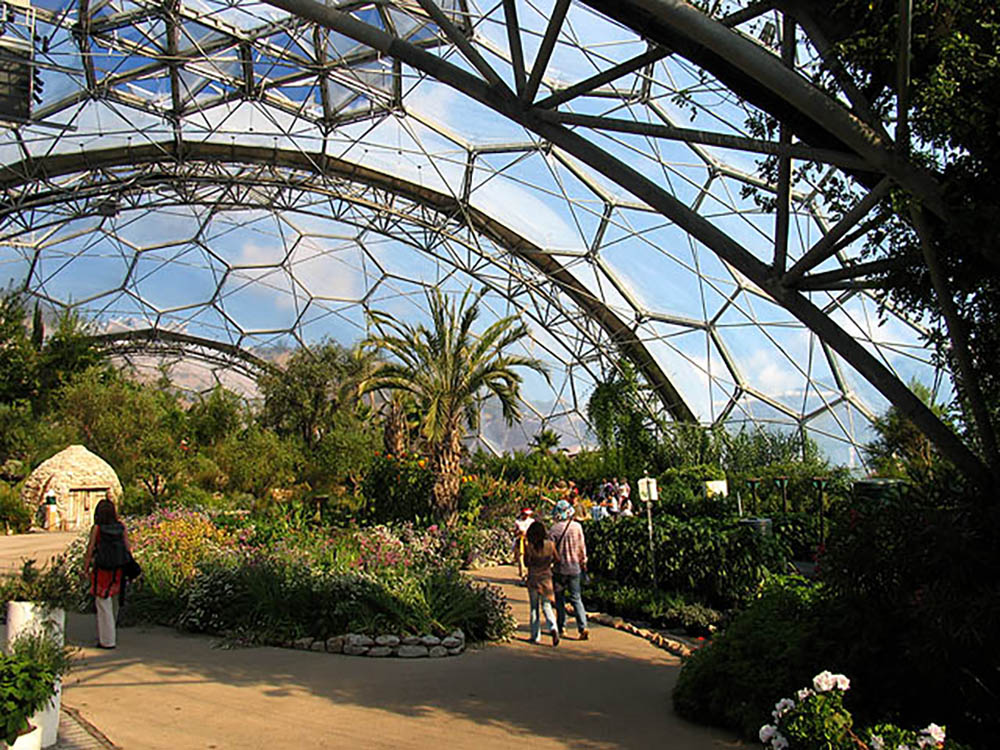
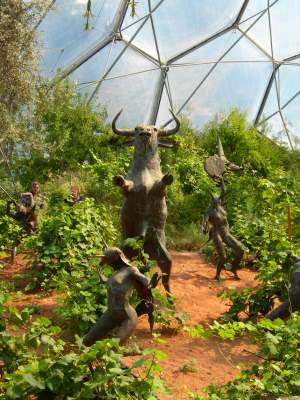
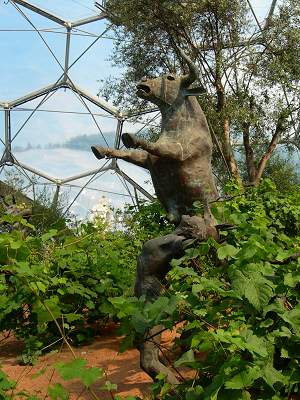
The Mediterranean Basin section traces the cradle of much of our own civilisation: the trade in olive oil helped shape Ancient Greek culture, and the olive still thrives here in poor, salty soil despite drought and intense summer heat. Alongside it grows the vine, tied to Roman civilisation, bursting into life each summer from apparently dead stems. Falmouth-based artist Tim Shaw's sculpture, inspired by the legend of Dionysus (the Greek god of wine, the Roman Bacchus), depicts the god as a bull surrounded by dancing Maenads among the vines.
Moving on through a citrus display, the biome reaches its South African Afro-Montane section, home to a unique collection of Cape flora including the Protea family, Fynbos heath plants and the daisy-like flowers of the scorching Namaqualand. The path then loops back through California's central valley prairie and chaparral planting, before a Cork Oak display featuring Quercus suber trees - harvested every nine to twelve years for wine-industry cork - complete with cork pig sculptures by artist Heather Jansch. The route ends among Eden's plants-for-perfume and floral colour displays, at their most vivid through the summer months.
Mediterranean Basin
Home to the olive - thriving in poor, salty soil and able to survive drought and intense summer heat - and the vine, linked to Roman civilisation and seemingly reborn each year from dead-looking stems. Look out for Tim Shaw's striking sculpture depicting Dionysus as a bull surrounded by dancing Maenads, before the path continues through the biome's citrus display.
South African Afro-Montane
The flora of the Cape is unlike anywhere else, with examples of the Protea family and heath plants from the Fynbos region, alongside the daisy-like flowers native to the baking Namaqualand.
California
The path winds back toward the entrance through a Californian, South San Francisco Bay-inspired display of central valley prairie vegetation and Nevada foothill chaparral species. Opposite, a Cork Oak exhibit showcases Quercus suber, whose bark is harvested every nine to twelve years for the wine industry - the same managed cork pastures (montados in Portugal, dehesas in Spain) also support charcoal production, livestock grazing, and habitat for species like the rare Black Vulture and Short-Toed Eagle. The cork trees are paired with cork pig sculptures by artist Heather Jansch.